
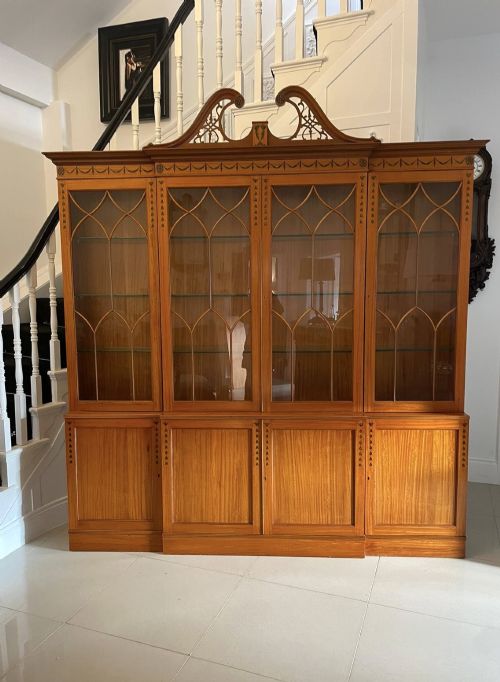

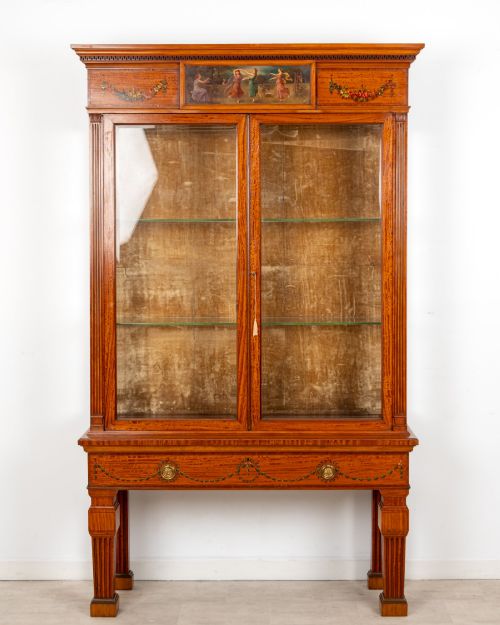
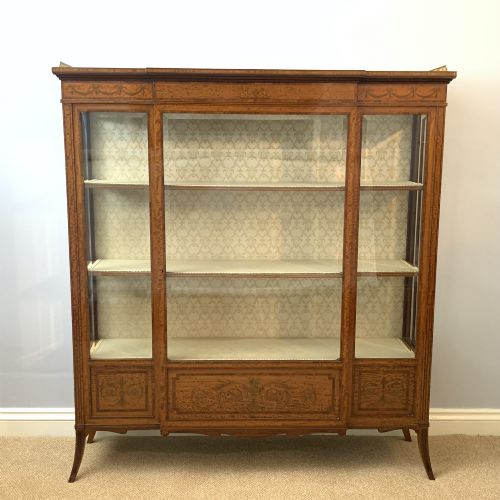
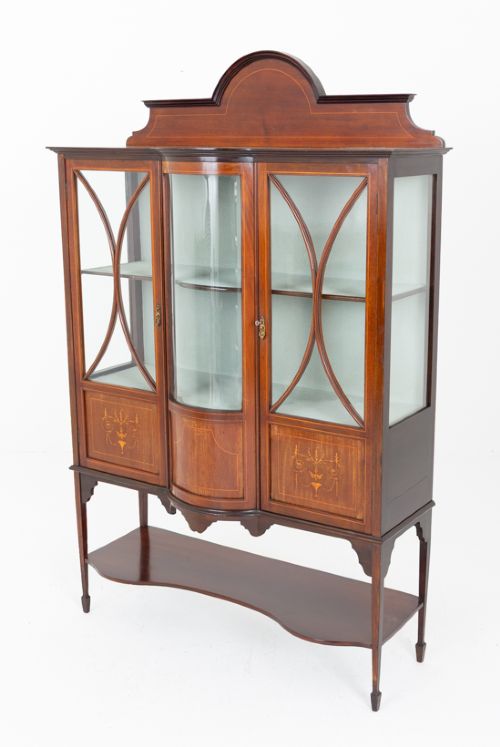
Satinwood Glazed Bookcase
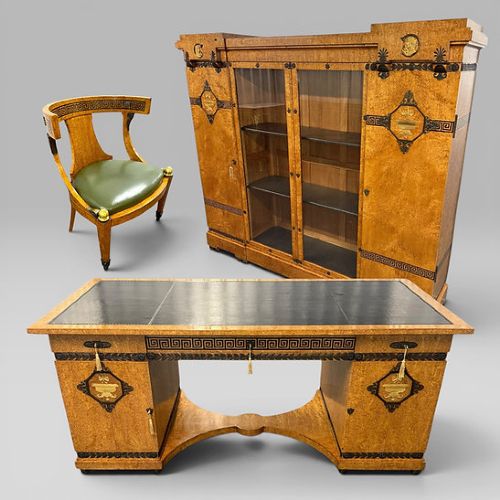
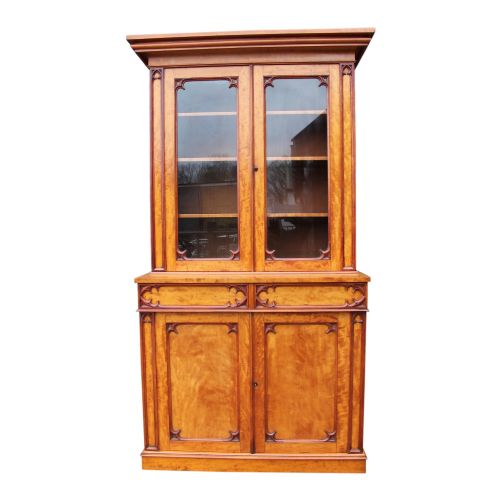
A satinwood glazed bookcase brings brilliant timber figure and refined display space to a room, offering the classic combination of visible shelving and fine cabinet-work.
Identifying a satinwood glazed bookcase
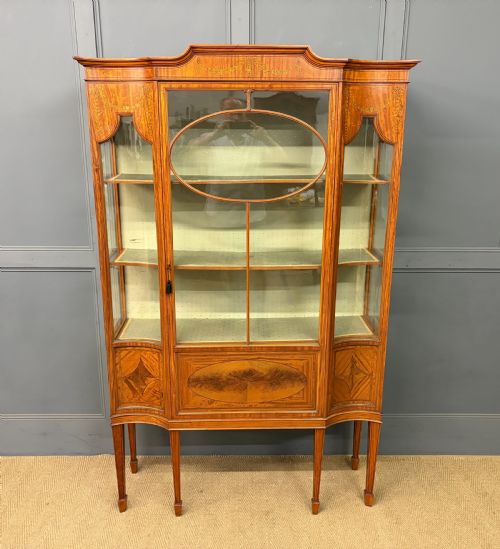
A satinwood glazed bookcase is a refined storage piece built around timber figure and glazed upper doors, designed to hold and display volumes. The evidence shows these pieces spanning the Georgian, Victorian, and Edwardian eras, with revival movements notably active in the nineteenth and early twentieth centuries.
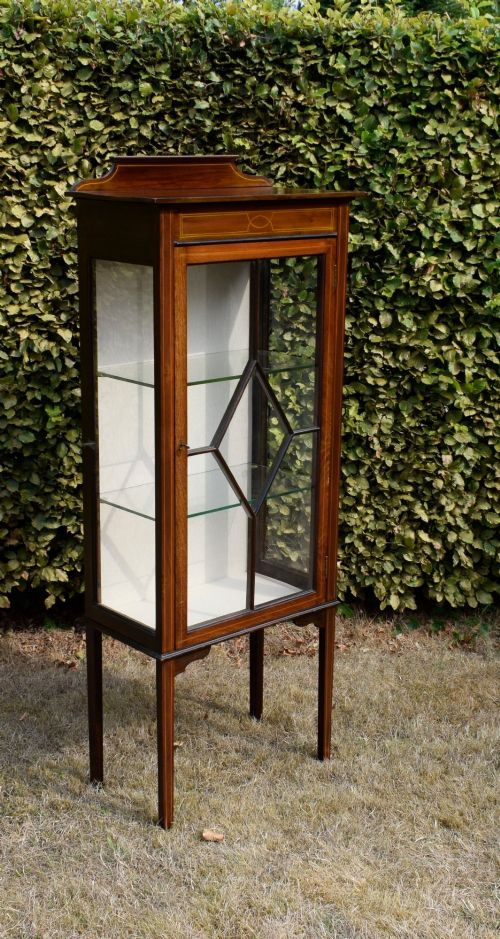
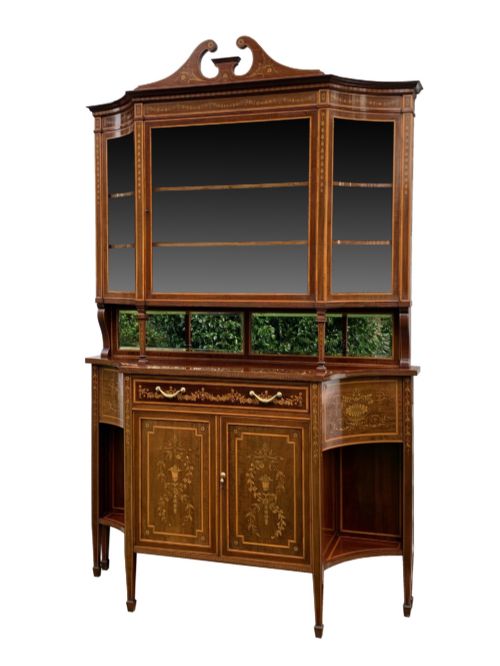
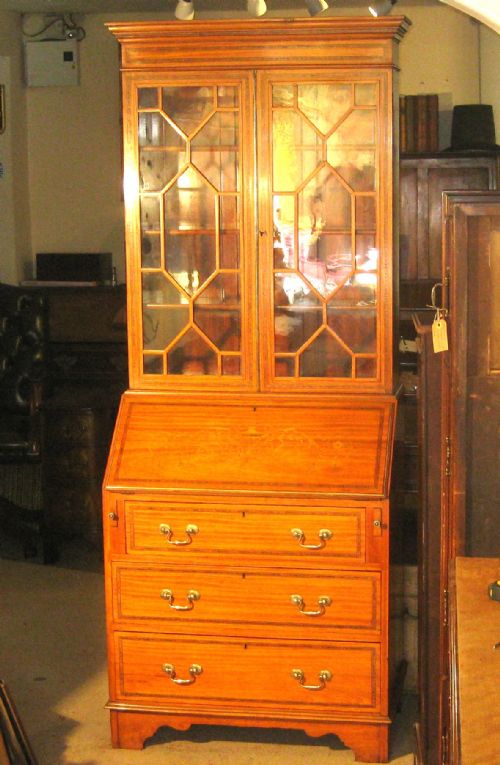
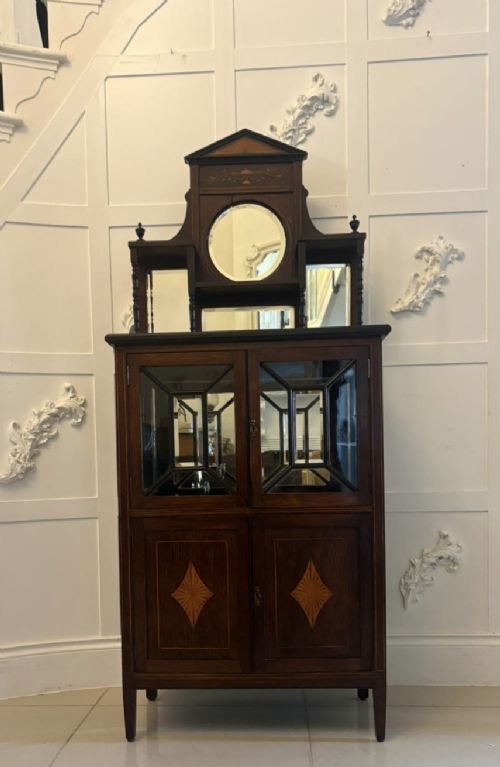
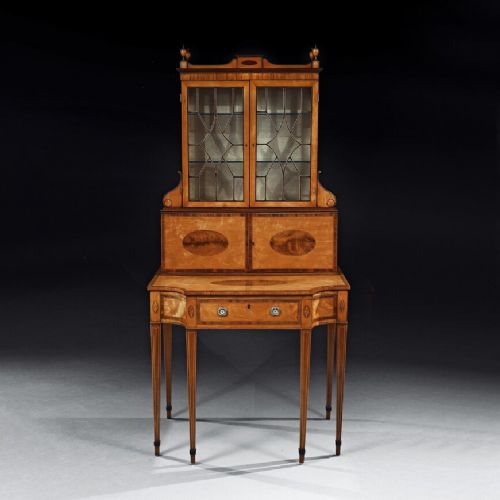
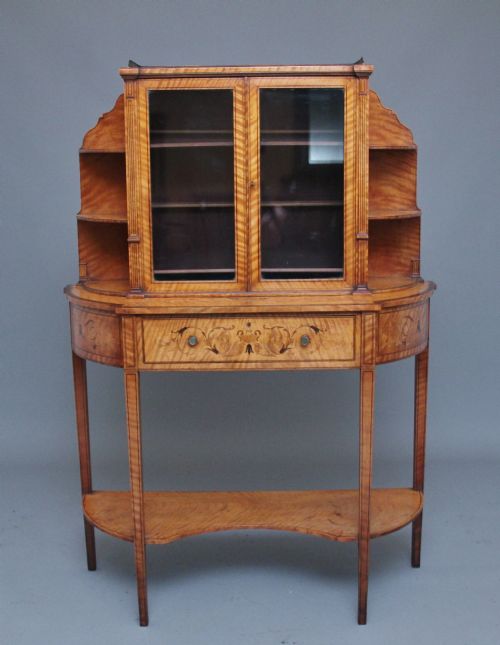
Buyers on this page most frequently meet Edwardian and nineteenth-century examples, often carrying Sheraton revival or serpentine shaping. Forms range from towering two-part bookcases and secretaire desks to compact bow-front display cabinets with glass doors.
The materials recorded across these items consistently feature satinwood, glass, and brass, occasionally augmented by mahogany backings, painted details, or fabric linings. Whether configured as a tall library piece or a lower display cabinet, each relies on timber grain to catch the light.
Construction and materials
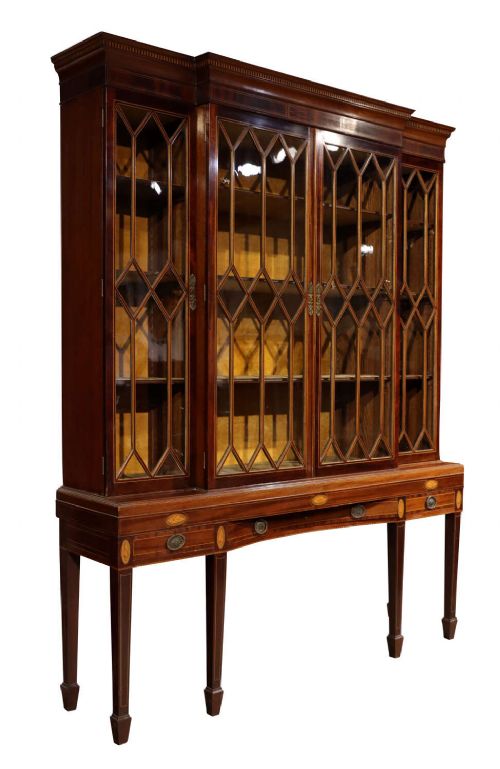
Makers constructed these cabinets using satinwood veneers and solids, frequently incorporating mahogany frameworks or crossbanding to frame the lighter wood. Brass fittings secure the doors and interior elements, while glass panels are held within wooden astragal bars.
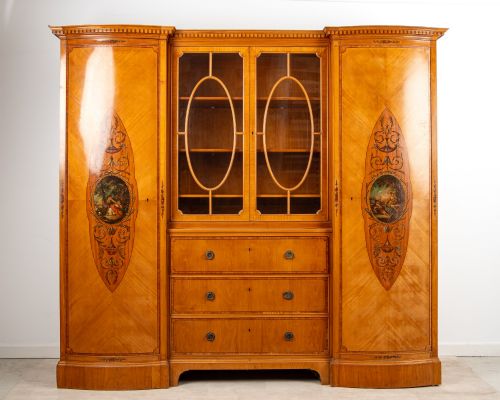
Surface treatment relies on timber selection and polish to highlight the natural sheen of satinwood, sometimes accompanied by delicate painted decoration or inlay. Construction techniques span standard cabinet-making methods of the eighteenth, nineteenth, and early twentieth centuries, resulting in stable two-part or single-carcase builds.
Retail Price Guide 2026
Typical UK retail prices for satinwood glazed bookcase, calculated from the Sellingantiques database of over a million retail prices indexed since 2003. This retail price guide relies exclusively on Sellingantiques data; no external sources or auction records are used, so the figures do not describe the wider market.
Certain cabinets hide a writing drawer behind a dummy book spine, letting you write letters while pretending to read.
Judging quality in satinwood furniture
Quality rests in the selection of the satinwood veneer and the precision of its grain alignment across the facade, particularly on curved or serpentine fronts. Superior pieces exhibit crisp joinery in the astragal glazing bars and thoughtful integration of secondary timbers like mahogany.
Finer examples show restraint and balance in their inlaid or painted ornamentation, whereas lesser items may rely on heavy or repetitive motifs. The weight of the brass hardware and the clarity of the glass panels further distinguish standard production from exceptional craftsmanship.
The Satinwood Glazed Bookcase Glossary
- Satinwood
- A dense, hard timber known for its golden lustre and reflective grain. It serves as the primary decorative surface on these cabinets.
- Astragal
- The narrow wooden moulding that divides panes of glass within a door. Fine astragals require precise carpentry.
- Crossbanding
- A border of veneer laid with the grain running perpendicular to the main panel. This technique frames the satinwood surfaces.
- Serpentine
- A curved shape that undulates outward and inward across the front of a cabinet. It demands advanced skill to veneer successfully.
- Secretaire
- A desk form featuring a pull-down writing drawer fitted with compartments. It often sits within the middle section of a bookcase.
Frequently Asked Questions
What periods do these bookcases come from?
The pieces span from the eighteenth century through the Victorian era to the Edwardian period. Revival styles, particularly Sheraton and Gothic, appear frequently among the nineteenth-century examples.
Dates range from Georgian originals to early twentieth-century interpretations, reflecting shifting tastes in domestic library furniture.
How are satinwood and mahogany combined?
Satinwood is typically used as a face veneer or banding material due to its bright, reflective figure. Mahogany often forms the structural carcase or secondary timber beneath.
This pairing provides stability while allowing the golden satinwood to dominate the visible exterior surfaces of the cabinet.
What is an astragal glazed door?
An astragal glazed door uses a network of slender wooden bars to hold multiple individual panes of glass. This traditional method creates a grid pattern across the bookcase front.
It allows books and display items to remain visible while keeping them protected behind secure glass.
How do I care for a satinwood surface?
Satinwood requires stable indoor humidity and protection from direct sunlight to prevent the polish from fading or the timber from drying. Regular dusting with a soft, dry cloth maintains the finish.
Avoid liquid cleaners and wax buildup, which can dull the natural chatoyant quality of the wood grain.