
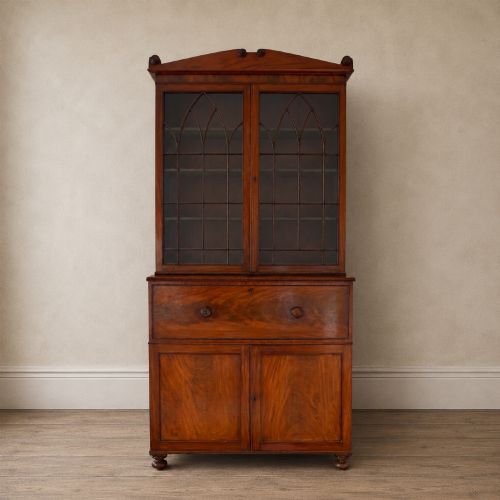


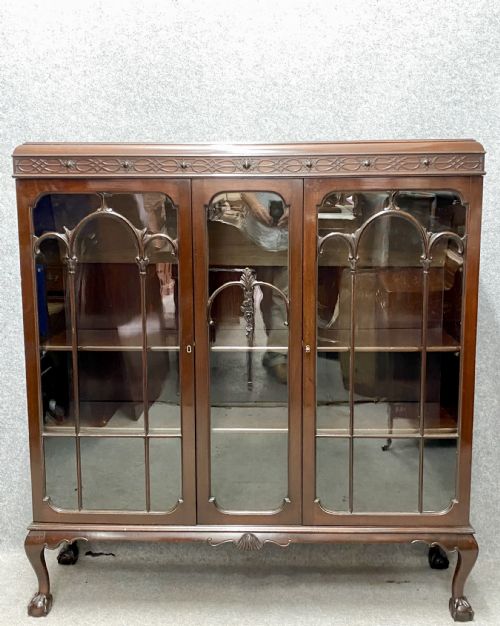
Gothic Tracery Bookcase
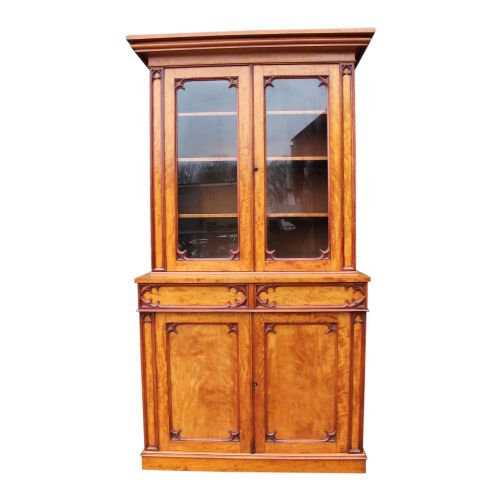
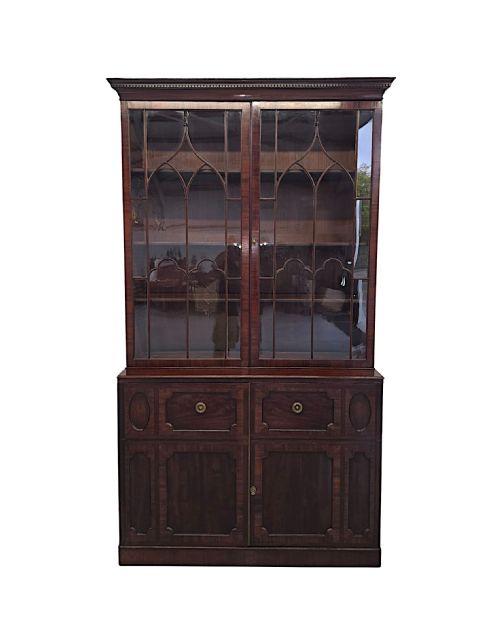
A gothic tracery bookcase brings architectural drama to a room, using pointed arches and stone-like wooden framing to house a library.
Gothic Tracery Bookcase
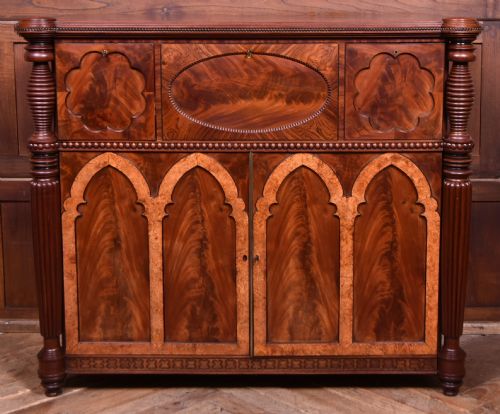
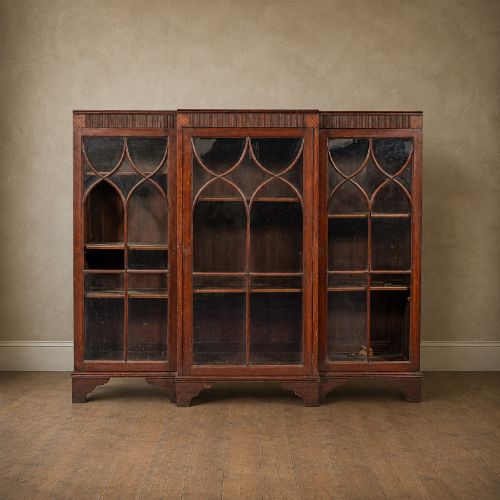
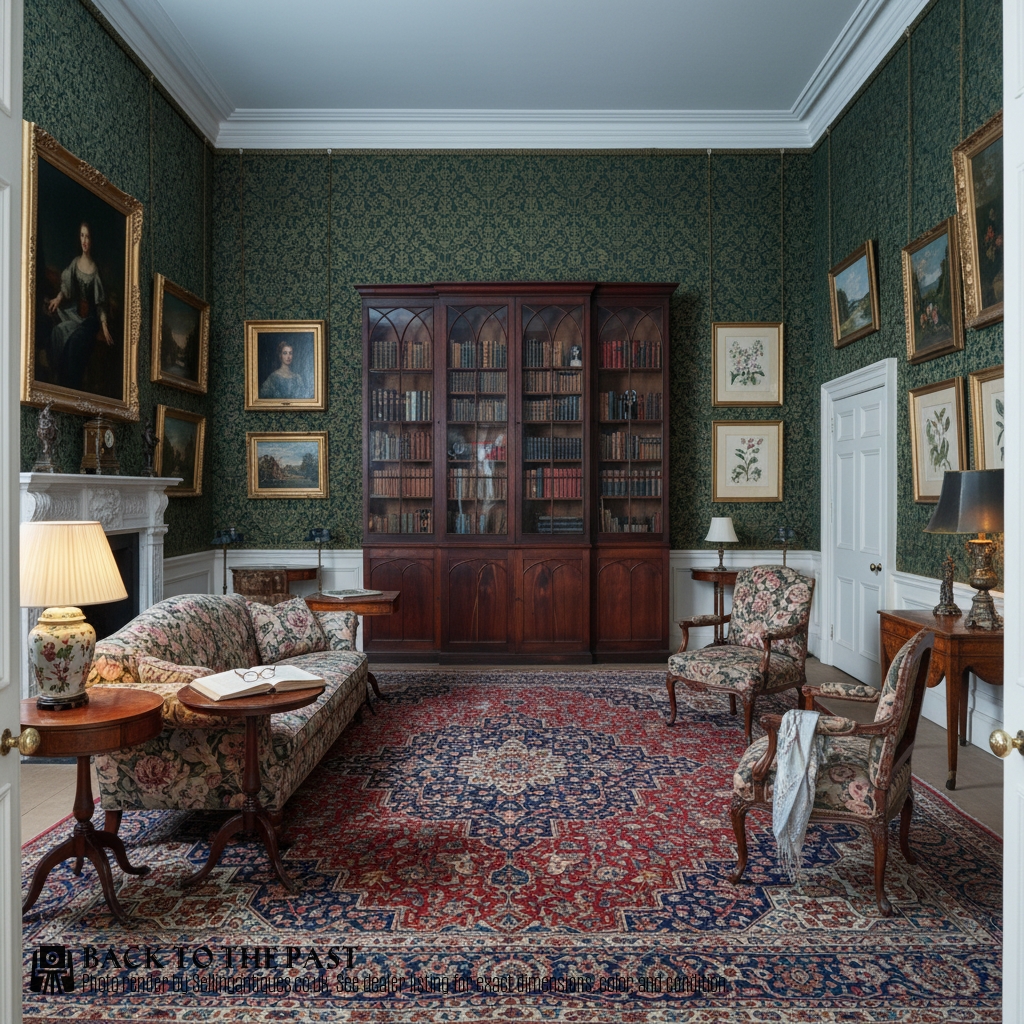
A gothic tracery bookcase draws on medieval church architecture, translating stone window patterns into timber woodwork for domestic storage. When searching for a gothic tracery bookcase, buyers encounter tall glazed cabinets, breakfront library pieces, and secretaire forms framed by pointed arches and geometric glazing bars.
The pieces appearing on this page span the nineteenth century, including Georgian and Victorian periods, alongside later revival interpretations. Mahogany and oak dominate the construction, often enhanced with glass doors that protect the volumes within while displaying the intricate joinery.
How they were made
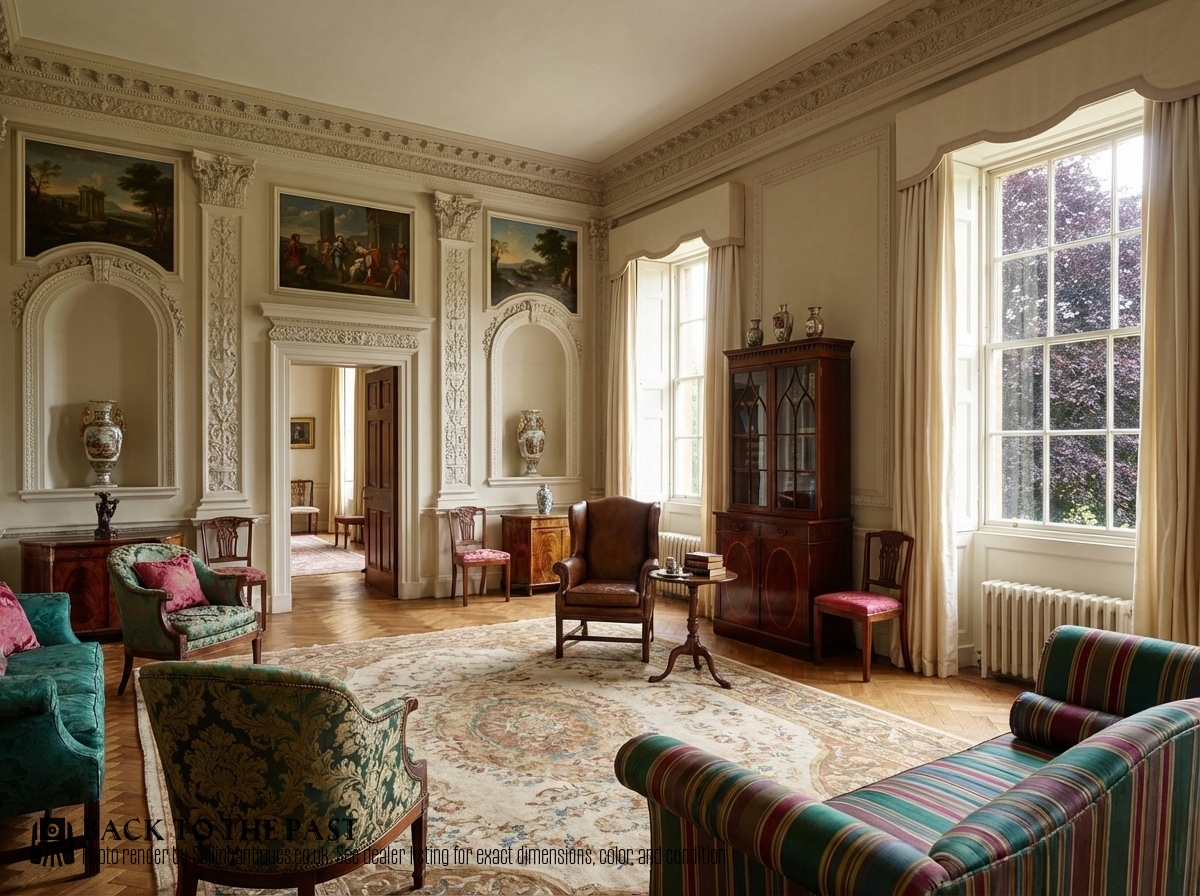
Cabinet makers constructed these library pieces using solid hardwoods like mahogany and oak, frequently selecting figured veneers to face larger expanses. The characteristic window patterns require precise joinery, shaping timber into delicate arches and intersecting bars that hold the glass panels securely.
Secondary materials such as brass fittings and fabric linings appear internally, while painted finishes like scrumbled pine offer alternative surface treatments. Artisans balanced structural weight with visual lightness, ensuring large breakfront carcasses could support heavy shelves while maintaining ornamental refinement.
Gothic Tracery Bookcase Retail Price Guide 2026
Typical asking prices for gothic tracery bookcase among the pieces listed under this phrase on Sellingantiques today, from the lower quarter to the upper quarter. They describe what is for sale here now, not the wider market.
Listings feature pieces spanning the nineteenth and early twentieth centuries, constructed in mahogany, oak, walnut, rosewood, and pine.
What varies in quality
The standard of execution in the timber work dictates the overall calibre of the piece, separating standard production from exceptional cabinet making. Sharply carved tracery and well-matched timber grains indicate greater maker investment than simpler sawn alternatives.
Proportion and scale also define the upper tier of these library furnishings, where balanced breakfront designs and harmonious hardware complement the architectural detailing without overwhelming the domestic interior.
Gillows
The Gothic Tracery Bookcase Glossary
- Tracery
- The stonework ornament of windows, translated here into timber glazing bars that divide the glass into pointed arches and geometric shapes. This feature defines the visual character of the cabinet.
- Breakfront
- A piece of furniture whose central section projects forward from the flanking wings, adding architectural depth and presence to large library cases.
- Secretaire
- A cabinet incorporating a fitted writing drawer with a drop-down front, combining desk space with book storage behind lower or upper doors.
- Glazing
- The fitting of glass panels into door frames, allowing books to remain visible and protected from dust within the enclosed shelves.
Gothic Tracery Bookcase: Frequently Asked Questions
What is a gothic tracery bookcase?
A large storage cabinet featuring wooden window-style framing inspired by medieval architecture.
These pieces use glazed doors and pointed arches to display books.
How do I date a gothic bookcase?
Examine the timber species, construction methods, and stylistic revival influences present in the carcass.
Nineteenth-century examples often employ solid mahogany or oak with distinct architectural hardware.
Where were these bookcases used?
They stood primarily in country house libraries, studies, and formal reception rooms.
Their substantial scale was designed to house large private collections of bound volumes.
What woods were commonly used?
Cabinet makers relied heavily on mahogany, oak, and walnut for structural stability and rich grain patterns.
Secondary woods and painted pine also appear in regional domestic examples.