

Edwardian Satinwood Display Cabinet
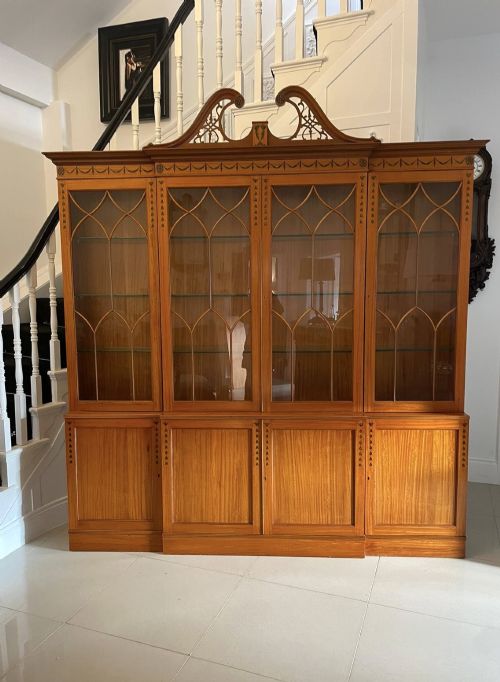
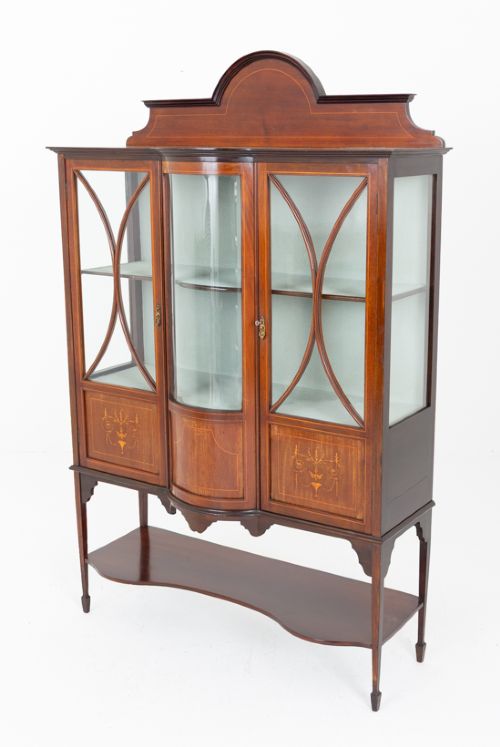
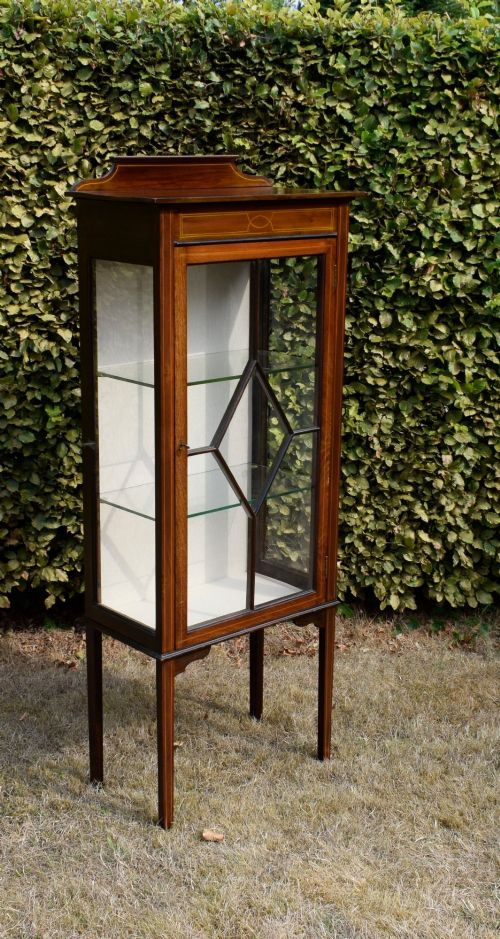
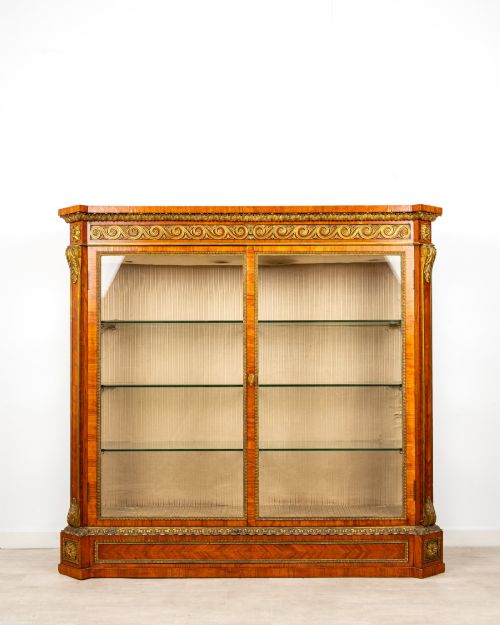
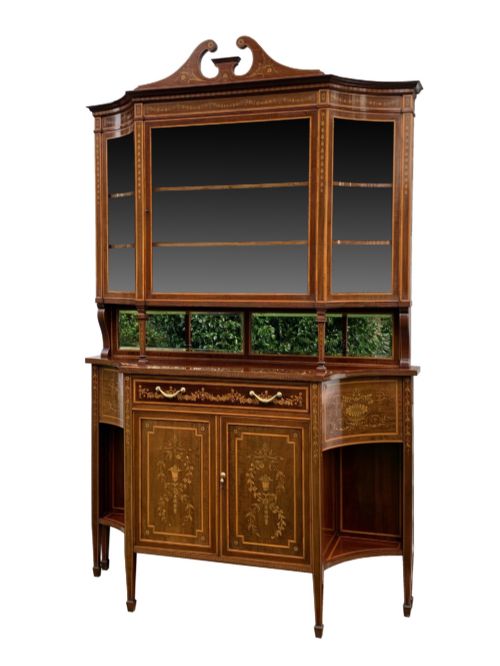
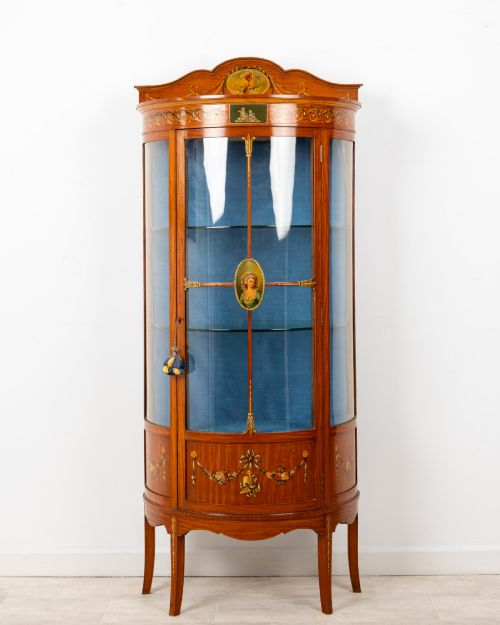
An Edwardian satinwood display cabinet brings light and refined timber grain to a room, designed originally to showcase porcelain and small ornaments behind glass.
Edwardian Satinwood Display Cabinet
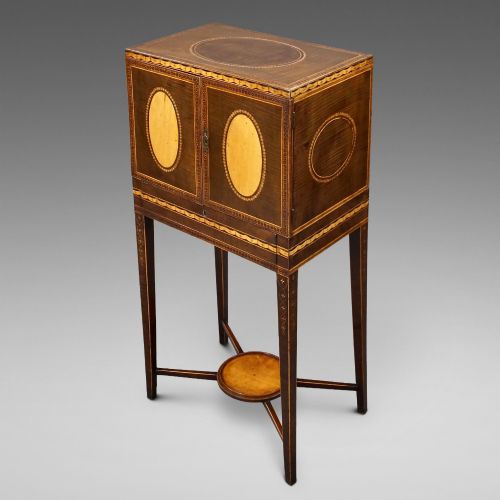
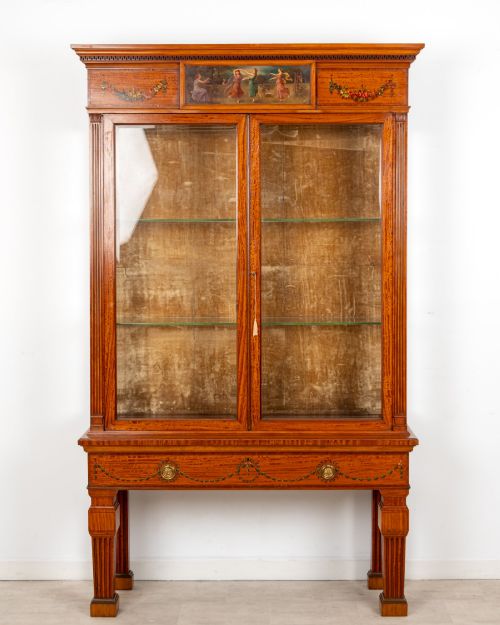
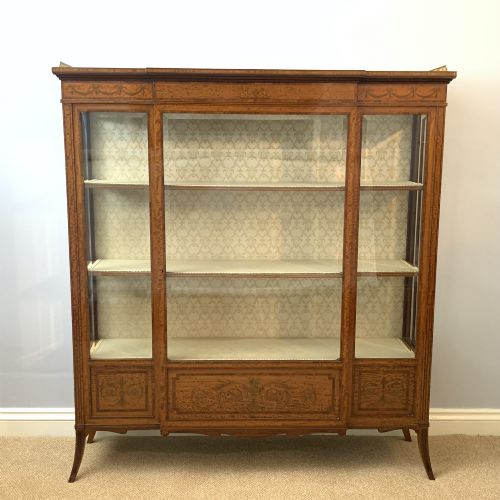
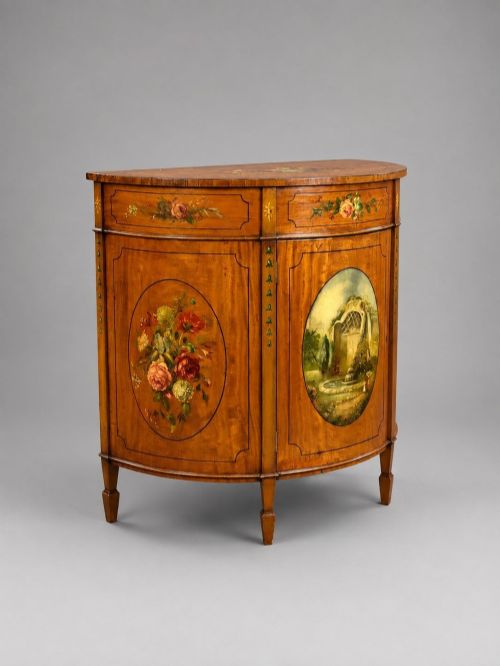
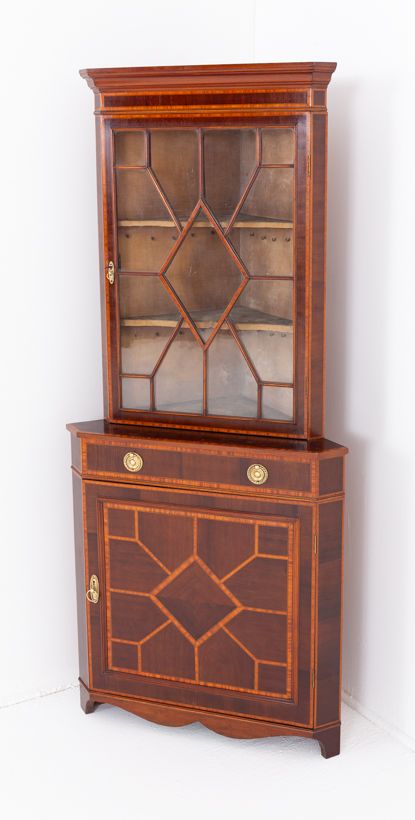
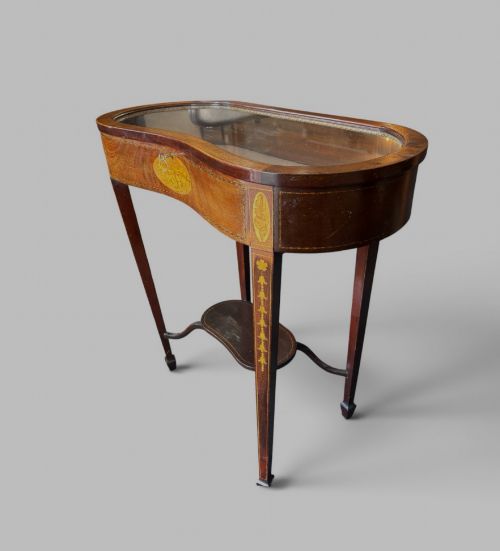
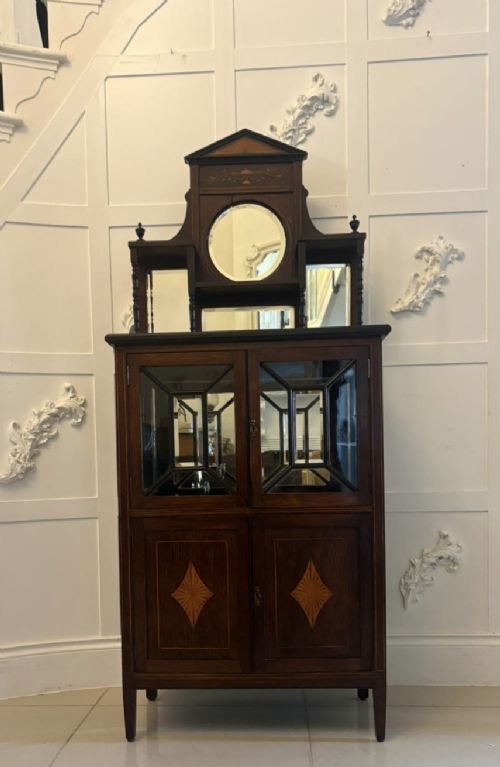
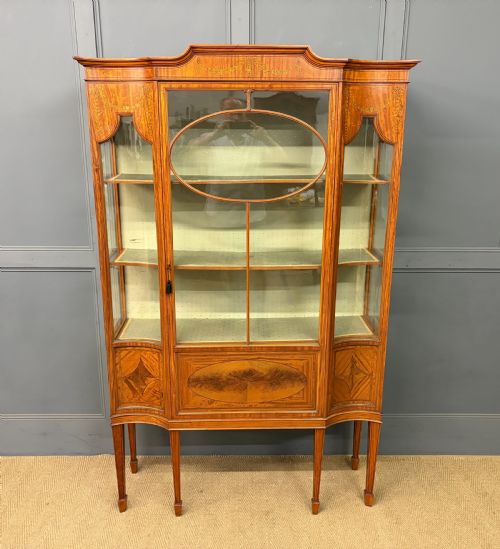
When searching for an edwardian satinwood display cabinet, buyers encounter pieces originating primarily from the late nineteenth and early twentieth centuries, spanning the Victorian, Edwardian, and Sheraton Revival periods. The forms appearing most frequently on this page include freestanding glazed cabinets, demi-lune shapes, corner units, and occasional display tables or cabinets on stands.
Makers working during this era drew heavily on eighteenth-century neoclassical vocabulary, producing upright vitrines and breakfront bookcases alongside smaller bijouterie tables. Satinwood often acts as the primary veneer or stringing material upon a mahogany carcase, accompanied by glass panels and mirrored backs designed to reflect light through displayed objects.
Materials and Construction
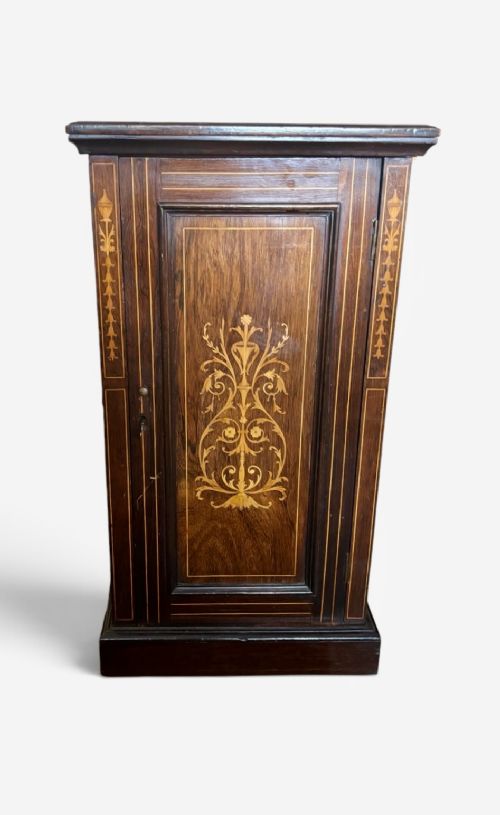
Cabinetmakers constructed these pieces using a solid timber frame, frequently mahogany, overlaid with figured satinwood veneers and delicate crossbanding in contrasting woods like boxwood. Marquetry and hand-painted floral or classical motifs frequently decorate the friezes and door panels, while internal shelving sits behind glazed doors framed in timber.
Hardware such as brass hinges, escutcheons, and locks secure the doors, and mirrored glass frequently lines the interior back panel to amplify ambient light. Joinery methods of the period relied on precise dovetailing for drawers and mortise-and-tenon frames to support the glass doors without warping.
Listings feature satinwood, mahogany, boxwood, and glass across Edwardian and Victorian display cabinets, bookcases, and tables.
Judging the Standard
The degree of hand-painted artistry and the complexity of the timber marquetry separate standard production from exceptional examples. Cabinetmakers who utilised dense, highly figured satinwood veneers and intricate crossbanding achieved a more luminous visual depth.
Structural refinement also dictates standard, visible in the sharpness of the glazing bars, the weight of the brass fittings, and the precision with which serpentine or demi-lune curves are executed. Maker attribution to known firms adds documentation that elevates certain pieces above anonymous workshop output.
Hampton & Sons·Edwards & Roberts·H. J. Hatfield & Sons·Maple & Co.·James Hicks·Jewell of Holborn·D. Hill Carter & Co.
The Edwardian Satinwood Display Cabinet Glossary
- Satinwood
- A pale, lustrous hardwood imported from tropical regions, valued for its reflective grain and smooth texture. It serves as both a solid timber and a decorative veneer.
- Sheraton Revival
- A late nineteenth and early twentieth-century design movement inspired by the neoclassical furniture of Thomas Sheraton. Pieces in this style feature straight tapered legs, delicate inlay, and symmetrical proportions.
- Demi-lune
- A half-moon shape used for the footprint of commodes and display cabinets designed to sit flat against a wall. This profile softens room angles.
- Marquetry
- The art of applying small pieces of wood veneer to a structure to form decorative patterns or pictorial scenes. Craftsmen cut contrasting timbers together to ensure tight joints.
- Vitrine
- A glass-fronted cabinet designed specifically for the display of curiosities, porcelain, or objects of art. The term derives from the French word for glass.
- Bijouterie table
- A glass-topped table or cabinet with a glazed compartment beneath the surface, intended for viewing small jewellery and collectables. These pieces often stand on slender tapered legs.
Edwardian Satinwood Display Cabinet: Frequently Asked Questions
What fits inside a display cabinet?
These cabinets suit porcelain figurines, silver tea services, glassware, and small collections of curiosities behind protective glass doors.
The shallow depth of many period pieces keeps collections visible without dominating the floor space of a modern room.
How do I care for satinwood furniture?
Keep timber surfaces away from direct sunlight and steady heat sources to prevent the veneers from drying or fading over time.
Dust gently with a dry, soft cloth and avoid commercial silicone polishes that can build up on fragile marquetry.
Where should I place a corner cabinet?
Corner units make effective use of neglected room junctions, bringing light and reflectivity into darker parts of an interior.
Ensure the floor is level so the glazed doors hang true and latch correctly against the frame.
How do I spot Sheraton Revival work?
Look for neoclassical motifs such as painted swags, bellflowers, urns, and stringing lines executed on satinwood or mahogany.
These pieces date from the late nineteenth or early twentieth century rather than the eighteenth-century original Georgian period.