



Warm Brown Satinwood Cabinet
A warm brown satinwood cabinet brings polished timber and refined inlay into a room, offering both display space and storage.
Warm Brown Satinwood Cabinet
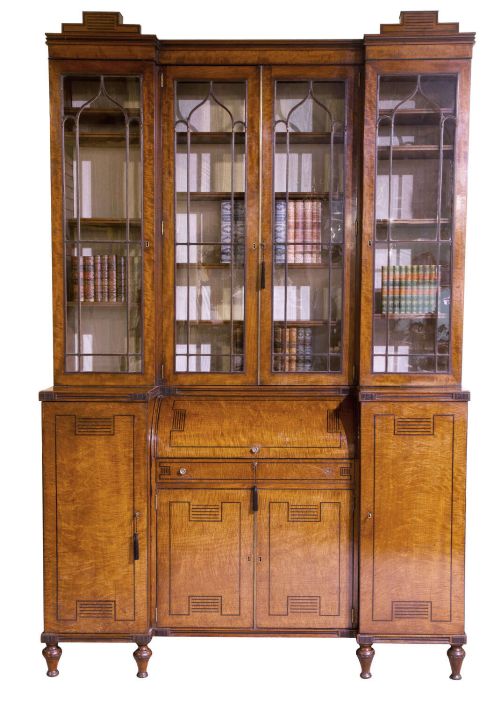
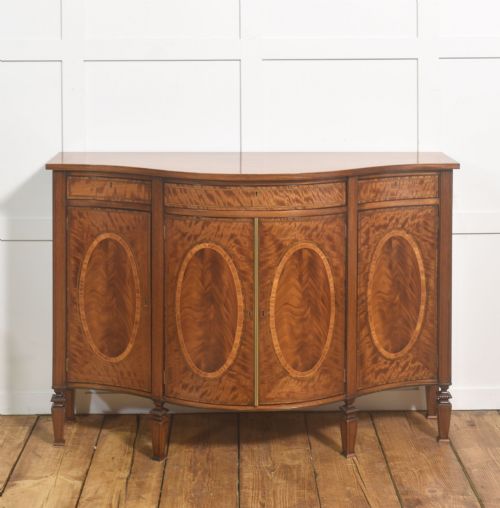
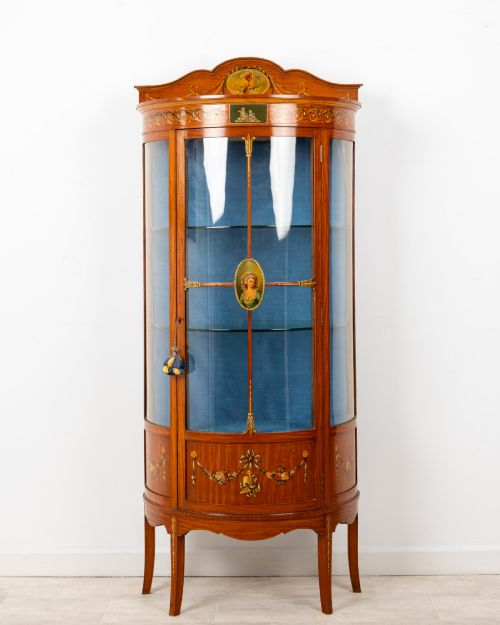
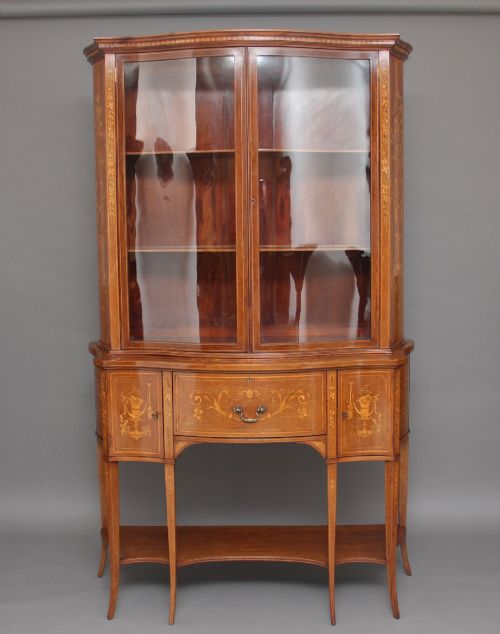
A warm brown satinwood cabinet encompasses display pieces, bookcases, sideboards, and chests of drawers from various periods including the Georgian, Victorian, and Edwardian eras. Buyers searching for a warm brown satinwood cabinet will encounter pieces shaped by Sheraton Revival, Chippendale Revival, and Louis XVI Revival styles, often featuring contrasting timber inlays.
Display cabinets and vitrines dominate the selection, alongside sideboards and secretaire bookcases that combine utility with decorative grain patterns. These items originate predominantly from the nineteenth and early twentieth centuries, reflecting the enduring popularity of satinwood furniture in domestic interiors.
Distinguishing quality in timber and detail
The standard of a satinwood cabinet rests upon the selection of the wood grain and the precision of the inlay work. Finer examples display carefully matched veneer patterns and crisp boxwood stringing that remains intact along the curves of bow-front profiles.
Structural refinement shows in the fitting of doors, the smooth operation of drawers, and the integration of brass mounts or painted details. Pieces that retain their original glass and hardware exhibit a greater degree of historical integrity.
Warm Brown Satinwood Cabinet Retail Price Guide 2026
Typical asking prices for warm brown satinwood cabinet among the pieces listed under this phrase on Sellingantiques today, from the lower quarter to the upper quarter. They describe what is for sale here now, not the wider market.
Stationery boxes in satinwood ensure that even writing paper enjoys a polished timber residence.
The Warm Brown Satinwood Cabinet Glossary
- Satinwood
- A durable timber known for its lustrous, golden-brown appearance and smooth grain. It forms the primary surface veneer on many revival and antique pieces.
- Bow-front
- A convex curved cabinet or sideboard front that projects outward. This shape requires skilled carpentry to bend wood and fit drawers accurately.
- Stringing
- Thin lines of contrasting wood, such as boxwood, inlaid into the surface of furniture. It creates decorative borders around panels and drawers.
- Vitrine
- A glass-fronted display cabinet designed for showing porcelain, books, or small decorative objects. These pieces often feature glazed side panels to let in light.
- Frieze
- The flat decorative band running along the upper part of a cabinet or bookcase beneath the cornice. It frequently incorporates inlaid patterns.
Warm Brown Satinwood Cabinet: Frequently Asked Questions
What periods do these cabinets come from?
The pieces span from the Georgian era through the Victorian period and into Edwardian times. Many examples date from around nineteen hundred, reflecting revivalist interest in earlier eighteenth-century designs.
Makers of these later periods drew inspiration from Sheraton and Chippendale styles, adapting them for Edwardian and Victorian homes using satinwood and mahogany.
How do I care for satinwood surfaces?
Satinwood furniture benefits from gentle dusting with a soft, dry cloth to protect the polished finish and delicate inlays. Avoid placing pieces in direct sunlight or near heat sources to prevent the wood from drying out.
Applying a traditional beeswax polish occasionally helps nourish the timber and maintain its characteristic warm glow without building up heavy residues.
Are these cabinets suitable for small rooms?
Certain forms, such as single-door display cabinets or corner cupboards, fit neatly into compact spaces while offering vertical storage and display capacity. Wall-adjacent sideboards and slender bookcases also provide function without dominating a room.
The light-reflecting quality of polished satinwood and glass doors helps brighten smaller interiors rather than weighing them down visually.