

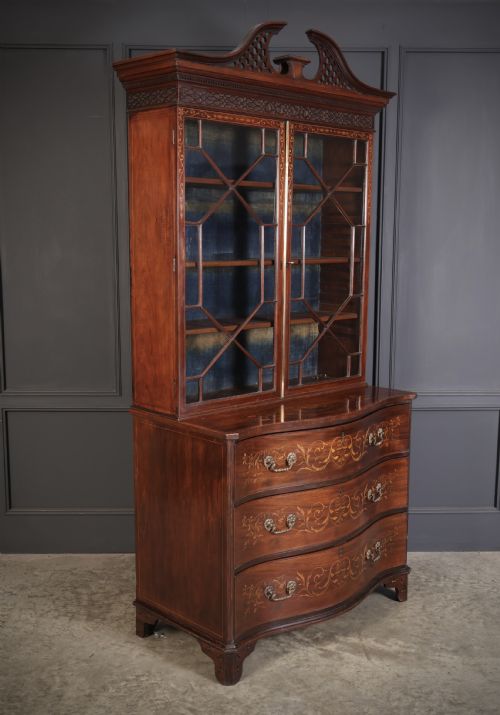


Chippendale Style Glazed Cabinet
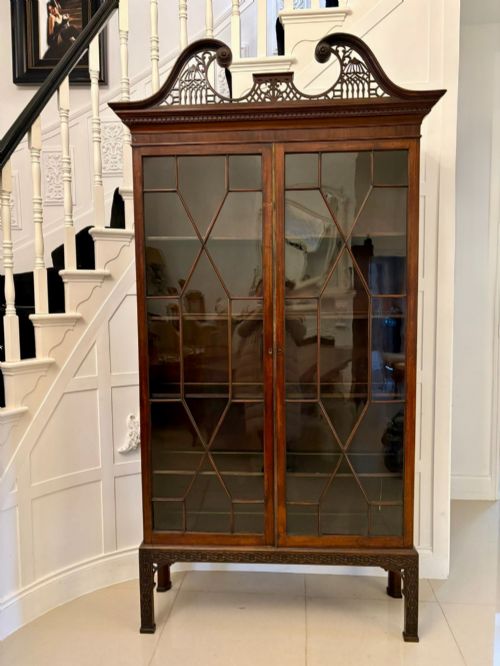
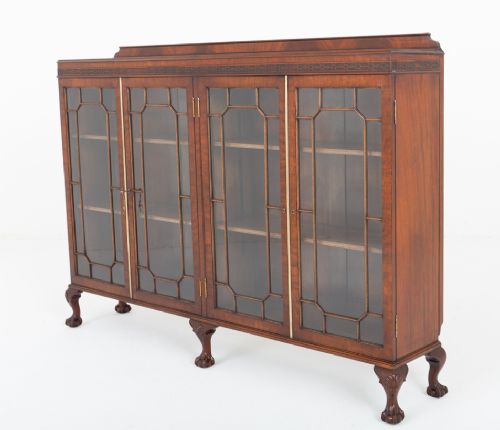
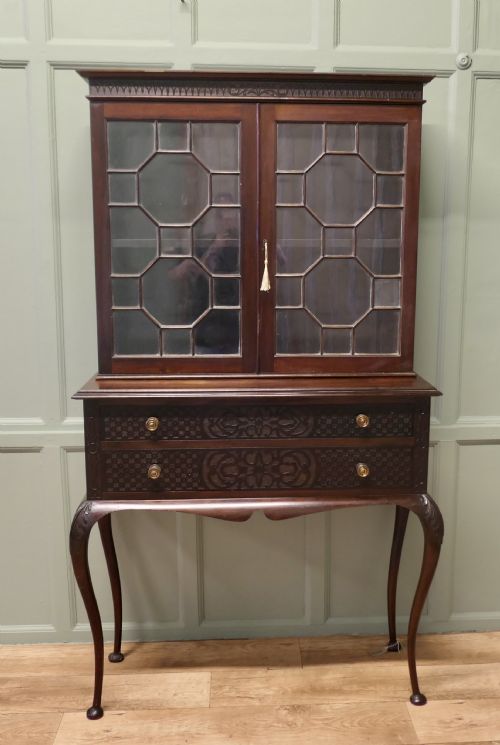
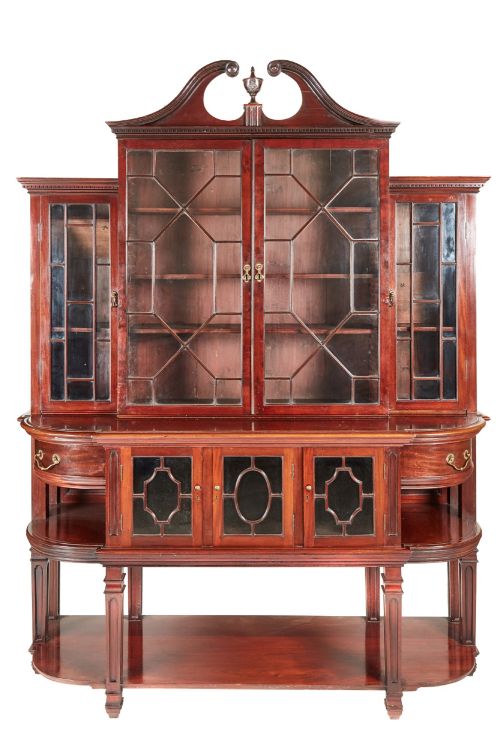
These chippendale style glazed cabinet pieces combine fine timber frames with glass fronts, offering both display and storage for books or collections.
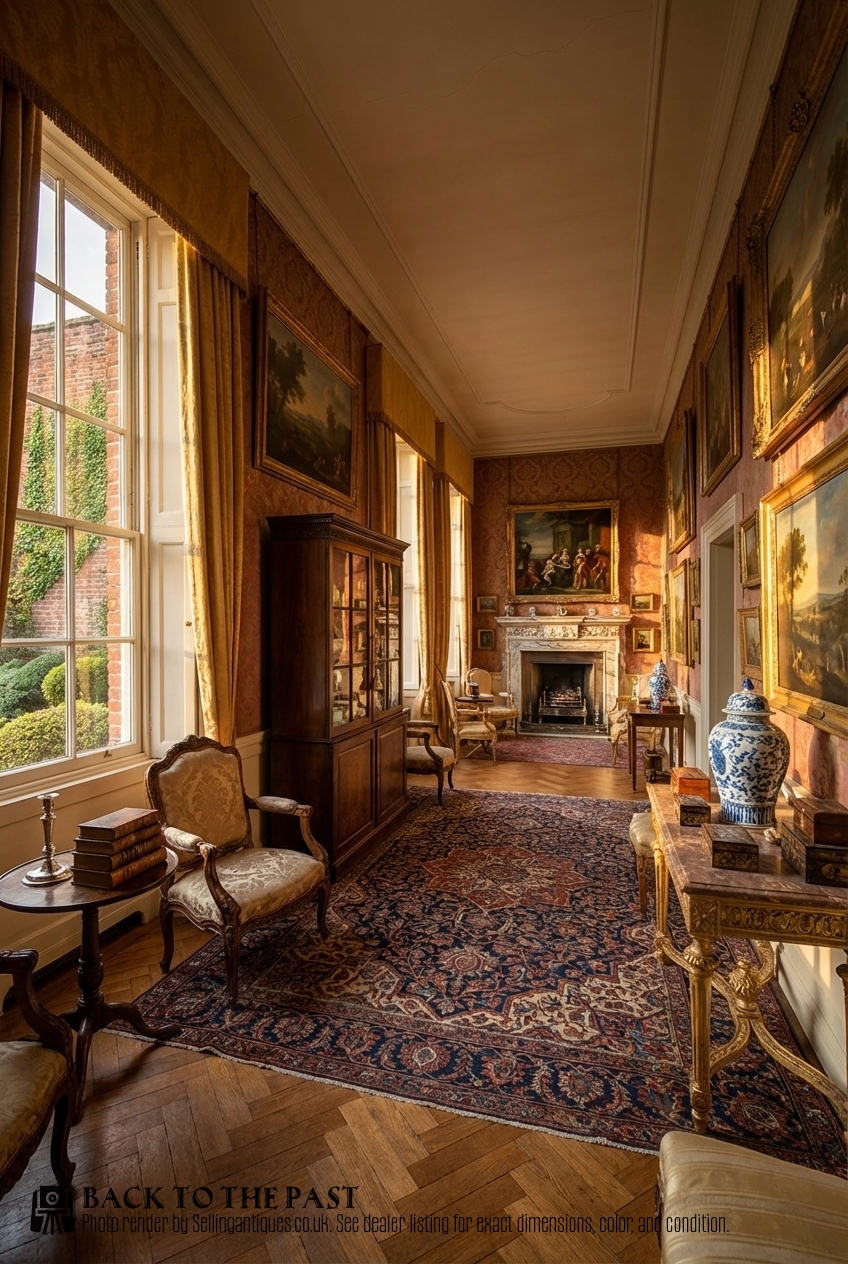
Chippendale Style Glazed Cabinet
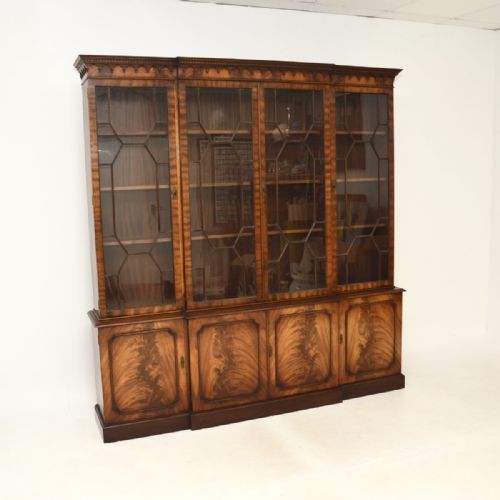
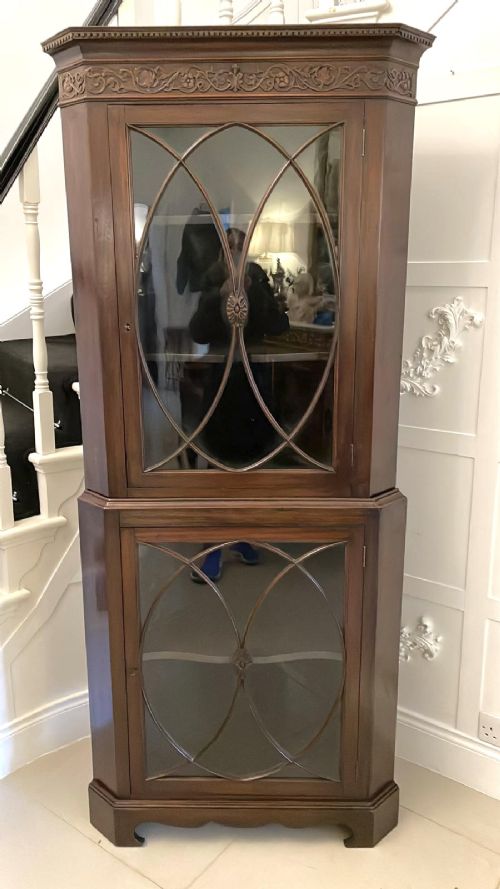
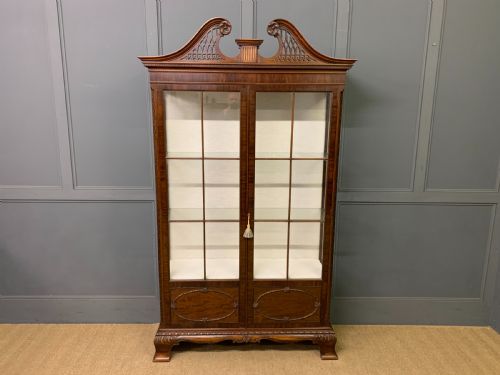
A chippendale style glazed cabinet brings together timber framing and glass panels to house books, ceramics, or display items within a room. When you examine this selection, you encounter forms ranging from tall breakfront bookcases and corner units to side cabinets and miniature display pieces.
The material record spans authentic 18th century examples alongside 19th century Victorian pieces, Edwardian editions, and later revivals from the 1900s through to the 1930s. Georgian periods provide the foundational proportions, while subsequent revival eras reinterpret those original designs with varied joinery and scale.
Display cabinets and bookcases dominate the available inventory, frequently incorporating glazed doors with astragal bars. You also find specialised forms such as secretaire bureau bookcases and bijouterie display tables appearing across the Victorian and Edwardian periods.
Construction and material techniques
Mahogany serves as the primary structural timber across the vast majority of these cabinets, providing both strength and a consistent reddish-brown ground for carving. Workshops occasionally introduced satinwood, marquetry inlay, and oak for secondary framing or decorative banding.
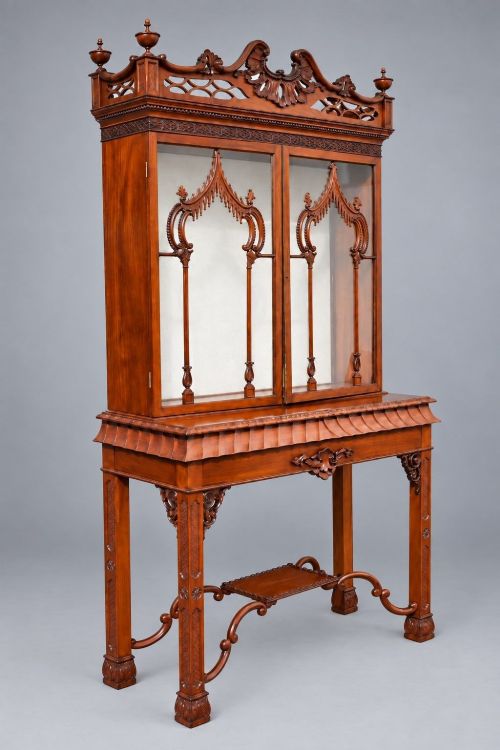
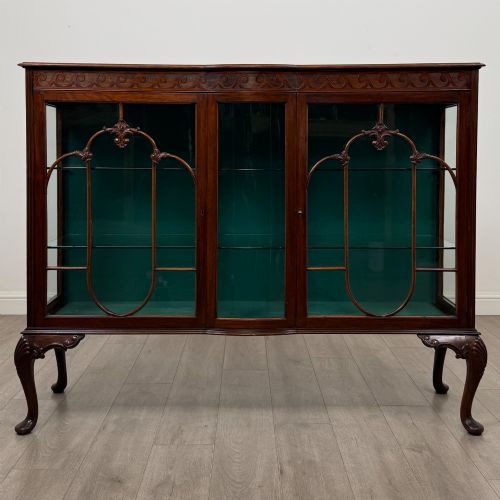
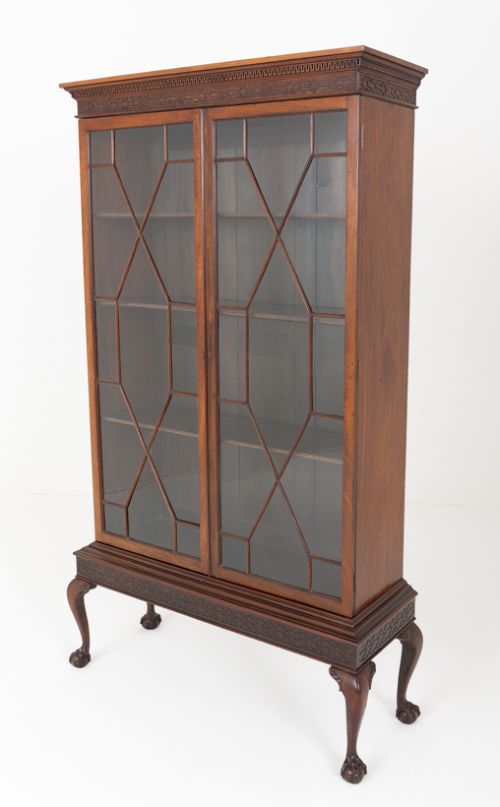
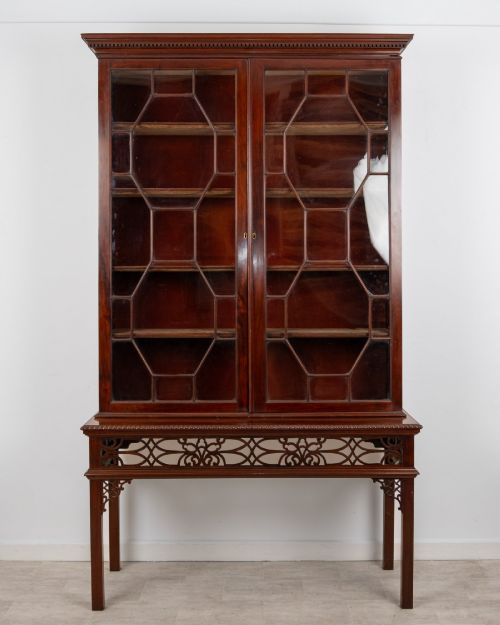
Glass panels are held within glazed doors, often utilising intricate wooden astragal bars arranged in geometric or Gothic revival patterns. Brass hardware secures the doors and drawers, while internal shelves frequently accommodate fabric lining to showcase displayed objects.
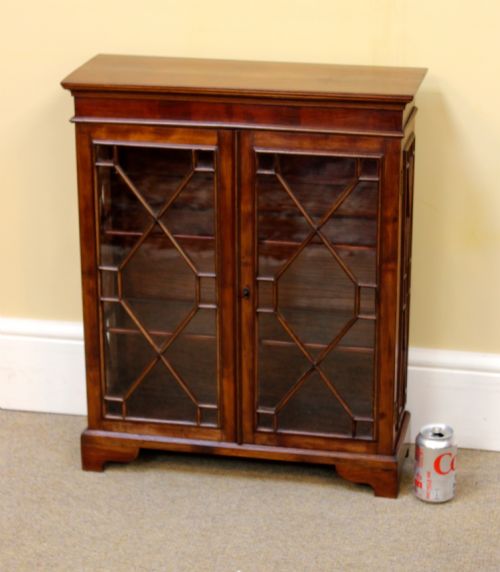
Miniature cabinets appear among the large breakfronts, offering compact display space for the most diminutive collections.
Craftsmanship and finish distinctions
The standard of carving on the mahogany frame separates standard production from exceptional work, particularly on pieces featuring pierced fretwork or intricate Chinese Chippendale motifs. Crisp detailing along the cornice and feet demonstrates the maker's control over the timber.
Proportion and the precision of the astragal glazing bars dictate visual balance in a breakfront bookcase or display cabinet. Fine examples maintain structural integrity across large expanses like four-door breakfronts without distortion in the glass or framing.
Hille
The Chippendale Style Glazed Cabinet Glossary
- Astragal glazing
- Timber bars that divide a glass window into smaller panes within a door. These intricate wooden divisions frame the contents while lending structural support to large glazed areas.
- Breakfront
- A piece of furniture where the central section projects forward from the flanking wings. This architectural layout creates depth and shadow across large bookcases and side cabinets.
- Secretaire
- A cabinet or bookcase incorporating a pull-down writing drawer fitted with internal small drawers and pigeonholes. It merges a practical writing desk with upper display shelving.
- Bijouterie cabinet
- A glazed display table or cabinet designed specifically for holding small precious objects and curiosities. They often feature fabric-lined interiors and glass tops or sides for all-round viewing.
- Demi-lune
- A half-moon shape used for the footprint of specialised side cabinets and console units. This curved profile allows the cabinet to sit flush against a wall while softening room angles.
Chippendale Style Glazed Cabinet: Frequently Asked Questions
What is a chippendale style glazed cabinet?
A chippendale style glazed cabinet is a timber storage and display piece featuring glass doors, drawing inspiration from 18th century design patterns. These units frequently incorporate mahogany frames, carved detailing, and astragal glazing.
They appear in various forms including bookcases, corner units, and breakfront cabinets across Georgian, Victorian, and later revival periods.
How do I distinguish original Georgian from revival pieces?
Original 18th century pieces exhibit period construction methods, timber ageing, and specific joinery traits characteristic of 1780 or earlier workshops. Revival pieces from the Victorian era or the 1900s reflect later interpretations of those proportions.
Examining the internal drawer linings, backboards, and secondary woods helps clarify whether a piece dates to the Georgian period or a subsequent 19th or 20th century revival.
Where were these cabinets placed in a home?
These cabinets served primarily in libraries, formal drawing rooms, and dining spaces to house bound volumes and prized collections. Tall bookcases stood against primary walls, while corner cabinets utilised unused room angles.
Smaller bijouterie tables and hanging cabinets offered display space for delicate ornaments in more intimate sitting areas.
How should I care for a mahogany display cabinet?
Maintain a stable indoor climate away from direct sunlight and heat sources to protect the mahogany timber and fabric linings. Regular dusting with a soft, dry cloth preserves the polished surface.
Avoid excessive moisture and heavy chemical polishes to ensure the antique finish and brass hardware remain intact over time.