





Sheraton Style Display Case
A sheraton style display case brings refined symmetry to a room, offering glazed panels and delicate woodwork to showcase cherished possessions.
Sheraton Style Display Case
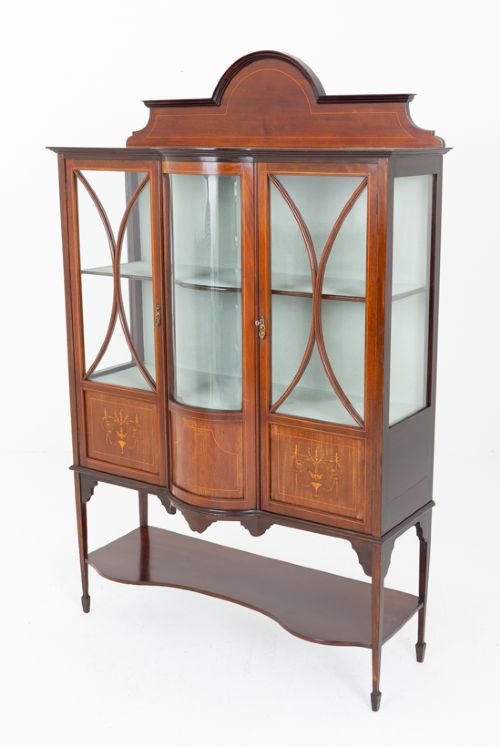
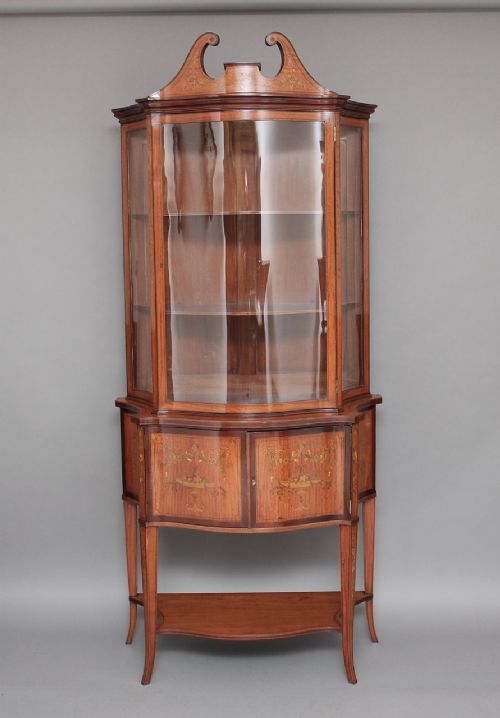
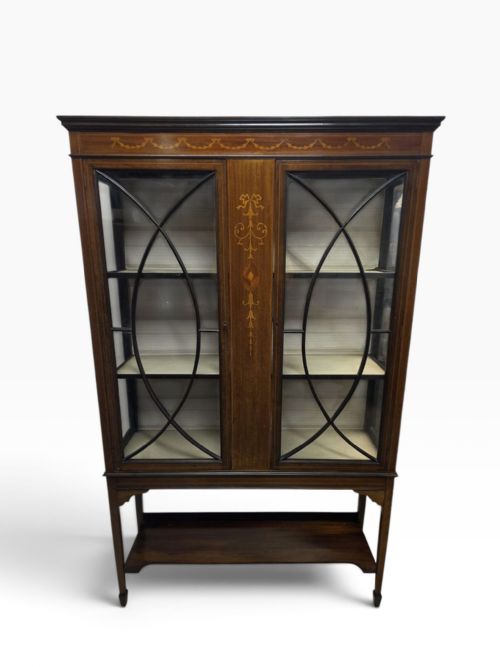
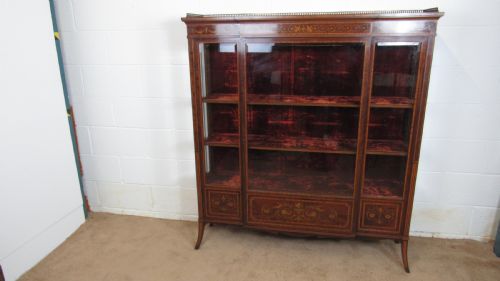
When you search for a sheraton style display case, you are looking at sophisticated cabinetry designed to exhibit porcelain, silver and curiosities behind glass. These pieces draw upon the neoclassical design vocabulary associated with the late eighteenth century, interpreted through later revivals.
The versions you are most likely to meet on this page date from the Edwardian period, nineteen hundred, the late Victorian era, and the nineteenth century. They appear as freestanding display cabinets, corner cabinets, and cabinets on stand, suited to both wall placement and corner integration.
Makers of these items favoured proportions derived from classical architecture, often employing upright rectangular carcasses or serpentine fronts. Cabinets and cupboards from this lineage frequently combine display functions with enclosed storage in lower sections.
Construction and materials
Makers built these pieces primarily using mahogany and satinwood, often selecting fiddle back mahogany for its rippled grain pattern. Frameworks were constructed with structural soundness before applying fine veneers and decorative elements.
Sheraton Style Display Case Retail Price Guide 2026
Typical asking prices for sheraton style display case among the pieces listed under this phrase on Sellingantiques today, from the lower quarter to the upper quarter. They describe what is for sale here now, not the wider market.
Listings feature mahogany, satinwood, boxwood inlay, and fabric linings across Edwardian and nineteenth century periods.
Judging quality in these cabinets
Quality rests upon the crispness of the inlay work and the selection of timber figures, where fiddle back mahogany and carefully matched satinwood indicate higher ambition. Finer pieces demonstrate precise joinery in the glazing bars and harmonious proportions across the entire facade.
The refinement of painted decorations and the quality of cast brass fittings further separate standard workshop output from exceptional examples. Interior detailing, such as fitted fabric and mirrored backs, also signals the level of craftsmanship invested in the construction.
The Sheraton Style Display Case Glossary
- Sheraton Revival
- A design movement spanning the late nineteenth and early twentieth centuries that reinterpreted the neoclassical furniture forms associated with Thomas Sheraton. It relies heavily on satinwood inlay, tapered legs, and balanced geometric shapes.
- Bijouterie cabinet
- A specialised display case featuring a glazed top compartment designed for viewing small precious items, medals, or jewellery from above. These often stand on slender legs to elevate the viewing surface.
- Serpentine front
- A cabinet front featuring a convex centre flanked by concave curves, creating an undulating movement across the surface. This technique requires advanced woodworking skill to shape both wood and glass.
- Inlay
- A decorative technique where pieces of contrasting wood, such as boxwood and satinwood, are inserted into recesses cut into the primary surface. It creates flat ornamentation along cornices, doors, and legs.
- Corner cabinet
- A storage or display unit specifically shaped to fit into the ninety degree angle of a room. These make efficient use of space while providing glazed display doors.
Sheraton Style Display Case: Frequently Asked Questions
What periods do these cabinets come from?
The pieces listed span the Edwardian era, nineteen hundred, and the nineteenth century, including late Victorian items. They represent revival movements rather than original eighteenth century production.
These dates reflect when the furniture was actually manufactured, capturing the revived interest in neoclassical cabinet making during later decades.
How were corner cabinets used?
Corner cabinets were placed in room corners to display ceramic collections and glassware without obstructing floor space. Their triangular footprint made efficient use of domestic interiors.
Upper glazed sections showcased prized tableware, while lower cupboard doors often concealed utility storage.
How do I care for satinwood?
Satinwood requires protection from direct sunlight to prevent the timber from darkening or fading unevenly over time. Regular dusting with a soft, dry cloth preserves the polished finish.
Avoid placing these pieces near heat sources which can cause delicate inlays to lift from the mahogany carcase.