


Two Part Bookcase
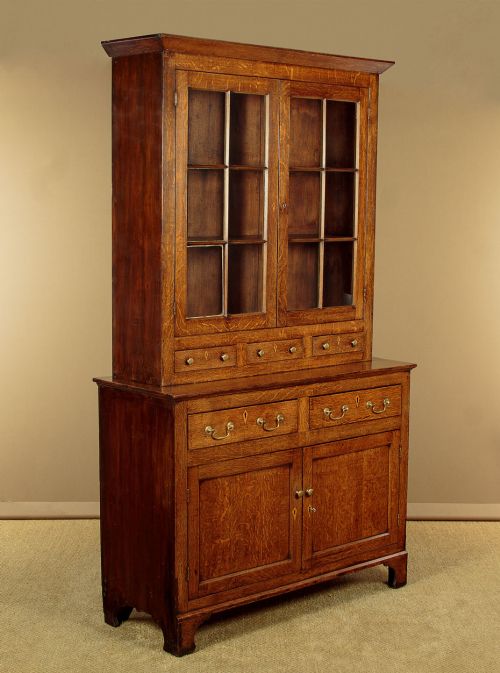
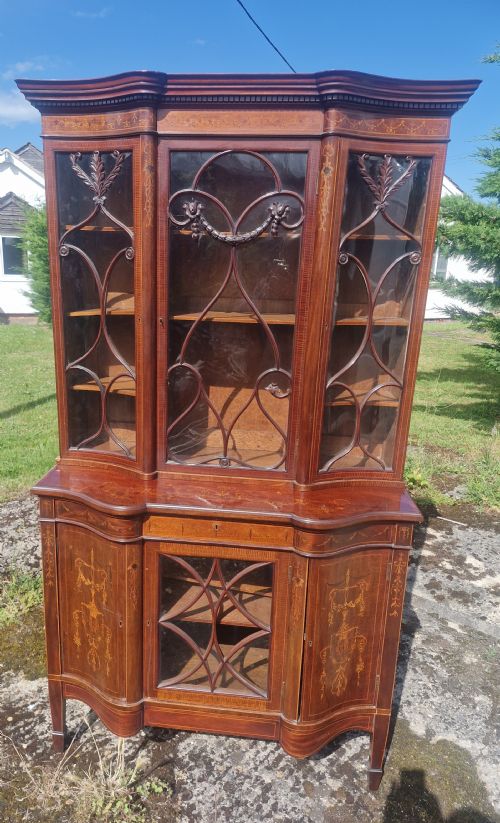
A two part bookcase gives a tall library structure the practical advantage of a sectional build for moving room to room.
Two Part Bookcase
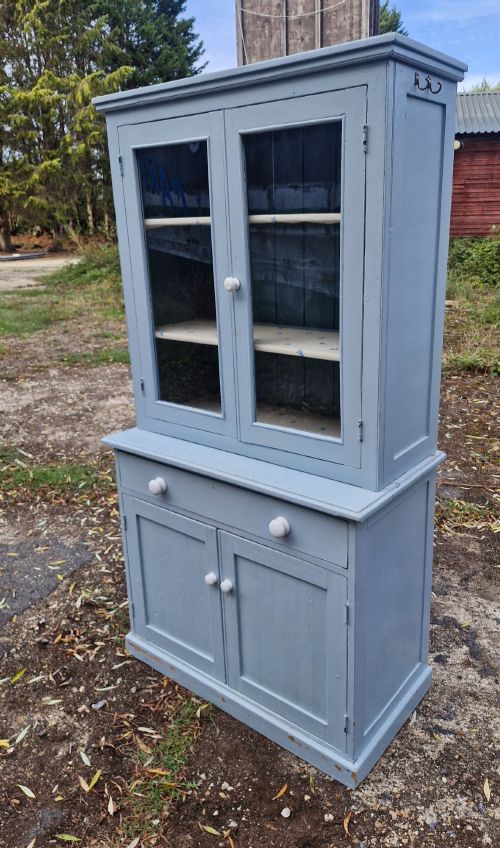
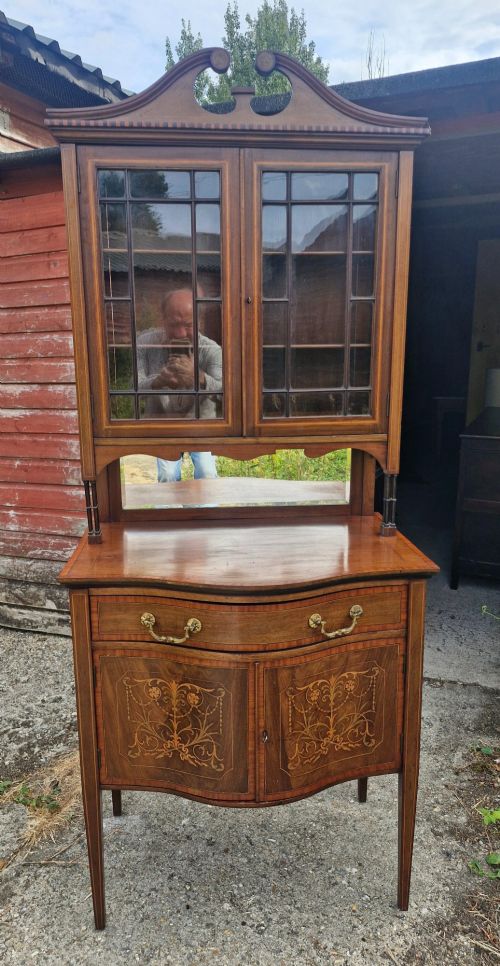
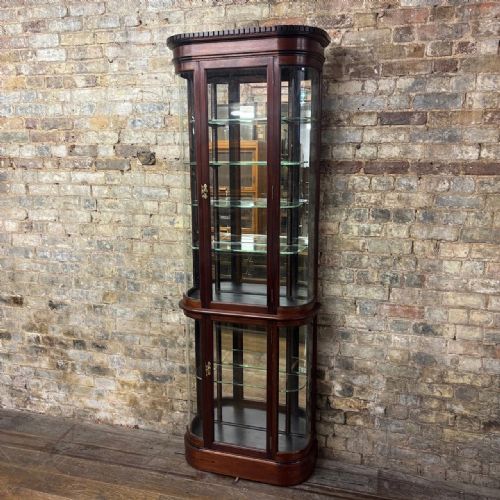
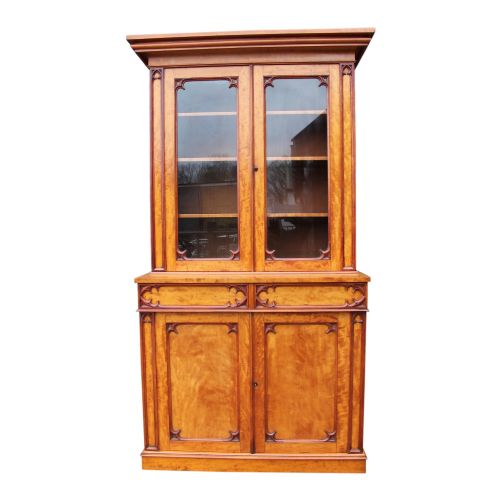
A two part bookcase divides into an upper section for books or display and a lower section formed of drawers, cupboards, or a bureau base. The pieces span periods from the eighteenth century through to the early twentieth century, taking forms such as glazed display cabinets, kitchen dressers, and library bookcases.
Most examples met on this page belong to the Victorian and Edwardian eras, alongside Georgian and early twentieth-century pieces in mahogany, oak, pine, and walnut. Styles range from plain English country and rustic farmhouse to Gothic Revival, Regency, and Queen Anne revival.
How they were made
Construction relies heavily on timbers such as mahogany, oak, pine, and walnut, often ornamented with satinwood inlay or finished with glass doors and brass hardware. Cabinetmakers built these large forms in two separate modules to ease transport and placement within a room.
Interior fittings frequently include adjustable shelves and stationary compartments, while lower sections incorporate panelled doors, drawers, or drop fronts for writing surfaces. The joinery combines structural softwood carcases with fine hardwood veneers or solid timber fronts.
Two Part Bookcase Retail Price Guide 2026
Typical asking prices for two part bookcase among the pieces listed under this phrase on Sellingantiques today, from the lower quarter to the upper quarter. They describe what is for sale here now, not the wider market.
Listings span the eighteenth, nineteenth, and early twentieth centuries, featuring woods such as mahogany, oak, walnut, satinwood, and pine.
What varies in quality
The choice of primary timber and secondary wood sets the baseline of a piece, with dense Spanish mahogany or figured walnut sitting above painted pine or standard oak. Finer work shows in the precision of satinwood stringing, the neat turning of bun handles, and the clarity of glazed door frames.
Structural integrity depends on the original pairing of the upper and lower modules, the stability of adjustable shelf mechanisms, and the retention of original brass fittings and working locks with keys.
The Two Part Bookcase Glossary
- Two-part bookcase
- A tall storage unit constructed in an upper and lower module that stack together. This sectional design facilitates transport and positioning.
- Bureau bookcase
- A cabinet featuring a sloping fall-front writing desk in the lower section combined with shelving above. Fitted interiors inside the drop-front organise stationery and small documents.
- Glazed display cabinet
- A cabinet featuring glass panelled doors on the upper section to protect books or collections while keeping them visible. These often include adjustable wooden shelving.
- Breakfront
- A large piece of furniture whose central section projects forward from the flanking wings. This architectural arrangement creates depth and visual balance on substantial library pieces.
- Cwpwrdd Gwydr
- A traditional Welsh term for a glazed cupboard or dresser. These regional pieces often utilise native oak.
Two Part Bookcase: Frequently Asked Questions
Why are they built in two parts?
Splitting the structure into an upper and lower module makes a tall piece manageable to transport up staircases and manoeuvre through domestic doorways.
The stacked design also distributes the heavy weight of books and timber across a sturdier base cabinet or chest.
How do I adjust the shelves?
Many period bookcases feature traditional wooden Spur shelving or rows of peg holes inside the upper cabinet walls.
Moving the small wooden supports allows you to alter shelf heights to accommodate volumes of varying sizes.
Can I separate the two sections?
The upper and lower modules rest together by gravity, often secured by alignment pins or moulding rather than heavy fixings.
While they can be separated for moving, the top section is heavy and requires two people to lift it safely.
What is a bureau base?
A bureau base incorporates a hinged writing flap that pulls down to reveal small drawers and pigeonholes for correspondence.
This lower desk section combines a workspace with the enclosed bookcase storage positioned directly above it.
How do I care for the timber?
Keep wooden surfaces away from direct heat sources and strong sunlight to prevent the mahogany, oak, or walnut from drying out.
Apply a traditional beeswax polish occasionally to maintain the sheen and nourish the grain.