
George III Cabinet
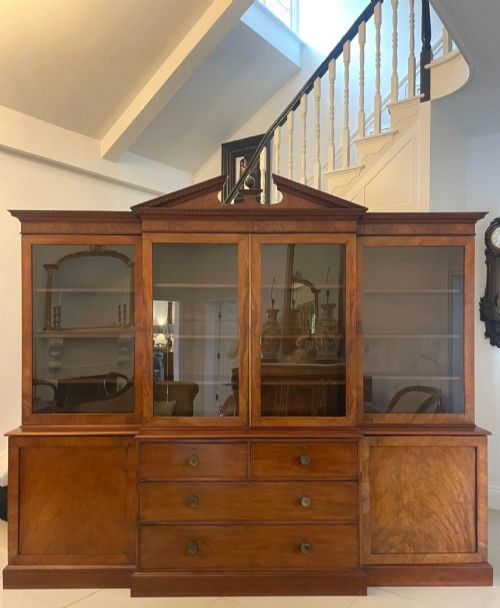
A george iii cabinet brings the balanced proportions and refined timberwork of the late eighteenth century directly into a room.

George III Cabinet
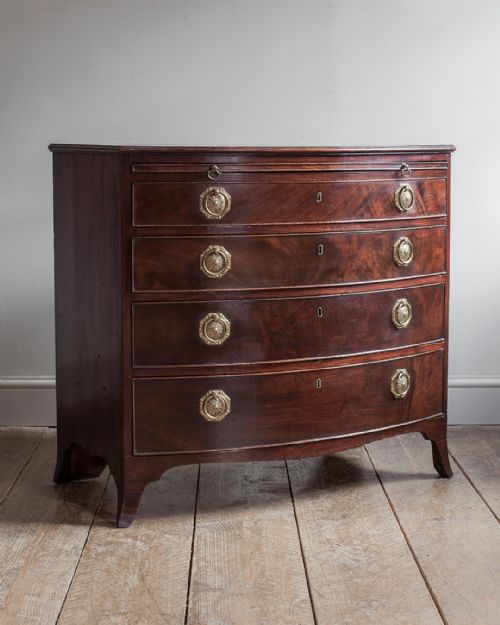
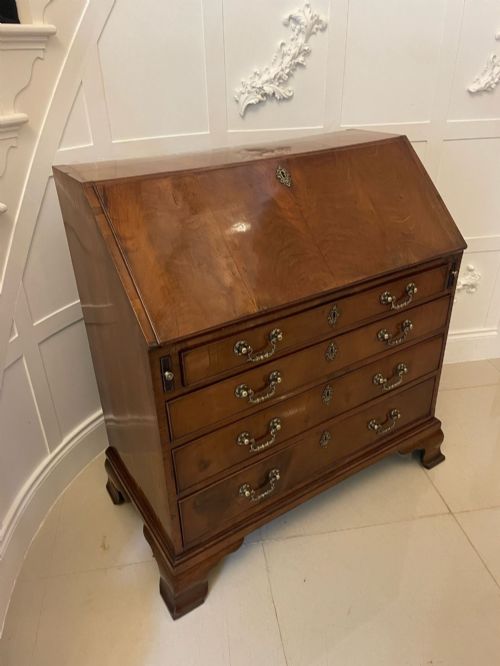
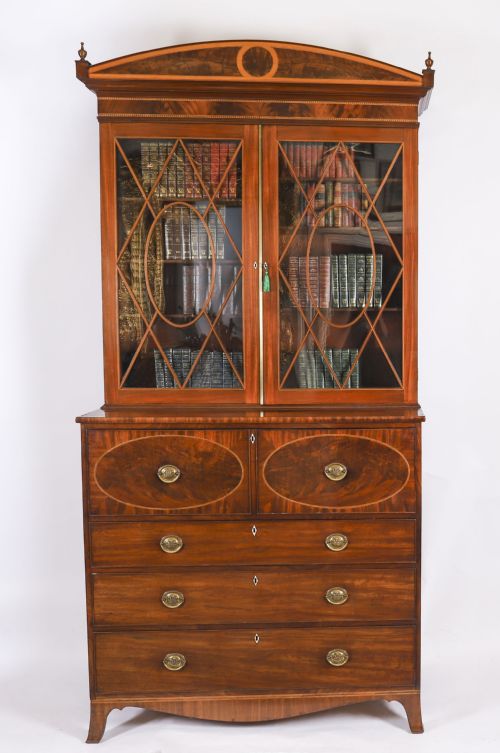
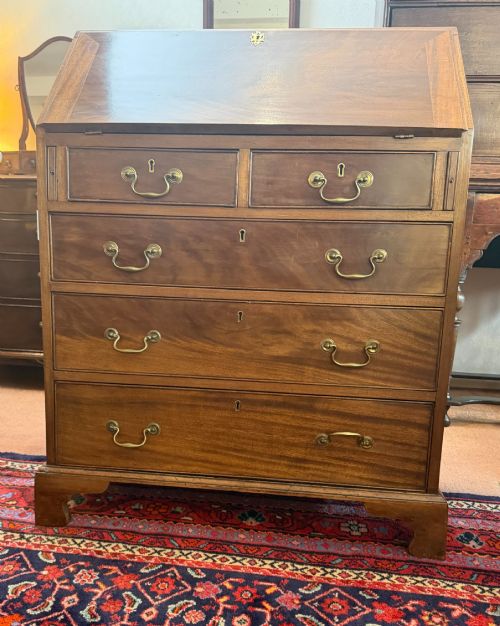
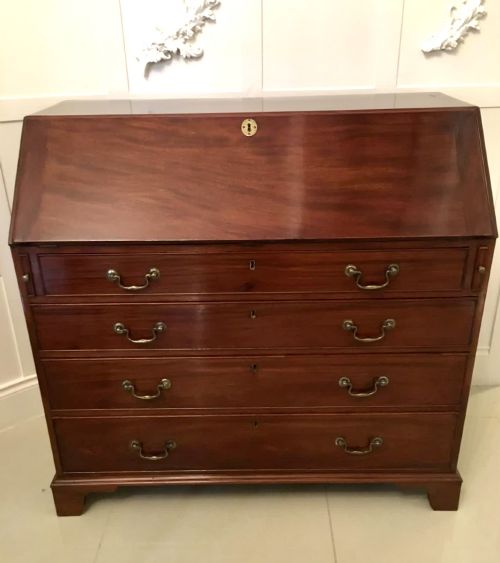
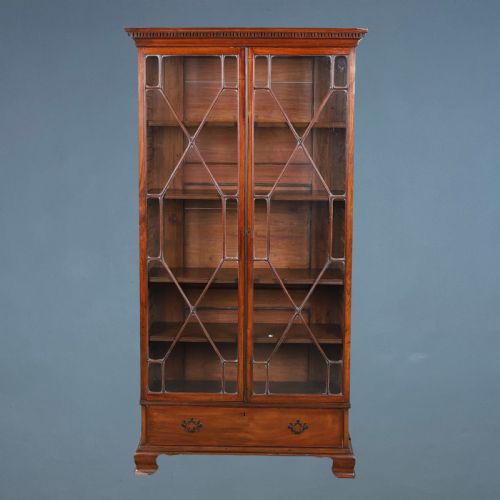
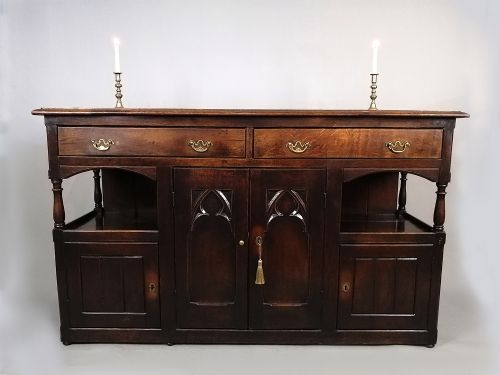
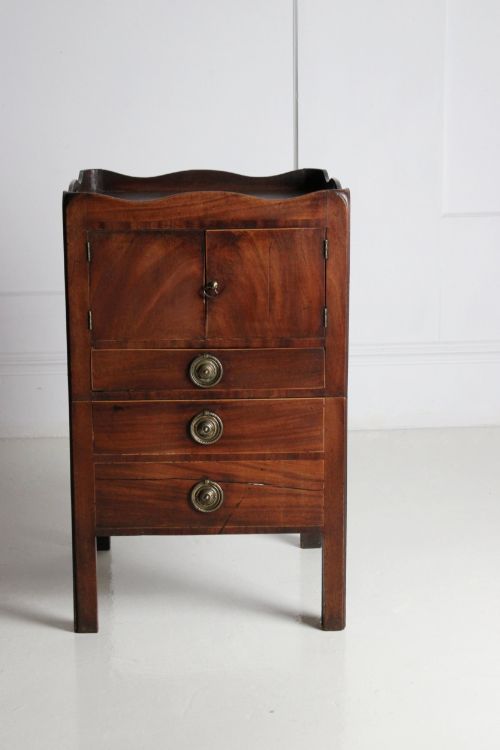
A george iii cabinet encompasses a wide variety of storage forms originating from the Georgian period, including bookcases, corner cupboards, bedside cabinets, and secretaire bookcases.
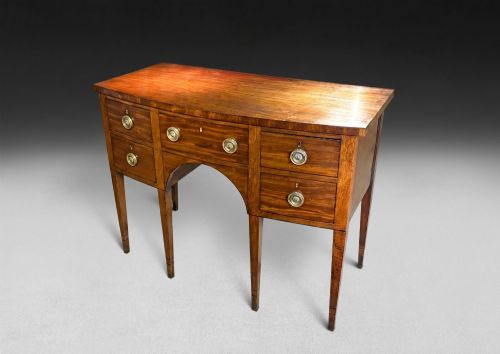
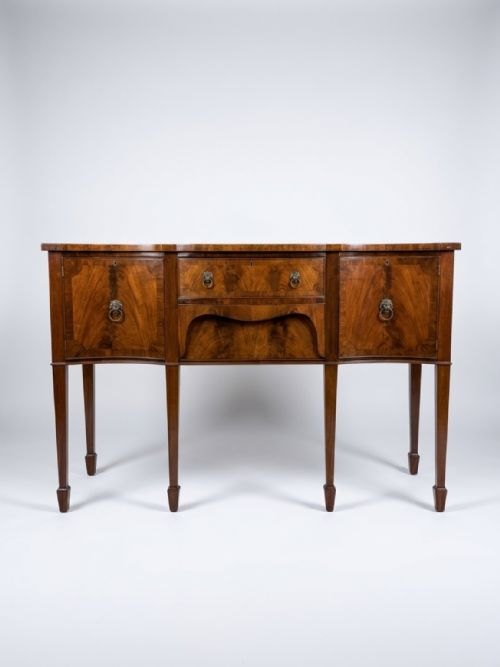
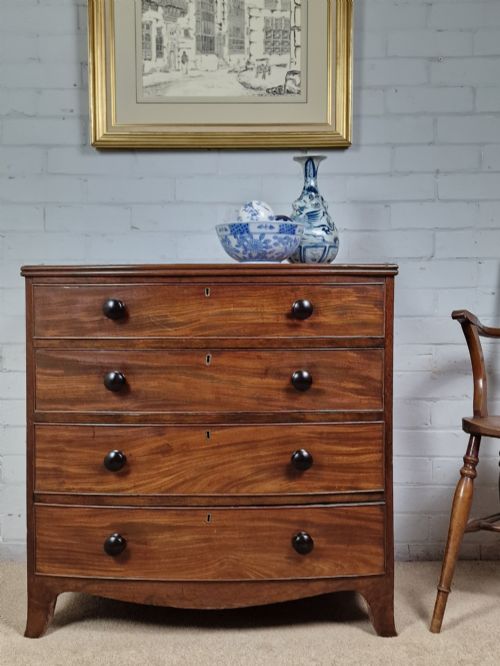
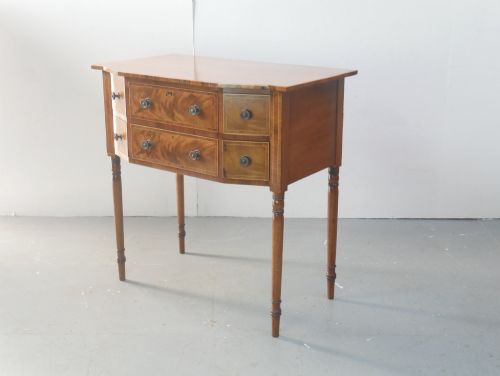
The version most commonly met on this page is constructed from mahogany, often displaying sophisticated configuration such as bow fronts or breakfront layouts.
These pieces served practical domestic functions in period interiors, from housing books and writing materials to storing linen and precious items.
Judging quality in a george iii cabinet
The standard of timber selection defines the upper tier, where figured mahogany or plum pudding mahogany displays rich depth and consistent grain across the entire surface.
Refinement in secondary details, such as crispness of boxwood stringing, original brass-bound edges, and well-executed glazing bars, separates standard utility pieces from exceptional workshop output.
Travelling apothecary cabinets reveal that eighteenth-century medical storage involved remarkably compact brass-bound compartments.
Thomas Chippendale·Gillows
The George III Cabinet Glossary
- Secretaire
- A desk form featuring a pull-down writing flap that conceals small drawers and pigeonholes within a larger cabinet structure.
- Breakfront
- A cabinet design where the central section projects forward from the flanking wings, creating visual depth and architectural presence.
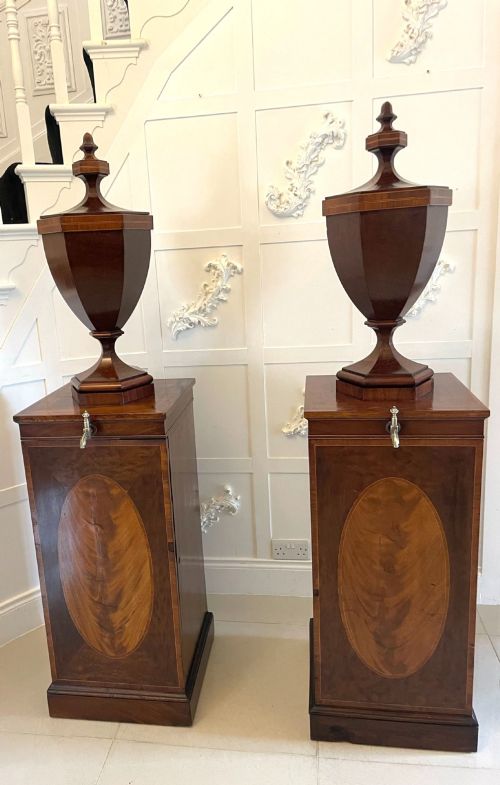
- Cellaret
- A wine cooler or storage chest, frequently brass-bound and lined, designed to hold bottles securely near the dining area.
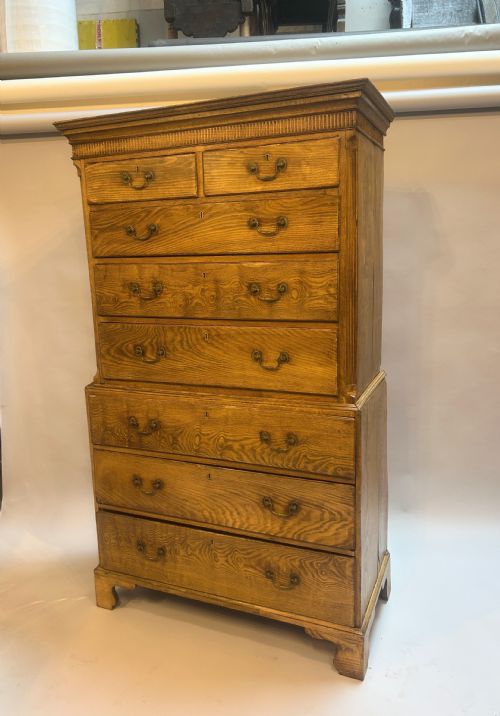
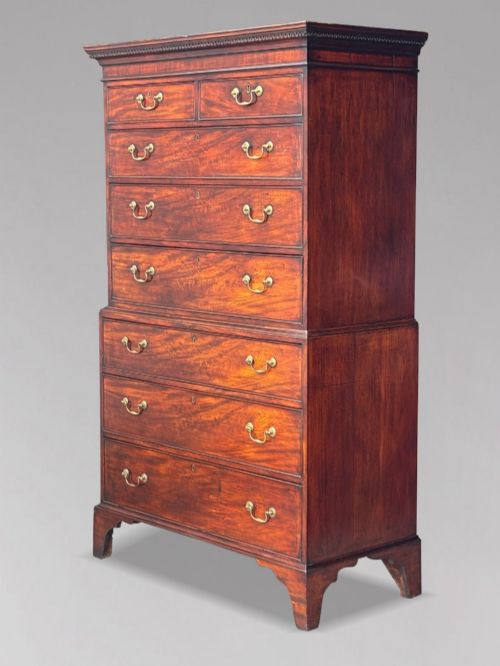
- Tallboy
- A tall double-cut chest of drawers stacked vertically, offering substantial storage capacity within a compact floor footprint.
George III Cabinet: Frequently Asked Questions
How do I identify an authentic george iii cabinet?
Authentic pieces exhibit period construction methods, such as hand-cut dovetails, secondary timbers appropriate to the late eighteenth century, and traditional finishes.
Examine the backboards and interior drawer construction for signs of age and consistent hand tool work that align with Georgian workshop practices.
Where should I place a corner cabinet?
Wall-hanging or standing corner cabinets were originally designed to utilise awkward angles in period rooms.
They function well in similar domestic spaces today, drawing the eye to empty corners while displaying books or decorative objects.
What is a secretaire bookcase?
A secretaire bookcase combines a shelved upper display section with a lower drawer that drops open to reveal a fitted writing surface.
This dual purpose made them popular for libraries and parlour rooms where writing space was required alongside enclosed storage.
How do I care for mahogany surfaces?
Maintain timber surfaces by avoiding direct sunlight and keeping them away from extreme temperature fluctuations that cause wood to split.
Apply traditional wax polish sparingly to nourish the grain and preserve the natural sheen of the aged wood.