
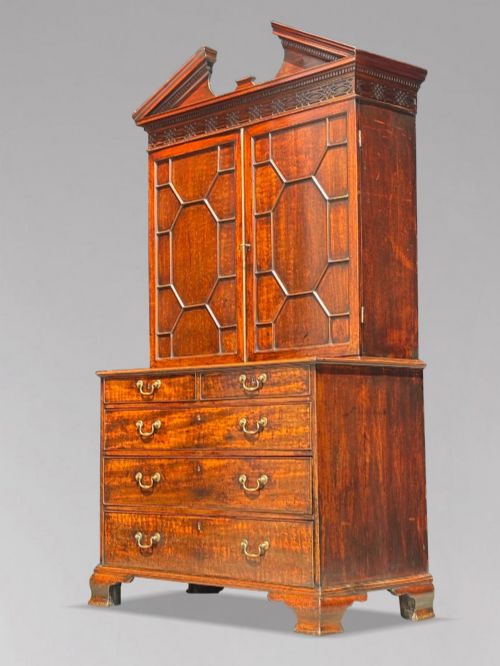


Broken Pediment Bookcase
A broken pediment bookcase brings architectural presence into a room, combining substantial storage with classic eighteenth-century proportions.
What these pieces are
A broken pediment bookcase is a tall library or display cabinet distinguished by an open triangular or arched pediment at the summit, creating a commanding silhouette. These pieces appear primarily across the eighteenth century, George II, George III, and Regency periods, embodying the formal design priorities of their respective eras.
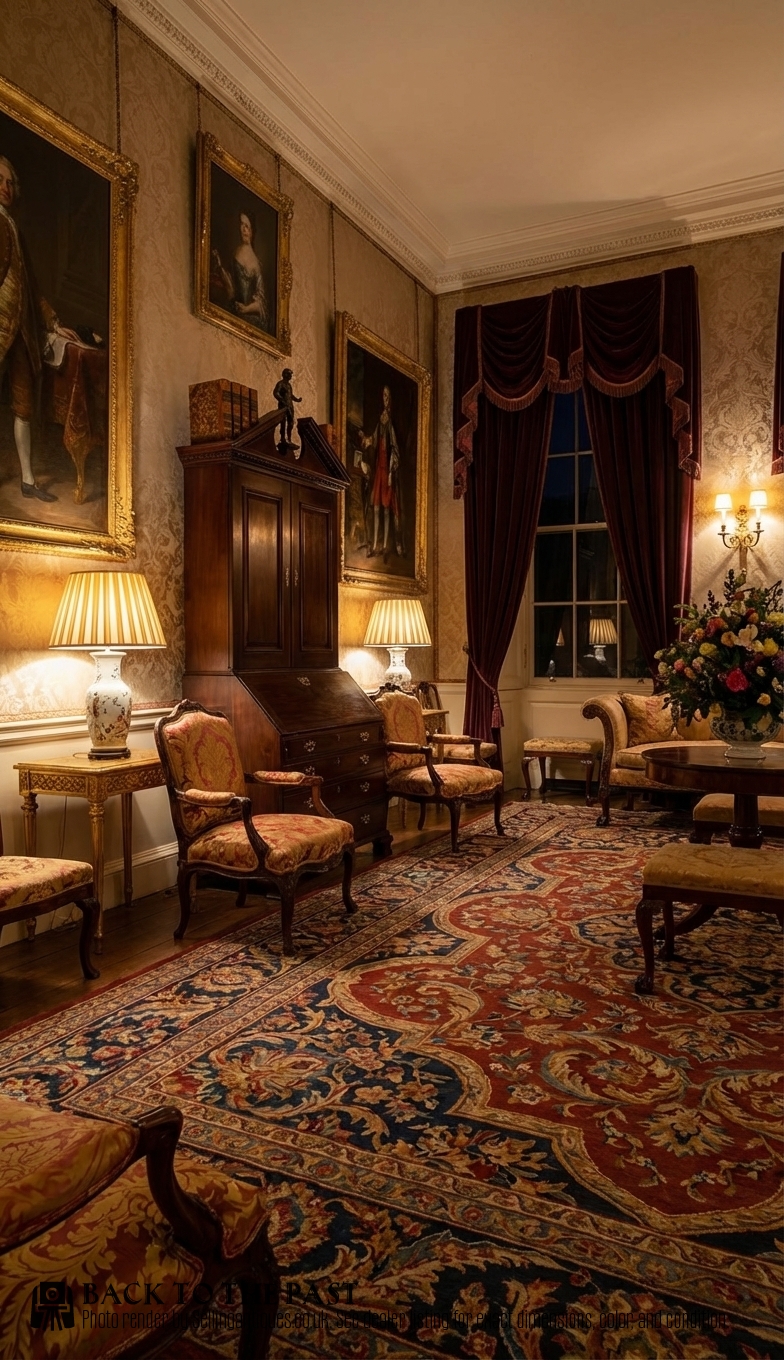
The most common formats on this page are bureau bookcases, which incorporate a fall-front writing desk in the central section, alongside glazed display cabinets and standalone libraries. Bureau bookcases combine a shelved upper cabinet with a fitted writing compartment, offering both functional workspace and enclosed storage.
Makers and workshops of the period constructed these cabinets to anchor formal rooms, utilising rich timbers such as mahogany, oak, and walnut. The broken arch pediment often houses a central carved cartouche or finial, drawing the eye upward and distinguishing the form from simple flat-topped alternatives.
How they were made
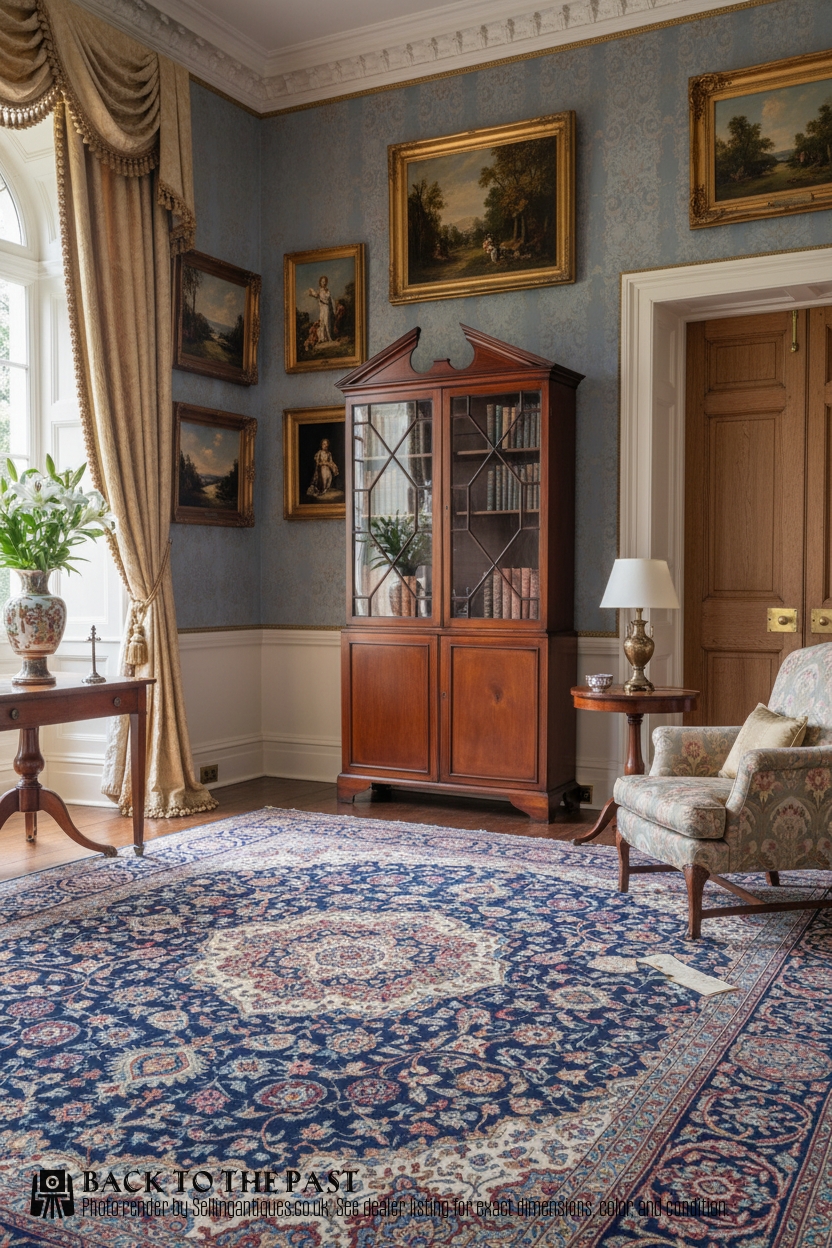
Cabinet makers constructed these large pieces using dense hardwoods like mahogany, walnut, and oak, frequently employing crossbanding and decorative veneers such as harewood and satinwood to accent the surfaces. The upper display sections incorporate glazed doors framed in timber, protecting books while maintaining visibility.
Structural integrity relied on traditional joinery methods suited to monumental furniture, reinforced with brass hardware on interior fittings and doors. Pediments were joined carefully to the main carcase to support central decorative elements like carved cartouches.
Retail Price Guide 2026
Typical UK retail prices for broken pediment bookcase, calculated from the Sellingantiques database of over a million retail prices indexed since 2003. This retail price guide relies exclusively on Sellingantiques data; no external sources or auction records are used, so the figures do not describe the wider market.
Listings span the eighteenth century and the Regency period, encompassing George II, George III, and Chippendale styles in woods including mahogany, oak, walnut, harewood, and satinwood.
What varies in quality
Quality in a broken pediment bookcase rests on the harmony of its proportions and the caliber of its timber selection, where highly figured mahogany or well-matched walnut veneers elevate the piece. The crispness of the carving on the pediment and any central cartouche indicates the skill of the original workshop.
Interior execution also separates standard examples from exceptional ones, particularly the complexity of the fitted pigeonholes and small drawers inside a bureau section. Superior pieces maintain consistent detail from the prominent architectural cresting down to the base moulding.
Thomas Chippendale·Giles Grendy
The Broken Pediment Bookcase Glossary
- Broken pediment
- An architectural gable or pediment interrupted at the apex, often leaving a central space for an urn, finial, or carved cartouche. This classical feature creates an immediate focal point at the top of tall furniture.
- Crossbanding
- A decorative border technique where strips of veneer are laid transversely to the grain of the primary surface. It frames panels and drawer fronts on eighteenth-century cabinetry.
- Bureau bookcase
- A dual-purpose form combining a sloping fall-front writing desk over drawers with a glazed or panelled cabinet above. It represents a major form of domestic workspace from the Georgian era.
- Cartouche
- An ornamental tablet or scroll-like frame, frequently carved with heraldic or foliate motifs. In these bookcases, it often occupies the centre of the broken arch.
- Harewood
- Sycamore timber that has been stained to a distinctive greyish-brown hue, popular for fine marquetry and cabinet accents during the Georgian period. It adds a cool tonal contrast to warmer woods.
Frequently Asked Questions
What is a broken pediment bookcase?
A broken pediment bookcase is a tall eighteenth-century or Regency storage cabinet featuring an interrupted triangular or arched crest at the top. This architectural top gives the furniture a formal, classical silhouette designed for libraries and principal rooms.
Such pieces usually combine glazed upper display doors with lower cupboards or a bureau writing section, serving both decorative and practical functions in a traditional interior.
How do I date a Georgian bookcase?
Dating relies on observing stylistic markers, timber choices, and construction methods associated with reigns like George II or George III. Walnut predominates in the earlier decades, while richly figured mahogany and decorative veneers like harewood characterise later eighteenth-century work.
The complexity of the pediment carving and the configuration of internal drawers provide further clues to the specific decade of production.
Where were these bookcases placed?
Historically, large library bookcases stood in studies, drawing rooms, or private libraries where gentlemen kept bound volumes and important papers. Their imposing height and architectural pediments required rooms with generous ceiling clearance.
Today, they function well in similarly proportioned living spaces or dining rooms, providing prominent display areas for books or collections behind glass.
What is a bureau bookcase?
A bureau bookcase integrates a sloping fall-front desk into the middle section of a tall cabinet. Dropping the flap reveals a fitted interior with small drawers and pigeonholes for correspondence.
This hybrid form allowed owners to write letters and manage household accounts directly beneath the main library or display shelves.