









Tiered Corner Stand
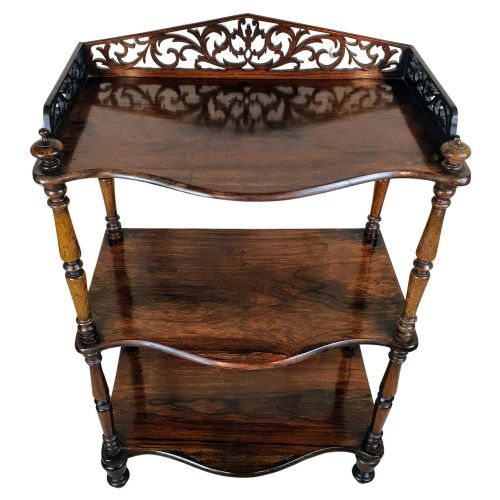
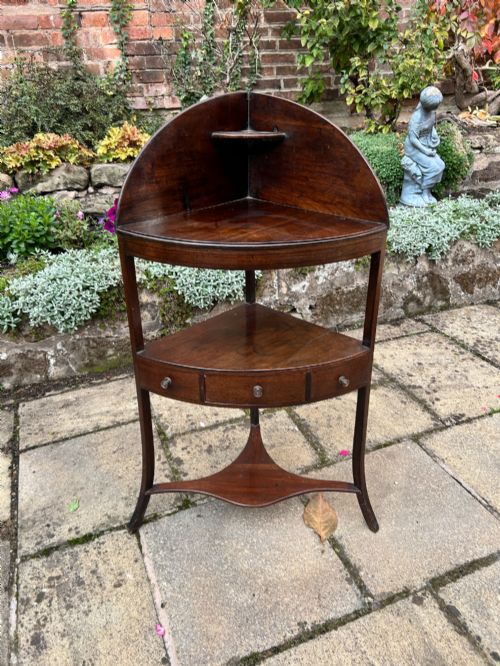
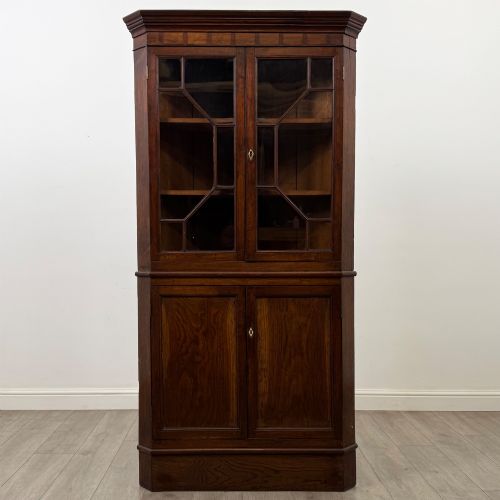
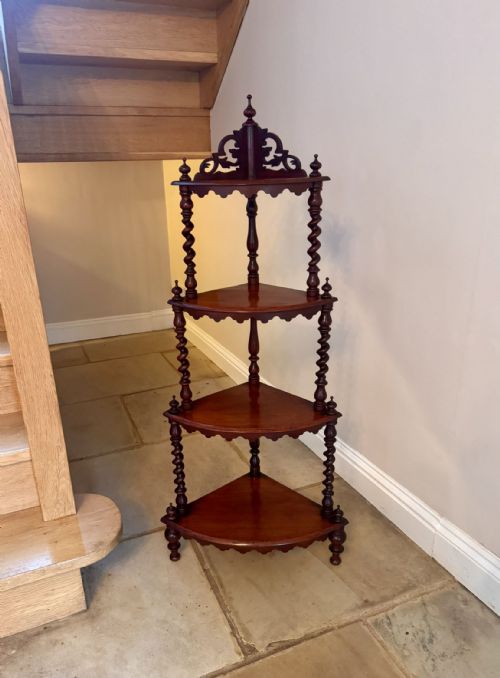
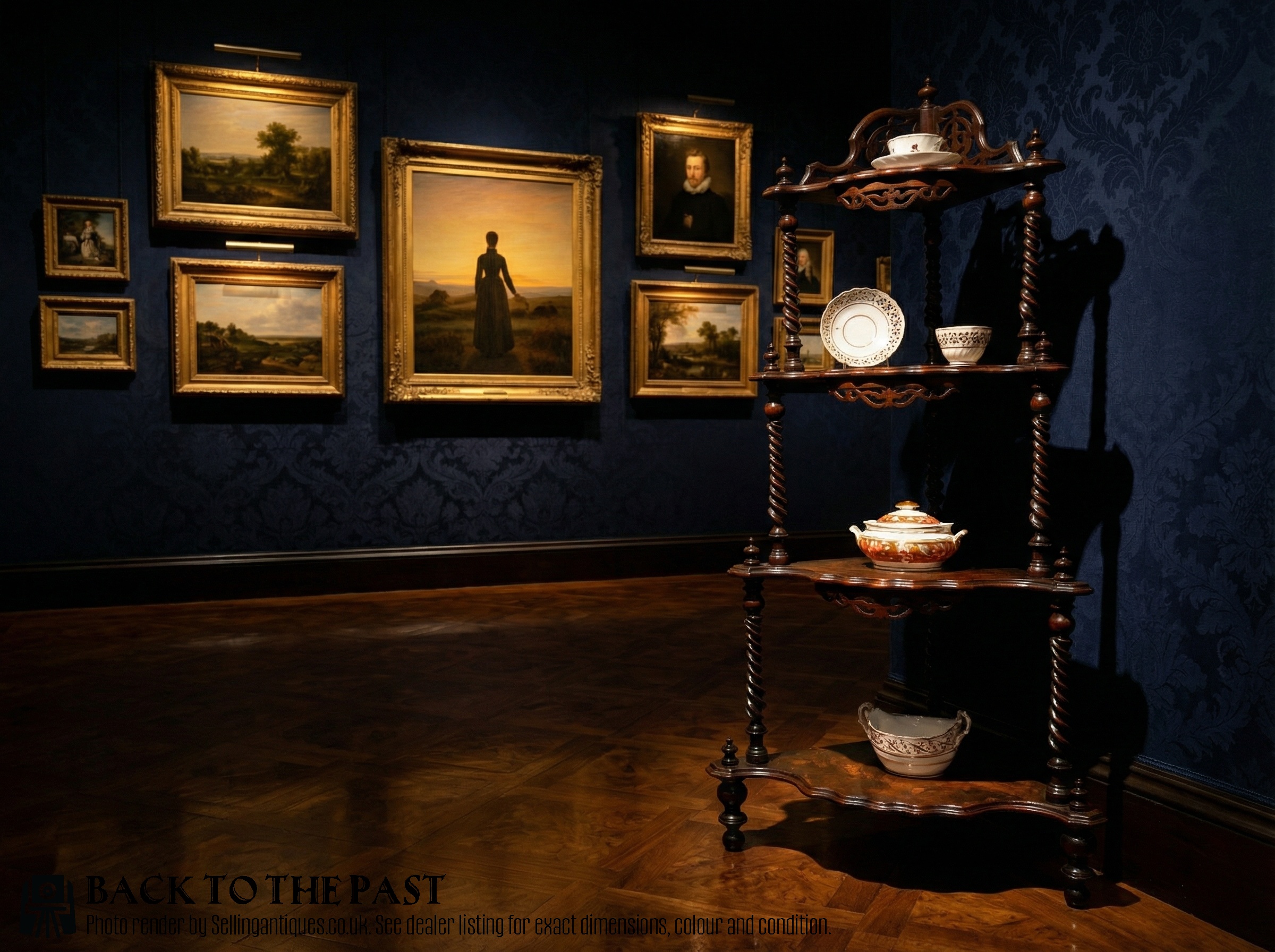
These tiered corner stand examples combine practical display space with clever geometry, fitting neatly into idle rooms to hold books, ceramics, and ornaments.
Tiered Corner Stand
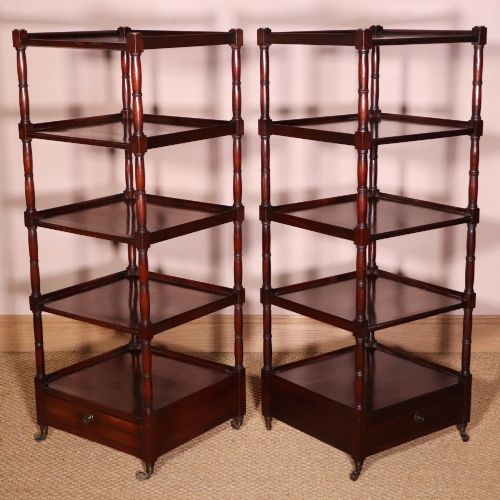
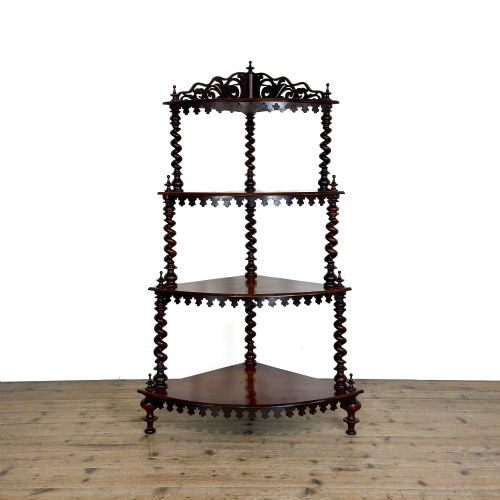
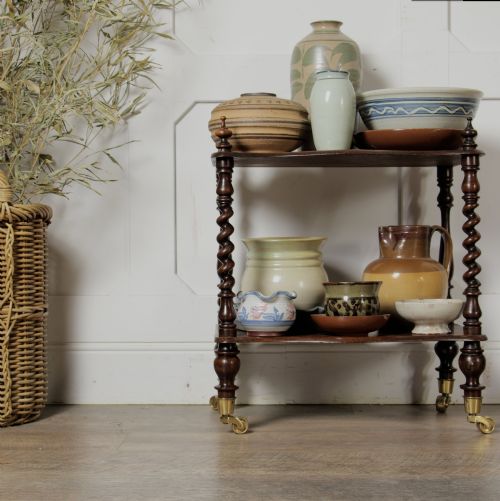
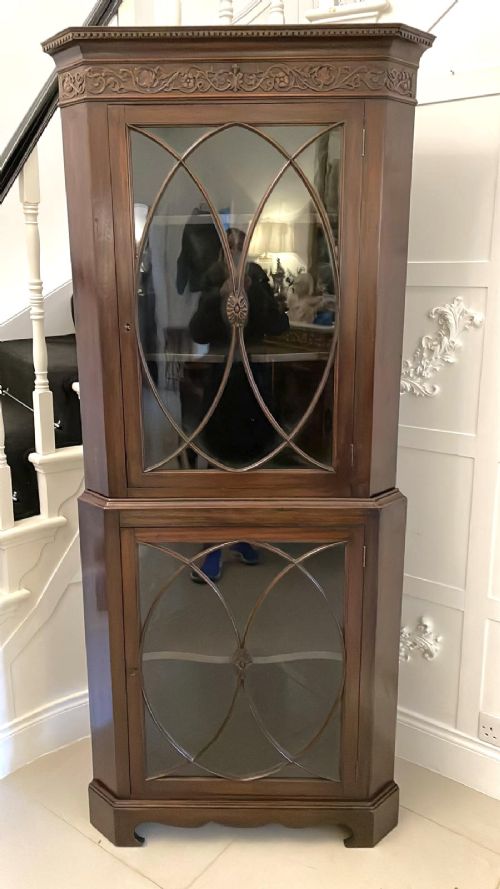
A tiered corner stand uses vertical space efficiently by placing multiple shelves in the angle of a room. The selection here spans the Regency, Victorian, and Edwardian eras, encompassing formats often called whatnots or dumb waiters.
The dominant forms on this page include corner whatnots and standing shelving units. Pieces range from four-tier walnut models to paired items and larger mahogany constructions designed for country house interiors.
Makers utilised these versatile pieces in studies, drawing rooms, and dining spaces where corner placement kept circulation open while offering generous display capacity.
How They Were Made
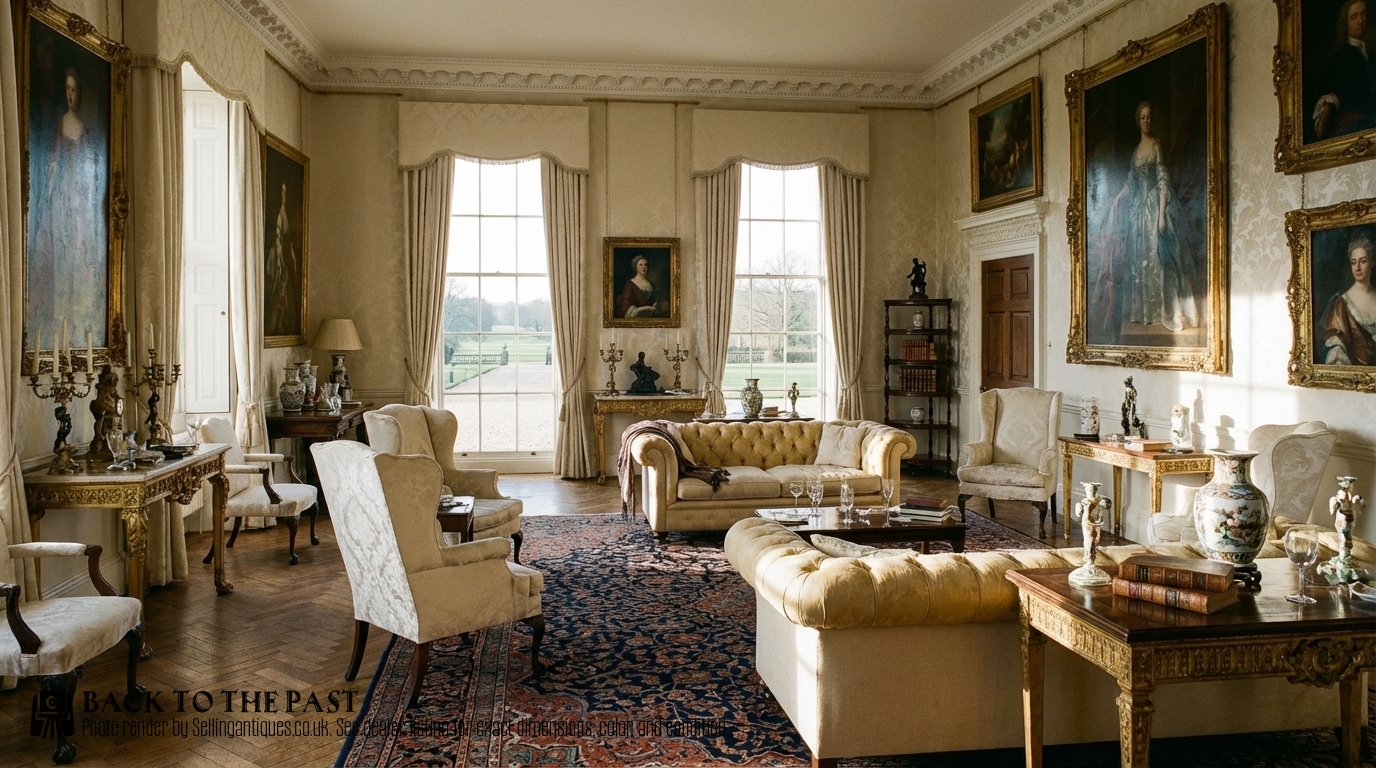
Cabinetmakers constructed these stands primarily in mahogany and walnut, occasionally incorporating ebonised wood or turned elements for structural support. Boxwood inlay adds linear definition to the shelf edges and uprights.
Tiered Corner Stand Retail Price Guide 2026
Typical asking prices for tiered corner stand among the pieces listed under this phrase on Sellingantiques today, from the lower quarter to the upper quarter. They describe what is for sale here now, not the wider market.
Victorian households often filled these corner stands with objects that today seem delightfully random, from stuffed hummingbirds to tea canisters.
What Varies in Quality
Quality rests on the choice of timber and the sophistication of its surface treatment. Finer examples display rich grain patterns in walnut or mahogany, paired with crisp boxwood inlay or delicate carved detail.
The refinement of the turned supports and the balance of the graduated tiers dictate the visual success of the piece. Stands with harmonious proportions and integrated brass fittings demonstrate superior cabinetmaking.
The Tiered Corner Stand Glossary
- Whatnot
- A piece of furniture consisting of open shelves for displaying books, ornaments, or china. These tiered units became popular during the Regency and Victorian periods.
- Dumb Waiter
- A tiered stand traditionally used in dining rooms for holding plates, glasses, or food dishes without requiring servant presence. They share a similar vertical structure to display whatnots.
- Ebonised Wood
- Timber treated with a dark finish to imitate expensive ebony. This technique was frequently utilised during the 19th century to create striking contrast.
- Boxwood Inlay
- Contrasting pale wood inserted into recesses of a darker ground to form decorative borders. It requires high precision from the woodworker.
Tiered Corner Stand: Frequently Asked Questions
What rooms suit a tiered corner stand?
These stands fit comfortably into unused room angles, making them practical for living rooms, hallways, and studies where floor space is limited. Their graduated shelves allow for the display of books, plants, and decorative objects without blocking movement.
Because they occupy vertical rather than horizontal dimensions, they introduce height and architectural interest to empty corners while keeping daily items accessible.
How do I date a corner whatnot?
Dating relies on observing the timber choice, decorative techniques, and overall form. Regency and early Victorian pieces often feature heavy mahogany construction, whereas later Victorian and Edwardian examples may incorporate lighter walnut, ebonised finishes, or boxwood inlay.
Turned supports and carving styles also shift across decades, moving from robust architectural turnings to more slender, refined uprights by the end of the 19th century.
Were these stands used for dining?
Some tiered pieces functioned as dumb waiters, holding serving dishes or glassware near the dining table. Other variations served as whatnots designed purely for ornamental display in reception rooms.
Their multi-tiered format made them adaptable to changing household needs over the course of the 19th century.
How should I care for walnut furniture?
Walnut benefits from stable room environments away from direct sunlight and strong heat sources. Regular dusting with a soft, dry cloth preserves the polished surface and natural grain of the timber.
Avoiding excessive moisture prevents warping and protects delicate boxwood inlay or ebonised finishes from deteriorating over time.