





Antique Corner Whatnot
An antique corner whatnot is a multi-tiered open shelving unit designed to fit neatly into a room junction, offering practical display space with distinctive period charm.
Antique Corner Whatnot
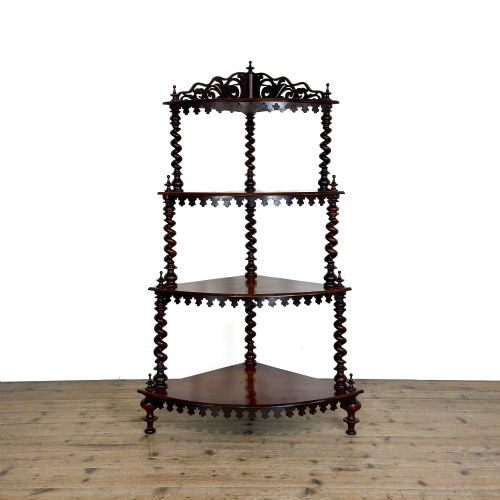
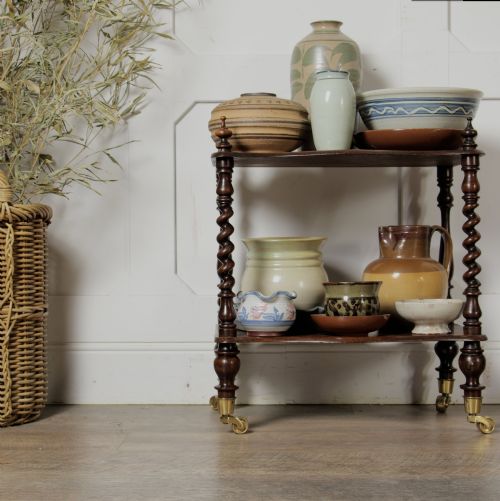
The antique corner whatnot is fundamentally a multi-tiered display stand engineered specifically to occupy unused angles within a domestic interior. These pieces serve primarily to hold books, ceramics, or ornaments across several diminishing levels of open shelving.
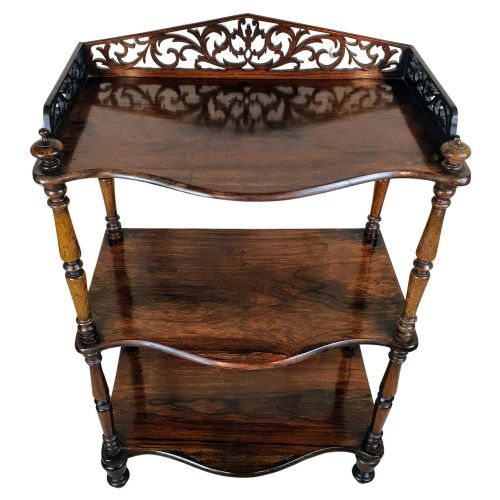
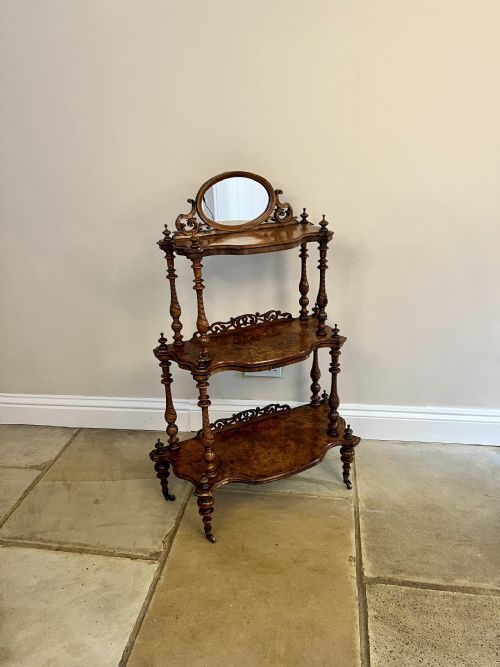
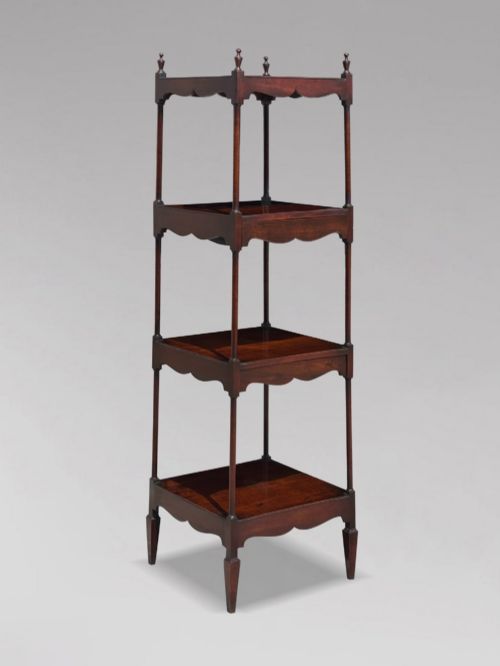
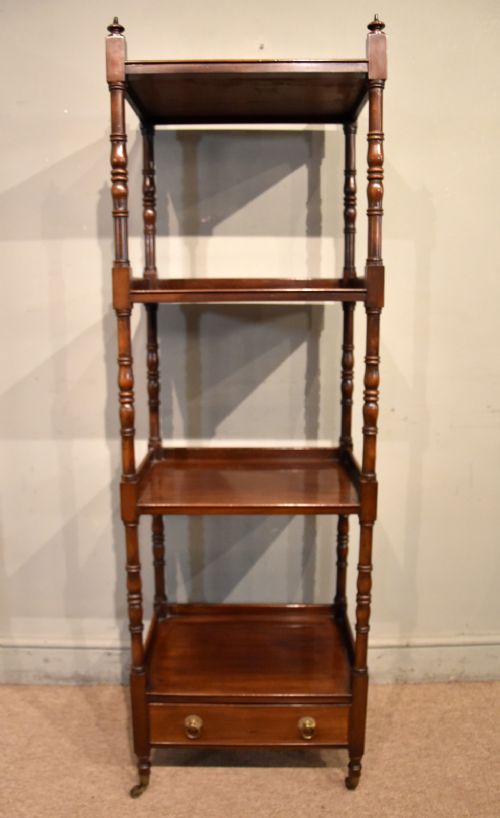
Most examples encountered here date from the Victorian era, constructed in rich timbers such as mahogany, walnut, and rosewood. The form ranges from simple three-tier triangular wall shelves to elaborate floor-standing cabinets featuring turned supports and serpentine fronts.
Makers designed these tiered stands to maximise vertical storage without crowding floor space in smaller parlours or drawing rooms. The silhouette typically tapers upward, creating a balanced triangular profile that anchors a room corner effectively.
Materials and construction methods
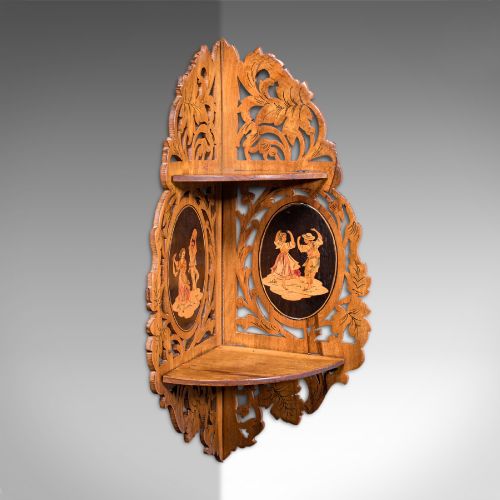
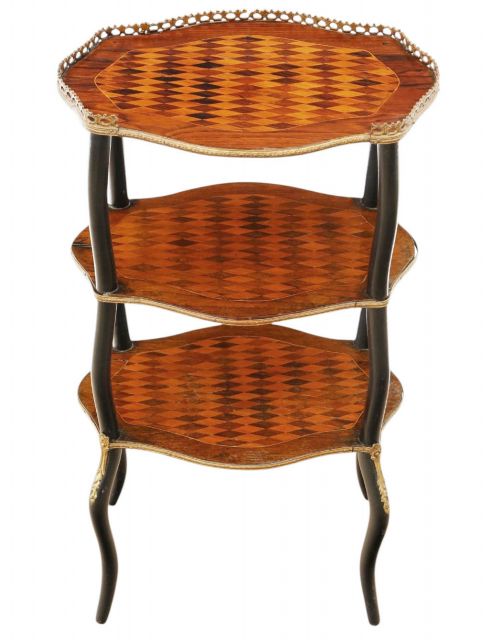
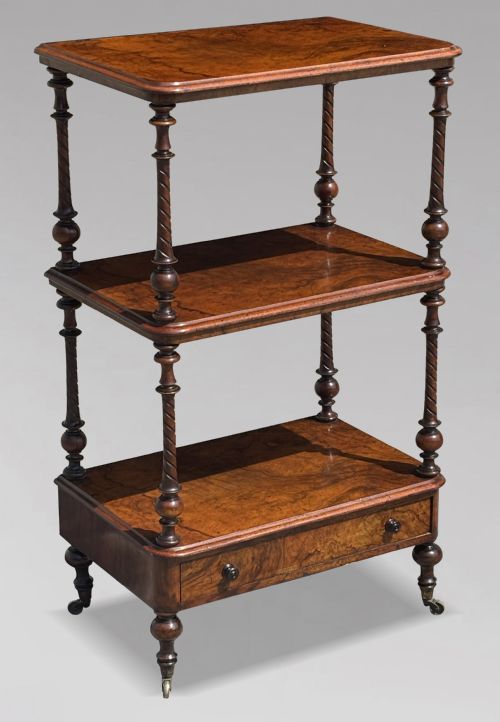
Cabinetmakers relied heavily on dense hardwoods, selecting mahogany and walnut for structural integrity alongside burr walnut veneers for decorative surfaces. Selected pieces incorporate brass mounts, inlaid wood parquetry, or ebonised details to enhance visual depth.
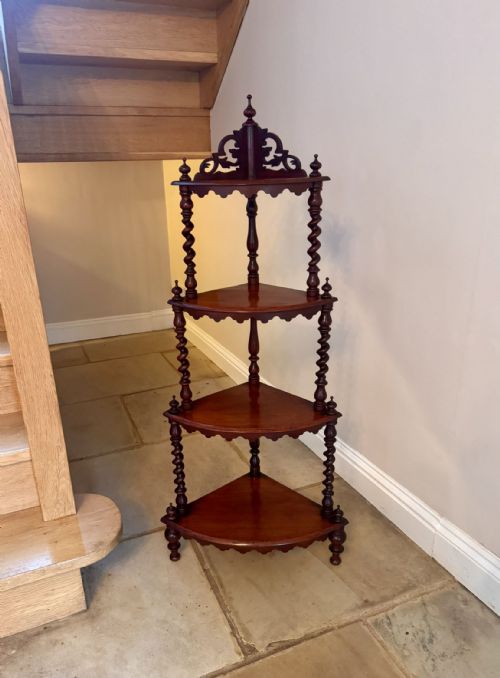
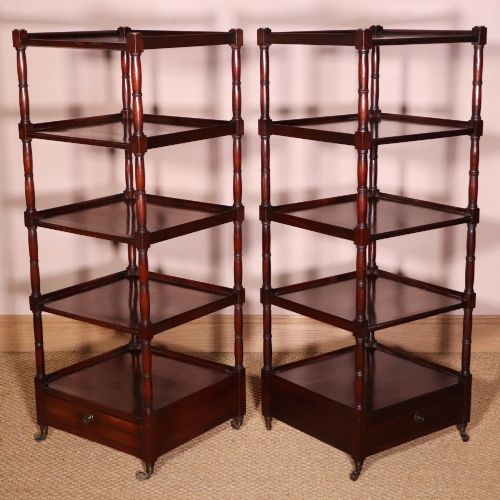
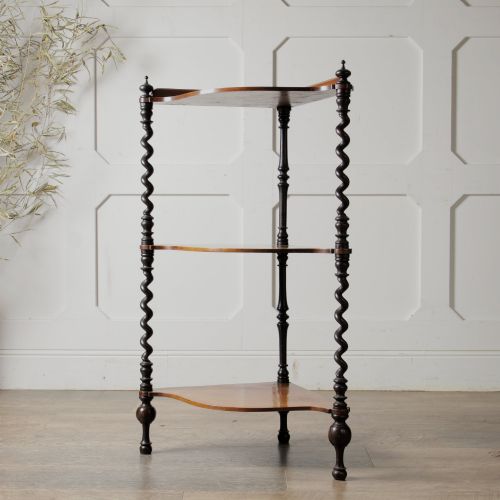
Vertical supports often take the form of turned barley twist columns, slender spindles, or shaped corner uprights that secure each individual shelf tier. Joinery relies on traditional methods, ensuring that multi-tier arrangements remain stable under the weight of porcelain or books.
Antique Corner Whatnot Retail Price Guide 2026
Typical asking prices for corner whatnot among the pieces listed under this phrase on Sellingantiques today, from the lower quarter to the upper quarter. They describe what is for sale here now, not the wider market.
Surviving pieces span the Georgian, Regency, and Victorian periods.
Assessing build quality and execution
Superior execution shows in the selection of figured timber veneers, where burr walnut or rosewood grain patterns align thoughtfully across tiers. Better examples display crisp turning on upright columns and precise joinery where shelves meet the corner uprights.
Simpler versions utilise plain mahogany or softwoods with minimal decorative inlay, whereas exhibition tier pieces integrate delicate marquetry, serpentine shaping, or gilt metal details. The overall rigidity of the tiered framework indicates the underlying standard of the cabinetmaker's work.
Gillows
The Antique Corner Whatnot Glossary
- Whatnot
- A multi-tiered piece of furniture designed for displaying ornaments, books, or small decorative objects. These open shelves became prominent during the 18th and 19th centuries.
- Etagere
- A French term for a piece of furniture consisting of a set of open shelves for displaying articles. It is functionally synonymous with the whatnot.
- Burr walnut
- A specialised wood veneer taken from the burl growth of a walnut tree, highly prized for its swirling, intricate grain patterns. Cabinetmakers utilised it on high-end Victorian furniture surfaces.
- Barley twist
- A spiral turning technique applied to wooden columns and furniture legs resembling a twisted rope. This ornamental detail appears frequently on 19th-century supports.
- Parquetry
- Geometric mosaic woodwork used for decorative surface patterns on tabletops and shelves. Artisans constructed these patterns using contrasting timber veneers.
Antique Corner Whatnot: Frequently Asked Questions
What is an antique corner whatnot?
An antique corner whatnot is a tiered open shelving unit specifically built to fit into the corner of a room. These pieces provide vertical display space for decorative objects, books, and ceramics.
Originating in the Georgian period and reaching widespread popularity during the Victorian era, they combine functional storage with architectural interest. Their triangular footprint allows them to utilise space that standard rectangular furniture cannot reach.
How were these stands used historically?
Historically, households utilised these tiered stands in parlours, drawing rooms, and studies to display prized possessions such as porcelain figurines, small clocks, and bound volumes. They acted as focal points for decorative collections rather than closed storage.
Because the shelves are entirely open, items placed upon them remain fully visible from multiple angles within the room. This made them ideal for showcasing items of visual interest during the 19th century.
How do I place one in a modern room?
Placing a corner whatnot effectively involves identifying an empty room angle that benefits from vertical height and decorative timber tones. They anchor awkward corners while keeping floor space entirely unobstructed.
When styling the shelves, balance heavier volumes or ceramic pieces on the lower tiers with lighter decorative objects towards the top. This maintains visual stability and reflects the proportions of the tiered structure.
How can I tell the period of a whatnot?
Dating relies on examining the timber species, decorative motifs, and overall construction characteristics of the piece. Georgian examples often feature simpler architectural lines in mahogany, while Victorian versions frequently employ burr walnut, rosewood, and elaborate turned columns.
Additional clues include the presence of hand-cut joinery, inlaid parquetry, or specific hardware styles. Comparing the tier count and edge shaping helps narrow down the manufacturing decade.