



Mahogany Corner Whatnot
A mahogany corner whatnot is a tiered shelving unit designed to tuck into a room, offering display space in dense timber.
Mahogany Corner Whatnot
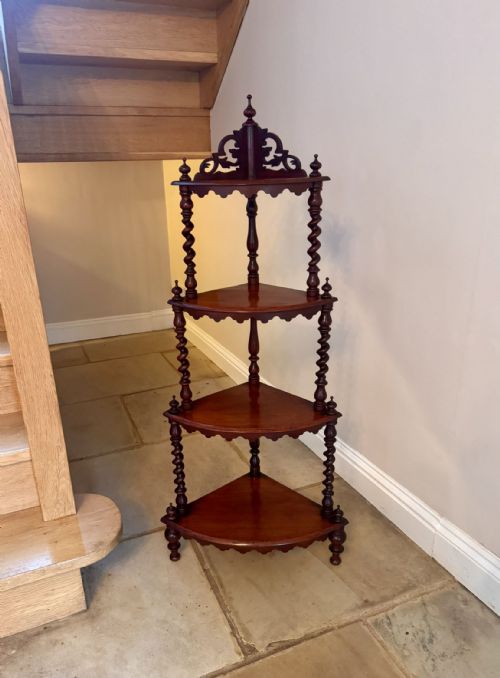
A mahogany corner whatnot provides several stacked tiers held by upright supports, engineered specifically to utilise awkward angles and empty room intersections. The form emerged to hold books, ceramics and ornaments within easy reach.
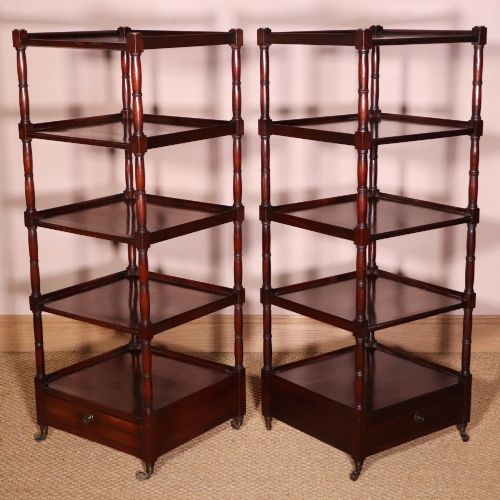
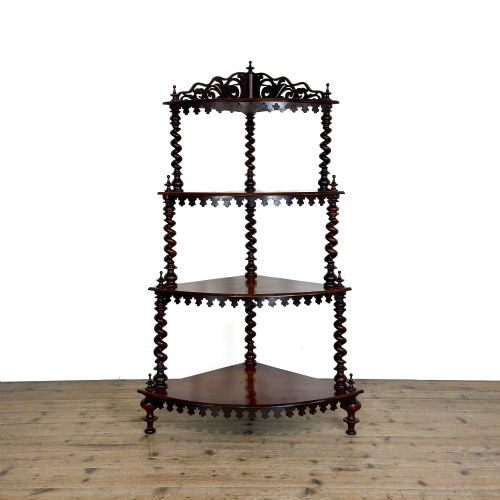
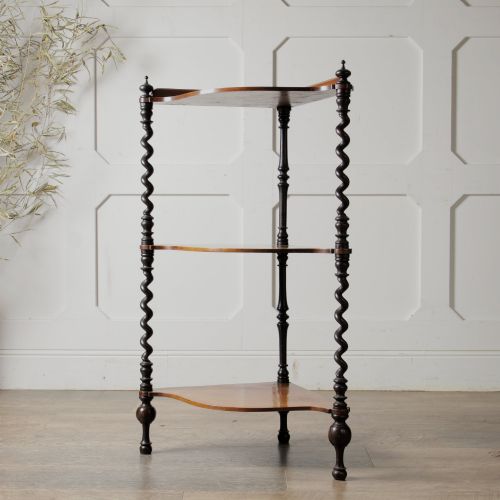
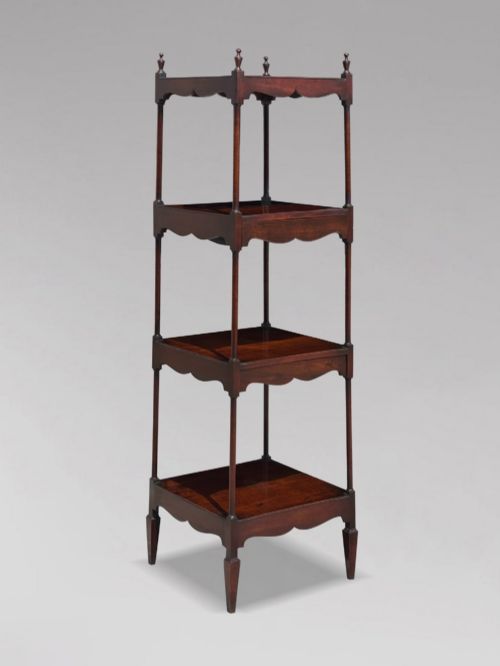
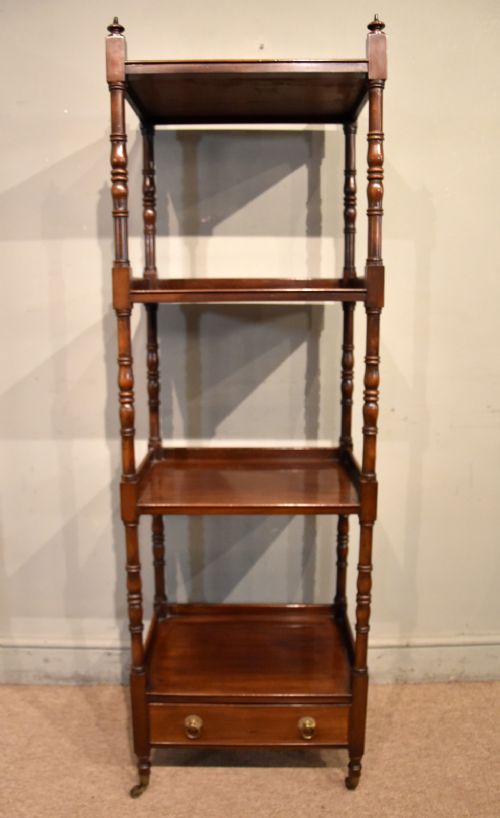
Most examples found here date from the nineteenth century, spanning the Georgian, Regency, William IV and Victorian eras. These pieces range from simple three-tier open shelves to taller four-tier structures, sometimes incorporating lower cupboards or turned barley twist supports.
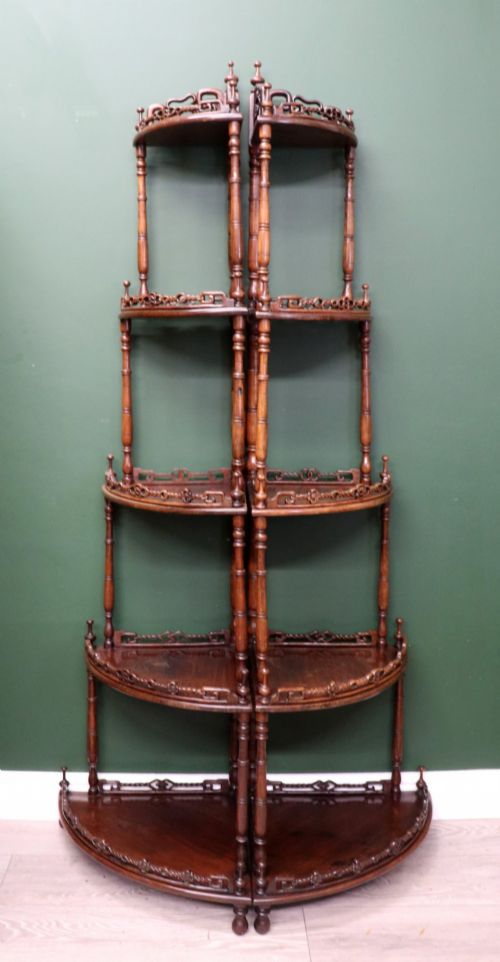
The layout typically follows a triangular footprint to fit flush against wall junctions. While many are purely open shelving, certain variants introduce mirrored backs, marble tops or serpentine fronts for added decorative presence.
How they were made
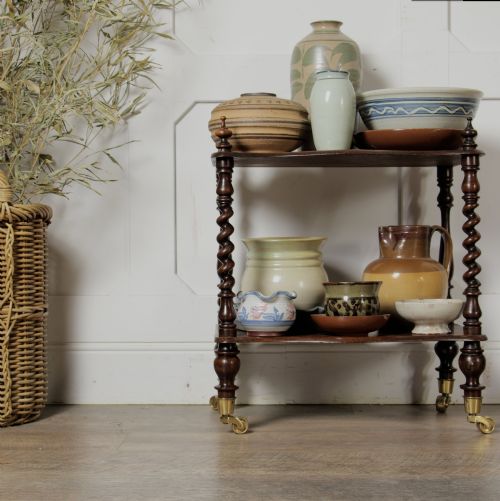
Makers relied primarily on solid and veneered mahogany, often pairing the rich brown timber with secondary elements like brass castors, cane, glass, or ebonised wood details. Marquetry inlay appears on select Victorian versions, introducing contrasting botanical motifs.
Structural integrity relied on carefully turned uprights, such as barley twist columns or tapered corner posts, supporting graduated shelves. Joinery was built to bear weight across multiple tiers without sagging at the joints.
Mahogany Corner Whatnot Retail Price Guide 2026
Typical asking prices for mahogany corner whatnot among the pieces listed under this phrase on Sellingantiques today, from the lower quarter to the upper quarter. They describe what is for sale here now, not the wider market.
Materials recorded across the inventory include solid mahogany, brass fittings, marble tops, cane, glass, and ebonised wood.
What varies in quality
The grade of timber dictates the visual depth of a piece, with dense, finely figured mahogany carrying greater warmth than plain stock. Superior examples display crisp turning on the upright supports and tight, precise joints where the shelves meet the frame.
Refinements such as integrated cupboards, mirrored panels, or a marble top elevate a piece from a simple utility stand to a formal display cabinet. The proportion and scale also matter, as compact, balanced heights command better spatial harmony in a modern interior.
Gillows
The Mahogany Corner Whatnot Glossary
- Whatnot
- A tiered open-shelved piece of furniture used for displaying ornaments and small objects. It gained popularity during the eighteenth and nineteenth centuries.
- Etagere
- A French term for a piece of furniture consisting of a set of open shelves for displaying small objects. It is functionally synonymous with the whatnot.
- Barley twist
- A type of turning shaped like a spiral rope, frequently used for the vertical supports on nineteenth-century stands. This technique adds dynamic movement to the silhouette.
- Serpentine
- A curved line that undulates outward then inward, often seen along the front edge of shelves. It requires precise woodworking to shape the timber smoothly.
- Dumb waiter
- A tiered stand traditionally placed beside a dining table to hold dishes or serving items without servants present. Some forms overlap heavily with standard whatnot designs.
Mahogany Corner Whatnot: Frequently Asked Questions
What is a corner whatnot used for?
These tiered stands served originally to hold books, small silver items, and decorative ceramics in domestic rooms. Their multi-level design maximised vertical display space without crowding the floor.
Today, they function well in living spaces or hallways for holding plants, lamps, and collections. The triangular shape lets them occupy unused room angles efficiently.
How do I identify a Georgian whatnot?
Georgian pieces generally display restrained lines, elegant proportions, and high-grade mahogany with deep natural patination. They often feature simple turned supports and delicate framing rather than heavy ornamentation.
Look for honest timber construction and period joinery methods beneath the shelves. Earlier examples avoid the busier carvings and mirrored backs common in later Victorian revivals.
Are all corner whatnots made of mahogany?
While mahogany is the dominant timber across these listings, makers occasionally incorporated secondary woods like beech or walnut. Some examples also feature ebonised wood highlights or marquetry inlay.
Brass hardware, marble inserts, and mirrored glass panels also appear on specific Victorian variants. The primary structure, however, remains centred on rich brown mahogany.
How do I fit a whatnot into a modern room?
A corner whatnot naturally slips into vacant wall junctions where standard rectangular furniture will not fit. This makes them ideal for softening empty corners in studies, bedrooms, or sitting rooms.
Keep the display balanced by placing heavier items on the lower tiers and lighter objects near the top. Avoid overloading the shelves to let the timber structure remain visible.