


Barley Twist Shelf
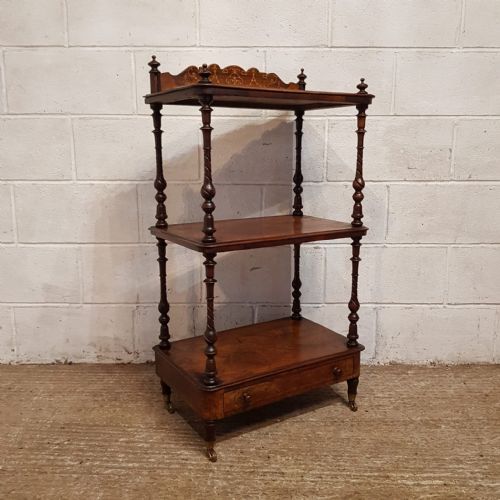
A barley twist shelf offers tiered display space supported by characteristically turned wooden shafts, drawing the eye upwards through stacked timber and polished surfaces.
Barley Twist Shelf
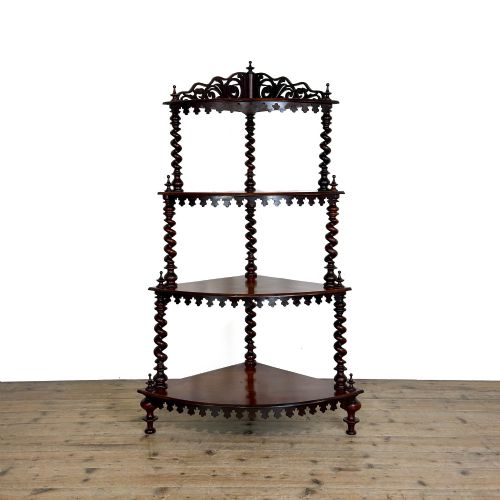
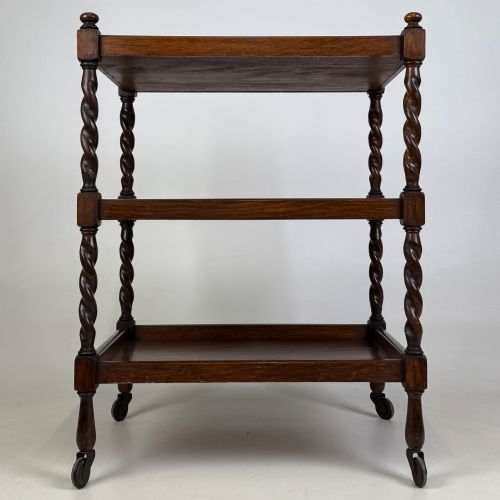
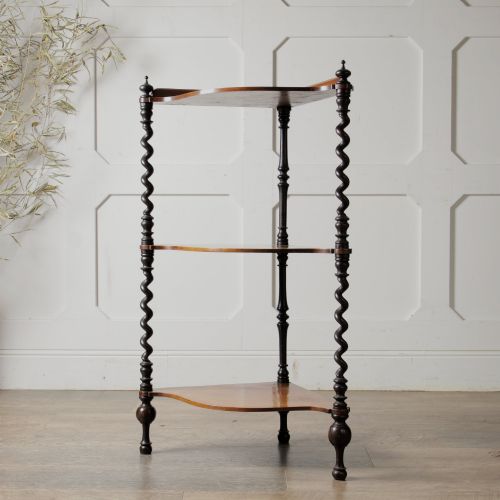
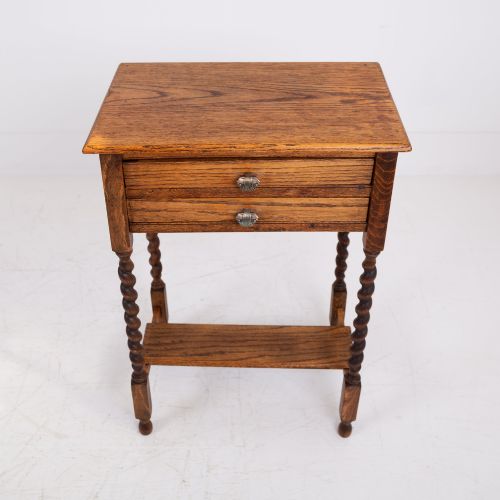
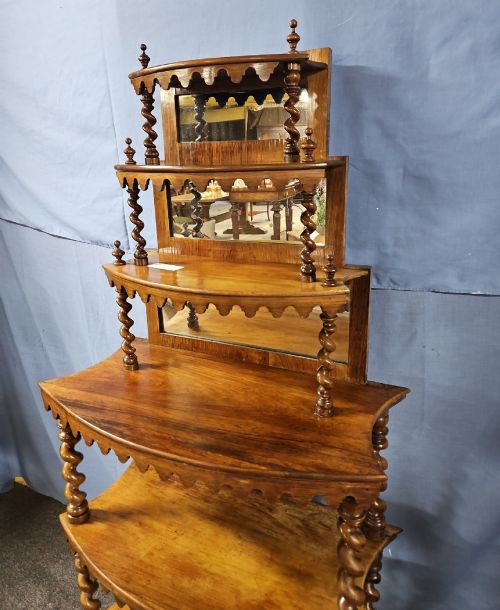
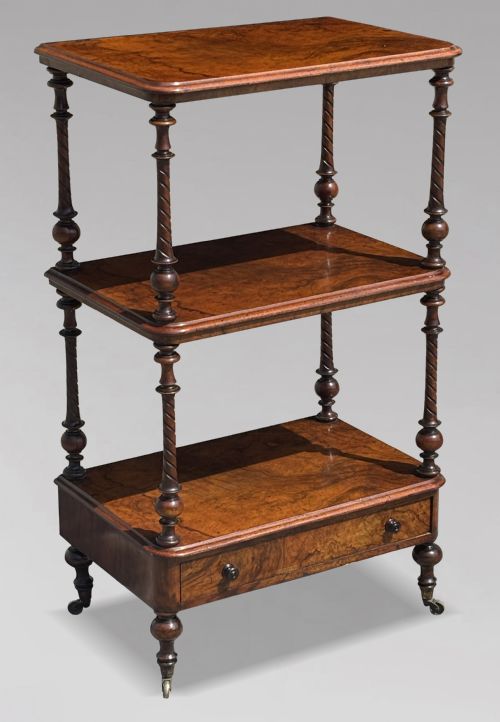
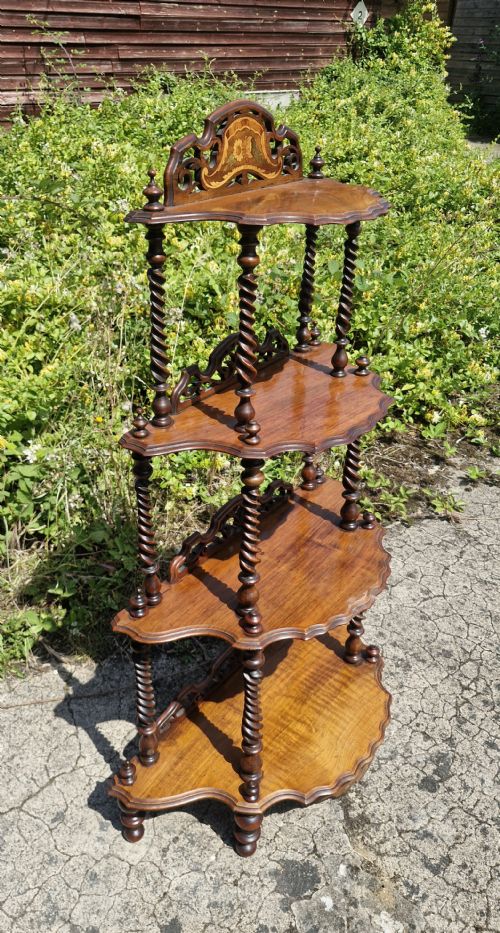
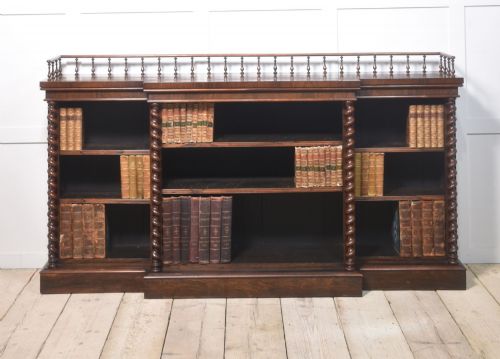
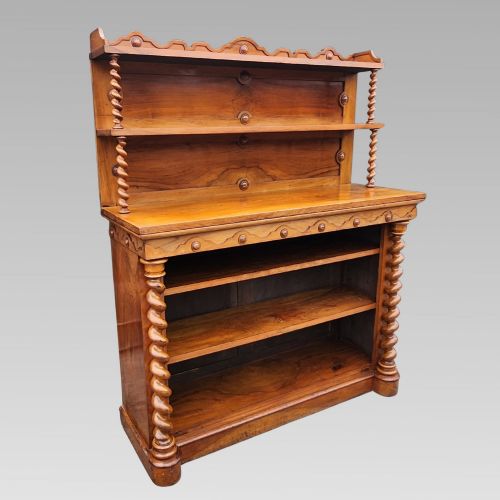
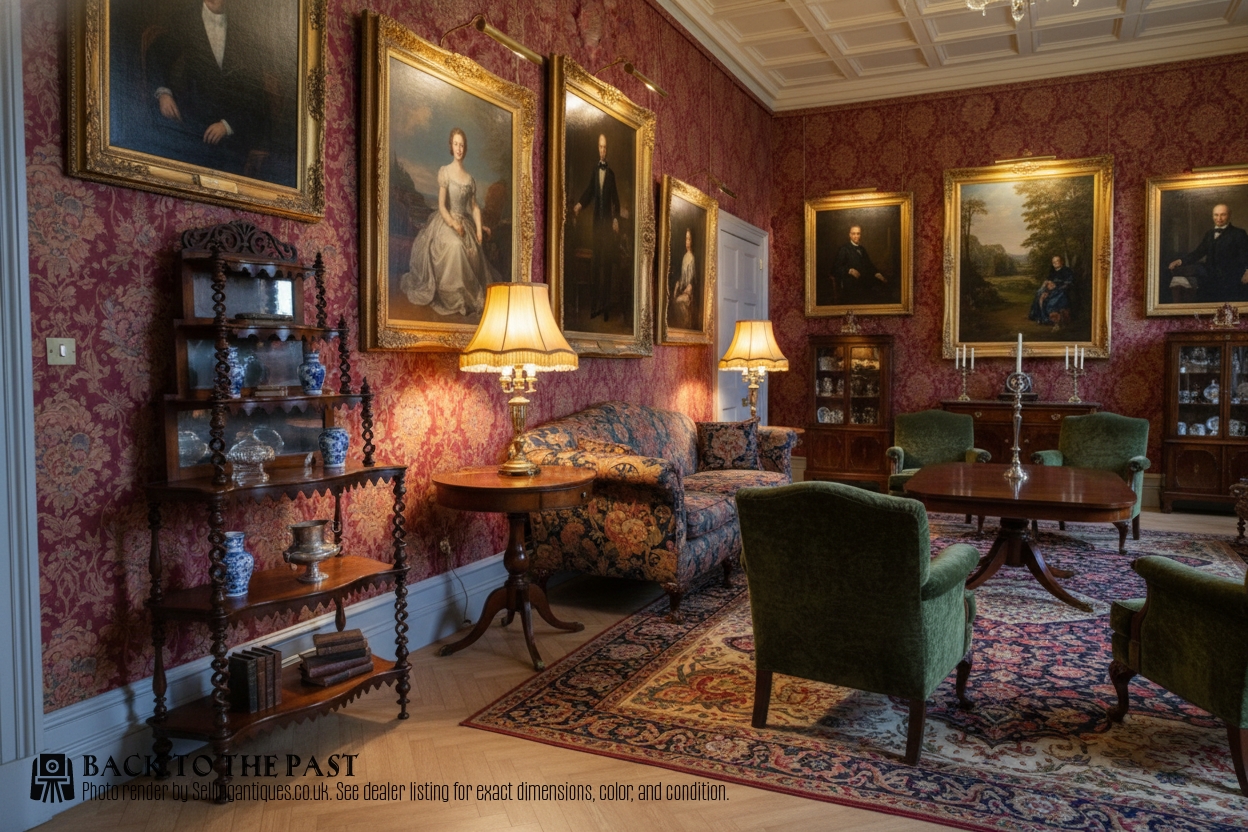
When you search for a barley twist shelf, you encounter multi-tiered display pieces, whatnots, and etageres that utilise the distinctive helical turning along their vertical supports. These pieces emerge predominantly from the Victorian and Edwardian eras, alongside nineteenth-century examples.
Makers fashioned these units in varying heights, from compact wall-mounted versions to towering six-tier floor stands. The inclusion of barley twist columns unites otherwise diverse forms like bookcases, side tables, and display stands.
How they were made
Cabinet makers utilised dense hardwoods like walnut, rosewood, and mahogany for the primary structure, turning the distinctive spiral columns on a lathe to create the characteristic helical twist. Oak and burr walnut also appear frequently, often selected for their prominent grain patterns.
Joinery techniques combined precision-turned uprights with rebated or dowelled shelves, occasionally incorporating brass details or single drawers beneath the display tiers.
Some miniature apprentice pieces survive, showing that even tiny shelves received full-sized barley twists.
What varies in quality
The fineness of the timber selection dictates the visual impact, with burr walnut and figured rosewood offering rich grain contrast that plain timbers lack. The precision of the lathe work on the spiral columns separates standard production from superior pieces.
Proportion and stability define the upper tier of these items, where slender uprights support multiple heavy tiers without leaning or distortion.
The Barley Twist Shelf Glossary
- Barley twist
- A decorative turning technique resembling a spiral helix, resembling the twist of a barley stalk. This form gained immense popularity during the Victorian period for furniture supports.
- Whatnot
- An open set of multi-tiered shelves designed for displaying ornaments, books, or knick-knacks. These pieces became domestic staples during the nineteenth century.
- Etagere
- A piece of furniture consisting of a number of open shelves for displaying small articles. They often feature delicate uprights and multiple tiers.
- Burr walnut
- Timber taken from the wart-like growth on a walnut tree, yielding highly figured and swirling grain patterns. Cabinet makers prized this veneer for high-status display furniture.
- Demi-lune
- Half-moon shape in furniture design, typically seen in console tables or corner units designed to fit flush against a wall.
Barley Twist Shelf: Frequently Asked Questions
What is a barley twist shelf used for?
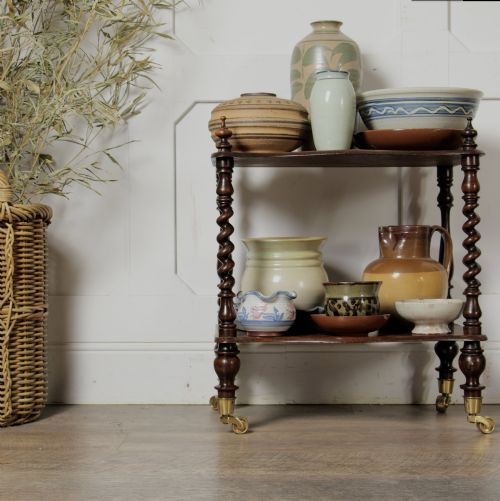
These pieces provide vertical display surfaces for ornaments, ceramics, and books while occupying minimal floor space in a room.
Their open tiers allow decorative objects to be viewed from multiple angles within a living space or hallway.
How do I date a Victorian barley twist shelf?
Examine the secondary woods, screw types, and overall timber finishing to establish the period of manufacture. Victorian examples frequently utilise solid rosewood, walnut, or mahogany with hand-cut joinery.
Compare the turned profile against dated pieces from the mid to late nineteenth century, noting that crisp, deep twists often point towards earlier Victorian craftsmanship.
Where should I place an etagere?
Corner whatnots and etageres suit empty wall angles or dead spaces where vertical height adds balance to a room. Taller multi-tier versions function effectively in studies or drawing rooms.
Keep these pieces away from direct heat sources and strong sunlight to protect the polished wood surfaces and veneers.
How do I clean a walnut display shelf?
Dust the tiers regularly with a soft, dry cloth to prevent particulate buildup on the carved columns and flat surfaces. Avoid modern silicone sprays that can damage antique wood finishes.
Apply a traditional beeswax polish occasionally to nourish the timber and maintain the natural lustre of the walnut or mahogany.