




Four Tier Whatnot
A four tier whatnot provides graduated open shelving designed for display and utility in formal interiors.
Four Tier Whatnot
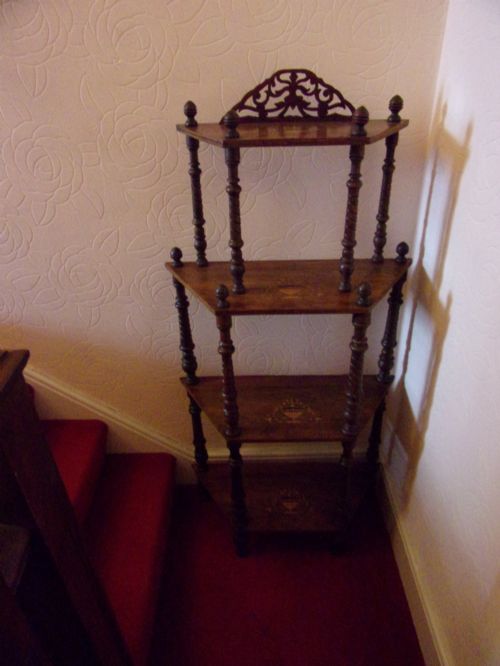
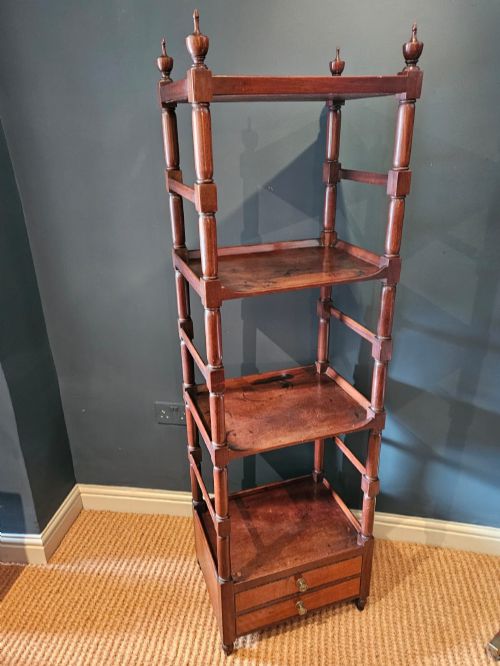
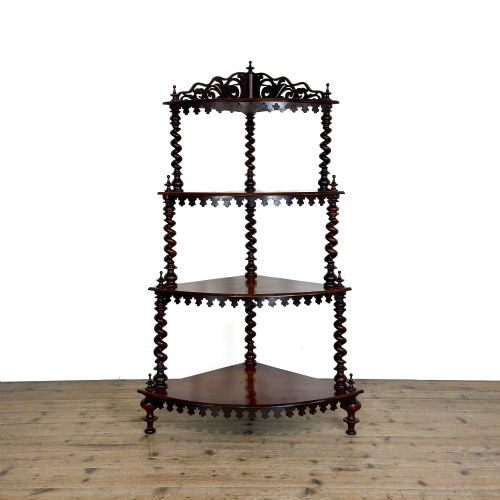
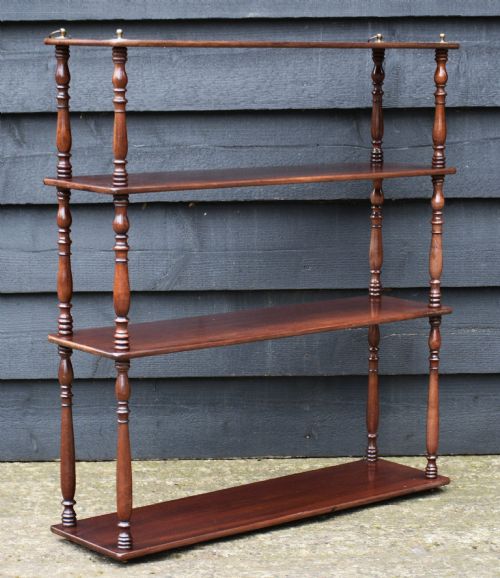
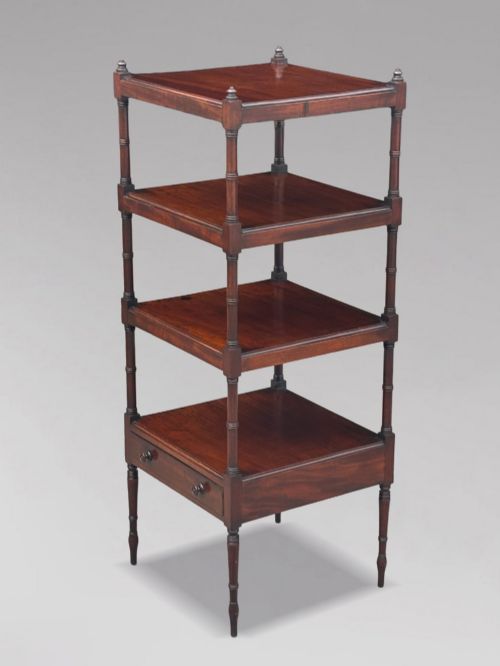
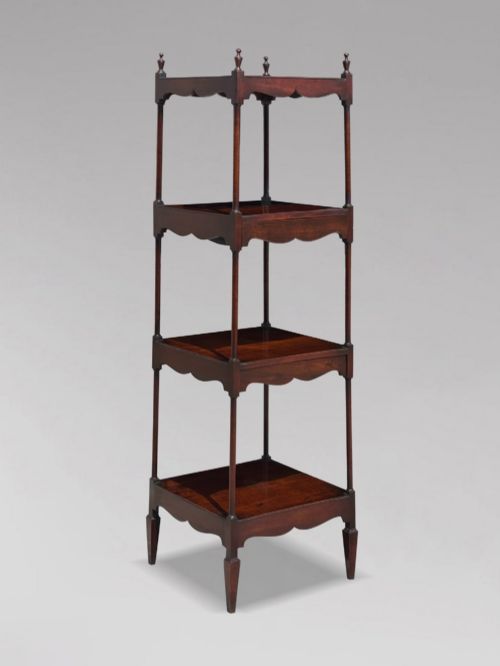
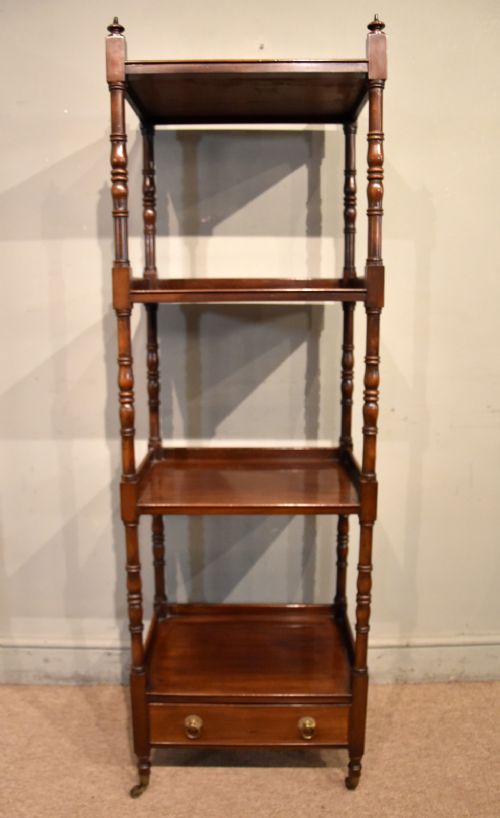
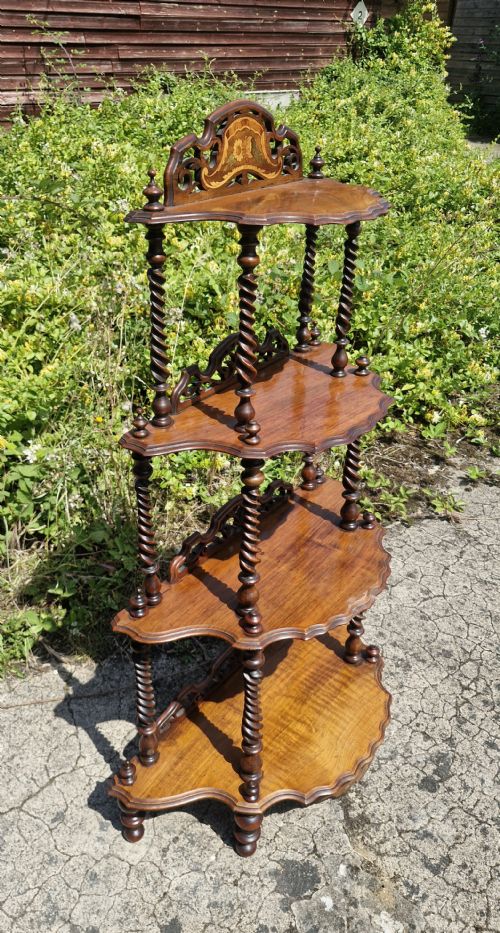
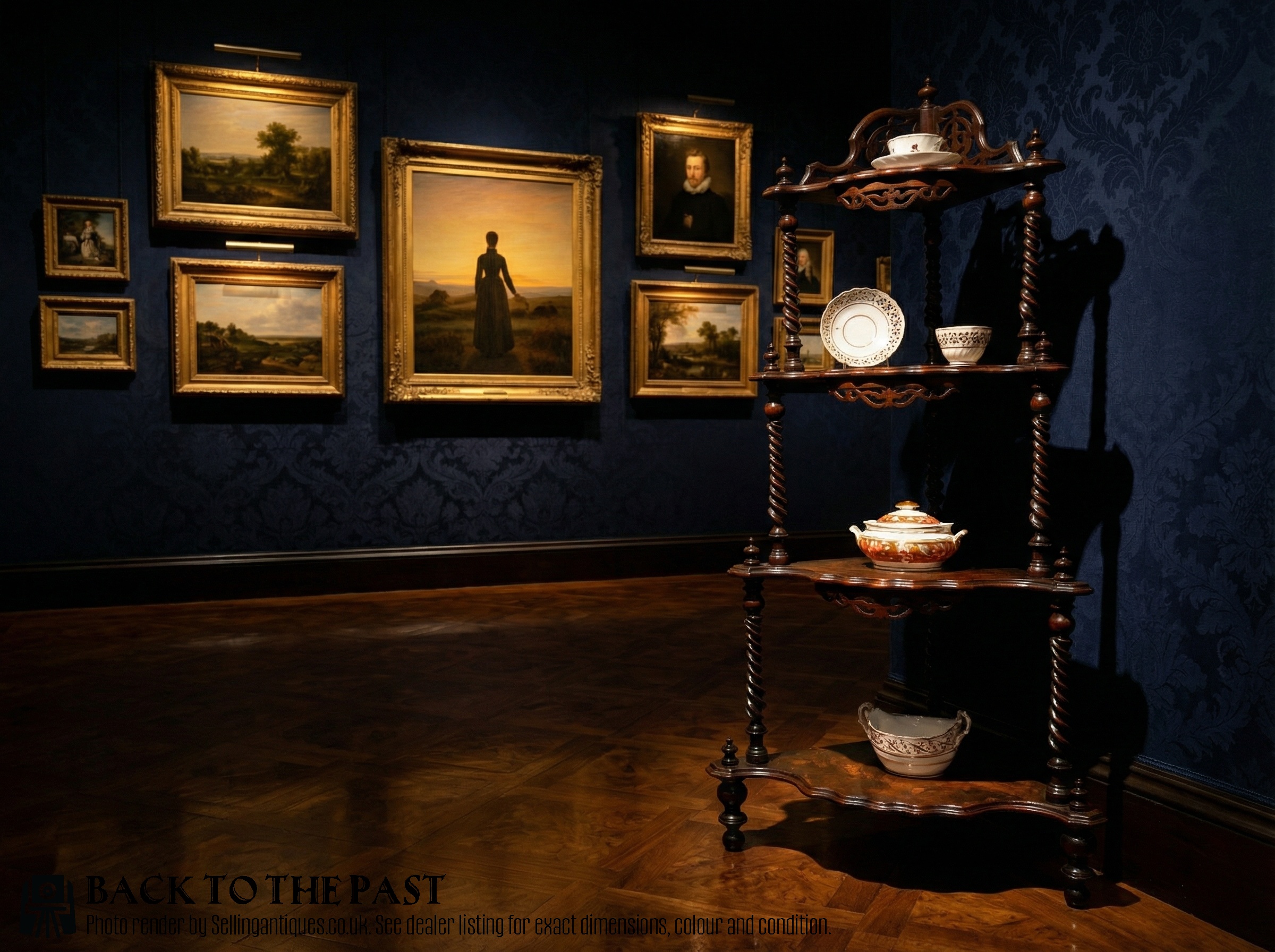
A four tier whatnot is a piece of standing open shelving designed for the display of ornaments, books, and collections in domestic rooms. The form is defined by horizontal shelves supported by turned, carved, or columned uprights, sometimes incorporating a drawer base or a reading stand.
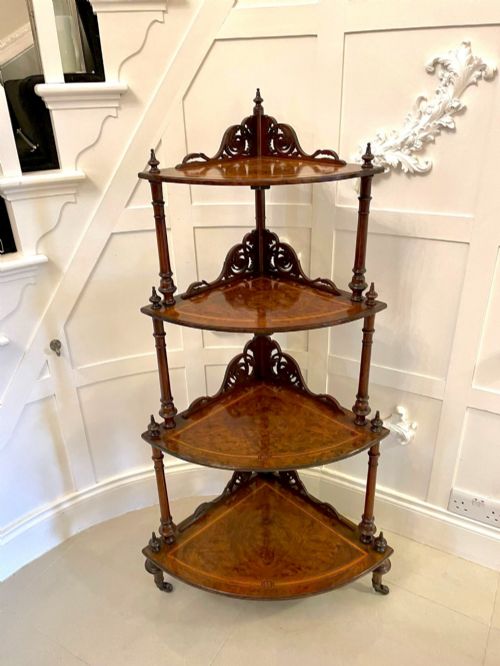
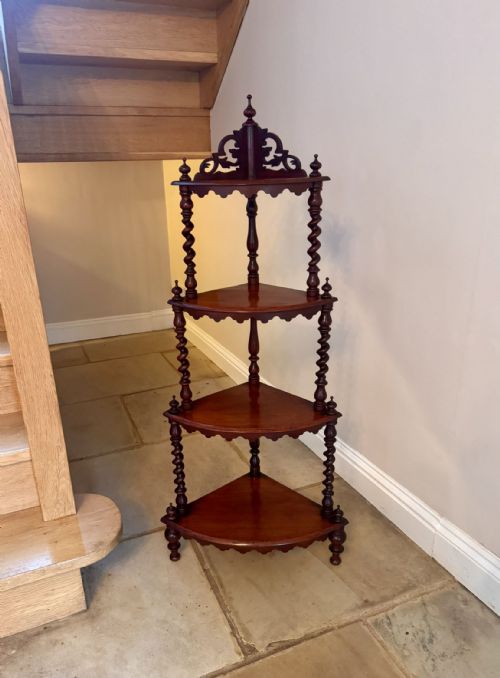
Most examples encountered on this page date from the nineteenth century, spanning the Regency, William IV, and Victorian periods, alongside earlier Georgian iterations. These pieces appear in freestanding rectangular formats as well as corner configurations designed to utilise room angles efficiently.
How they were made
Cabinetmakers constructed these pieces primarily in dense hardwoods such as mahogany, rosewood, and walnut, frequently selecting burr veneers for prominent surfaces. Timber preparation relied on traditional framing and joining methods to ensure the vertical stability of tiered structures.
Decorative enrichment included marquetry and wood inlay, brass fittings, and finely turned corner supports. More elaborate variants employed exotic woods like satinwood and ebony alongside carved structural detailing.
Four Tier Whatnot Retail Price Guide 2026
Typical asking prices for four tier whatnot among the pieces listed under this phrase on Sellingantiques today, from the lower quarter to the upper quarter. They describe what is for sale here now, not the wider market.
Available formats include freestanding rectangular standing shelves and specialised corner units, occasionally incorporating music stands and drawers.
What varies in quality
The standard of timber selection and veneer matching dictates the visual impact of the piece, with richly figured burr walnut or select rosewood representing the upper tier of production. Superior construction is evident in the crispness of turned supports, tight joinery, and the integration of functional elements such as drawers or adjustable stands.
Proportion and architectural balance separate standard workshop output from exceptional examples attributed to prominent cabinetmakers. The integrity of the original finish and the restraint or ambition of the inlay work further distinguish finer items.
Gillows
The Four Tier Whatnot Glossary
- Whatnot
- A piece of furniture consisting of several open shelves placed one above the other, used for displaying small objects or books. The form emerged in the late eighteenth century and remained popular through the Victorian era.
- Etagere
- A piece of furniture with a set of open shelves for displaying ornaments, closely related in form and function to the whatnot. These often exhibit lighter proportions and decorative framing.
- Marquetry
- Decorative woodwork in which delicate pieces of coloured wood, veneer, or shell are fitted into a background to form geometric or pictorial designs. This technique enhances the visual richness of tabletop and shelf surfaces.
- Burr walnut
- A specialised wood grain obtained from walnut tree growths, valued for its swirling, highly figured patterns. It was frequently used as a veneer on high-status Victorian furniture.
- Corner whatnot
- A specialised variant of the shelving unit constructed with a triangular footprint to fit snugly into the corner of a room. These maximise display space while occupying minimal floor area.
Four Tier Whatnot: Frequently Asked Questions
What was a four tier whatnot used for?
These pieces served as multi-purpose display stands in principal rooms for ceramics, silver, and books. They allowed owners to exhibit portable decorative items within easy reach.
Over time, their placement shifted from libraries and drawing rooms to private parlours and bedchambers as domestic interiors became more crowded.
How do I identify a Regency period piece?
Regency examples typically feature clean architectural lines, dark mahogany timbers, and classical column supports. Attention is paid to restraint in ornament and strict structural geometry.
Subtle details such as brass caster fixings and fine turning help separate this era from later Victorian interpretations.
Are corner versions less formal?
Corner whatnot units were designed specifically to occupy unused angles in smaller drawing rooms or parlours without obstructing traffic flow. Their triangular format offered identical display capacity to rectangular variants while saving floor space.
Despite their practical shape, walnut and inlaid examples matched the timber quality and decorative finish of freestanding pieces.
How do I care for rosewood shelves?
Rosewood surfaces require stable humidity conditions and protection from direct sunlight to prevent the timber from fading or splitting. Regular dusting with a dry, soft cloth preserves the polished finish.
Avoid placing damp items directly on antique veneer surfaces to prevent water marking and lifting of the wood.