

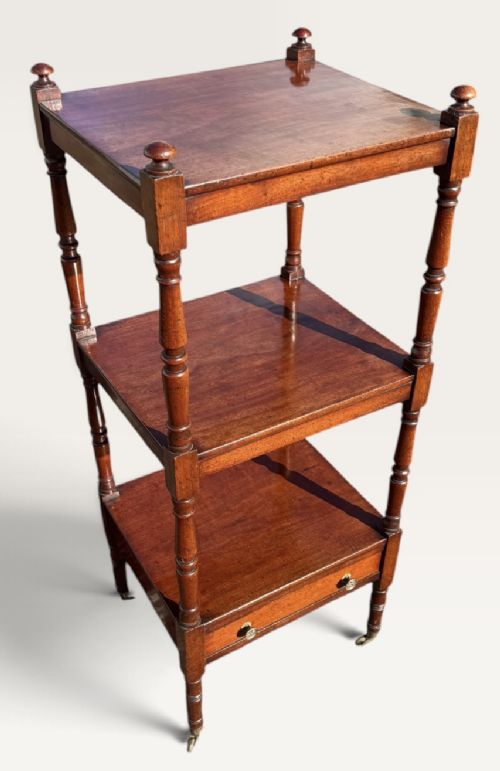
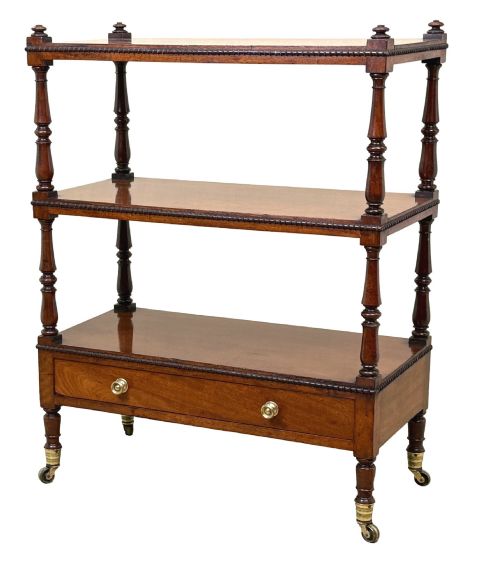
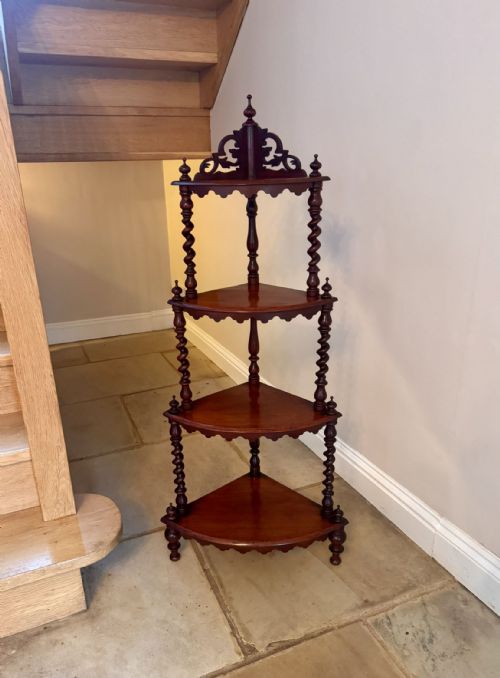
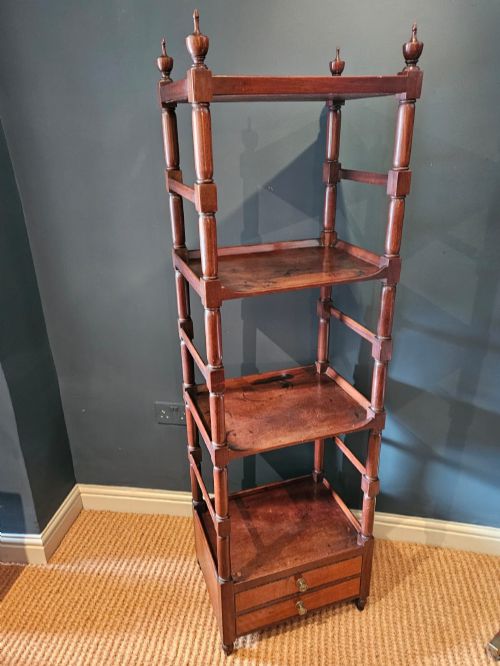


Mahogany Whatnot Stand
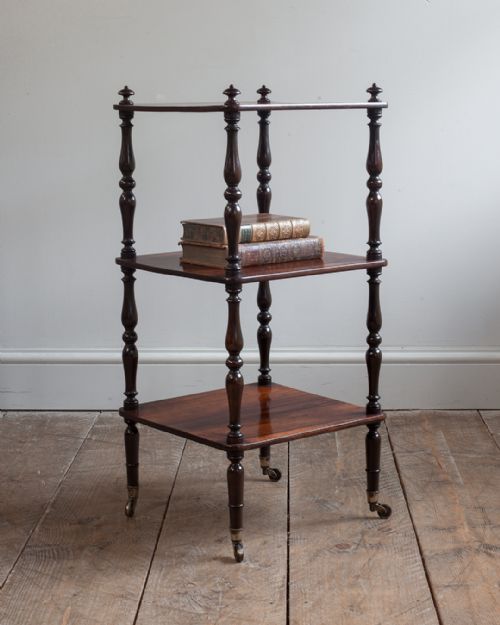
A mahogany whatnot stand is a tiered shelving piece built to display books and ornaments, prized for its slender utility.
Mahogany Whatnot Stand
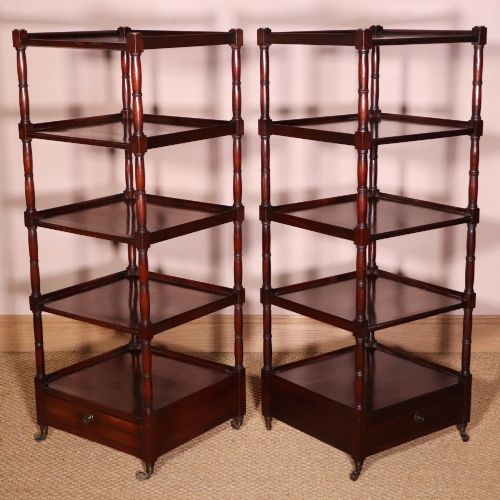
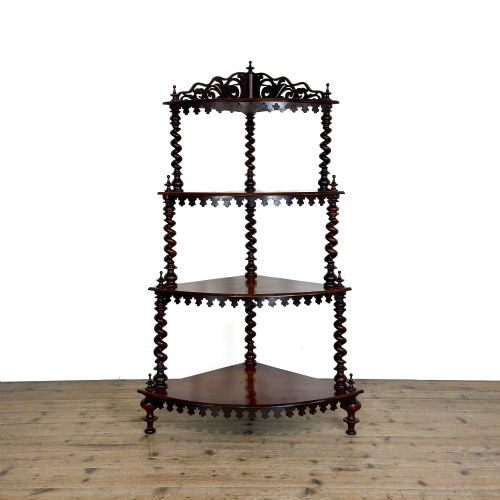
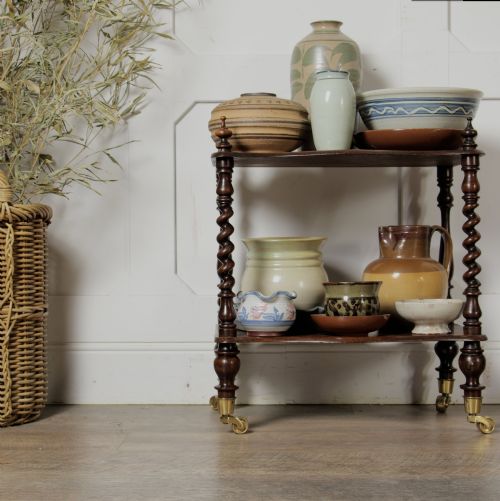
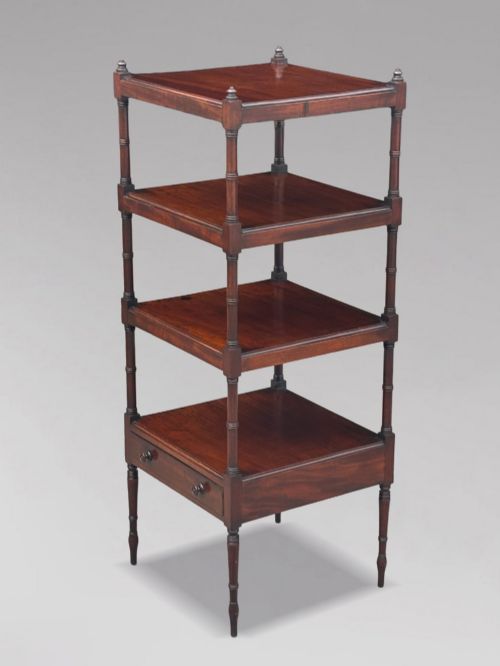
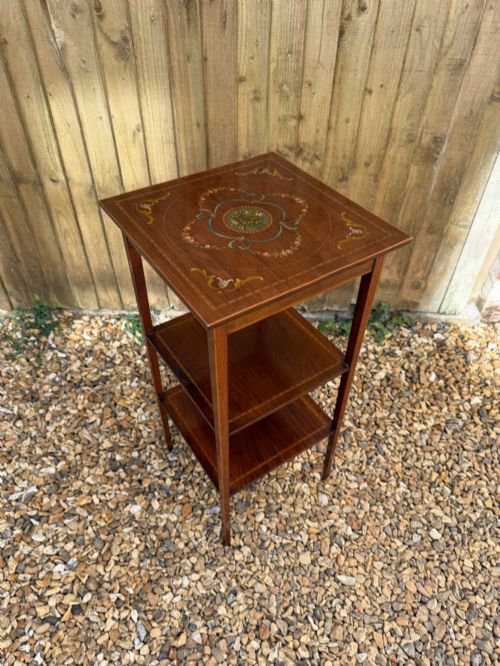
A mahogany whatnot stand brings tiered open display to a room, offering multiple levels supported by slender uprights. These pieces emerged to hold books, sheet music, or decorative objects without dominating the floor space.
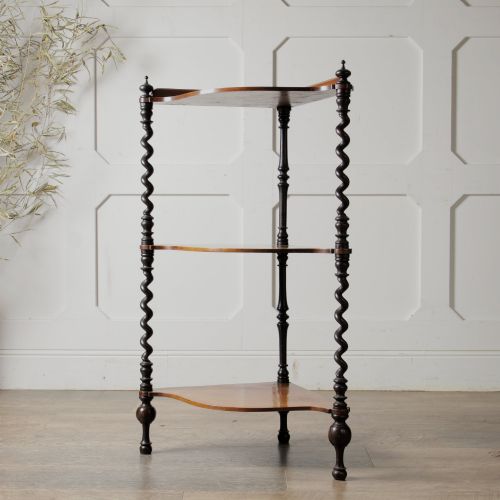
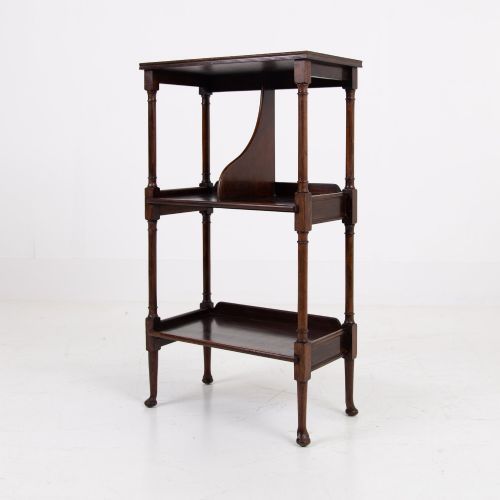
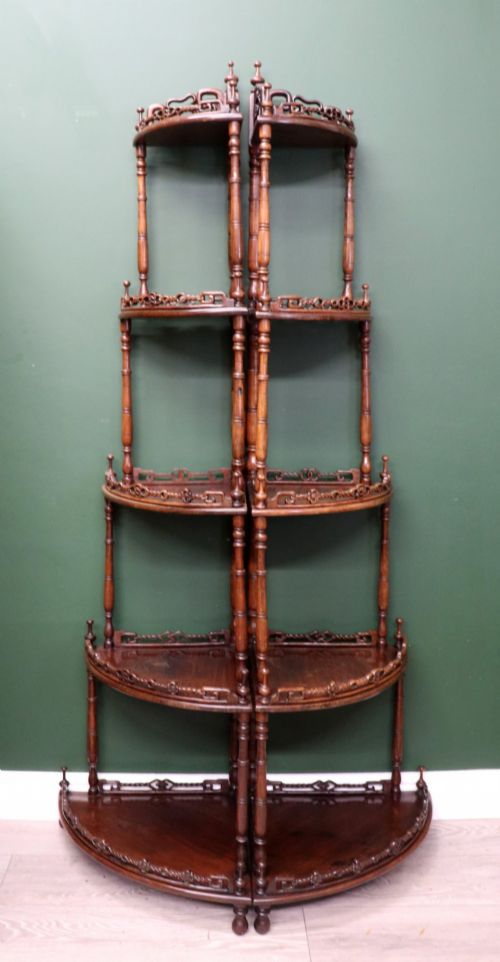
The versions met on this page span Georgian, Regency, William IV, and Victorian periods, often taking simple rectangular forms, corner configurations, or incorporating specialised music stands and reading slopes. Most examples rely on mahogany construction, sometimes accented with brass fittings or mounted on castors for mobility.
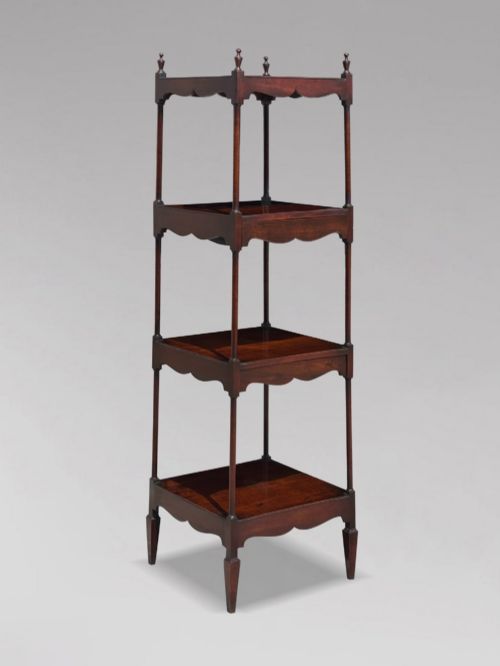
Makers adapted the basic multi-tiered formula into specialised variants like freestanding canterbury stands or compact bedside tables. A buyer encounters everything from simple three-tier shelves to taller four-tier and five-tier storage units.
What varies in quality
Quality rests in the selection of timber figures, the sharpness of the turnery on the upright posts, and the structural integrity of the tier joints. Finer examples display thoughtful proportion between the shelf spacing and the overall height, avoiding awkward gaps.
Mahogany Whatnot Stand Retail Price Guide 2026
Typical asking prices for mahogany whatnot stand among the pieces listed under this phrase on Sellingantiques today, from the lower quarter to the upper quarter. They describe what is for sale here now, not the wider market.
Listings on this site show mahogany whatnot stands spanning the Georgian, Regency, William IV, and Victorian periods, alongside specific music stand variants.
The Mahogany Whatnot Stand Glossary
- Whatnot
- A freestanding piece of furniture consisting of a set of shelves for displaying small objects or books. It developed in the late 18th century and remained popular through the Victorian era.
- Étagère
- A French term for a piece of furniture with a series of open shelves for displaying ornaments. It is functionally synonymous with the English whatnot.
- Canterbury
- A low stand with partitioned sections for sheet music, books, or folios, often combined with whatnot tiers above. It frequently sits on castors for easy movement across a room.
- A-frame
- A structural side profile where the upright supports taper inward toward the top. This configuration provides inherent stability to taller multi-tiered stands.
- Reading stand
- An adjustable book or music desk incorporated into the top tier of a whatnot. It uses a ratchet mechanism to alter the viewing angle.
Mahogany Whatnot Stand: Frequently Asked Questions
What is a whatnot stand used for?
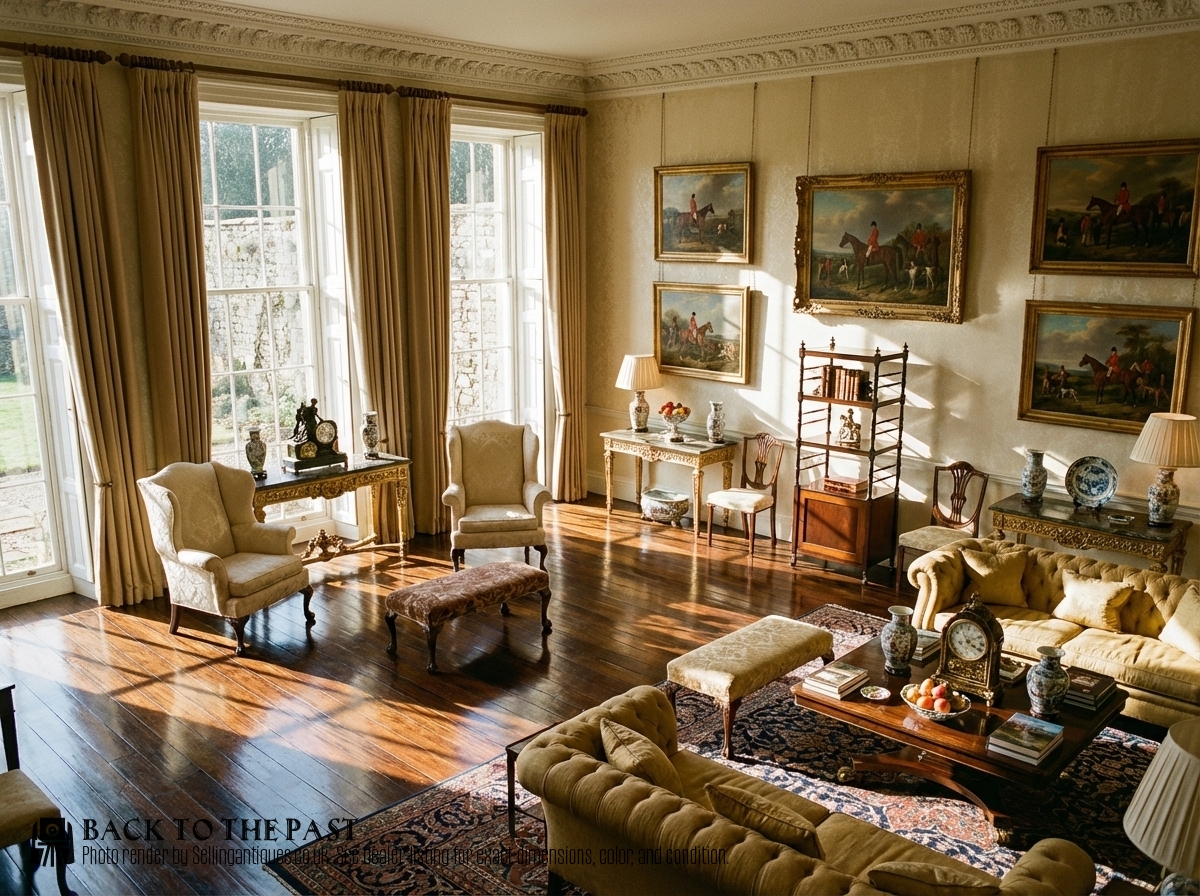
These stands served to hold books, ceramics, and ornaments in sitting rooms and parlours. Their open tiers kept collections visible and accessible.
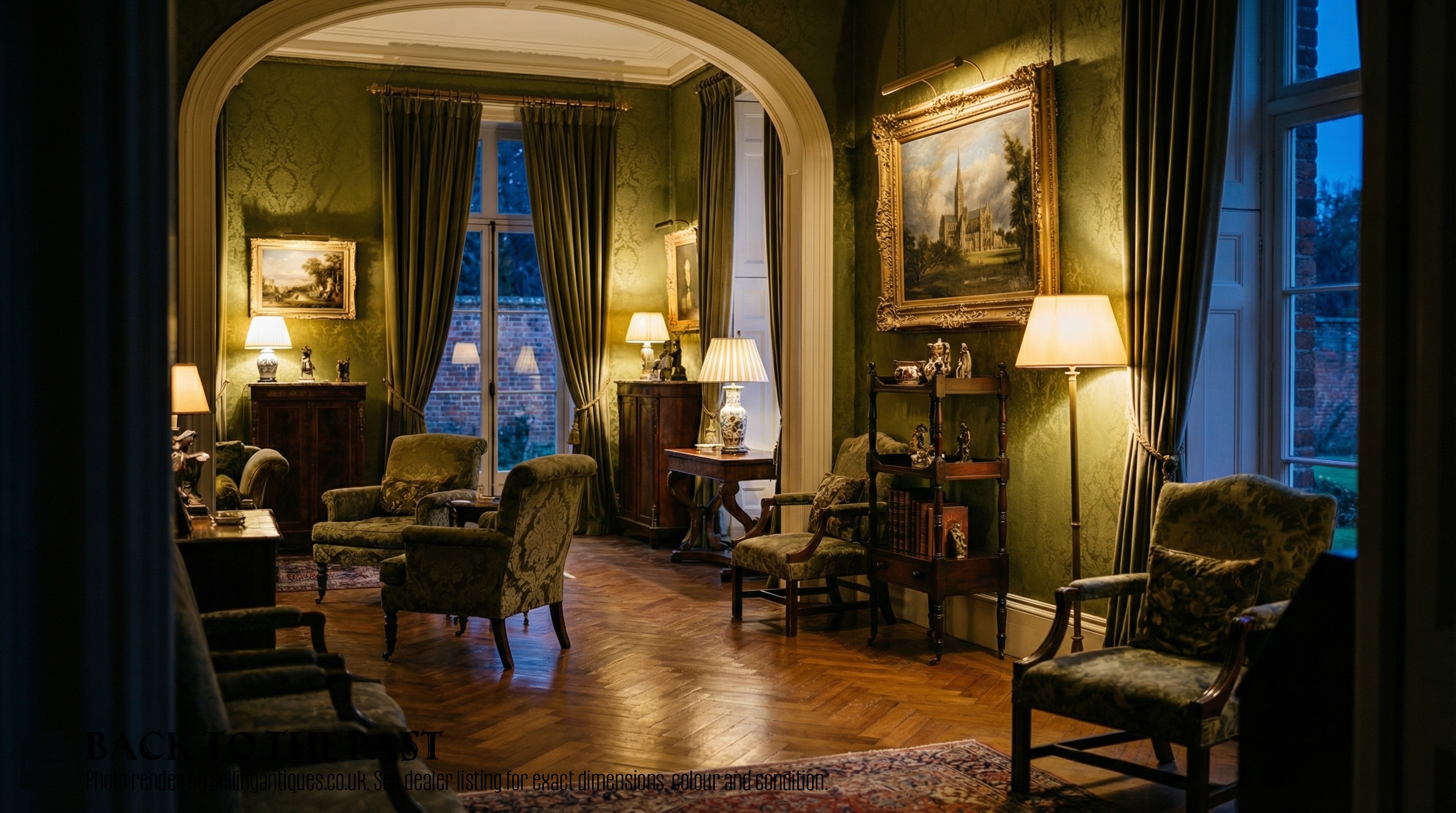
Today they function effectively as lamp tables, plant stands, or corner display units in domestic interiors.
How do I date a mahogany whatnot?
Dating relies on stylistic markers, such as the slender reeded legs of the Regency period or the heavier, bolder turnery typical of William IV and early Victorian pieces. Edge mouldings and bracket designs also shift across these decades.
Examining the underside and construction joints reveals timber preparation methods consistent with specific manufacturing eras.
Are all these stands made of solid mahogany?
While primary surfaces and structural posts utilise solid mahogany, cabinetmakers frequently applied flame or figured mahogany veneers to shelf panels. Secondary timbers like pine or oak sometimes appear in drawer linings.
Matching the timber grain across tiers indicates the grade of materials selected by the original maker.
Can a whatnot stand safely hold heavy books?
Most standard tiers are designed for decorative items, small volumes, or sheet music rather than heavy folio libraries. The upper shelves taper in depth and weight capacity.
Placing heavier reference books on the lowest tier maintains the overall balance of the freestanding frame.