


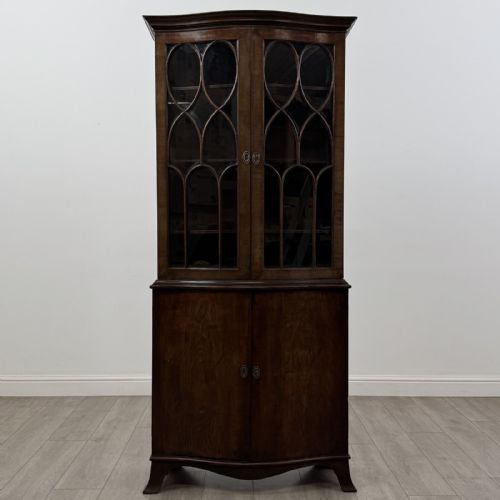
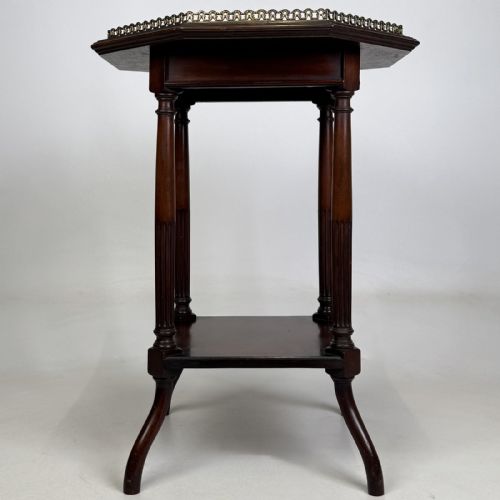
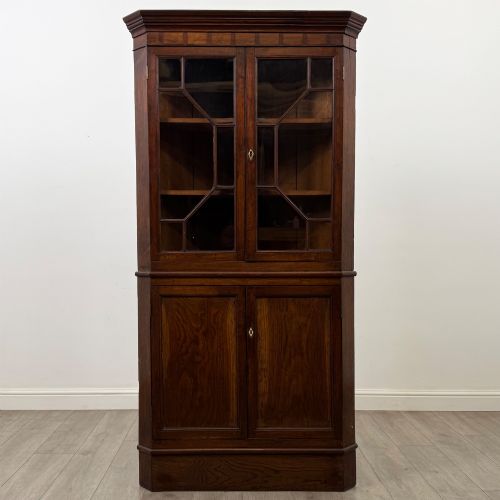
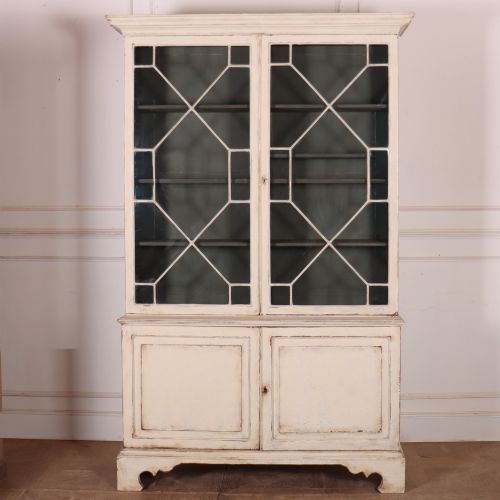
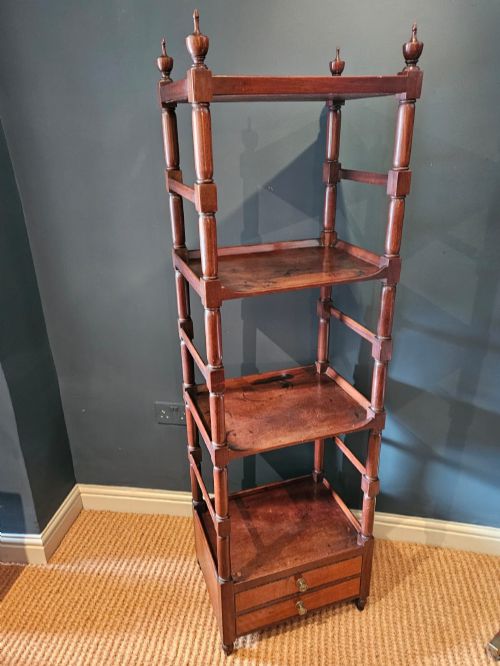
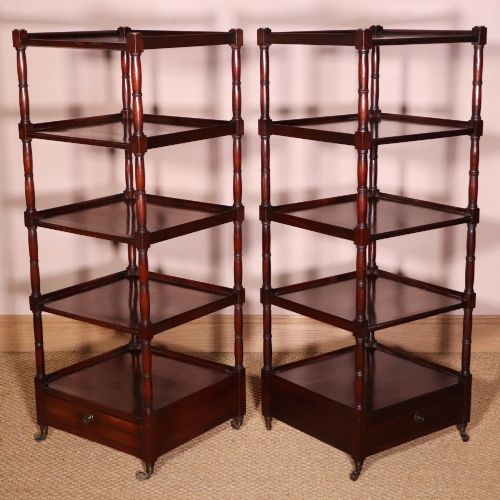
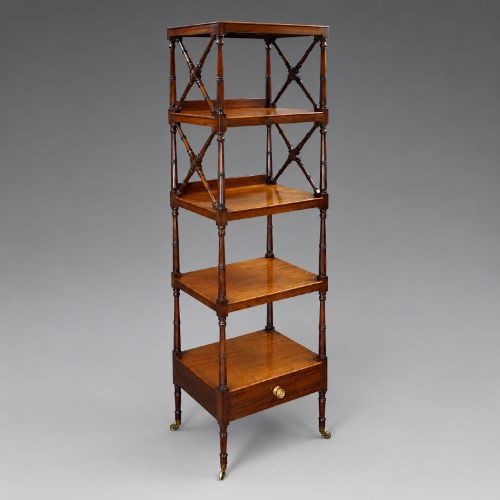
Georgian Tier Stand
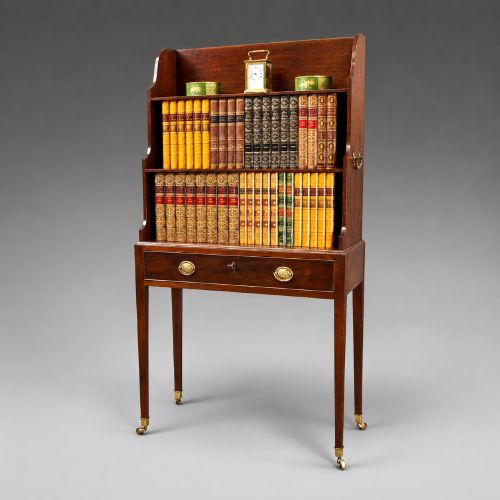
These Georgian tier stands are multi-level timber pieces designed to hold books, serving dishes or washware.
Georgian Tier Stand
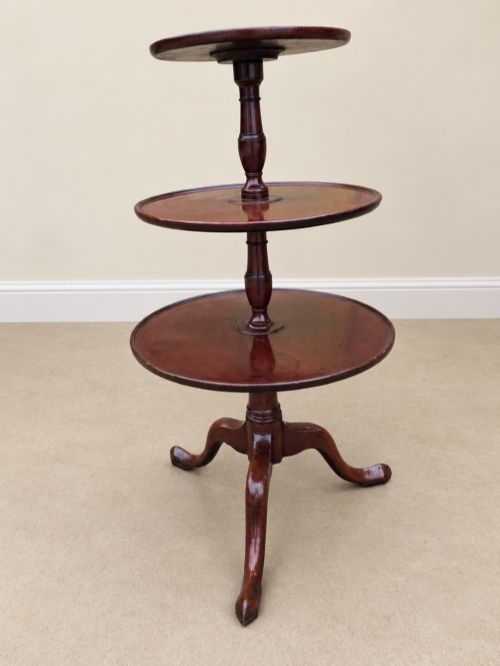
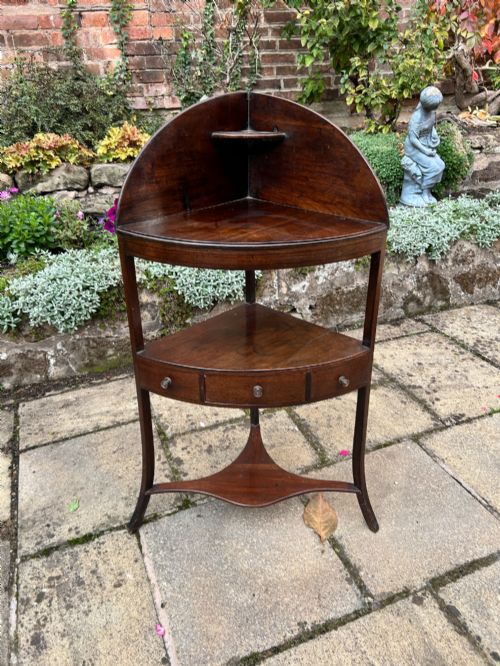
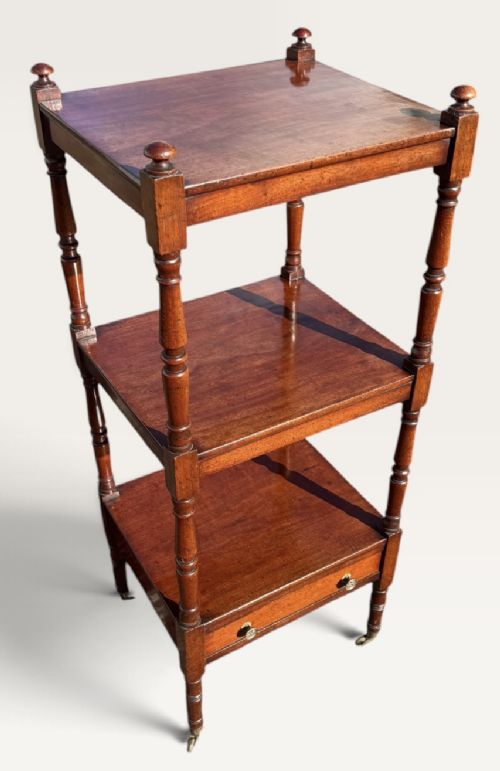
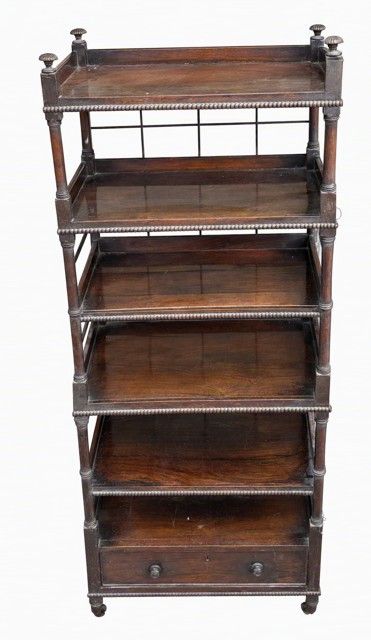
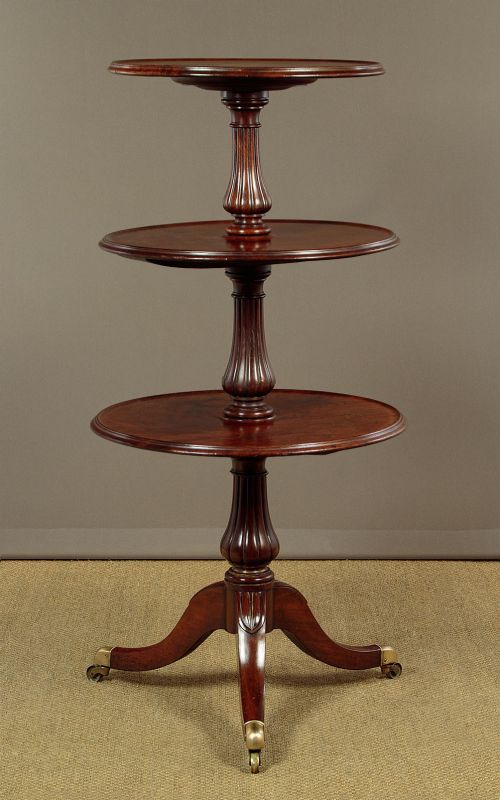
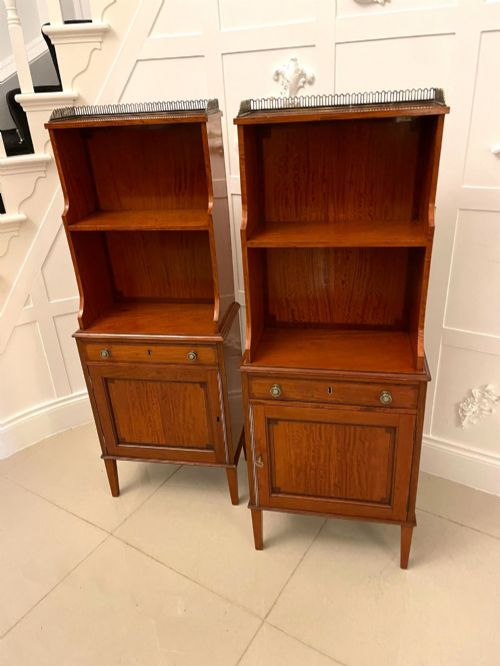
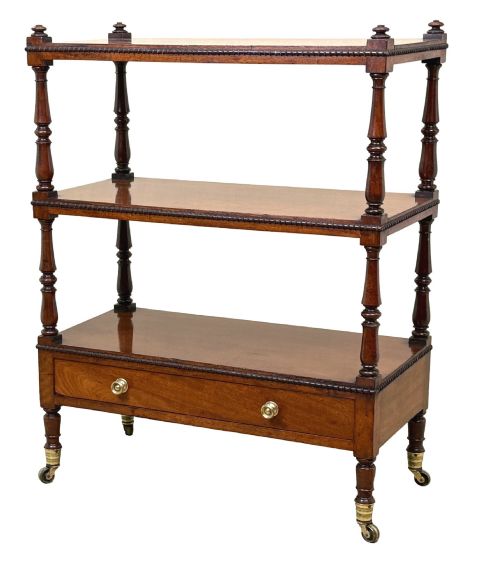
A georgian tier stand comprises stacking surfaces supported by uprights, designed for service or display in period interiors. The form includes whatnots, etageres, dumb waiters and washstands across multiple levels.
You meet mahogany most often on this page, occasionally with brass fittings or rosewood elements. Pieces span the Georgian and Regency periods, including George III and Sheraton styles.
Forms range from folding drop-leaf tables and corner washstands to freestanding A-frame whatnots and music stands. Many feature two, three or four tiers depending on their intended domestic use.
How they were made
Cabinetmakers built these tier stands primarily using solid mahogany and figured veneers. Timber selection focused on grain pattern and stability across the multiple shelves and uprights.
Metal components such as brass castors, hinges or galleries appear on specific examples to aid movement and secure items on upper levels. Joinery techniques tied vertical supports directly to horizontal platforms.
Georgian Tier Stand Retail Price Guide 2026
Typical asking prices for georgian tier stand among the pieces listed under this phrase on Sellingantiques today, from the lower quarter to the upper quarter. They describe what is for sale here now, not the wider market.
Octagonal drop-leaf tiers fold down when you need to reclaim your dining room floor.
What varies in quality
Timber selection and grain figure separate standard examples from finer work, particularly on prominent display surfaces. Cabinetmakers who matched mahogany veneers across multiple tiers achieved a more cohesive visual balance.
The sophistication of turning on upright supports and the integration of functional elements like folding leaves or brass galleries determine the execution level. Heavier structural framing distinguishes robust dumb waiters from lighter display whatnots.
The Georgian Tier Stand Glossary
- Whatnot
- A freestanding piece of furniture with multiple open shelves for displaying ornaments or books. It developed in the late 18th century as domestic display requirements expanded.
- Etagere
- A French term for a display stand with several shelves tiered one above the other. These served similar domestic functions to British whatnots.
- Dumb waiter
- A tiered serving table designed to hold food and utensils without the presence of servants. They often feature revolving or graduating circular trays.
- Galleried
- Having a raised decorative border around the edge of a shelf to prevent items from sliding off. This feature appears frequently on upper tiers.
- A-frame
- A structural profile where upright supports taper inward toward the top. This configuration provides stability across multiple stacked shelves.
Georgian Tier Stand: Frequently Asked Questions
What is a dumb waiter?
A dumb waiter is a tiered serving table used in dining rooms during the Georgian period. It allowed diners to help themselves to courses without servants present.
These pieces feature rotating or stacked circular trays supported by a central pillar or tripod base.
How do you use a whatnot?
A whatnot functions as an open display and storage unit for books, ceramics and decorative objects. Its multiple tiers provide vertical storage in smaller rooms.
Place them in corners or against walls where open shelving adds practical surface area.
What is the difference between a whatnot and an etagere?
A whatnot is typically a British term for a multi-tiered shelving unit used for general display. An etagere originates from French terminology but describes a similar multi-level stand.
Both forms serve identical practical purposes in period interiors.
How do you date a Georgian tier stand?
Dating relies on timber choices, construction methods and stylistic markers such as Sheraton proportions or Regency turnings. Secondary woods and fastener types provide further clues to the manufacturing era.
Comparing structural details against documented examples helps narrow down the decade of production.