
Tiered Serving Table
A tiered serving table offers practical multi-level surface space, combining traditional craftsmanship with functional design for modern entertaining.
Tiered Serving Table
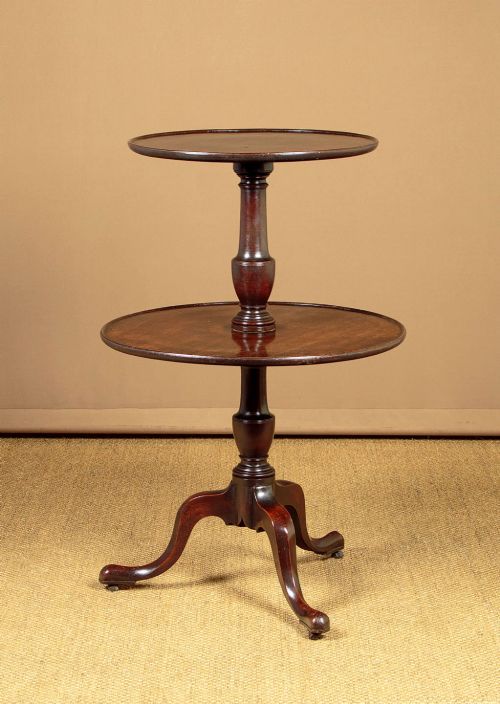
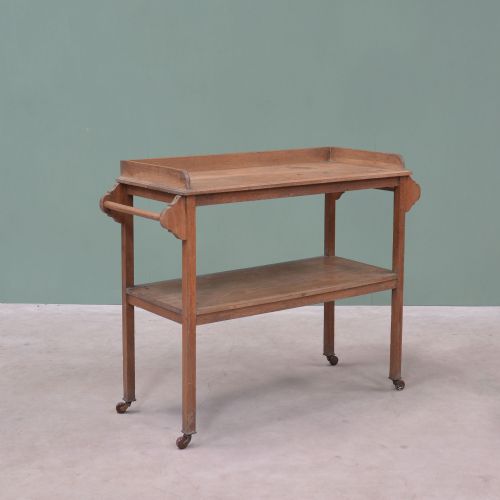
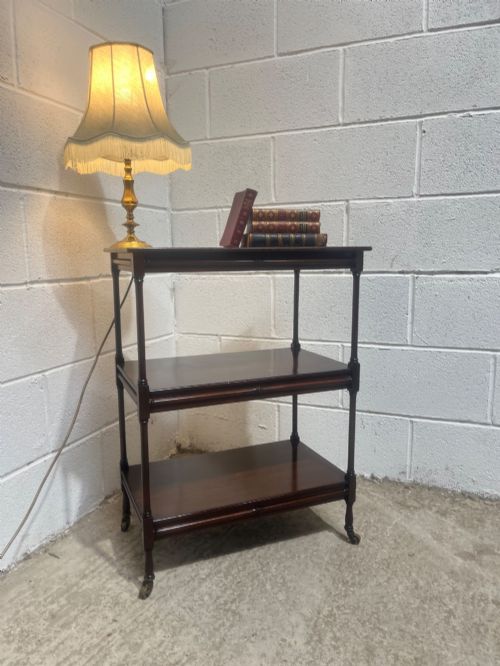
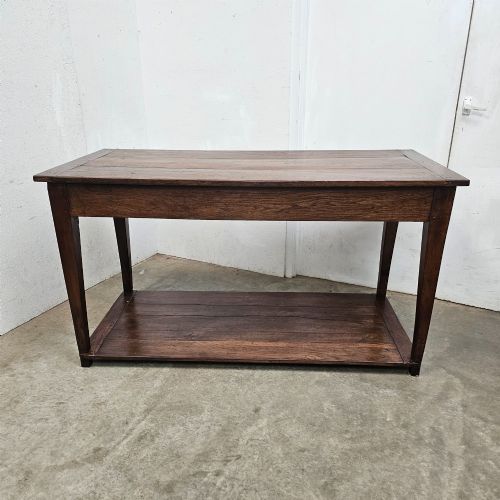
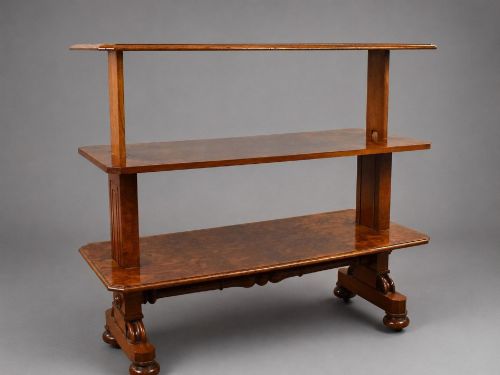
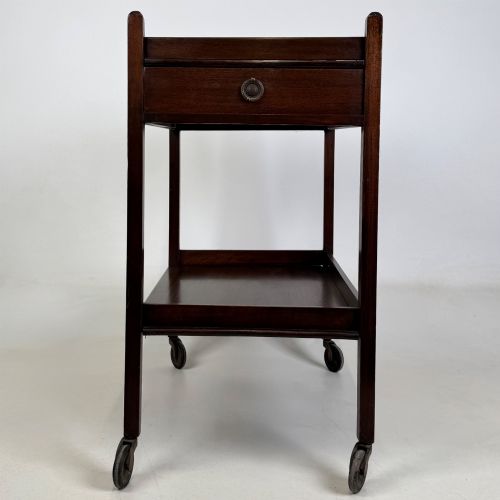
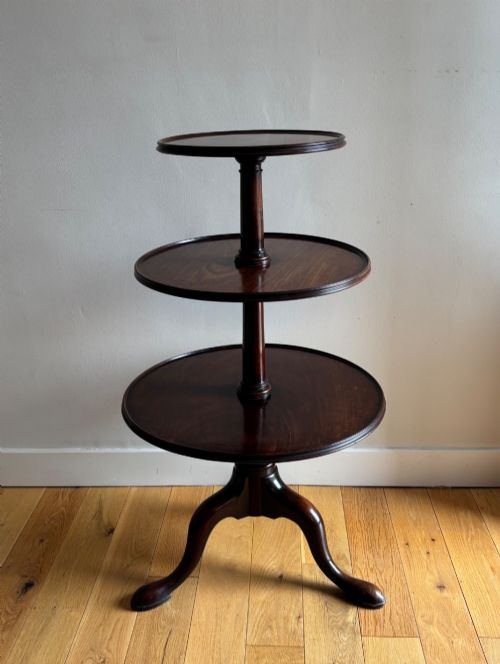
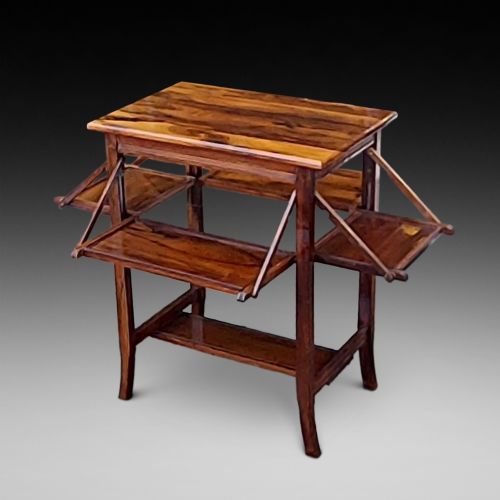
A tiered serving table provides multiple stacked surfaces designed for presenting food, drinks, or books within a domestic interior. When searching for a tiered serving table, buyers encounter forms ranging from Georgian dumbwaiters to Edwardian tea trolleys and Victorian buffets. These pieces accommodate varied hosting requirements through revolving circular tiers or rectangular drop-leaf levels.
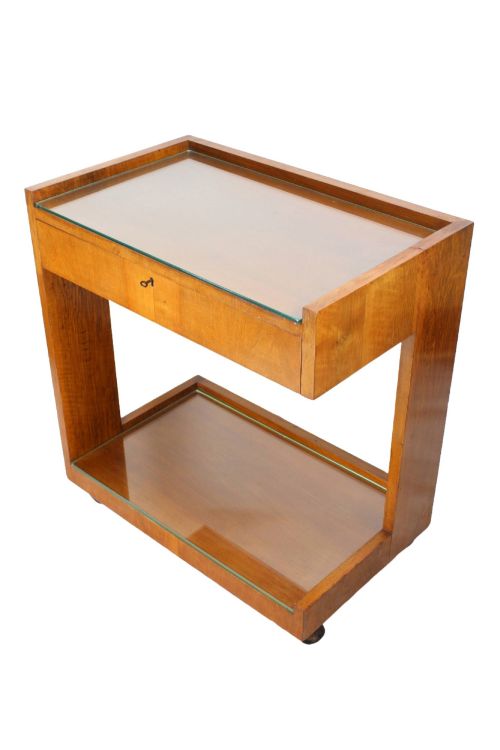
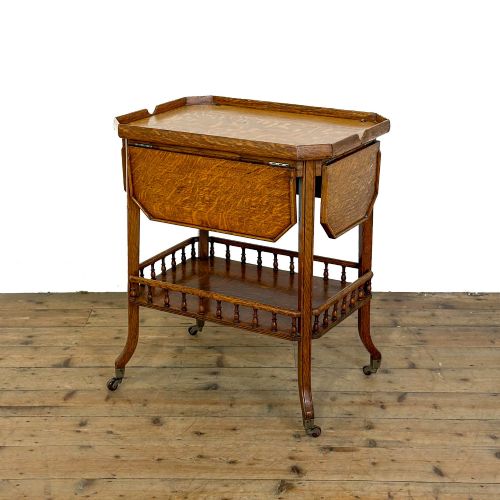
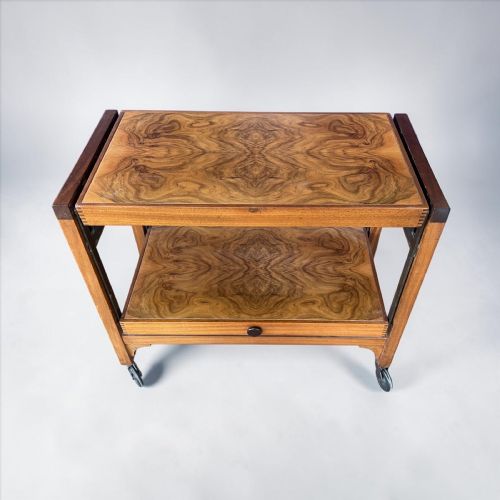
The versions most frequently met on this page include mahogany dumbwaiters from the Georgian and Regency periods, alongside oak and walnut tea trolleys from the Edwardian era and the 1920s. Examples often incorporate castors for mobility or feature rise-and-fall mechanisms. Each piece reflects the social dining habits of its respective century.
How they were made
Cabinet makers constructed these pieces primarily from solid timbers and veneers of mahogany, oak, walnut, and rosewood, occasionally incorporating pollard oak or amboyna for decorative effect. Secondary elements utilised brass for castors, hinges, and tier supports, while marble appeared on specific surfaces.
Construction techniques involved turning central pillars on lathes for revolving dumbwaiters, jointing rectangular frames for tea trolleys, and fitting mechanical rises or folding actions. Timber surfaces received polished finishes that highlighted the grain structure of the selected wood.
Tiered Serving Table Retail Price Guide 2026
Typical asking prices for tiered serving table among the pieces listed under this phrase on Sellingantiques today, from the lower quarter to the upper quarter. They describe what is for sale here now, not the wider market.
Some Victorian dumbwaiters possess folding actions that allow the entire structure to collapse flat, anticipating modern flat-pack convenience by over a century.
What varies in quality
The distinction between tiers rests upon the selection of timber figures, such as figured mahogany or burr walnut, and the precision of the joinery connecting the levels to the central support or frame. Superior examples demonstrate harmonious grain matching across multiple shelves and robust construction that supports weight without instability.
Execution of mechanical elements, including original castors, smooth revolving actions, and functional rise-and-fall mechanisms, marks the upper tier of manufacture. Simpler utility trolleys from later decades display straightforward assembly suited to domestic tea service rather than cabinet-making virtuosity.
The Tiered Serving Table Glossary
- Dumb waiter
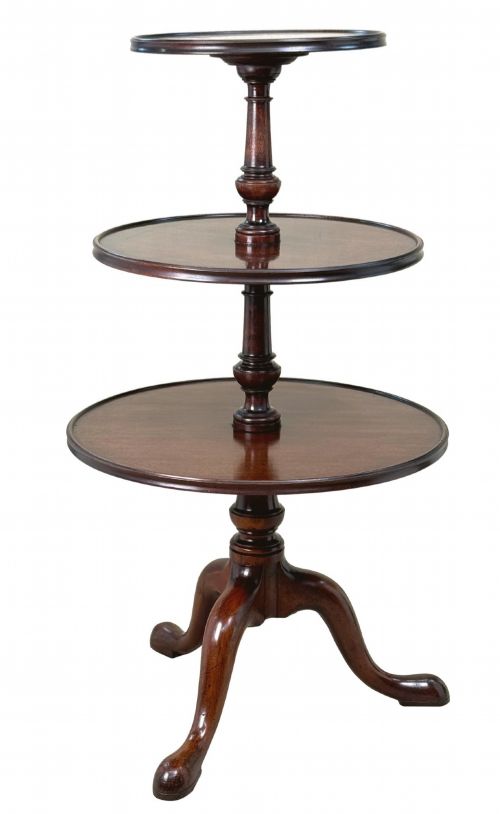
- A multi-tiered serving table designed to hold dishes or drinks without requiring a servant present at the table. These pieces often feature graduated circular trays on a central column.
- Trolley
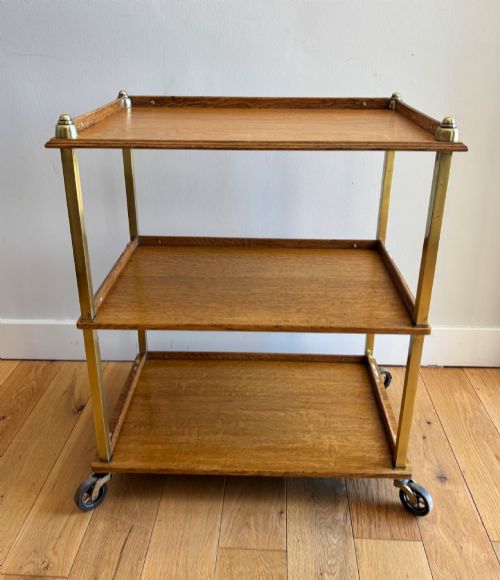
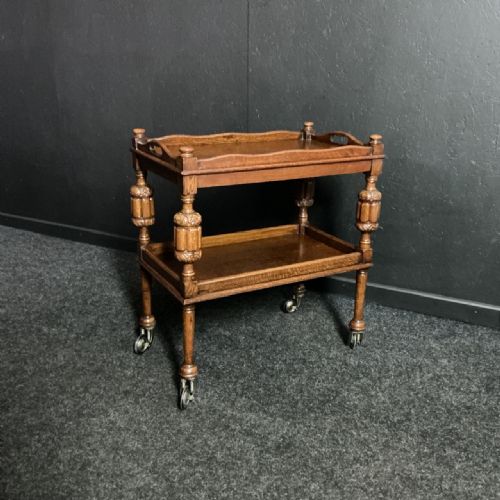
- A mobile serving table mounted on wheels or castors, frequently produced in oak or mahogany during the Edwardian period and the 1920s. They often include drop leaves or folding actions.
- Buffet
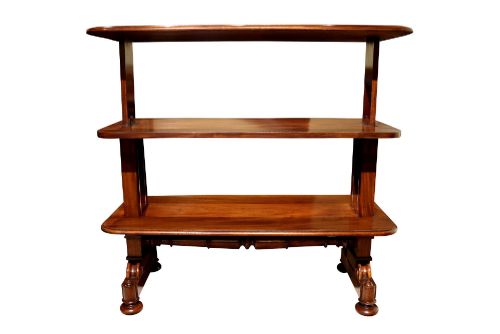
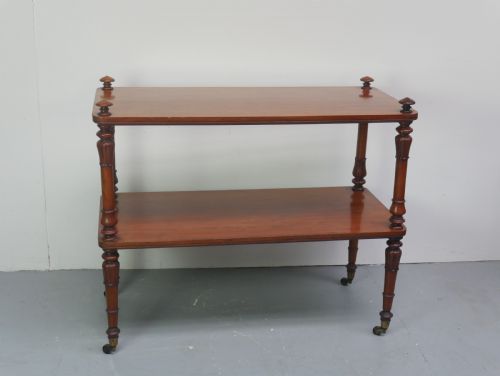
- A substantial tiered serving table or sideboard used for food presentation in dining rooms, particularly prominent during the Victorian and William IV periods. They frequently incorporate three tiers.
- Etagere
- A set of open shelves or tiers used for displaying objects or serving items, seen in late Victorian variations. The design prioritises vertical storage space.
- Metamorphic
- Describing a piece of furniture that transforms its configuration, such as a serving table or dumbwaiter altering its height or surface area through mechanical action.
Tiered Serving Table: Frequently Asked Questions
What is a tiered serving table used for?
These pieces function as multi-level surfaces for presenting food, afternoon tea, or beverages during social gatherings. Historical examples provided extra capacity in dining rooms where space on the main table was limited.
Today, they serve similar hosting duties while functioning as static display stands for books, plants, or decorative objects within living spaces.
How do I identify a Georgian dumb waiter?
Georgian examples typically feature two or three graduated circular wooden tiers rotating on a turned central pillar supported by tripod legs. The timber is predominantly solid mahogany with deep patina.
Later Victorian and Edwardian variations often introduce castors, rectangular shelves, or mechanical lifting devices that distinguish them from earlier 18th-century forms.
Were all tiered serving tables mobile?
Not all variants include wheels. Early dumbwaiters from the Georgian and Regency periods rely on stable tripod bases designed to stand firmly in one place beside a dining table.
By the late 19th and early 20th centuries, tea trolleys and butler's trolleys commonly incorporated castors to allow easy movement across the floor during service.
How do I care for a wooden tiered table?
Maintain the polished timber surfaces by dusting regularly with a soft, dry cloth and avoiding placement near direct heat sources or strong sunlight. Periodic application of appropriate wax preserves the finish.
Protect the tiers from moisture by using coasters or mats under glasses and serving dishes to prevent water rings on antique polished wood.
What is a metamorphic serving table?
A metamorphic tiered table incorporates mechanical ratchets or screws that allow the shelves to rise, fall, or adjust in height. These adjustments adapted the furniture for different dining or serving positions.
William IV and Victorian makers favoured these complex operational designs to combine the functions of a low table and a tall buffet within a single item.