

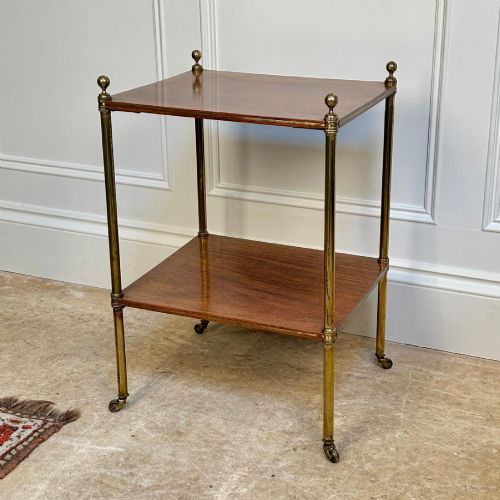
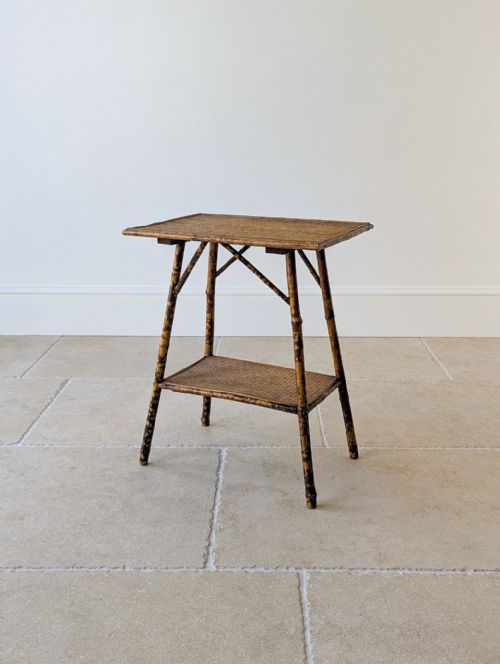
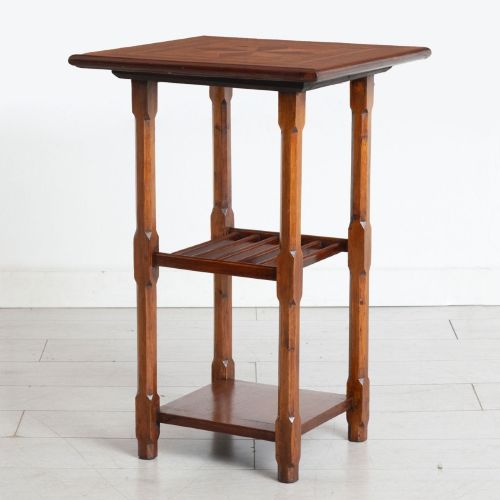
Tiered Display Table
A tiered display table brings multiple levels of surface space into a room, offering practical elegance for displaying objects.
Tiered Display Table
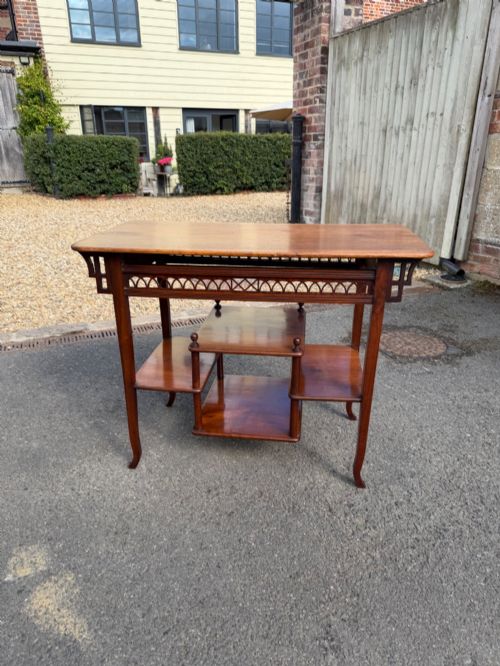
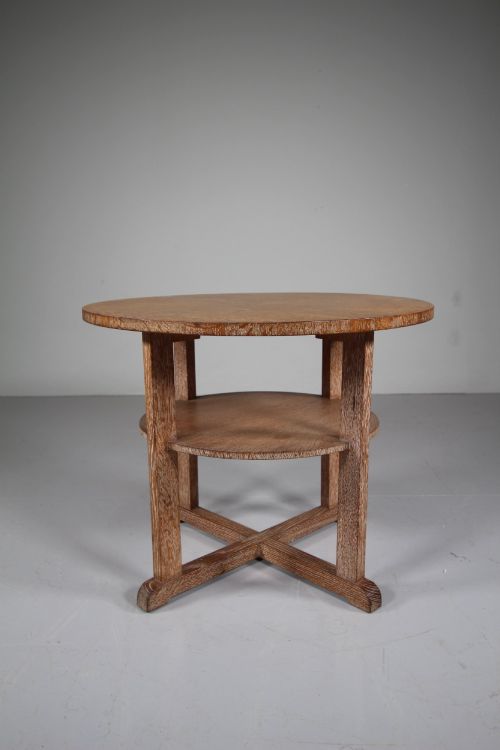
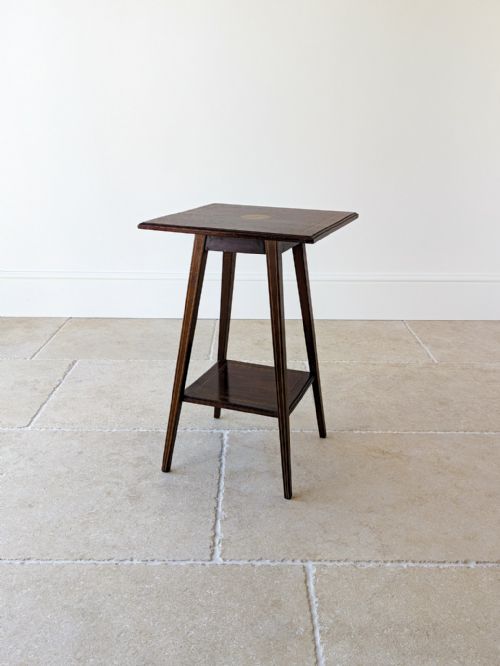
A tiered display table is designed with multiple shelves or surfaces stacked vertically to hold ornaments, books, or plants without occupying excessive floor space. These pieces serve functional roles as side tables, bedside surfaces, or plant stands while adding architectural height to a room.
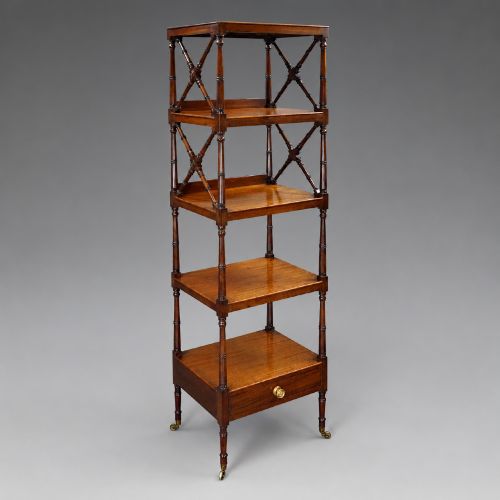
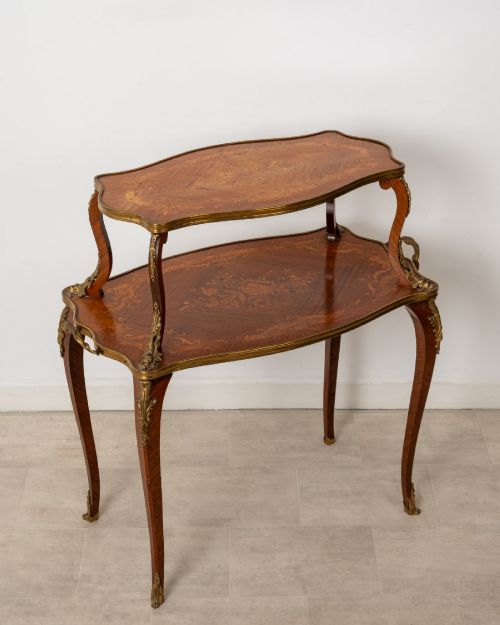
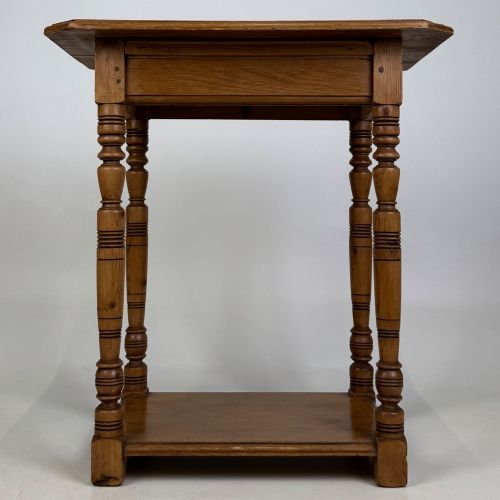
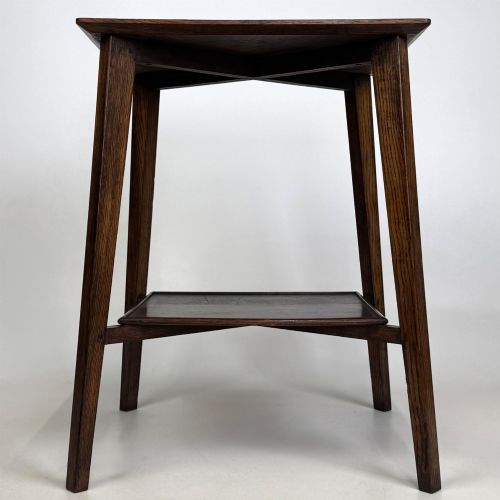
Buyers searching for a tiered display table most commonly encounter Victorian and Edwardian examples alongside pieces from the early twentieth century. Forms range from classical mahogany whatnots and etageres to occasional tables and plant stands utilising multiple tiers.
The materials span traditional timbers such as mahogany, walnut, rosewood, and oak, alongside brass, bamboo, and ebonised wood. Styles vary from Regency and Victorian to Arts and Crafts, Art Deco, and French revival designs.
How they were made
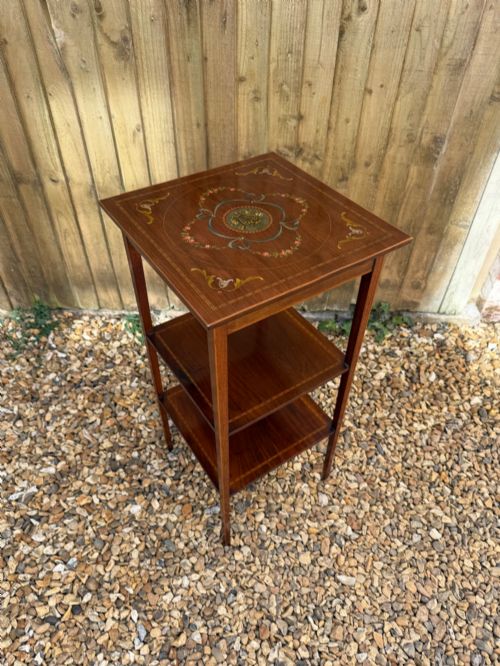
Timbers like mahogany, walnut, rosewood, and satinwood provide the structural foundation for many pieces, frequently enhanced by parquetry, marquetry, or painted finishes. Craftsmen shaped these woods using traditional joinery, turning legs for support and building tiered shelves connected by uprights or columns.
Alternative materials include brass, bamboo, cast iron, and ebonised wood, reflecting diverse period tastes from nineteenth-century bamboo stands to twentieth-century brass and glass or metal frameworks. Decorative elements incorporate parcel gilding, hand carving, and brass fittings to secure and accent the tiers.
The selection includes forms such as whatnots, etageres, plant stands, and occasional tables spanning the nineteenth and twentieth centuries.
What varies in quality
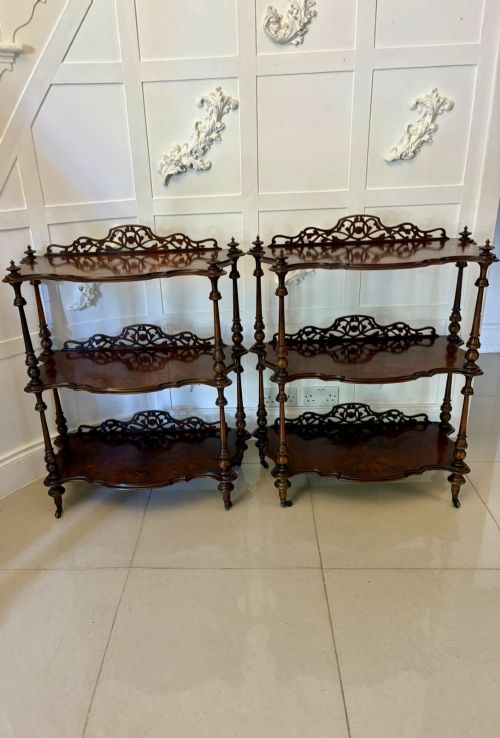
Quality in a tiered display table rests upon the selection of timber, the crispness of the carving or inlay, and the structural integrity of the vertical supports. Dense burr walnut, finely figured mahogany, and intricate marquetry indicate higher workshop standards.
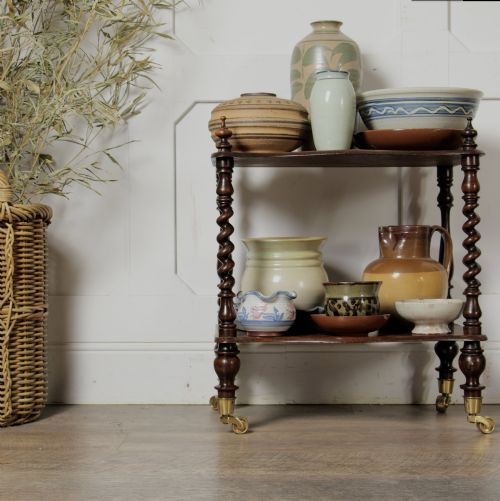
The refinement of the joinery and the stability of the stacked tiers determine how well the piece holds its form over time. Subtle details such as turned barley twist legs, delicate brass galleries, or hand-carved motifs separate standard utility pieces from finer decorative examples.
Liberty of London·Maison Giroux
The Tiered Display Table Glossary
- Etagere
- A piece of furniture consisting of a set of open shelves for displaying small objects or ornaments. These typically feature two or three tiers supported by slender columns.
- Whatnot
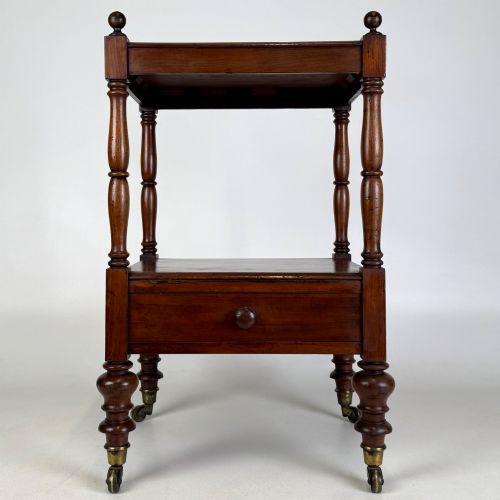
- An open set of shelves used for displaying articles, popular during the nineteenth century. It often stands on legs and can include a small drawer at the base.
- Marquetry
- Decorative veneer applied to furniture in patterns or pictures using thin slices of wood, shell, or ivory. This technique frequently appears on French and Edwardian table surfaces.
- Parquetry
- Geometric mosaic woodwork used for ornamenting floors, furniture panels, and table tops. It creates repeating patterns using contrasting wood blocks.
- Barley twist
- A type of woodturning that creates a spiral column resembling a twisted rope. This detail frequently decorates the upright supports of Victorian stands.
Tiered Display Table: Frequently Asked Questions
What is a tiered display table used for?
These tables provide multiple surfaces arranged vertically to hold plants, lamps, books, or decorative objects. Their stacked design allows them to utilise vertical room space efficiently.
They function well as bedside tables, plant stands, or side tables in sitting rooms where extra surface area is useful.
How do I identify a Victorian whatnot?
Victorian whatnots typically feature three or more open shelves supported by turned or carved vertical pillars. They often incorporate timbers like mahogany or burr walnut.
Many examples include small drawers beneath the lower shelf and stand upon castors for mobility.
What is the difference between an etagere and a side table?
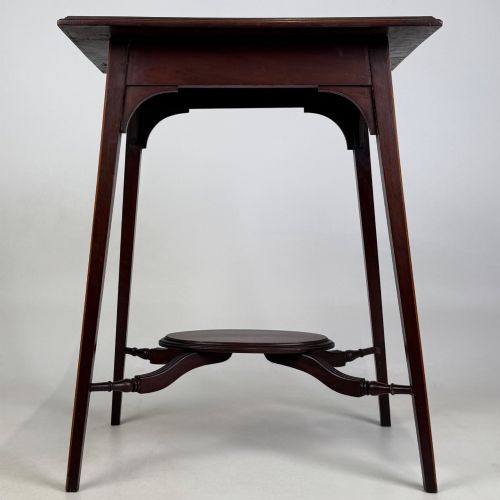
An etagere is defined specifically by its multiple open display tiers stacked one above the other. Standard side tables usually offer a single main surface with perhaps a lower undertier.
Tiered etageres focus primarily on display rather than primary surface utility.
Are these tables suitable for small rooms?
Their vertical orientation makes tiered tables ideal for compact spaces because they multiply surface area without expanding the floor footprint. Slim profiles fit easily beside seating or in corners.
Corner designs and narrow etageres make efficient use of otherwise neglected room areas.