


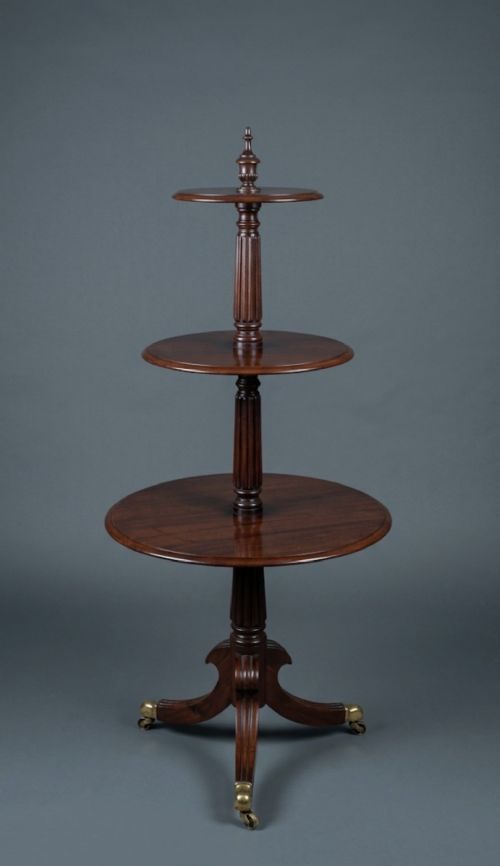

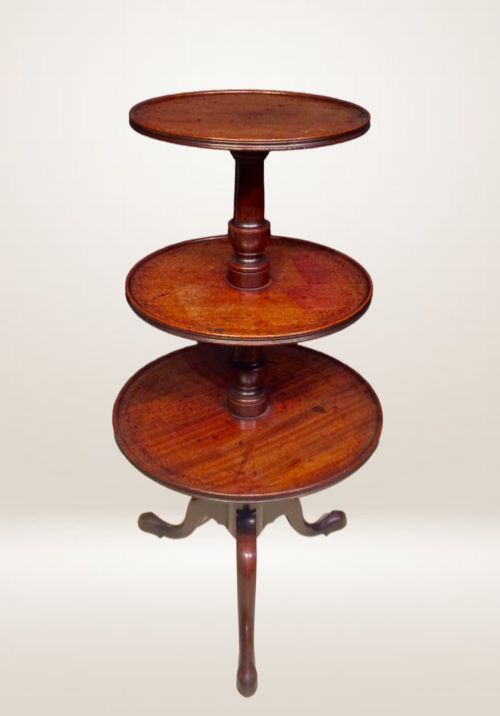

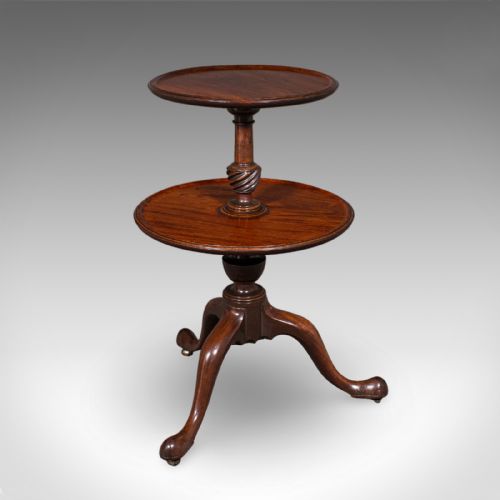


Tripod Dumb Waiter
These tripod dumb waiter stands are tiered wooden servers built to hold dishes and drinks near the dining table.
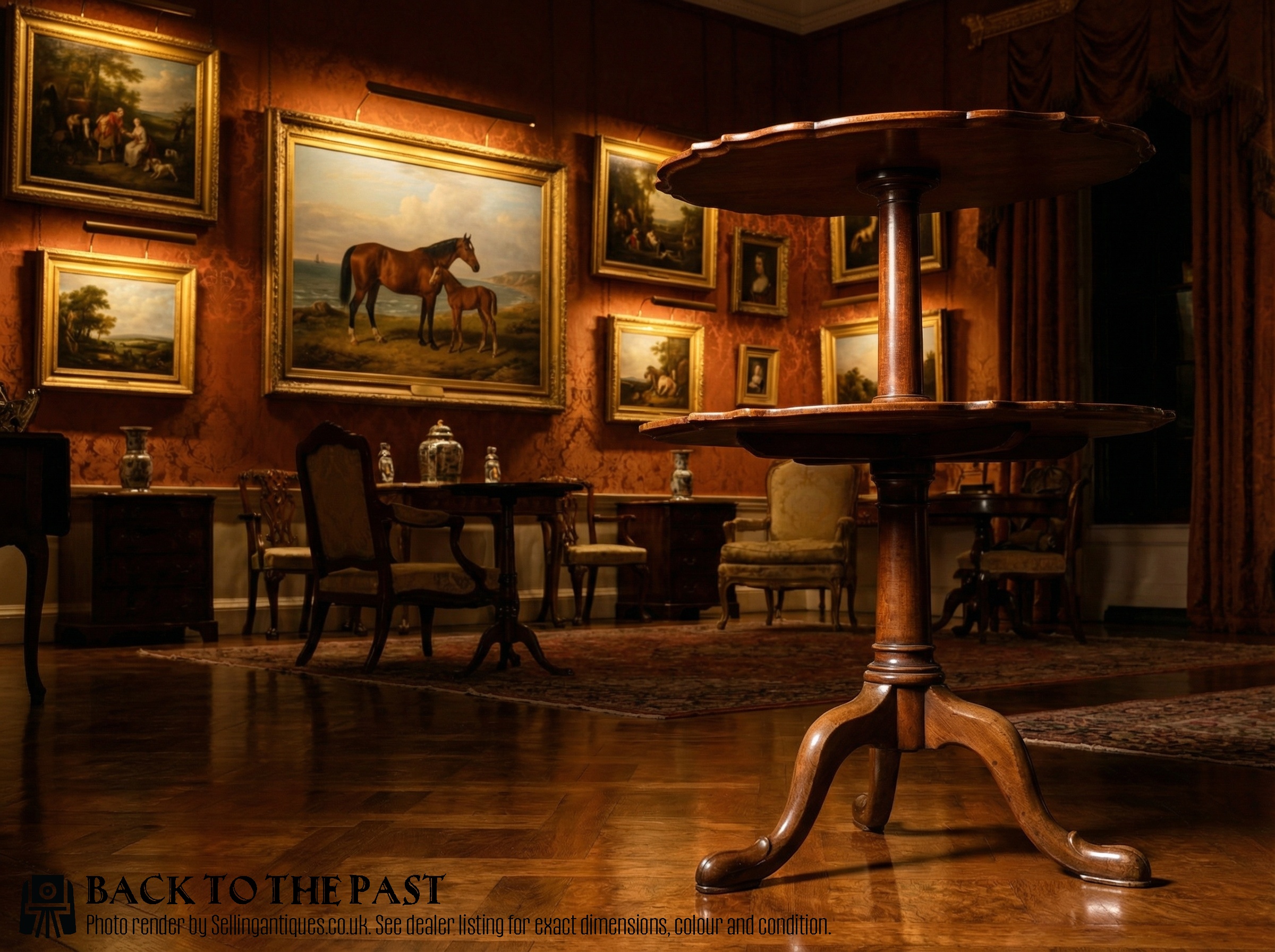
Tripod Dumb Waiter
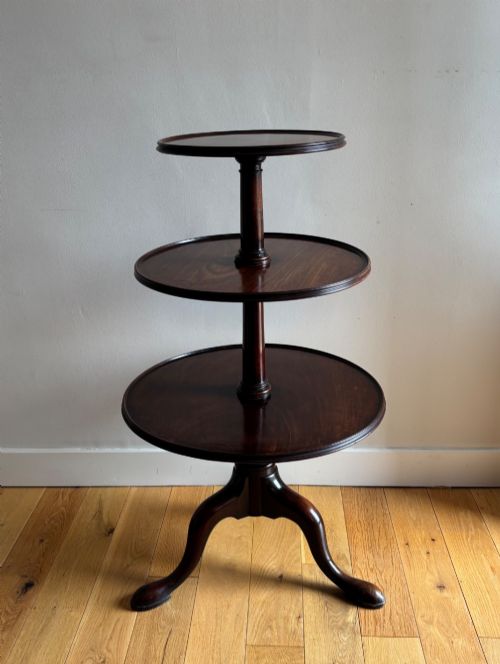
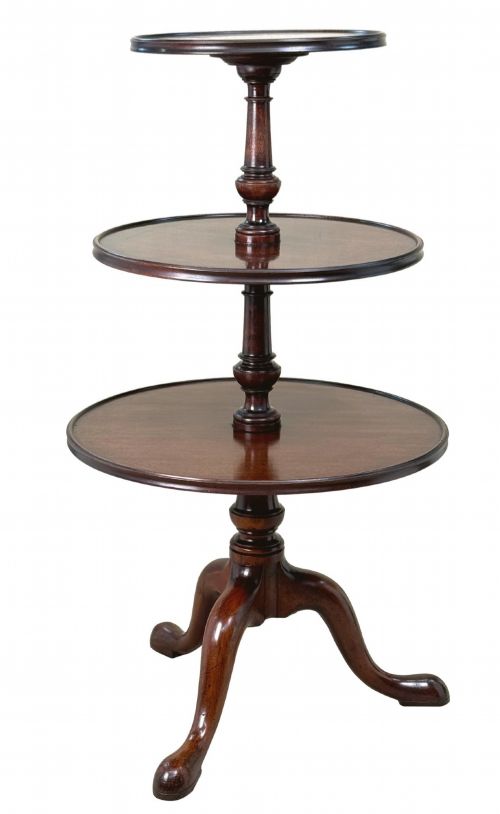
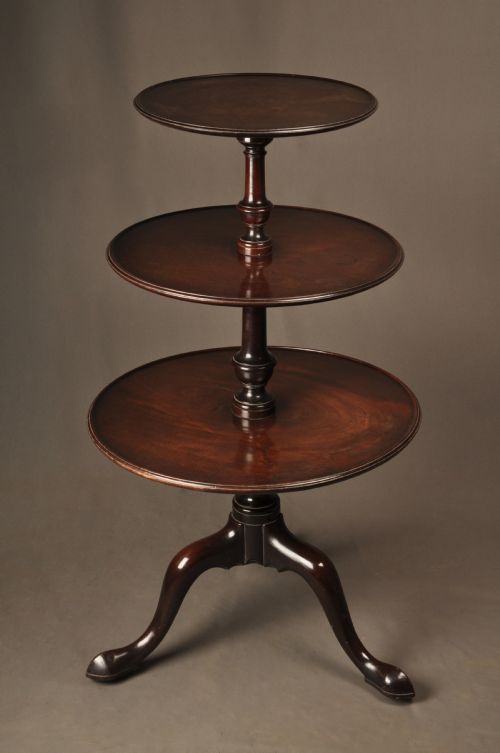
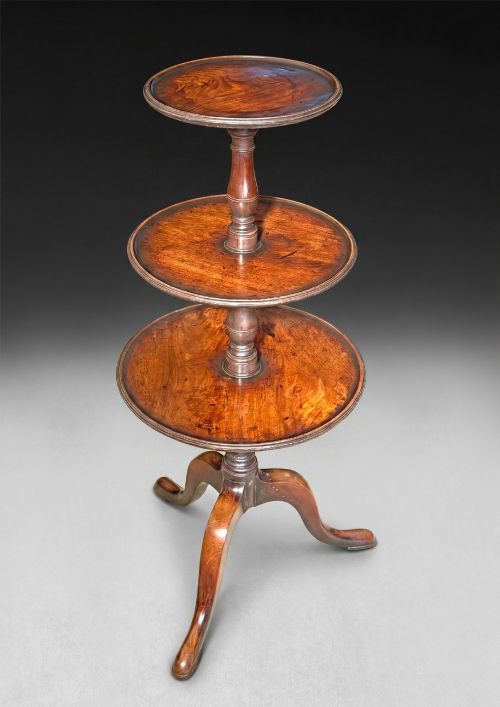
A tripod dumb waiter is a tiered serving stand designed to hold dishes and bottles beside the dining table. When you search for tripod dumb waiter, you are looking at practical dining room furniture developed to ease the service of meals.
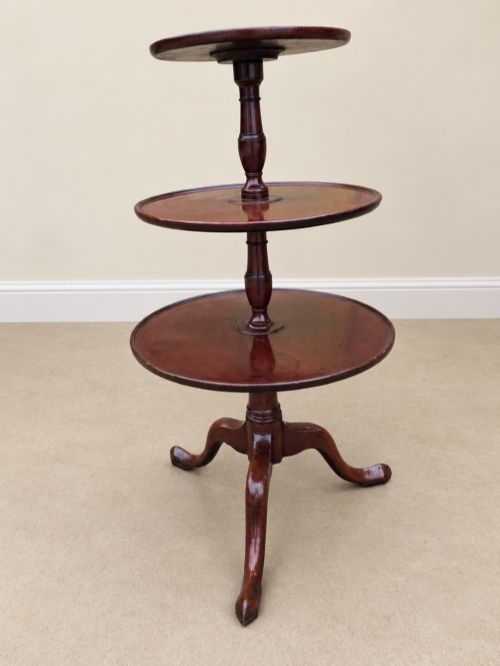
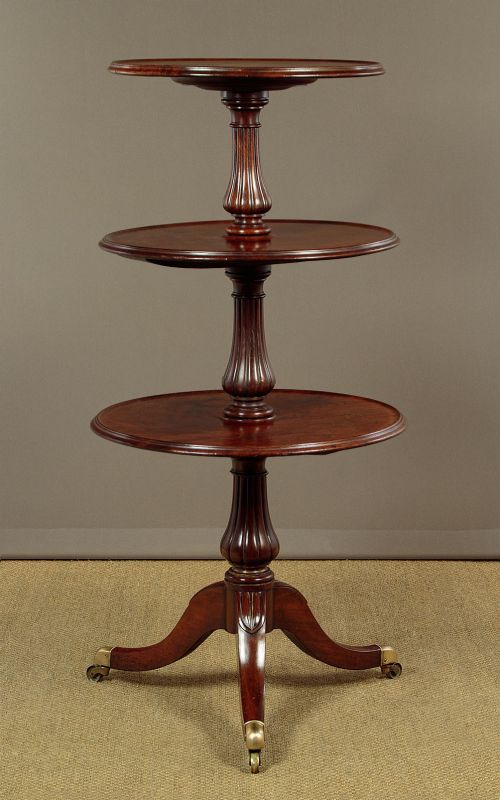
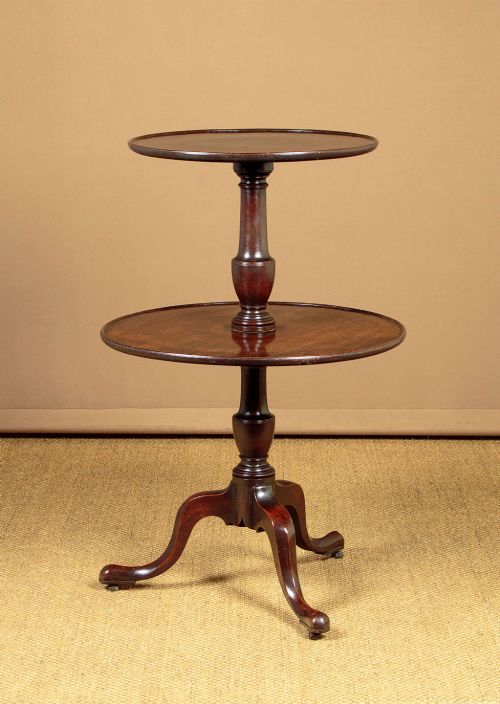
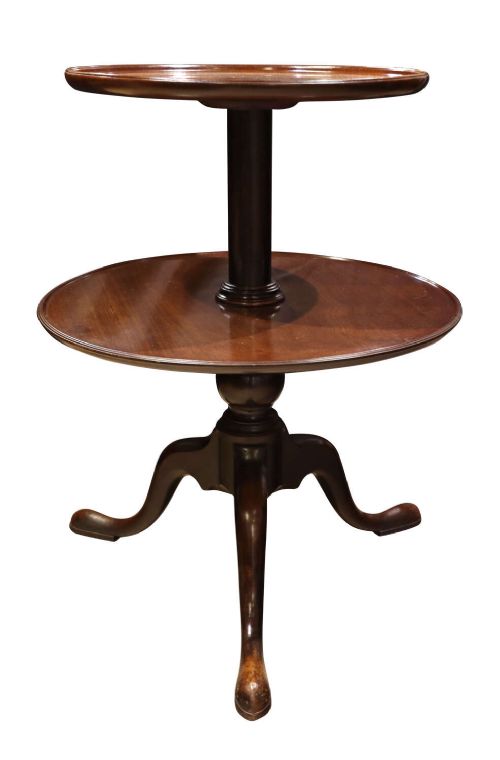
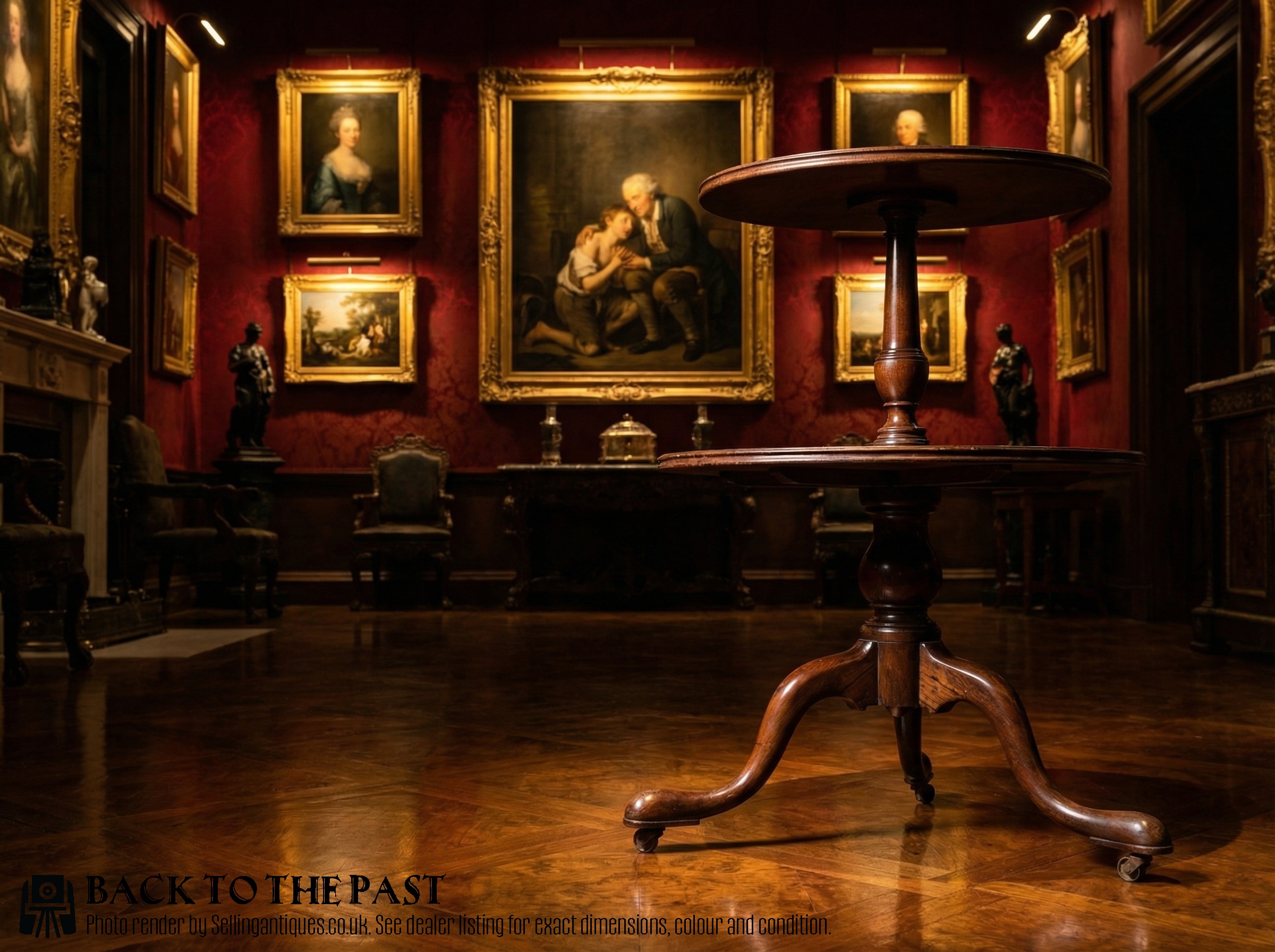
You are most likely to meet examples from the eighteenth and nineteenth centuries, spanning the Georgian, Regency and Victorian periods. These pieces typically present two or three circular graduating trays supported by a central pillar and three cabriole or splayed legs.
Most pieces on offer are constructed from mahogany, though variants in rosewood, wood with paint, or fitted with brass elements also appear. They function as occasional tables, side tables, or afternoon tea serving stands.
How they were made
Cabinet makers built these pieces predominantly using mahogany, including Cuban and fiddleback varieties, shaped into turned central columns and solid timbers for the tiers. Tripod legs often terminate in pad feet, spade feet, or brass castors to allow easy movement around the dining room.
Joining techniques relied on robust central peg fixings and sturdy leg blocks to support the weight of multiple stacked trays. Some examples incorporated revolving mechanisms, drop-leaves, or folding frames to adjust the service area as needed during a meal.
Tripod Dumb Waiter Retail Price Guide 2026
Typical asking prices for tripod dumb waiter among the pieces listed under this phrase on Sellingantiques today, from the lower quarter to the upper quarter. They describe what is for sale here now, not the wider market.
Listings feature mahogany, rosewood, and brass, spanning the Georgian, Regency, and Victorian eras through to the early twentieth century.
What varies in quality
The distinction between tiers dictates much of the visual balance, with well-proportioned graduating discs showing greater harmony than heavy or clumsy proportions. The choice of timber grain, such as figured Cuban mahogany or fiddleback figuring, elevates the visual presence of the piece.
Engineering touches like a smooth revolving action on the tiers or finely carved tripod bases separate standard utility pieces from finer examples. Original brass castors and the crispness of turned pillar details further mark the standard of the workshop.
Gillows
The Tripod Dumb Waiter Glossary
- Tripod base
- A three-legged support structure underneath a central column, commonly found on small occasional tables and serving stands. It provides stability on uneven floors.
- Tiered table
- A piece of furniture featuring multiple horizontal surfaces stacked vertically above one another. This design maximises display and serving space within a compact footprint.
- Cuban mahogany
- A dense, dark timber imported from the Caribbean used extensively in high-grade eighteenth-century cabinet making. It possesses a rich grain and deep natural lustre.
- Etagere
- A set of open shelves or tiers used for displaying small objects, drinks, or serving items. It functions as both a decorative and practical room accessory.
- Fiddleback mahogany
- A highly figured variety of mahogany displaying ripples across the grain resembling the back of a violin. Cabinet makers selected this decorative veneer for premier furniture.
Tripod Dumb Waiter: Frequently Asked Questions
What is a tripod dumb waiter?
A tripod dumb waiter is a multi-tiered serving stand supported by a central pillar and three legs, historically used to hold dishes, glasses, or bottles during dinner service.
These pieces allowed diners to help themselves without the constant presence of servants in the room.
How were dumb waiters used?
They stood beside dining tables to hold extra courses, wine decanters, and afternoon tea service items within easy reach.
Some versions featured revolving tiers so users could spin the trays to access different dishes without standing up.
How do I tell periods apart?
Georgian and George III pieces typically feature clean mahogany turning and pad or spade feet, dating from the late eighteenth century.
Regency and Victorian examples often introduce bolder grain patterns like fiddleback mahogany, heavier turned pedestals, or later decorative paint finishes.
Where can I use one at home?
They fit well beside a sofa or armchair as an accent table, or in a dining room to display glassware and decanters.
The tiered design provides useful surface area for plants or decorative objects while occupying a small floor space.