






Graduated Tier Table
A graduated tier table provides stepped surfaces for serving and display, bringing historic utility and rich mahogany to any room.

Graduated Tier Table
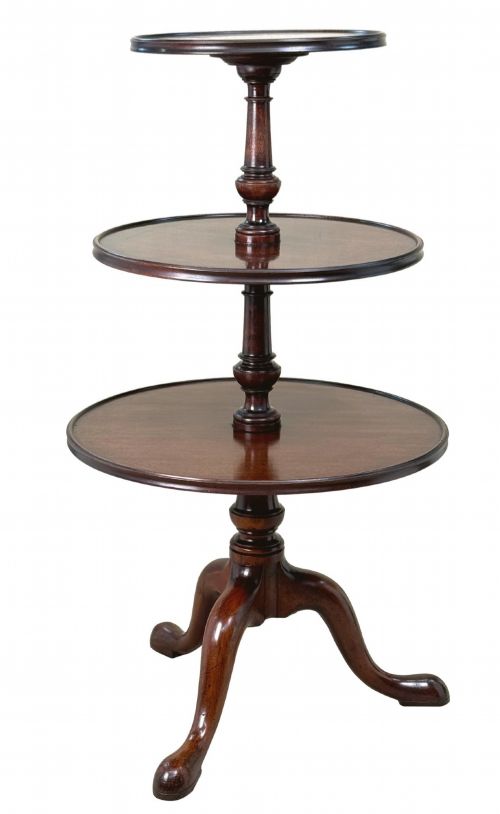
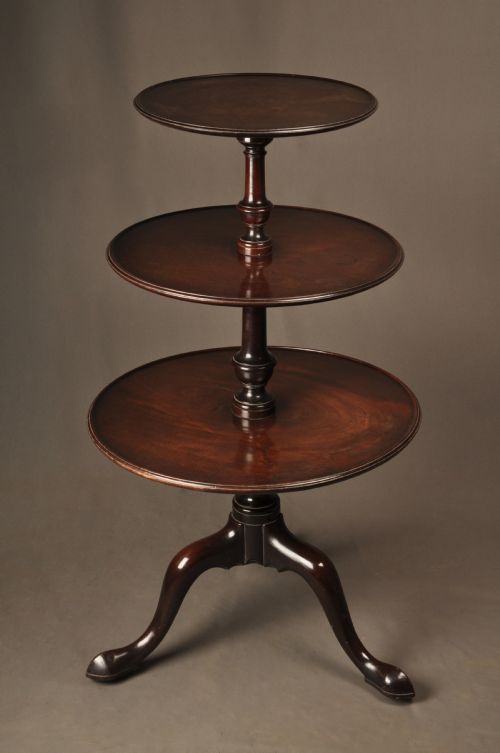
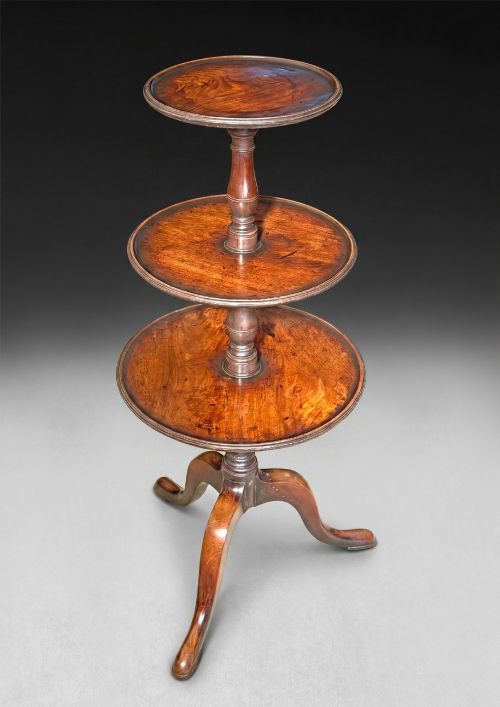
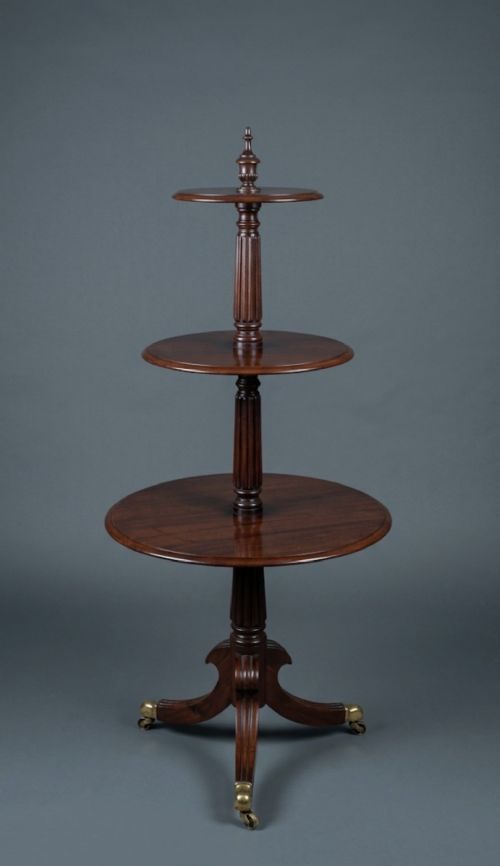
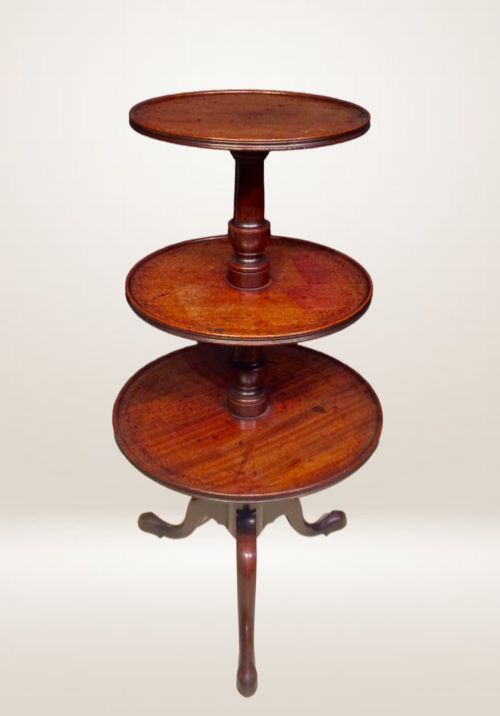
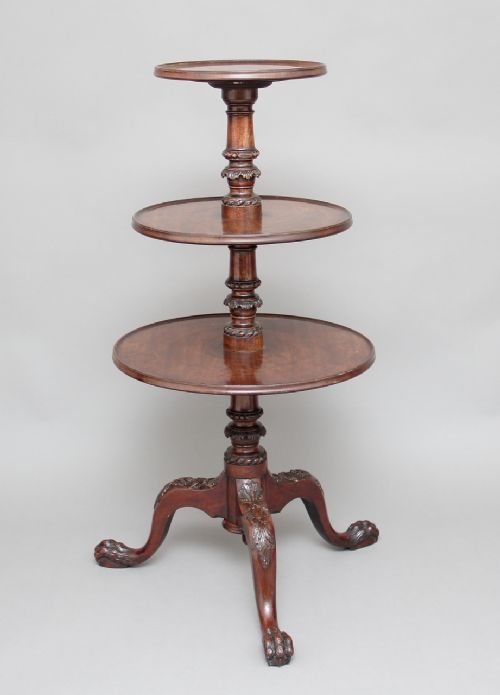
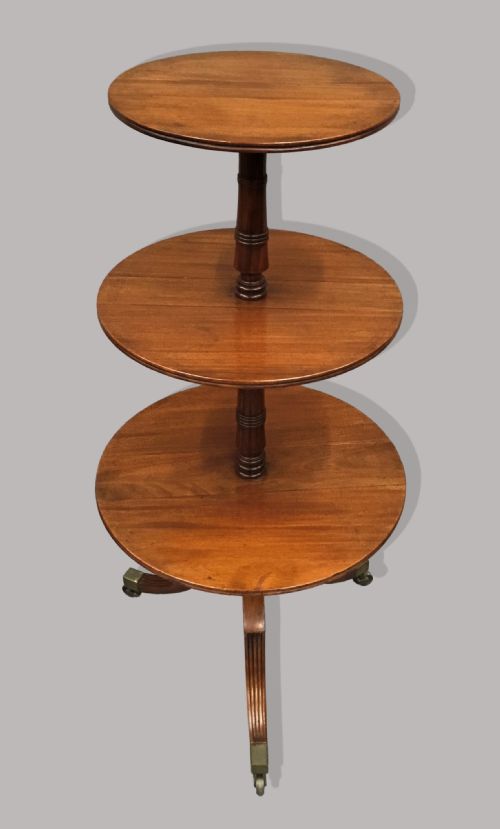
A graduated tier table appears primarily as a dumbwaiter in the listings, spanning the Georgian, 18th century, Regency, and Edwardian periods. These tiered serving tables feature multiple circular shelves decreasing in size from bottom to top, designed to hold dishes or books.
The form ranges from heavy Georgian and George III mahogany three-tier dumbwaiters down to later Edwardian nests of tables and occasional pieces. Most examples on this page are constructed with circular graduated trays supported on central columns.
Makers and craftsmen of the past produced these multi-level pieces in solid mahogany, frequently utilising Cuban timber for its dense grain and deep colour. Alongside standard dumbwaiters, related forms such as revolving bookcases and accent tables appear within the inventory.
How they were made
Makers built these graduated tier tables predominantly using solid mahogany and Cuban mahogany, selecting dense timber for both stability and fine finish. Brass fittings often appear on the hardware, securing moving parts or serving as castors.
Construction techniques involve turning central pillars on a lathe and mounting circular trays that decrease in diameter progressively upwards. Folding mechanisms and revolving tiers demonstrate advanced cabinet-making skills typical of eighteenth and nineteenth century workshops.
Graduated Tier Table Retail Price Guide 2026
Typical asking prices for graduated tier table among the pieces listed under this phrase on Sellingantiques today, from the lower quarter to the upper quarter. They describe what is for sale here now, not the wider market.
The listings span the Georgian, Regency, and Edwardian periods, featuring mahogany, solid mahogany, and Cuban mahogany across various forms.
What varies in quality
Quality in a graduated tier table rests on the selection of timber, particularly the rich figuring found in Cuban mahogany. Superior examples exhibit finely turned central columns and well-proportioned graduated trays that maintain balance.
The standard of craftsmanship shows in the smooth operation of revolving tiers and folding sections. Pieces reflecting the manner of specific known cabinet-makers tend to display superior joinery and more refined edge mouldings.
Gillows
The Graduated Tier Table Glossary
- Dumbwaiter
- A piece of furniture with multiple tiers used for holding food or utensils. In these listings, they appear as circular graduated tier tables from the Georgian and Regency eras.
- Cuban Mahogany
- A dense, dark timber prized for cabinet-making due to its rich grain patterns. It forms the primary material for the finer eighteenth-century pieces here.
- Nest of tables
- A set of graduated tables designed to fit one beneath another. The Edwardian examples on this page represent this space-saving form.
- Revolving bookcase
- A rotating tiered structure designed to hold books accessibly on all sides. This form shares the rotating mechanic seen on many dumbwaiters.
- Tiered
- Having successive levels arranged one above the other. This defines the stepped structure of the graduated tables and dumbwaiters recorded in the inventory.
Graduated Tier Table: Frequently Asked Questions
What is a graduated tier table?
A graduated tier table is a multi-level piece of furniture, most commonly seen here as a Georgian or Regency dumbwaiter featuring circular trays that shrink in diameter from bottom to top.
These tables were originally designed to hold food, drink or books within reach in dining rooms and libraries without requiring constant service from staff.
How were dumbwaiters used historically?
Historically, these tiered tables stood beside dining or card tables to hold extra plates, bottles and serving dishes during long meals. Their rotating or tiered surfaces allowed diners to help themselves independently.
Today, they function effectively as serving tables or display stands in living spaces and hallways.
How do I identify a Georgian tier table?
Georgian and George III tier tables typically feature solid mahogany construction, often utilising dense Cuban timber with deep colouration. They rely on a central turned pillar supporting circular graduated trays above tripod or pedestal bases.
Many examples from this era also incorporate folding mechanisms or revolving tiers to assist with serving.
Are all tier tables dumbwaiters?
Not all tier tables are dumbwaiters, though the majority in these listings belong to that category. The inventory also includes Edwardian nests of tables, occasional tables, and revolving bookcases.
Each variation utilises the principle of graduated surfaces, whether stacked vertically for serving or nested horizontally to save space.
How do I care for antique mahogany tables?
Antique mahogany surfaces benefit from regular dusting with a soft, dry cloth and occasional treatment with appropriate traditional wax. Avoiding direct sunlight and sudden temperature changes protects the timber and finish from drying out.
Careful handling of the central column and moving tiers preserves the historic mechanics of these pieces.