

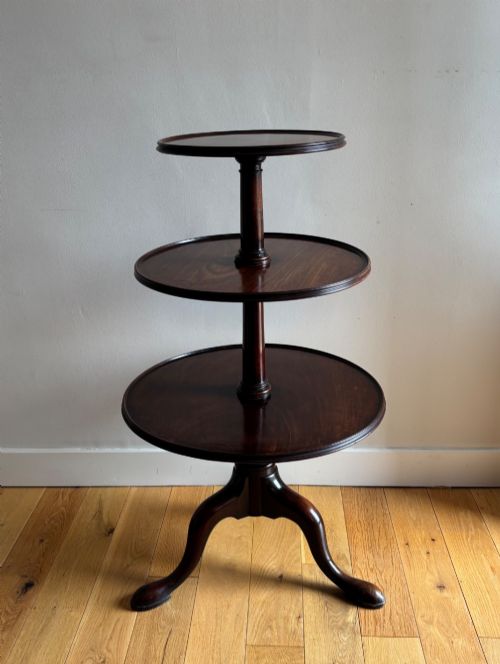
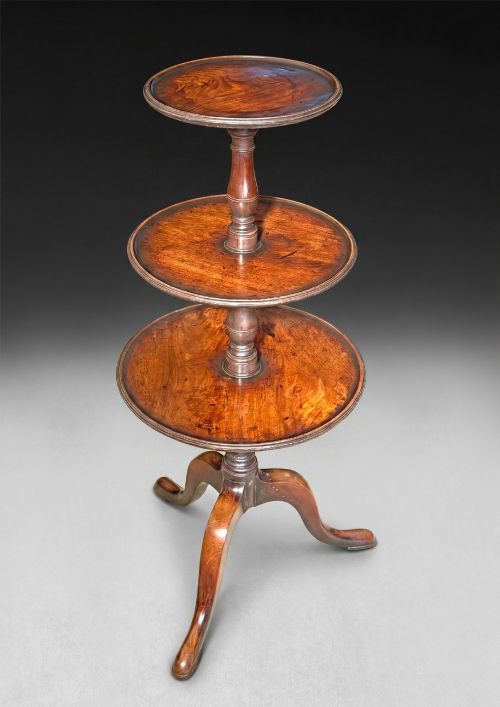


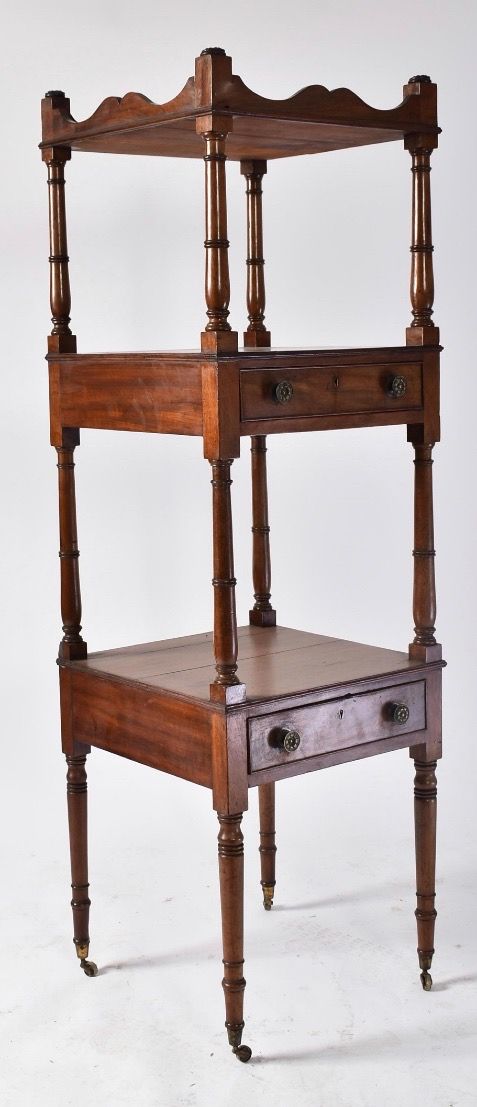


George III Dumb Waiter
A george iii dumb waiter is a tiered wooden serving stand designed to hold dishes without servants nearby.
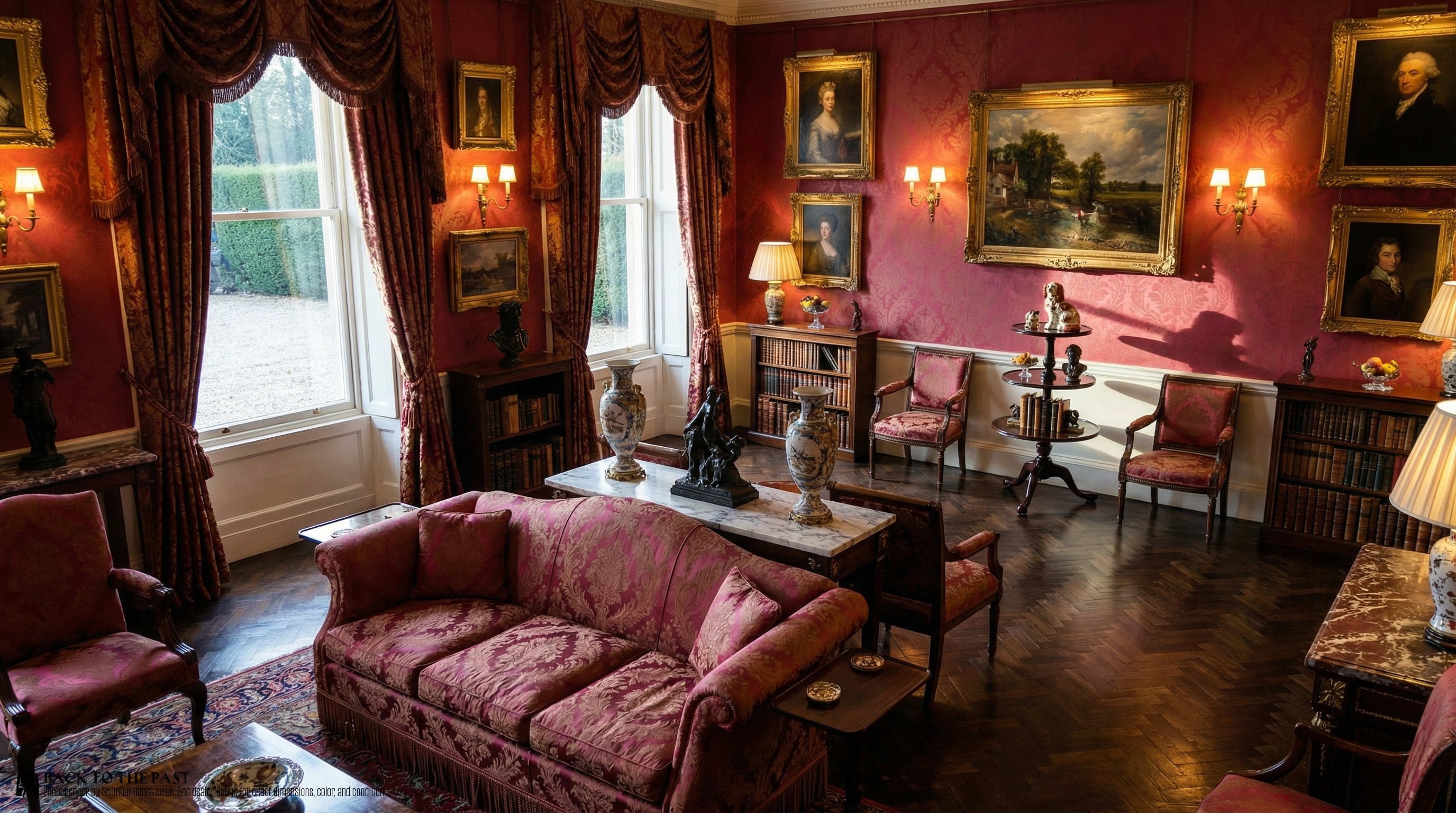
George III Dumb Waiter
A george iii dumb waiter is a tiered serving stand designed to hold dishes without servants nearby during a meal. The pieces listed here span the Georgian period, the eighteenth century, and the early nineteenth century.
Most examples found on this page take the form of circular multi-tier tables supported by a central column and tripod legs. Two-tier and three-tier formats dominate, alongside occasional drop-leaf, folding, and revolving variations.
Makers of the period utilised timber to construct functional furniture for dining rooms and drawing rooms. The evidence shows forms ranging from standard round trays to octagonal and hexagonal tops.
How they were made
Cabinet makers constructed these stands primarily from mahogany and Cuban mahogany, selecting dense timber suited to turning and carving. Brass components frequently appear on castors and pivoting mechanisms.
Construction techniques involve a central turned pillar standing on three splayed legs, supporting graduated circular trays. Folding and drop-leaf mechanisms employ clever hinging to allow sections to drop down when not in use.
George III Dumb Waiter Retail Price Guide 2026
Typical asking prices for george iii dumb waiter among the pieces listed under this phrase on Sellingantiques today, from the lower quarter to the upper quarter. They describe what is for sale here now, not the wider market.
Listings feature mahogany and Cuban mahogany timber combined with brass castors.
What varies in quality
Quality rests upon the selection of timber grain, the crispness of the turning on the central column, and the structural integrity of the tier joints. Cuban mahogany examples often display superior figure and weight.
The sophistication of the mechanism dictates the tier functionality, separating standard fixed trays from smoothly revolving or folding designs that operate precisely without sagging.
The George III Dumb Waiter Glossary
- Dumb waiter
- A tiered serving table designed to hold food and bottles independently of human attendants. These stands typically feature graduating circular trays mounted on a central pillar.
- Tripod base
- A three-legged support structure resting at the base of the central column. This arrangement provides stability on uneven dining room floors.
- Cuban mahogany
- A dense, dark timber harvested in the Caribbean and prized for its rich grain. Furniture makers utilised this material for high-status pieces.
- Drop-leaf
- A hinged section of a tabletop that folds down when not in use. This mechanism allowed dining furniture to be stored compactly against a wall.
- Revolving tier
- A tray mounted on a pivot that spins around the central column. This design allowed diners to access dishes without passing them across the table.
George III Dumb Waiter: Frequently Asked Questions
How were dumb waiters used?
Dinners during the Georgian period often proceeded without servants present in the room to encourage private conversation. Diners placed extra plates, glasses, and wine bottles on the tiers of the stand for self-service.
Rotating or folding trays allowed guests to access food and drink easily from their seats. The stands sat quietly beside the dining table until needed.
How many tiers do they have?
Most examples feature either two or three graduating tiers mounted vertically on a single central pillar. The largest diameter tray sits at the bottom with smaller trays stacked above.
Some variations include folding drop-leaves that alter the footprint of the tiers. This multi-level construction maximised surface area while occupying minimal floor space.
Are the tiers fixed or movable?
Many examples incorporate revolving mechanisms that allow the circular trays to spin around the central shaft. This rotation enabled diners to reach items without standing up.
Other versions utilise folding sides or drop-leaves that adjust the shape of the tiers. Fixed tier designs also appear frequently across the listings.
What timber was used?
Cabinet makers relied heavily on mahogany for its strength, dark colour, and smooth finish. Selected pieces specifically note Cuban mahogany for its dense grain and superior weight.
Brass hardware frequently accompanies the timber structure, appearing on castors at the foot of the tripod base and within folding hinges.
How do I date a piece?
Dating relies on stylistic markers associated with the Georgian era and the late eighteenth to early nineteenth centuries. Cabinet making techniques, leg profiles, and turning details help narrow the period.
Listing dates range from around 1770 through to 1810, encompassing the height of Sheraton influence and the Regency transition.