




Georgian Dumbwaiter
A georgian dumbwaiter brings tiered mahogany utility to dining rooms, offering graduated circular tiers designed to hold dishes without requiring servants at the table.
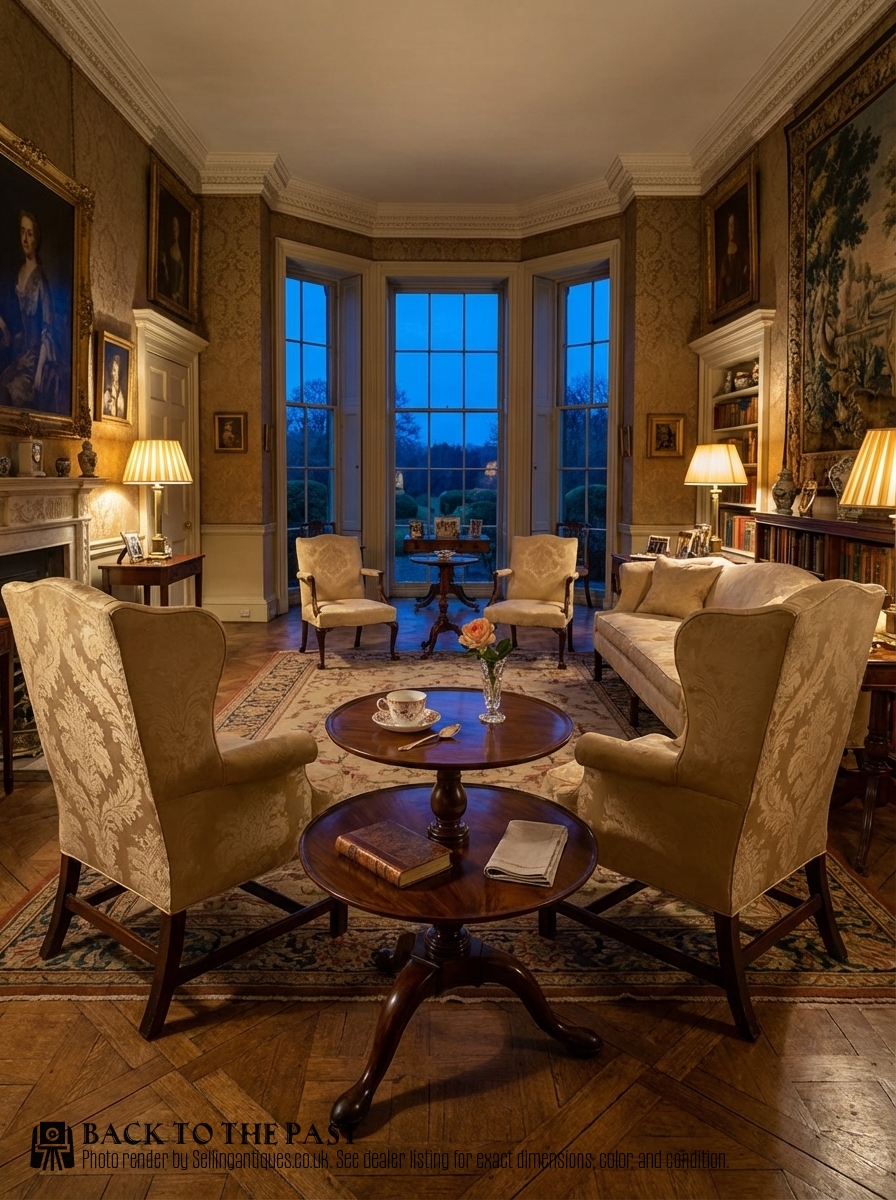
Georgian Dumbwaiter
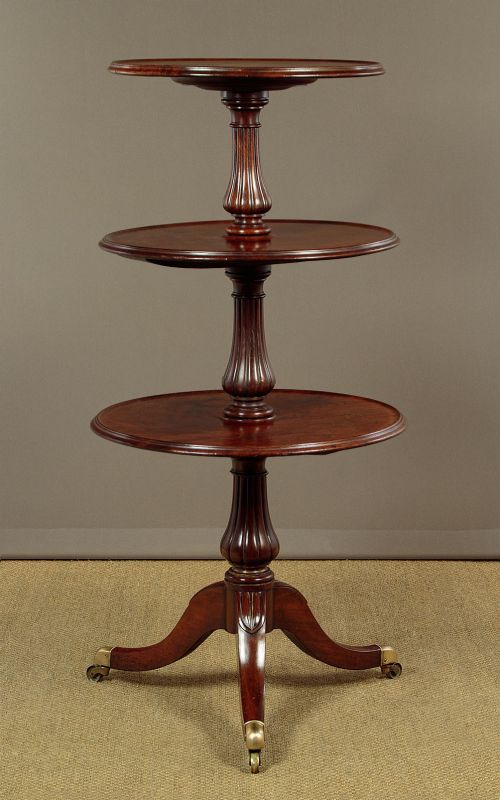
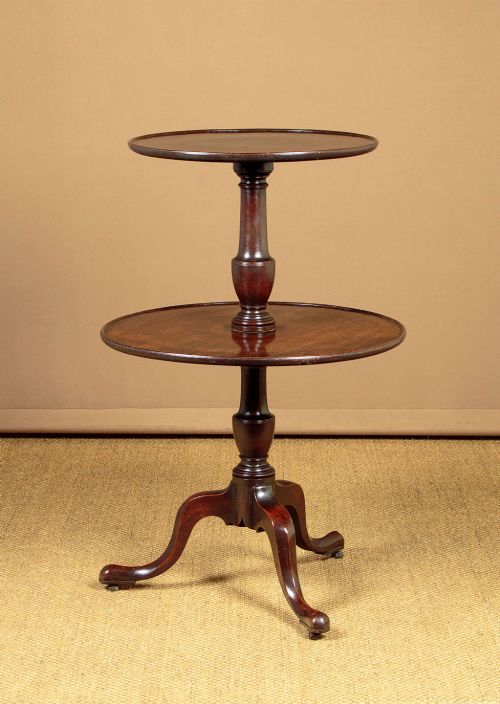
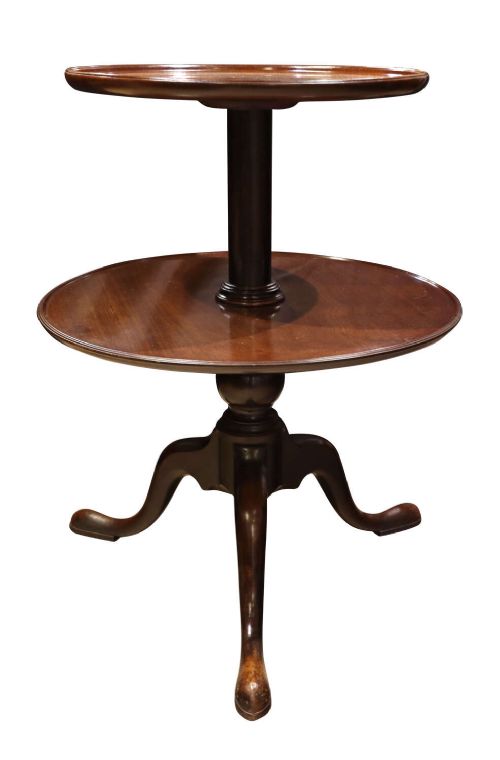
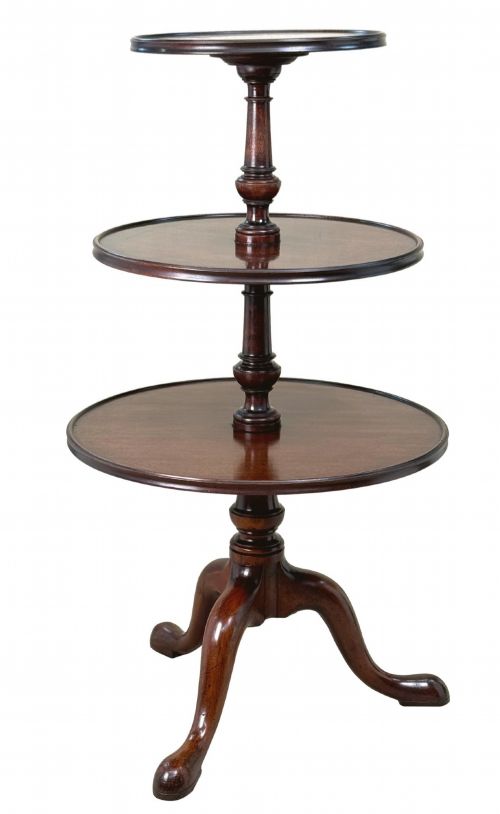
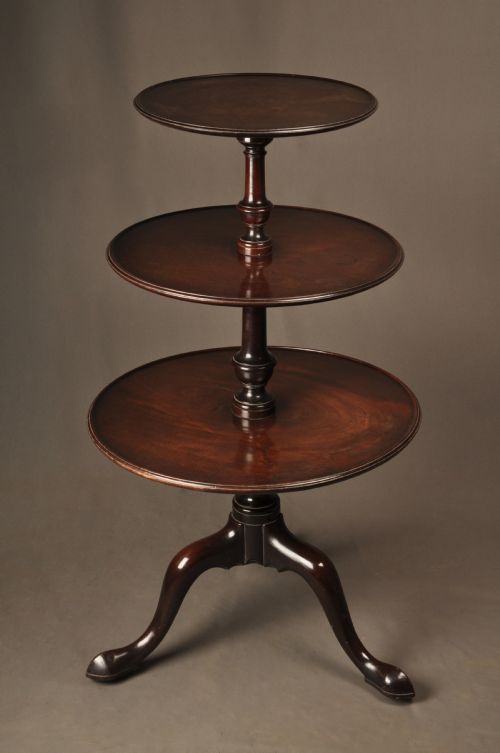
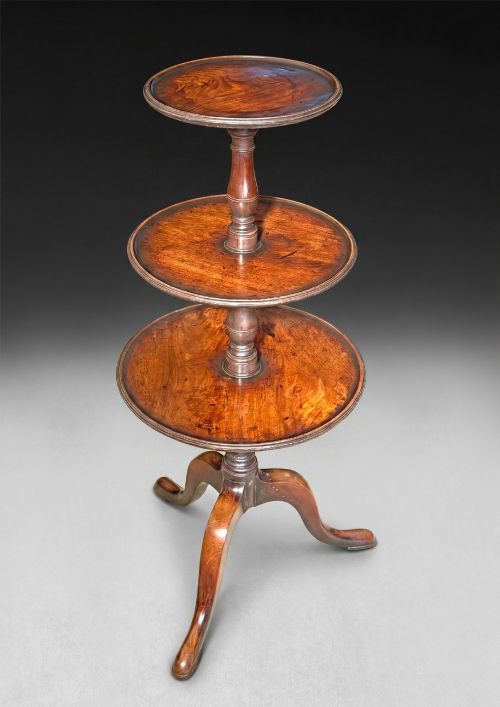
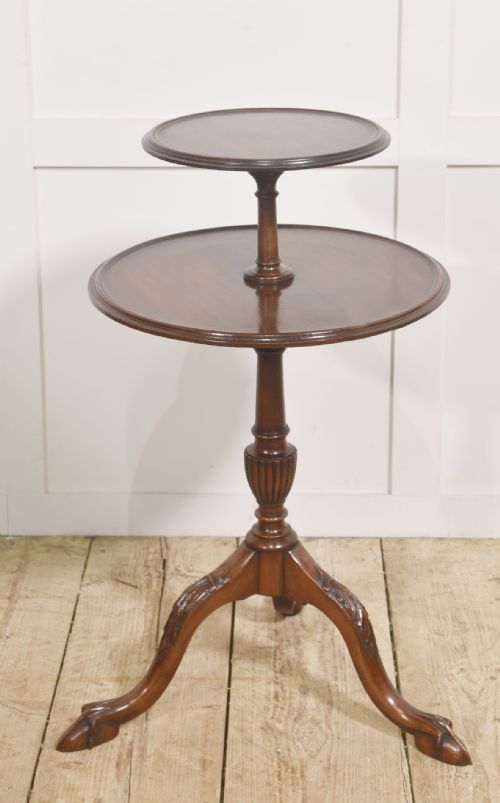
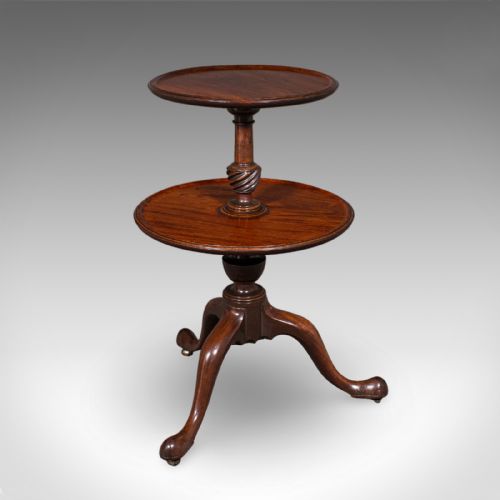
When you search for a georgian dumbwaiter, you are looking at multi-tiered serving furniture intended for the dining room. These pieces typically feature two or three graduated circular trays mounted on a central pillar supported by tripod legs.
The versions you are most likely to meet on this page date primarily from the eighteenth and early nineteenth centuries, spanning the Georgian, George III, and Regency periods. Alongside traditional freestanding tiered stands, you will encounter related forms such as etageres, side tables, lazy susans, and occasional tables.
Most examples serve the dining space, though variations include folding designs, drop-leaf configurations, and revolving tops. Their primary function was to hold extra dishes, wine bottles, and tableware independently of footmen during meals.
Distinctions in quality
Quality separates simple utility pieces from superior cabinetwork through the selection of timber and the execution of turning on the central pillar. Fine examples display rich, dense mahogany grains and precise joinery in the tripod legs and tier attachments.
The sophistication of the mechanisms also defines the upper range, particularly in revolving tiers, folding leaves, and metamorphic designs. Pieces that retain harmonious proportions between the graduated trays and the supporting pedestal reflect superior design integrity.
Georgian Dumbwaiter Retail Price Guide 2026
Typical asking prices for georgian dumbwaiter among the pieces listed under this phrase on Sellingantiques today, from the lower quarter to the upper quarter. They describe what is for sale here now, not the wider market.
Early dining etiquette demanded quiet service, hence the name dumbwaiter for a piece of furniture that silently held the mustard.
The Georgian Dumbwaiter Glossary
- Tripod base
- A three-legged support structure commonly found beneath the central pedestal of serving tables and dumbwaiters to ensure stability on uneven floors.
- Tiered table
- Furniture constructed with multiple horizontal surfaces arranged vertically above one another to maximise display or serving area.
- Etagere
- A set of open shelves or tiers used for displaying small objects or serving items, sharing lineage with traditional dumbwaiter forms.
- Lazy susan
- A revolving tray or tabletop placed on a pedestal to allow items to be easily reached by diners around a table.
- Metamorphic
- Furniture engineered to transform from one form or function into another, such as a buffet converting into a serving stand.
Georgian Dumbwaiter: Frequently Asked Questions
What is a georgian dumbwaiter used for?
These tiered stands were originally placed beside dining tables to hold heavy dishes, wine decanters, and cutlery. This allowed diners to help themselves during meals without servants present in the room.
In modern homes, they function as versatile side tables, display stands, or serving pieces in dining rooms and sitting rooms.
How many tiers do these tables have?
Most traditional examples feature either two or three circular trays graduated in size, with the largest tier at the bottom. Some specialised designs incorporate folding leaves or rectangular drop-leaves.
The tiers are mounted on a single central wooden pillar that rests on a tripod base.
Are all dumbwaiters revolving?
Not all pieces revolve, though many Regency and George III examples incorporate a pivoting mechanism that allows the trays to turn independently. Stationary multi-tier stands and folding versions are equally common.
Revolving tops were particularly useful for sharing condiments and serving dishes among guests seated around a table.
How do I identify a George III piece?
George III pieces typically date from the late eighteenth century and are constructed from solid mahogany with classic proportions. Look for slender turned central pillars, robust tripod legs, and clean joinery without heavy ornamentation.
Later Victorian and Edwardian pieces often repeat these earlier styles or introduce revival elements like inlaid decoration.