


Three Tier Buffet Table
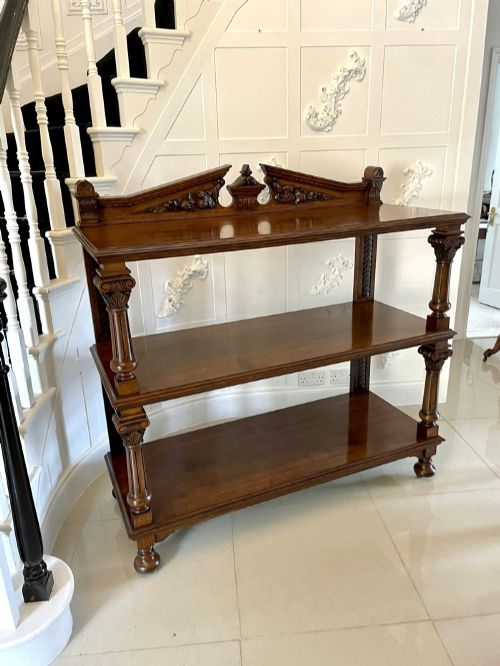
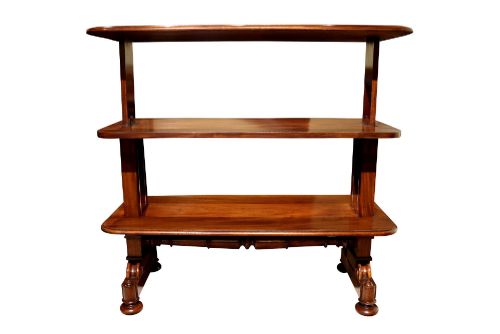
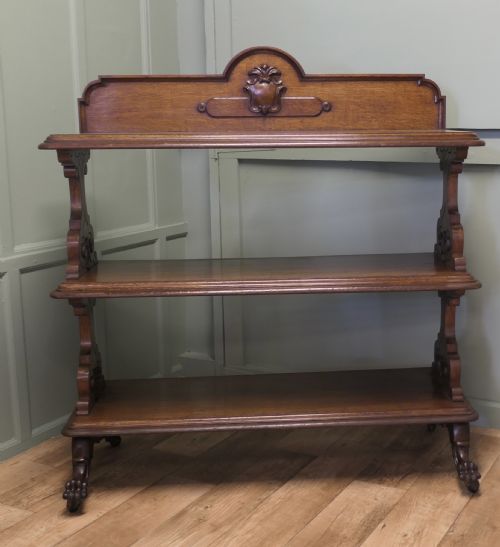
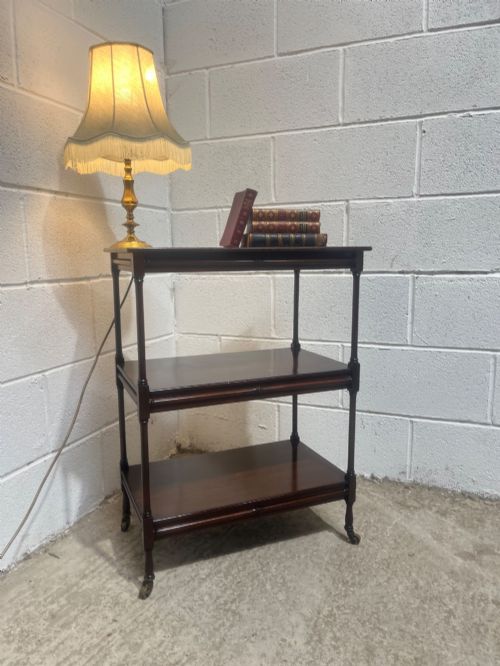
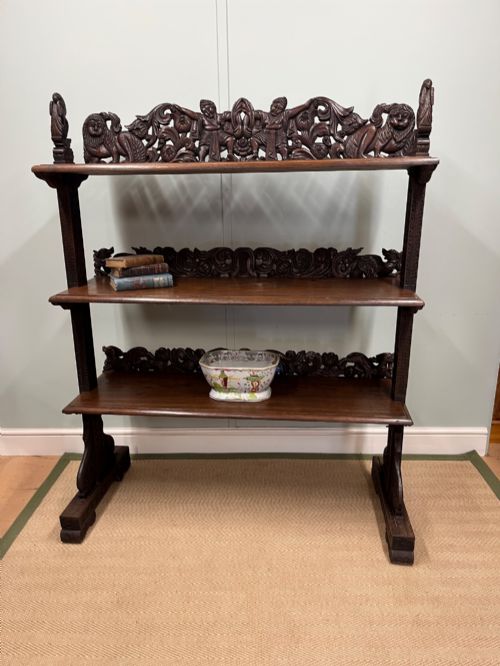
A three tier buffet table offers tiered shelving for serving or display, spanning Georgian, Victorian, and Regency periods in mahogany, walnut, and oak.
Three Tier Buffet Table
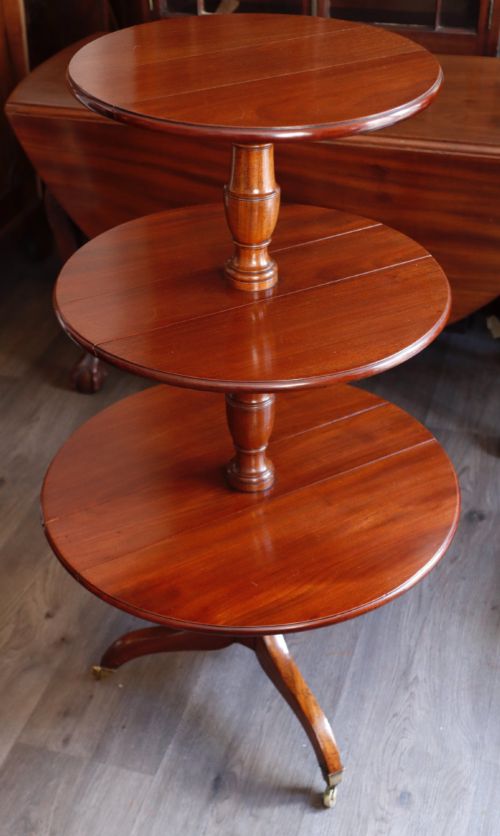
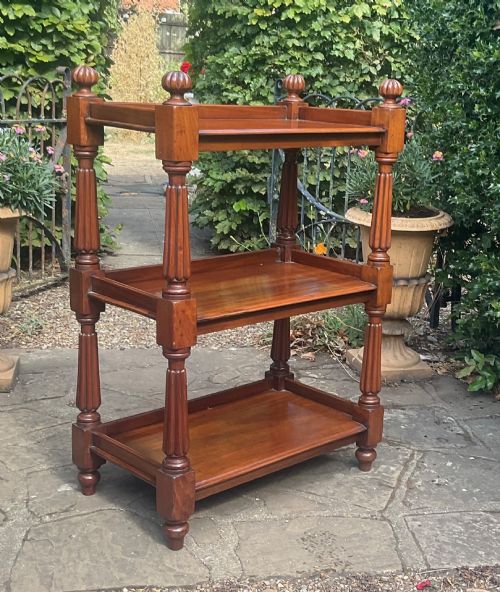
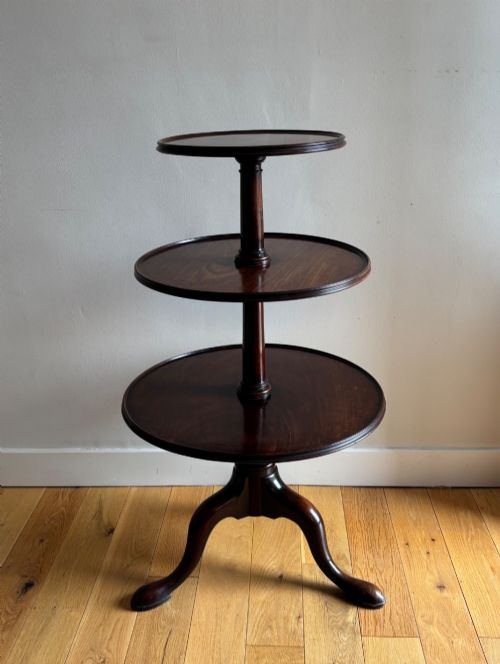
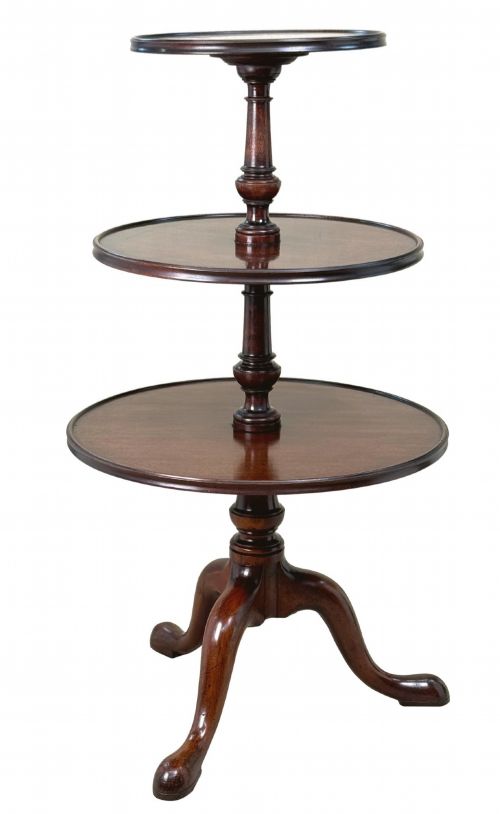
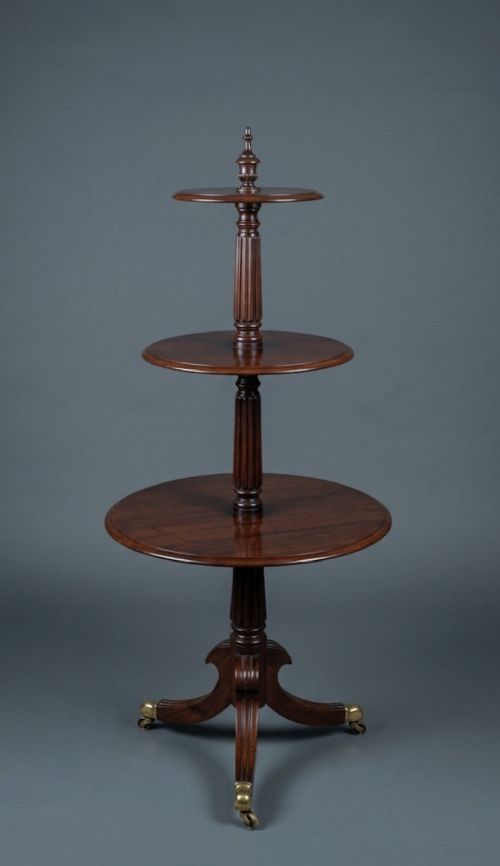
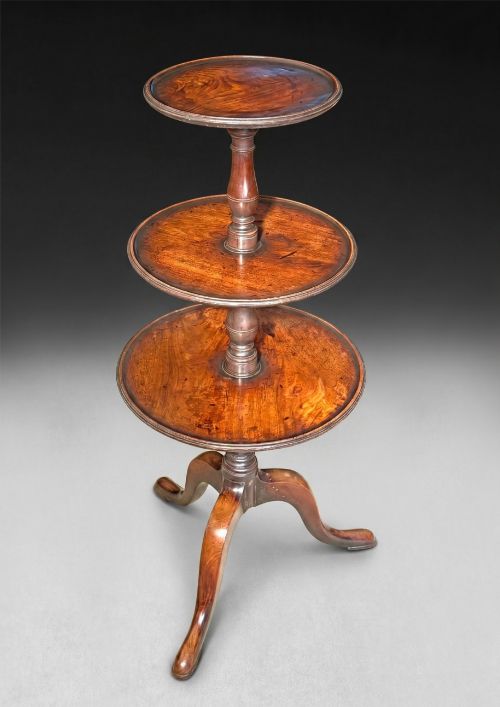
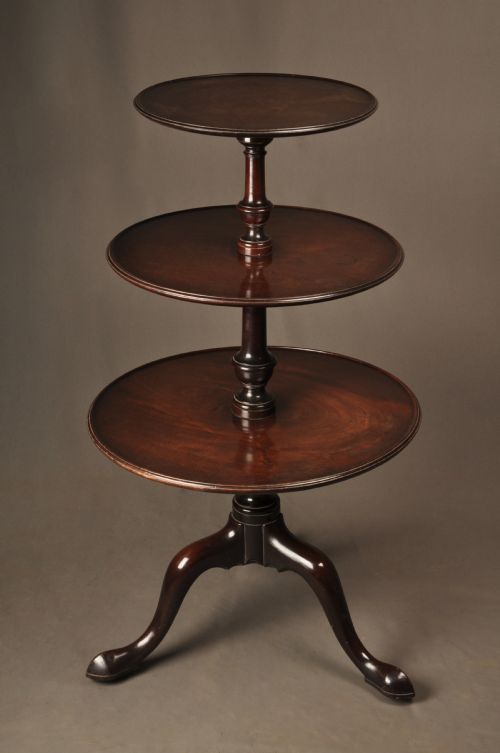
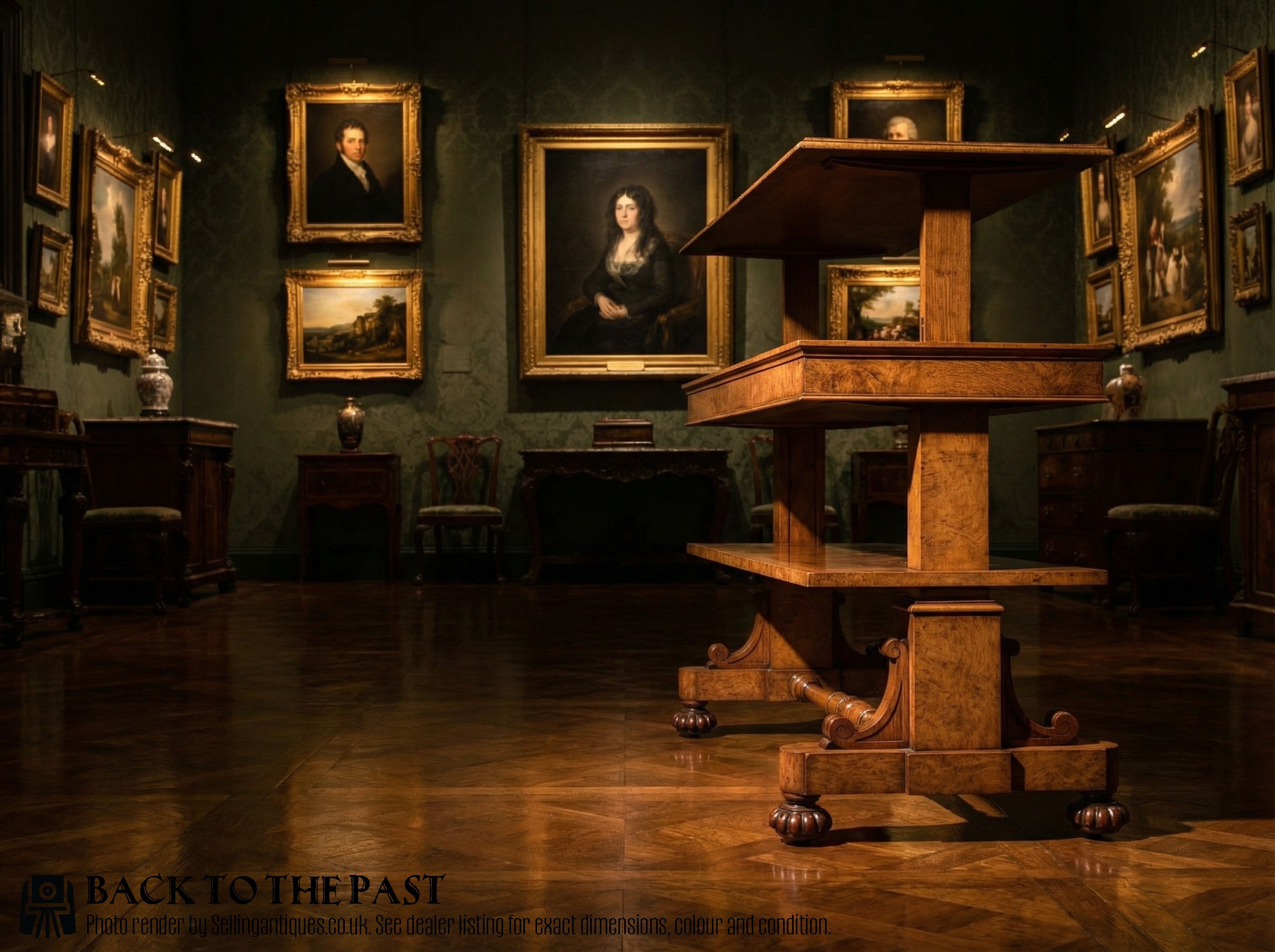
A three tier buffet table provides stacked tiers for service and display, commonly appearing as dumbwaiters, etageres, and serving tables across this selection. These pieces date across the eighteenth, nineteenth, and early twentieth centuries, encompassing Georgian, Regency, and Victorian periods.
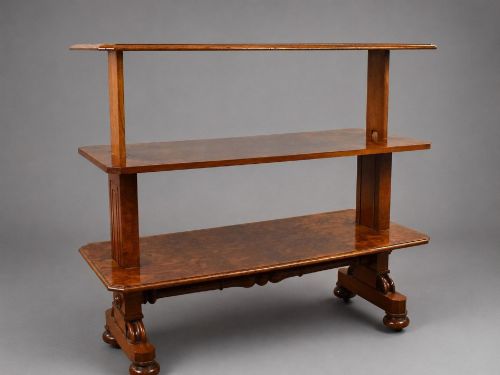
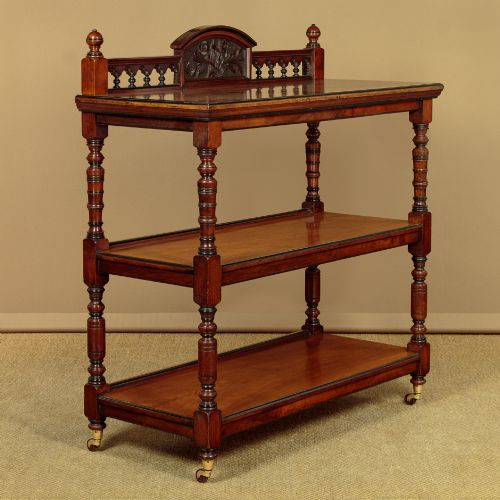
The format ranges from circular tiered revolving dumbwaiters to rectangular drop-leaf trolleys and tall metamorphic or rise-and-fall versions. Mahogany forms the backbone of these listings, accompanied by walnut, pollard oak, teak, and occasional rosewood or ebonised surfaces.
Makers and designers of the past produced these tiered servers to manage dining rooms efficiently without constant attendance. The surviving pieces show diverse regional adaptations, from classic English cabinetwork to Anglo-Indian production.
What varies in quality
The grade of timber selection and the sharpness of carved or turned details distinguish standard production from exceptional work. Dense grain figures in walnut and figured mahogany indicate superior material choice.
The complexity of the mechanism also sets pieces apart, particularly in telescopic, revolving, or rise-and-fall examples where smooth operation requires precise engineering. Original castors and undisturbed timber patination elevate an individual piece.
Three Tier Buffet Table Retail Price Guide 2026
Typical asking prices for three tier buffet table among the pieces listed under this phrase on Sellingantiques today, from the lower quarter to the upper quarter. They describe what is for sale here now, not the wider market.
Some nineteenth-century diners relied on revolving tiers to quietly dismiss unwanted dinner guests from the conversation.
Gillows
The Three Tier Buffet Table Glossary
- Dumbwaiter
- A multi-tiered freestanding serving stand designed to hold dishes or glassware near a dining table. These pieces often feature revolving circular tiers or graduated shelves.
- Etagere
- A piece of furniture consisting of a set of open shelves for displaying small objects or serving. The form provides multiple tiers supported by slender columns.
- Rise and fall
- A mechanical function allowing tiers to adjust in height via a central screw or ratchet mechanism. This engineering permits variable clearance between shelves.
- Metamorphic
- Furniture designed to transform from one form or height into another through articulated joints or sliding parts. Such designs demonstrate ingenious nineteenth-century cabinetmaking.
- Fiddleback mahogany
- Mahogany timber displaying a wavy cross-grain pattern resembling the back of a violin. Cabinetmakers reserved this decorative grain for prominent surfaces.
Three Tier Buffet Table: Frequently Asked Questions
What is a three tier buffet table?
A three tier buffet table is a multi-level serving or display stand, often known historically as a dumbwaiter or etagere. These pieces provide stacked surfaces to hold dishes, glassware, or decorative items.
They appear in various forms, from circular revolving tiers to rectangular drop-leaf tables and adjustable rise-and-fall versions. Cabinetmakers produced them primarily during the eighteenth and nineteenth centuries in timbers such as mahogany, walnut, and oak.
How were three tier buffet tables used?
Dining rooms utilised these servers to reduce the need for servants during meals by keeping extra food and drink within arm's reach. Guests or hosts could spin revolving tiers or access different shelves as needed.
Over time, their function shifted from active dining service to general display and storage in domestic interiors. Today, they serve equally well as side tables, drinks stands, or book holders.
How do I identify a Georgian dumbwaiter?
Georgian examples typically feature solid mahogany construction with classically inspired turned central pillars and tripod pad-foot or spade-foot bases. The proportions remain restrained, focusing on timber grain and understated edge moulding.
Earlier eighteenth-century pieces often incorporate independent revolving trays mounted on birdcage mechanisms. Craftsmanship from this era prioritises structural joinery without elaborate nineteenth-century mechanical additions.
How do Victorian versions differ?
Victorian iterations introduce heavier proportions, darker ebonised finishes, or decorative woods like burr walnut and pollard oak. Design influences range from Aesthetic Movement austerity to elaborate carving.
Many Victorian pieces incorporate complex mechanics, including telescopic adjustments, rise-and-fall stems, and original brass castors. These innovations allowed the furniture to adapt to changing domestic requirements during the nineteenth century.
How do I care for antique mahogany?
Maintain antique mahogany by keeping it away from direct sunlight and sudden temperature shifts that can dry out the timber. Dust regularly with a soft, dry cloth to protect the polished surface.
Apply a traditional beeswax polish sparingly when the wood appears dry, buffing gently to maintain its natural lustre. Avoid placing damp items directly on the tiers to prevent water marking the finish.