

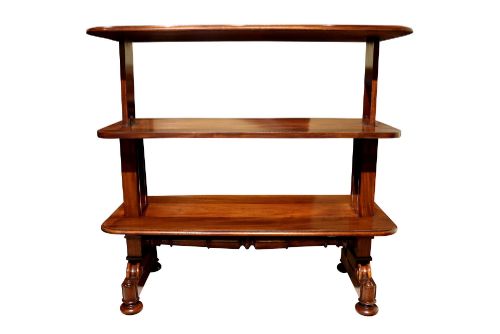
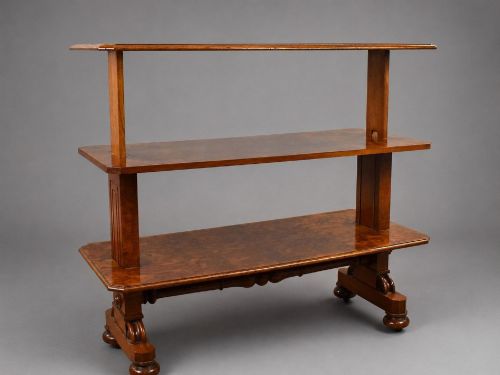
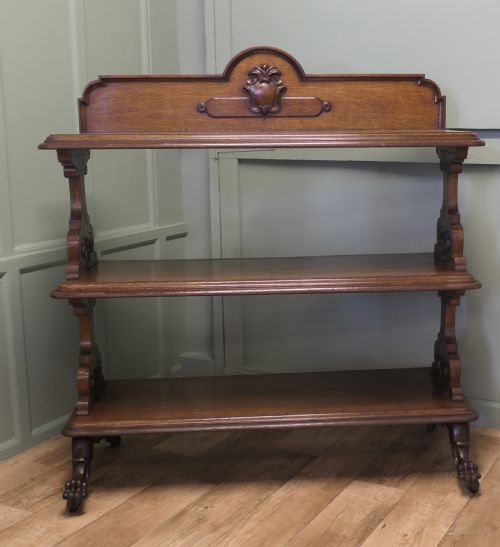
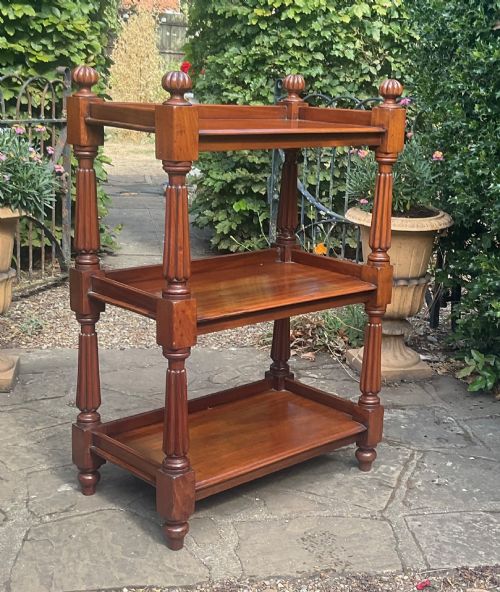




Three Tier Server
A three tier server offers tiered wooden tiers for service and display, spanning Georgian, Regency, and Victorian periods in mahogany, oak, and walnut.
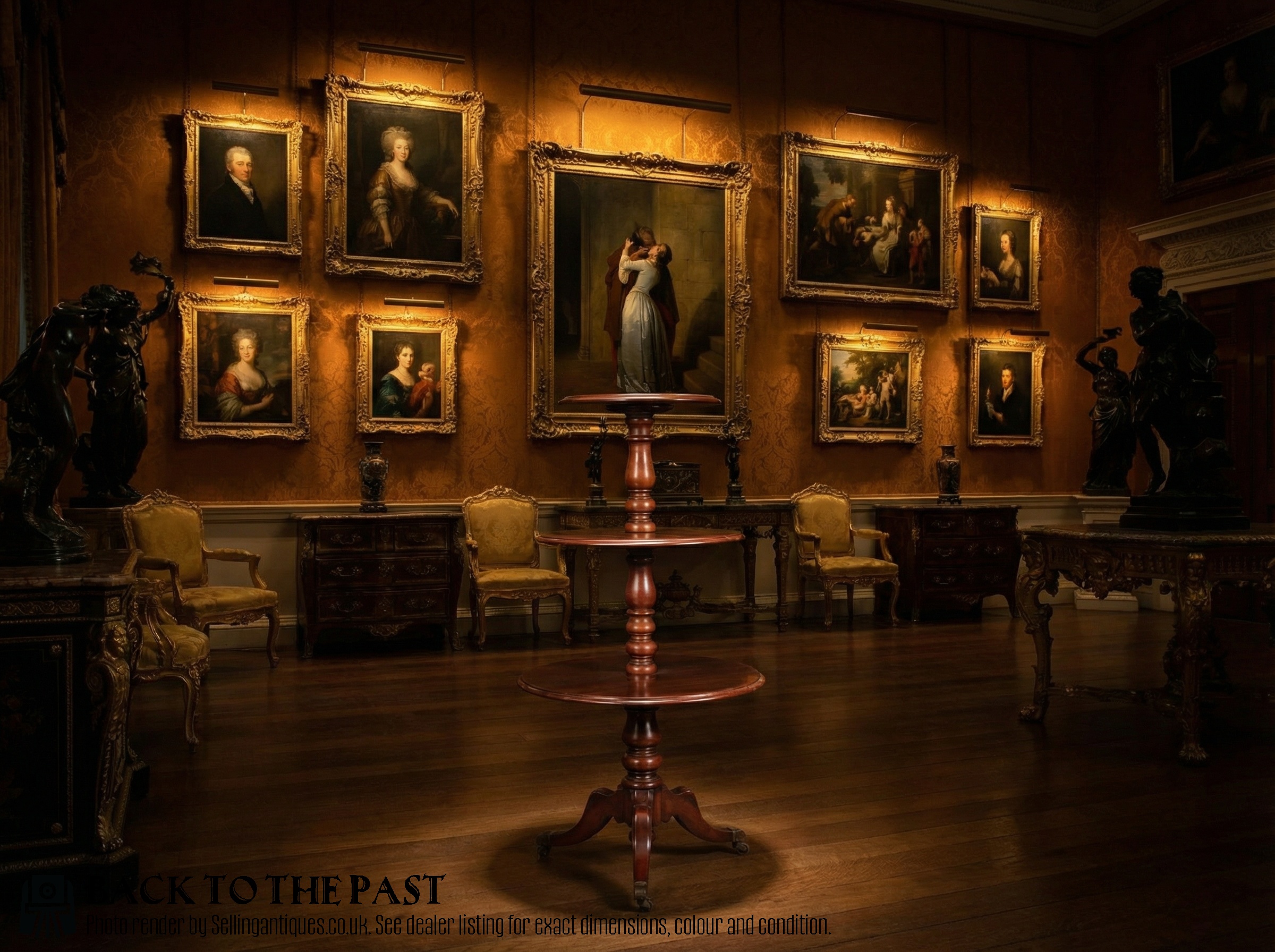
Three Tier Server
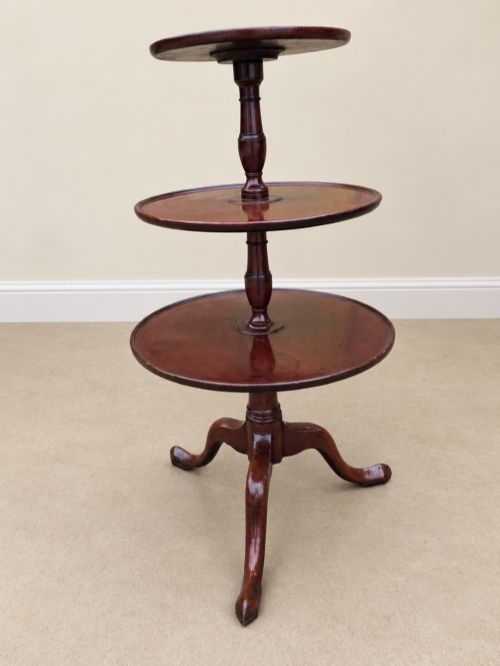
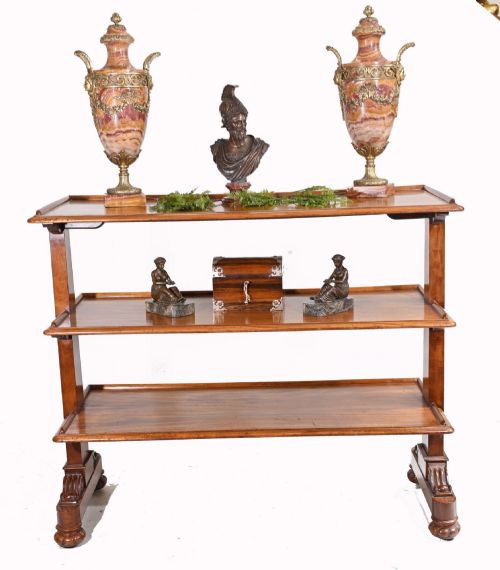
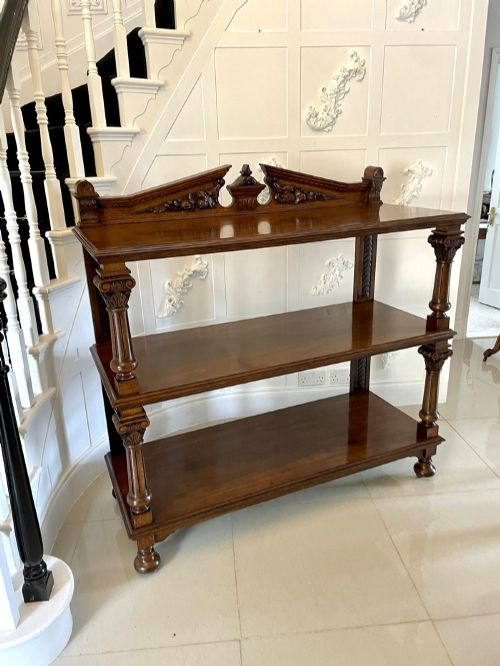
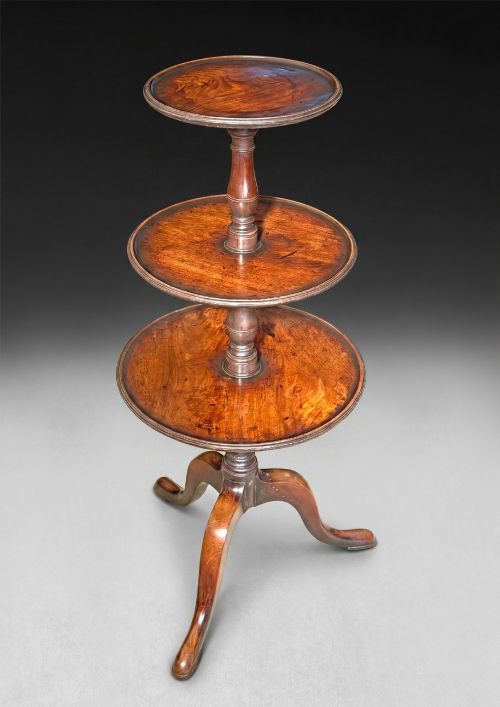
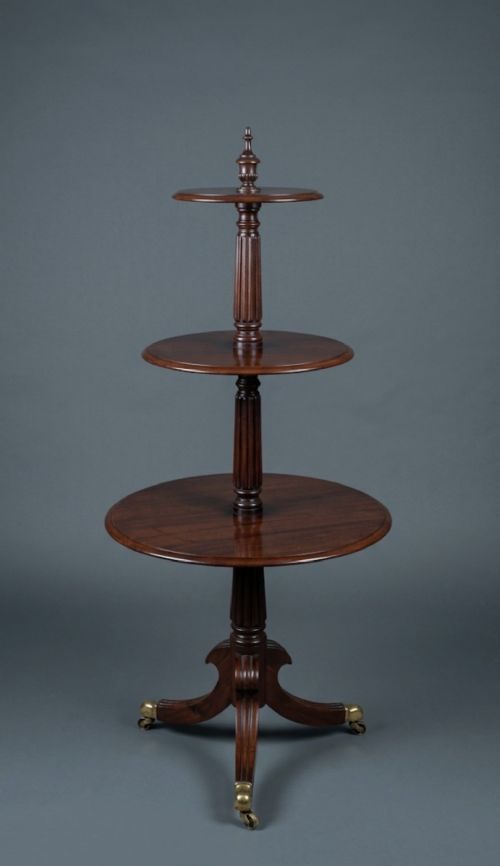
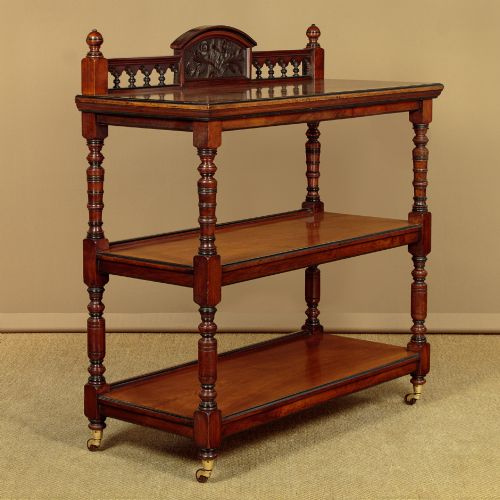
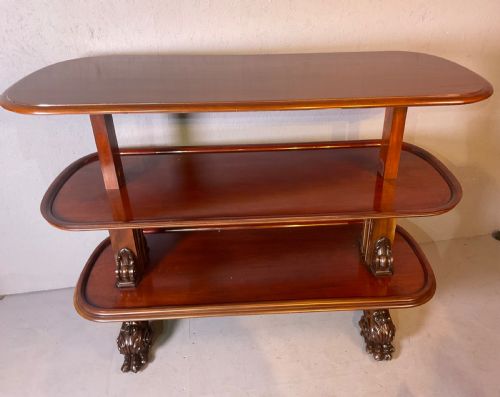
A three tier server, often called a dumb waiter, buffet, or etagere, provides graduated tiers arranged vertically on a central column or supporting frame for dining room service. You encounter circular revolving tiers from the Georgian and Regency eras alongside rectangular Victorian variations featuring drop leaves or adjustable mechanisms.
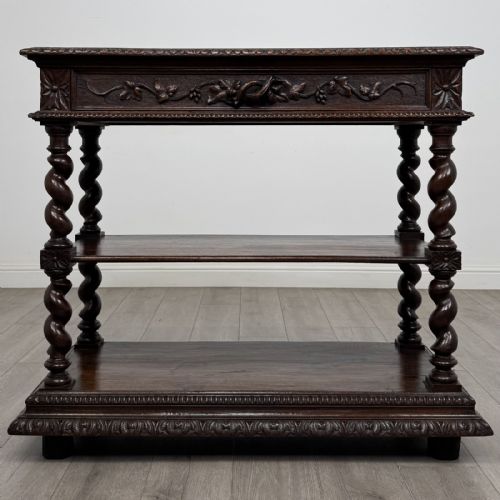
The form developed to assist with dining without servants present, allowing dishes, glasses, and silverware to sit close to the table on multiple levels. Mahogany dominates the examples on this page, supplemented by walnut, burr walnut, pollard oak, and carved oak pieces reflecting changing interior fashions.
Makers utilised various mechanical devices in the nineteenth century, producing rise and fall tiers, telescopic actions, and metamorphic designs that transformed a serving table into a tiered stand. These pieces bridge the gap between heavy sideboards and mobile occasional furniture, serving practical storage functions in modern dining spaces.
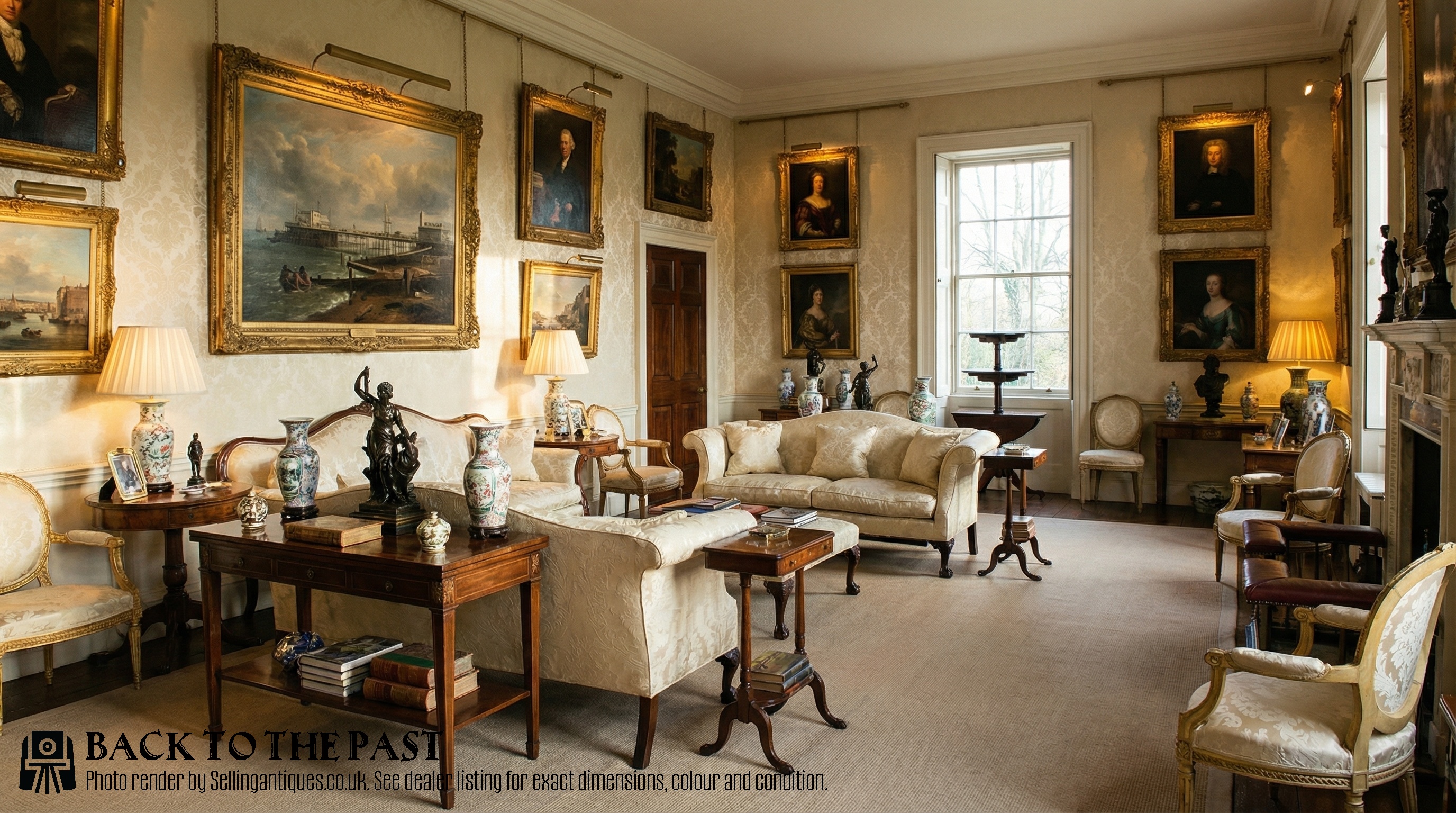
How they were made
Cabinet makers constructed these tiered servers primarily in solid and veneered mahogany, alongside oak, walnut, and pollard oak, often selecting figured timbers such as fiddleback mahogany or burr walnut for display surfaces. Turning, carving, and brass casting formed the structural columns, castors, and mechanical ratchets.
Circular tiers required careful edge moulding and stable central pillar joints, while rectangular variations incorporated drop leaves, galleries, and adjustable brackets. Professional joinery ensured that multi-tiered stands maintained rigidity across three distinct levels without sagging under weight.
Three Tier Server Retail Price Guide 2026
Typical asking prices for three tier server among the pieces listed under this phrase on Sellingantiques today, from the lower quarter to the upper quarter. They describe what is for sale here now, not the wider market.
Listings feature timbers including mahogany, pollard oak, burr walnut, ebonised wood, and sterling silver across eighteenth and nineteenth-century periods.
What varies in quality
Quality rests upon the choice of timber and the precision of the mechanism, where figured mahogany or burr walnut veneers paired with smooth-working rise and fall actions distinguish finer workshops. Heavy, stable tripod bases or solid castors indicate better manufacturing standards than lighter, derivative examples.
The integration of carving, such as crisp mouldings or deep foliate detail on oak and mahogany frames, separates standard utility pieces from high-status items attributed to notable cabinet makers like Gillows.
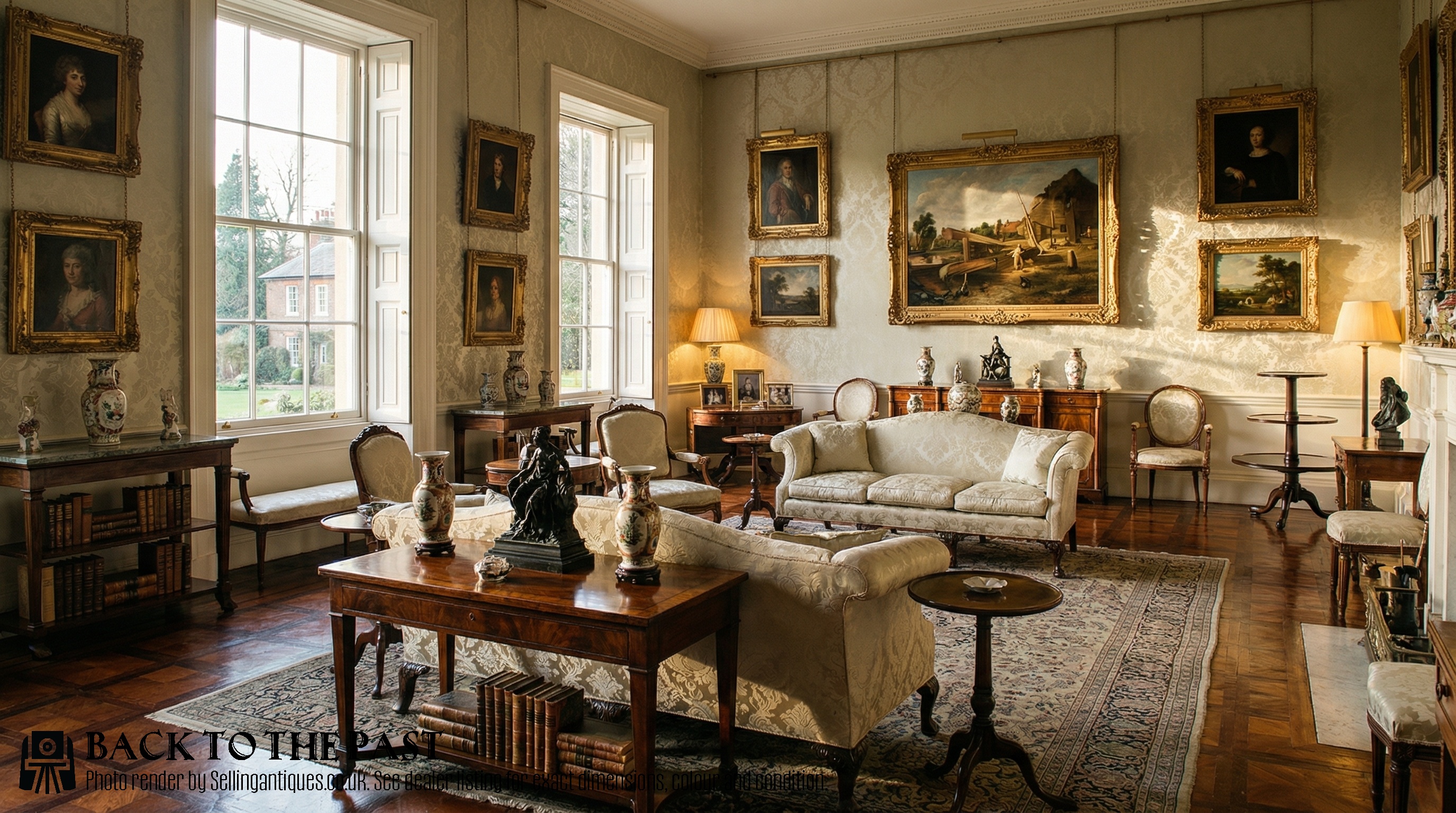
Gillows
The Three Tier Server Glossary
- Dumb waiter
- A freestanding tiered piece of furniture used for holding dishes or drinks during meals. These items typically feature two or three graduating circular or rectangular shelves.
- Etagere
- A piece of furniture consisting of a set of open shelves for displaying small objects or serving. This French term applies to lighter tiered stands found in Victorian interiors.
- Rise and fall
- A mechanical arrangement allowing shelves to be adjusted in height via a central screw or ratchet. This clever device allowed the server to adapt to different dining configurations.
- Metamorphic
- Describing furniture that transforms from one type of object into another through folding or sliding actions. These versatile pieces often convert between sideboards, servers, and tables.
- Fiddleback
- A figure in mahogany timber showing rippled grain patterns resembling the back of a violin. Cabinet makers prized this figured wood for high-end dining furniture.
Three Tier Server: Frequently Asked Questions
What is a three tier server used for?
These pieces served dining rooms by holding extra plates, glassware, and dishes when table space ran short.
Today, they function as display stands for plants, books, or tableware in living spaces and kitchens.
How do I tell a Georgian tier from a Victorian one?
Georgian examples often feature circular graduated tiers on tripod cabriole legs with pad or snake feet.
Victorian pieces frequently introduce rectangular shelves, drop leaves, mechanical adjustments, and heavier carved oak or walnut structures.
What does rise and fall mean on these servers?
Rise and fall describes a telescopic mechanism that allows the tiers to move up and down on a central column.
This adjustment helped servants alter the height of the shelves or allowed the piece to double as an occasional table.
Are these servers stable on carpets?
Most models stand on three or four legs fitted with original castors, which distribute weight evenly across a firm floor.
Placing them on thick carpets requires care to ensure the central column remains plumb and balanced across all three tiers.