
Victorian Carved Buffet
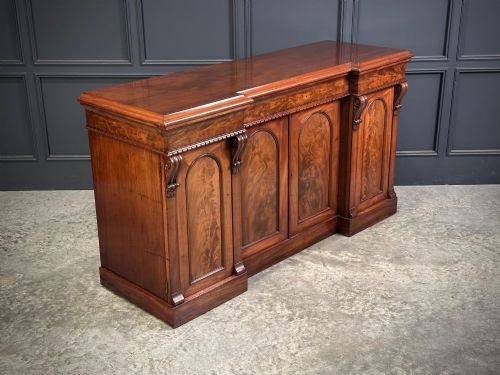
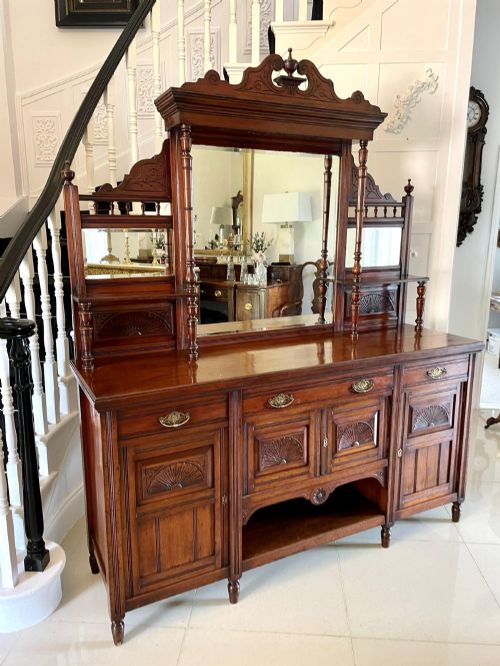
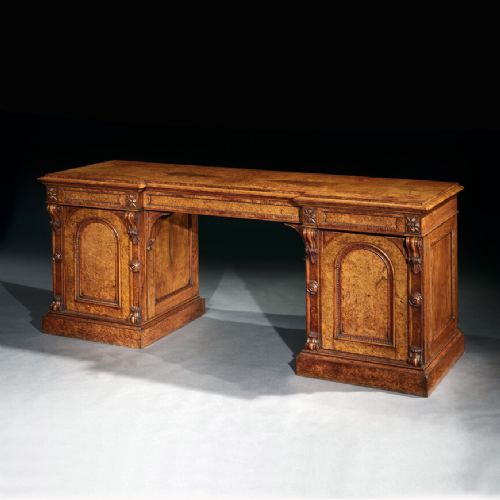
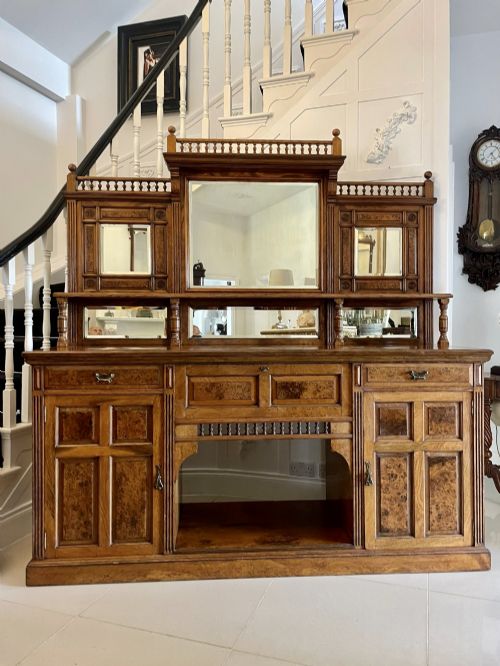
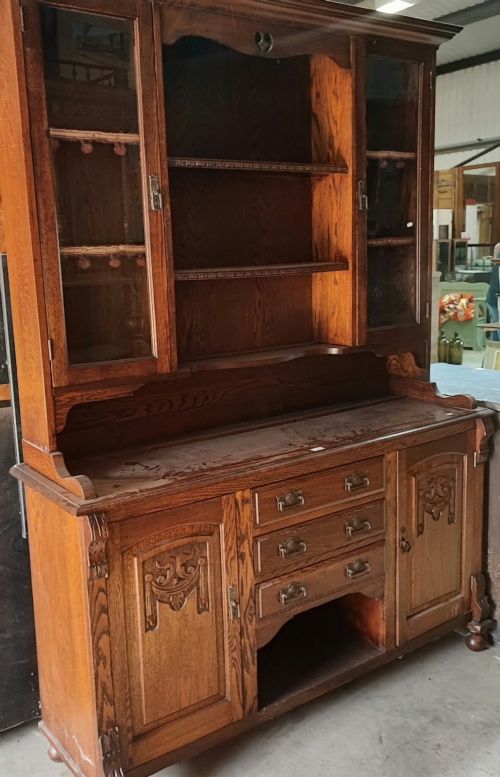
These Victorian carved buffet pieces are substantial dining room furniture built for display and service, combining deep relief ornament with practical timber construction.
What the pieces are
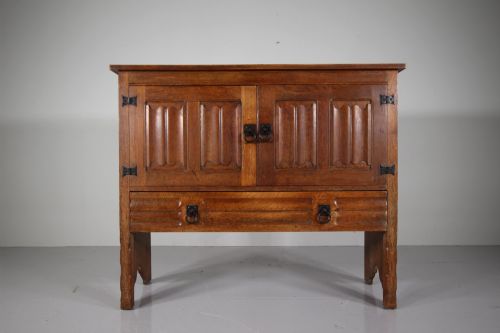
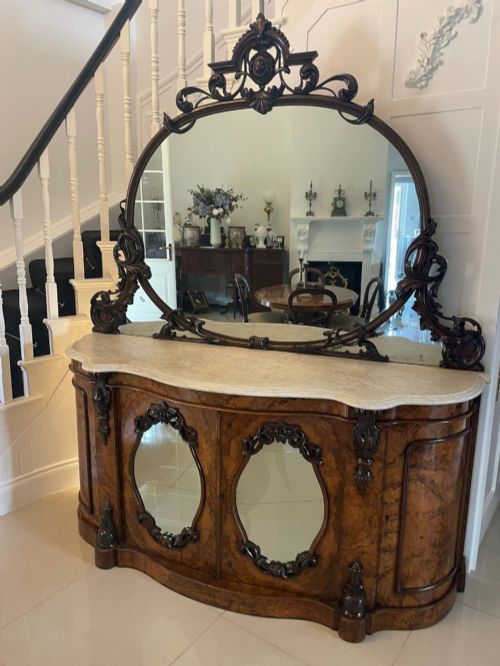
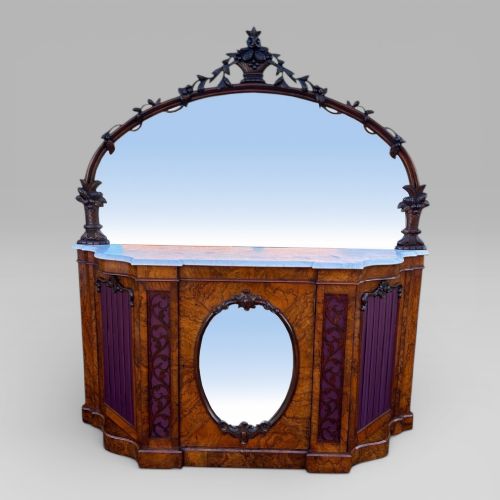
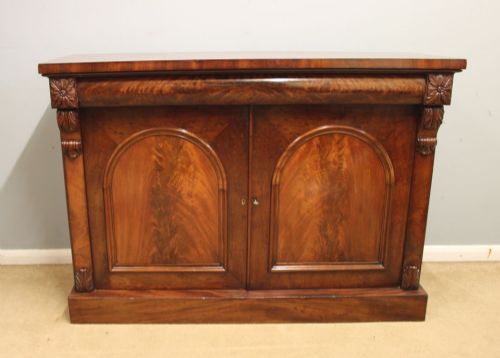
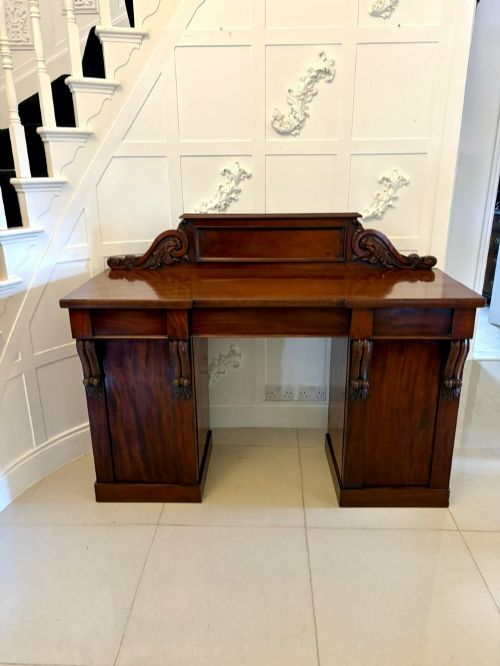
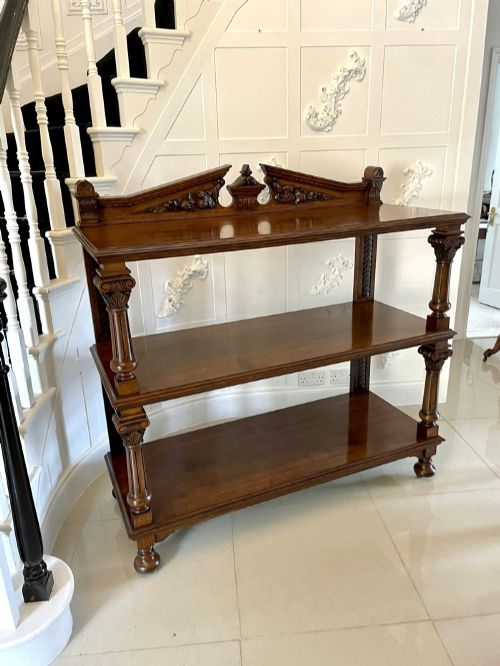
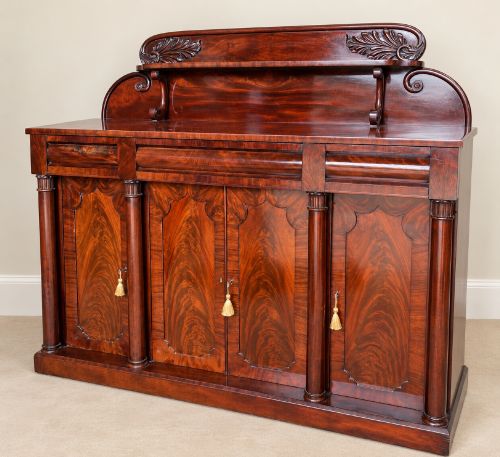
A victorian carved buffet is a heavy dining room server, dumb waiter or tier table designed for holding tableware and food during the nineteenth century. These items appear in both mahogany and oak, often taking the form of low cupboards, open three-tier serving tables or mirror-backed sideboards. Forms range from compact petite cabinets to large six-foot architectural servers with multiple tiers and upright supports.
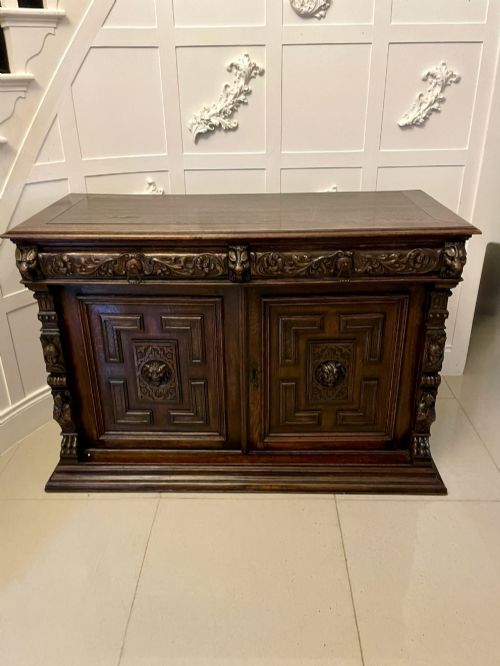
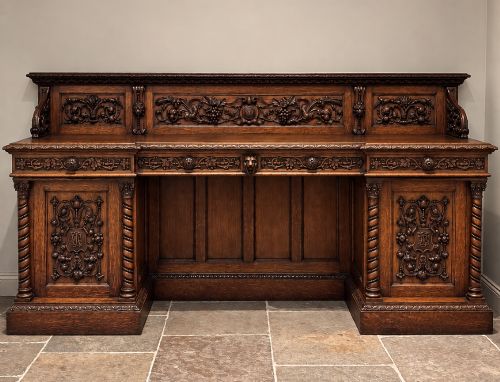
Green man carvings and lion masks regularly punctuate the heavy timber framework of the oak pieces, giving them a distinctively robust character. Open server variants function effectively as tiered side tables or dumb waiters, whilst closed cupboard versions provide concealed storage for dining paraphernalia. The surviving inventory bridges formal Victorian dining room furniture and more rustic vernacular interpretations.
How they were made
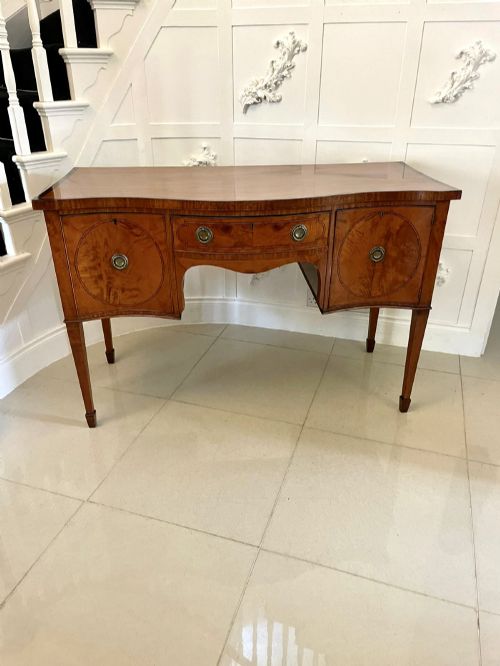
Makers constructed these carcases primarily from solid oak and mahogany, applying flame mahogany veneers to flat surfaces for added visual depth. Structural stability relied on traditional joinery methods, housing thick timber panels within sturdy frames to support heavy tiers and upper mirror backs.
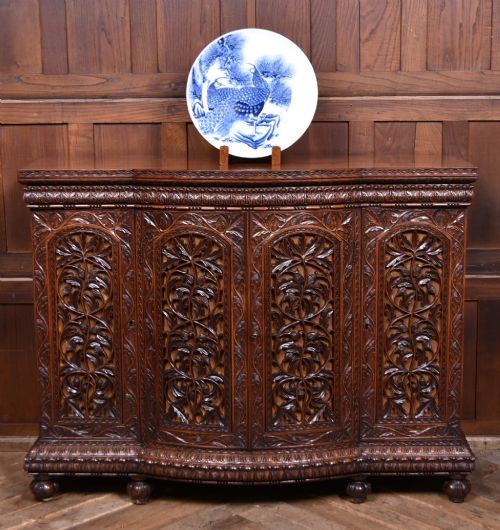
Carvers executed the extensive relief ornament by hand directly into the timber, bringing out details such as green man faces, lion masks and foliate scrolls. Turned wooden elements, including barley twist columns, required specialised lathe work to support the tiered shelves of the serving tables.
Additional hardware components integrated into the construction include cast brass handles, ceramic castors and lead work, whilst glass panels appeared in cabinet doors and mirror plates were fitted into carved wooden frames.
Retail Price Guide 2026
Typical UK retail prices for victorian carved buffet, calculated from the Sellingantiques database of over a million retail prices indexed since 2003. This retail price guide relies exclusively on Sellingantiques data; no external sources or auction records are used, so the figures do not describe the wider market.
Recorded periods span from mid-century 1850 variants up to late Victorian 1880 Gothic court cupboards and tiered servers.
What varies in quality
The depth, crispness and ambition of the hand-carving determine the upper tier of quality, distinguishing lively figural work like green man masks from mechanical factory production. Heavy, dense timbers and well-figured veneers such as burr walnut elevate the presence of a piece compared to plain, uninspired stock.
Structural complexity also dictates worth, separating simple two-tier serving tables from elaborate three-tier court cupboards fitted with barley twist columns, functional drawers and mirrored upper backs. Integration of thoughtful secondary materials, from good quality brass fittings to clean mirror glass, marks out superior workshops.
The Victorian Carved Buffet Glossary
- Dumb waiter
- A multi-tiered serving table used in dining rooms for holding dishes and utensils without requiring constant servant attendance. These pieces often feature two or three open shelves.
- Green man
- A sculptural architectural motif depicting a human face emerging from or entwined with foliage and vines. It appears frequently on the carved oak panels of these nineteenth-century items.
- Barley twist
- A turned wooden column or leg resembling a tightly wound spiral rope. This decorative turning technique is common on the upright supports of tiered servers.
- Court cupboard
- A heavy enclosed wooden storage cabinet featuring upper and lower sections, often richly decorated with carved panels. They provide substantial concealed storage space.
- Burr walnut
- A prized wood veneer showing turbulent, swirling grain patterns formed from tree growths. It adds rich texture to the surfaces of mid-period examples.
Frequently Asked Questions
How do I use a buffet today?
These sturdy pieces function exceptionally well as dining room servers for holding glassware and serving platters during meals. They also serve as grand hallway display tables or media consoles in larger living spaces.
Open-tiered versions provide practical open shelving for books and decorative objects, whilst enclosed cupboard variants hide away clutter.
Are these pieces made of solid oak?
The majority of the heavily carved examples utilise solid oak timbers for both the structural frame and the decorative relief panels. Other variations employ solid mahogany or feature flame mahogany veneers applied over secondary woods.
High-end items may also incorporate luxury timbers like burr walnut on prominent display surfaces to create striking grain patterns.
What is a green man carving?
A green man carving is a traditional decorative motif showing a human face surrounded by or sprouting from leaves, vines and foliage. It represents rebirth and is deeply tied to Gothic revival styles.
This specific motif appears constantly on nineteenth-century oak furniture from this category, especially on cupboard doors and friezes.
How do I tell an 1850 buffet from an 1880 one?
Mid-century pieces from around 1850 frequently lean towards rich mahogany construction with smoother surfaces and mirror backs. Pieces dating closer to 1880 tend to display heavier Gothic oak carving, green man motifs and barley twist columns.
Construction density and regional stylistic influences, such as French Breton or Gothic revival, help pinpoint the exact decade of manufacture.