







Regency Dumb Waiter
Regency dumb waiter pieces are tiered serving stands offering practical multi-level surface space, combining architectural proportion with functional elegance for dining rooms.
Regency Dumb Waiter
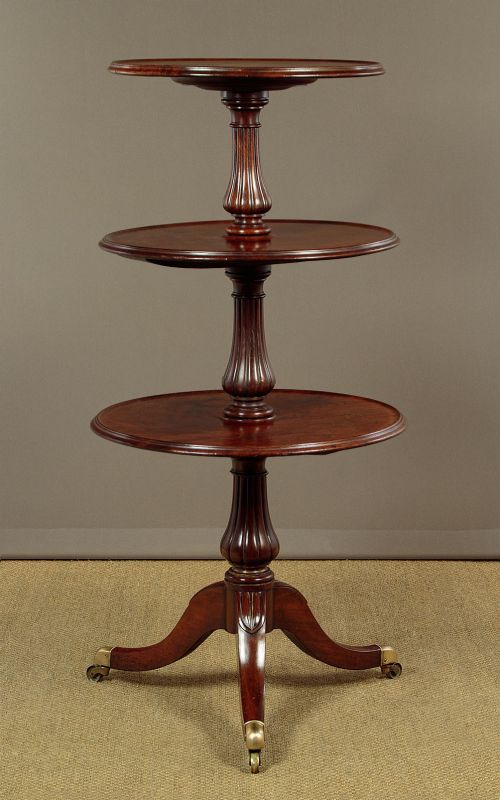
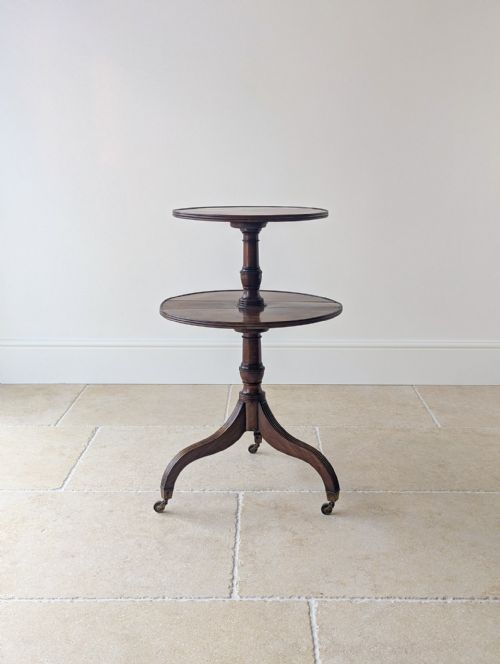
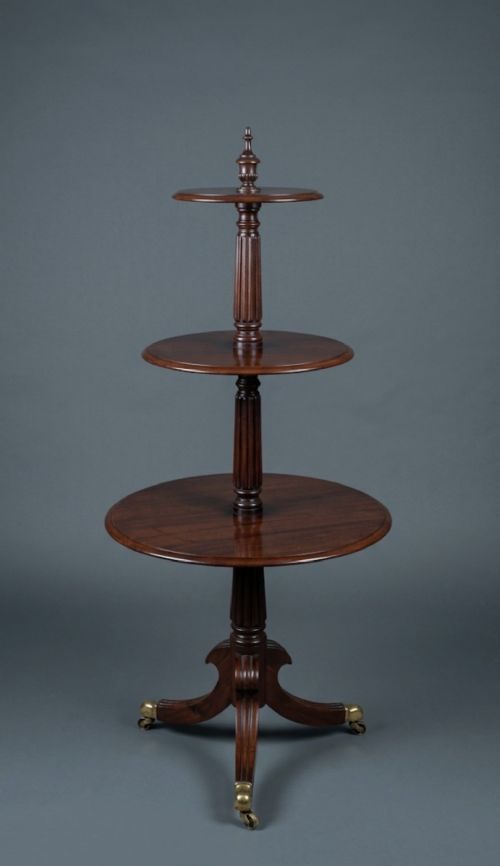
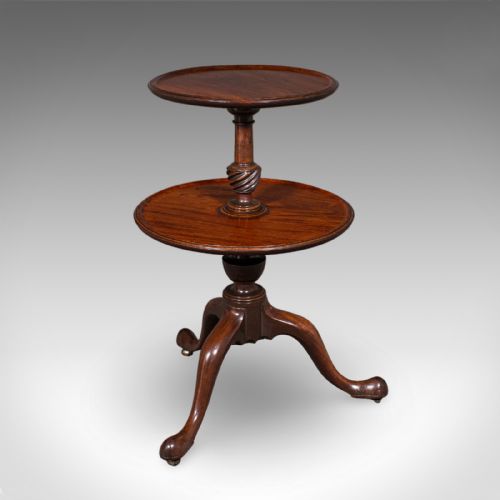
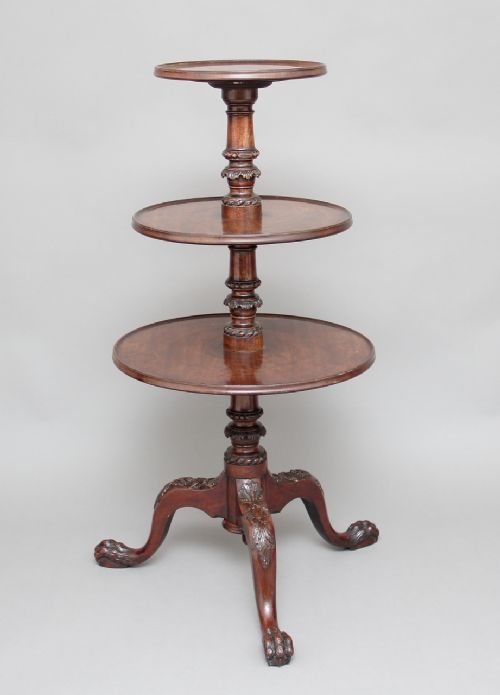
A regency dumb waiter is a tiered serving piece designed to hold dishes and silverware near the dining table. These items appear primarily in forms with circular tiers or revolving shelves supported by central pedestals.
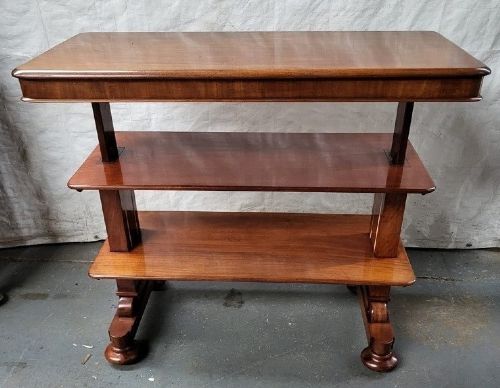
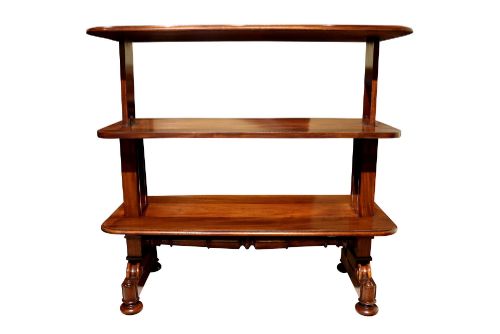
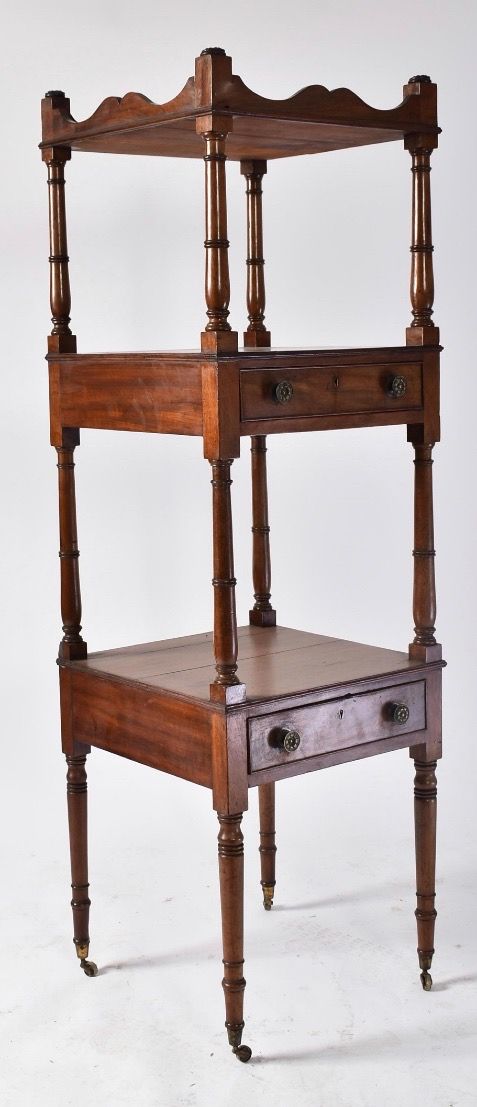
The majority of pieces belong to the Regency period and the wider nineteenth century, including variations such as occasional tables, etageres, and multi-tier buffet stands. Examples range from standard two-tier and three-tier formats to folding or metamorphic designs.
Origins span standard English workshop production to Irish pieces and Anglo-Indian campaign furniture executed in the Regency style. Grand proportions and unusual configurations occasionally emerge alongside standard domestic variants.
Materials and construction
Construction relies heavily on mahogany, often chosen for its rich grain and structural stability across large circular tiers. Workshops also utilised brass for mounts, fittings, and original castors on mobile pedestals.
Joinery techniques connect graduated tiers to central turned columns or pedestals, sometimes incorporating folding mechanisms or metamorphic actions. Surface finishing highlights the natural figuring of the timber without excessive ornamentation.
Regency Dumb Waiter Retail Price Guide 2026
Typical asking prices for regency dumb waiter among the pieces listed under this phrase on Sellingantiques today, from the lower quarter to the upper quarter. They describe what is for sale here now, not the wider market.
Recorded object forms include dumb waiters, etageres, occasional tables, and side tables.
Assessing quality and proportion
Quality rests in the architectural harmony of the tiered proportions and the choice of mahogany figure. Pieces displaying substantial scale, balanced graduation, and original brass castors demonstrate superior workshop execution.
Distinction also arises in mechanical complexity, where folding mechanisms or metamorphic functions operate with precision. Subtle details like turned column supports and clean edge moulding separate standard utility pieces from grander examples.
Gillows
The Regency Dumb Waiter Glossary
- Dumb waiter
- A tiered freestanding piece of dining room furniture used to hold plates, glasses, and serving dishes without the aid of servants. These pieces typically feature multiple circular trays on a central column.
- Tiered table
- A piece featuring two or more levels of surface space arranged vertically on a single support. This design maximises floor space while offering distinct levels for display or service.
- Castors
- Small wheel attachments fitted to the base of furniture legs or pedestals to allow smooth movement. Original brass examples add authenticity and practicality to heavier serving pieces.
- Metamorphic
- A descriptive term for furniture engineered to transform into different forms or uses, such as shifting between a standard table height and a tiered stand.
Regency Dumb Waiter: Frequently Asked Questions
What is a regency dumb waiter used for?
These pieces served as auxiliary storage beside the dining table during meals, holding extra plates, cutlery, and dishes to reduce the need for attending servants.
Today, they function effectively as display stands, plant pedestals, or occasional side tables in living spaces.
How many tiers do these pieces have?
Most examples feature two or three graduated circular tiers mounted on a single central pedestal column.
Larger or more unusual formats include buffet-style variants and folding designs tailored for specific spatial needs.
Are original castors important?
Original brass castors indicate that the base and movement mechanisms remain intact from the period of manufacture, which preserves the historical integrity of the piece.
Many examples retain their mobility, allowing the serving stand to be repositioned easily across dining room floors.
How do I spot a Regency piece?
Regency items typically display clean classical proportions, mahogany construction, and understated turned columns rather than heavy Victorian carving.
Details such as brass mounts and circular tiered arrangements help distinguish pieces from the broader nineteenth-century production.