

Mahogany Tier Stand
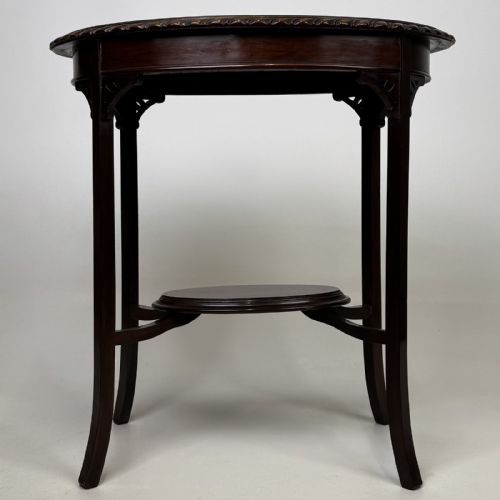
When you search for a mahogany tier stand, you are looking at multi-level display pieces designed for practical storage and serving across several centuries.

Mahogany Tier Stand
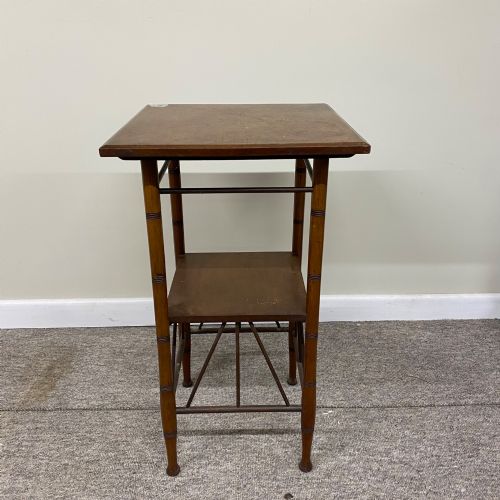
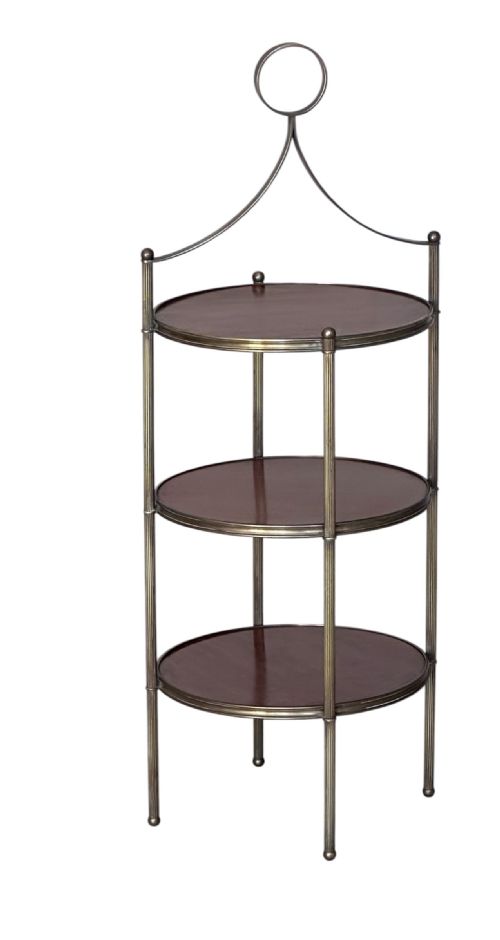
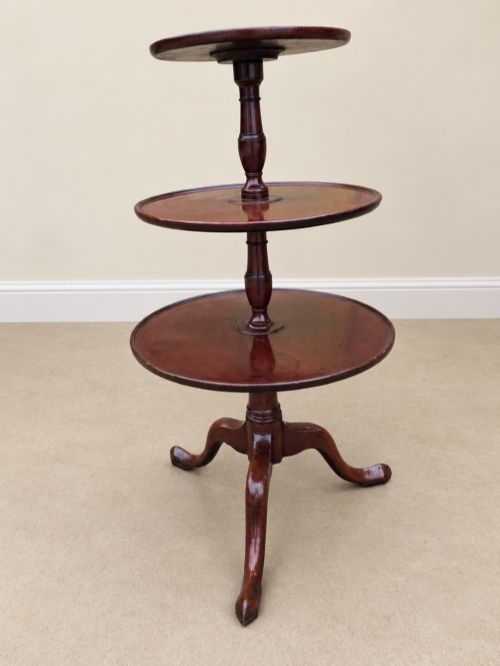
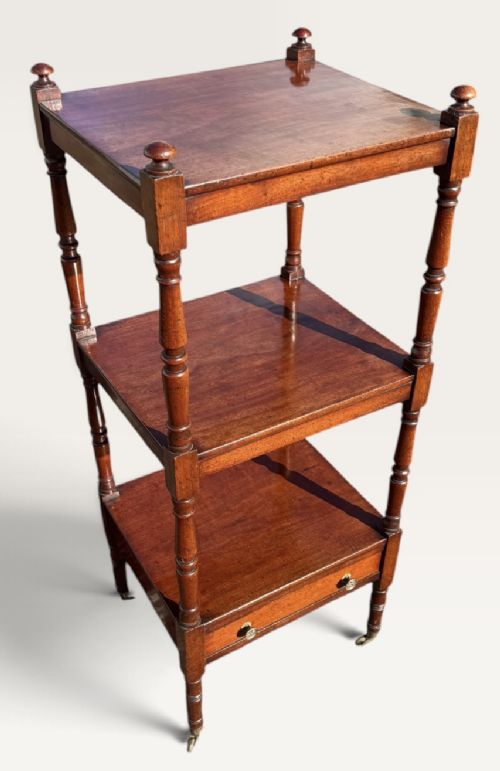
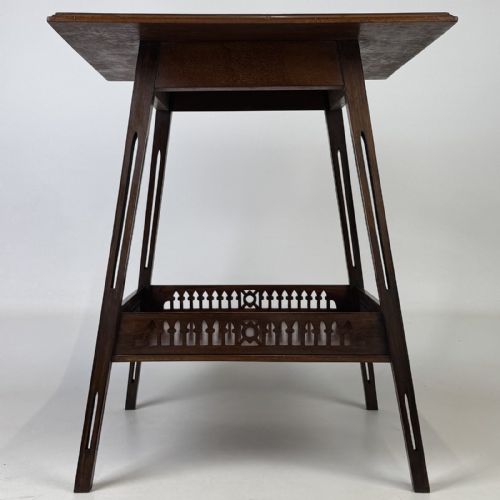
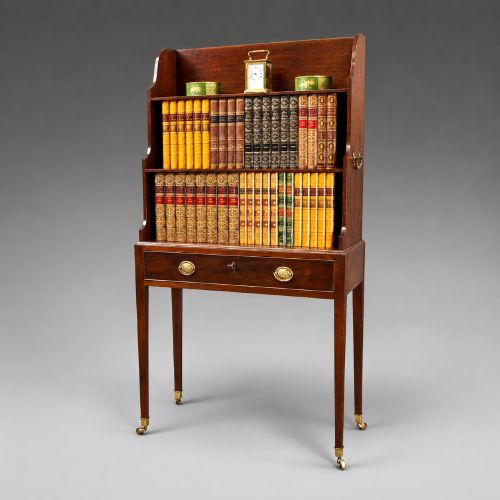
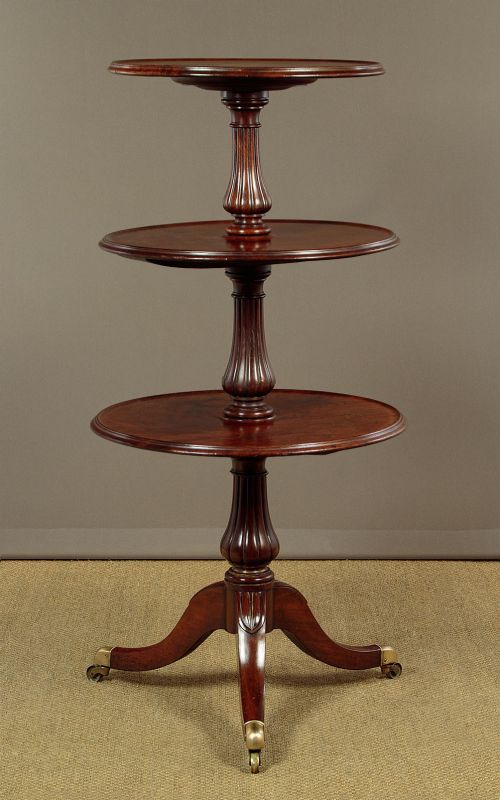
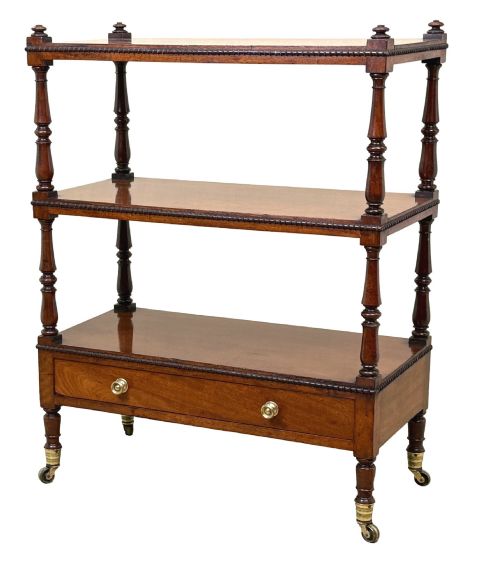
A mahogany tier stand encompasses multi-level furniture forms spanning from the Georgian and Regency periods through the Victorian and Edwardian eras. The listings here frequently include what-nots, etageres, dumb waiters, and cascading cake or plant stands with multiple horizontal surfaces.
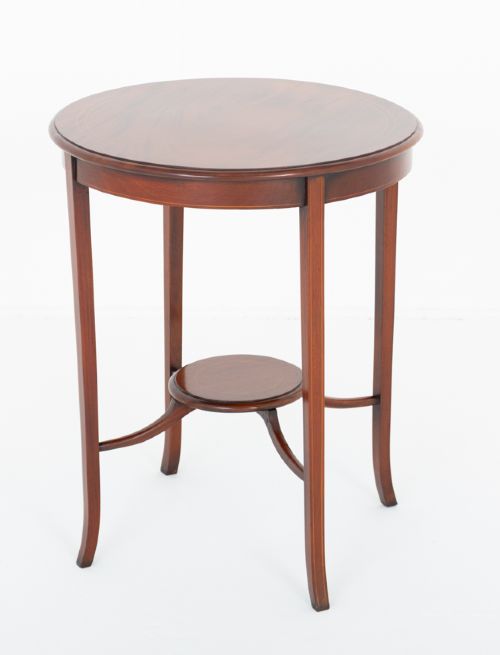
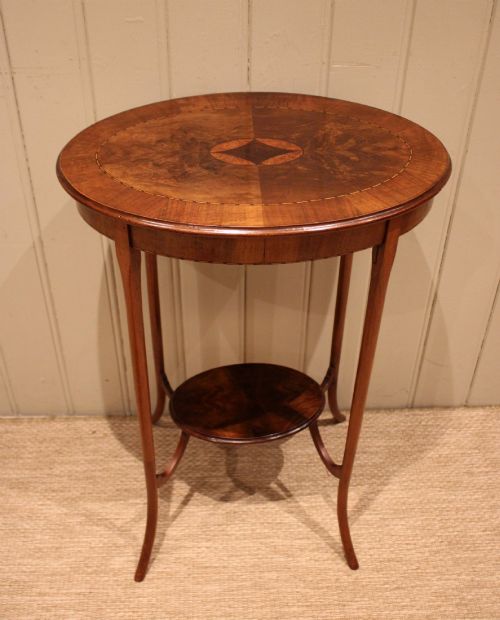
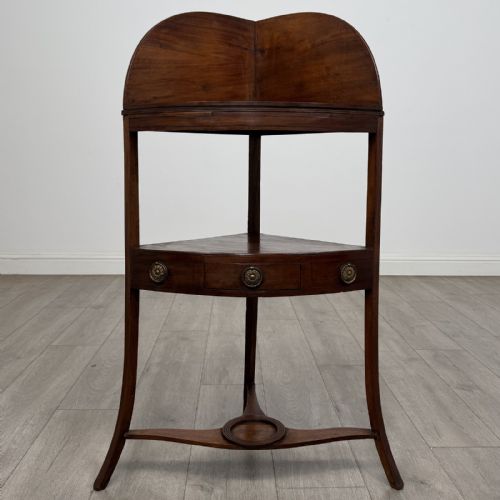
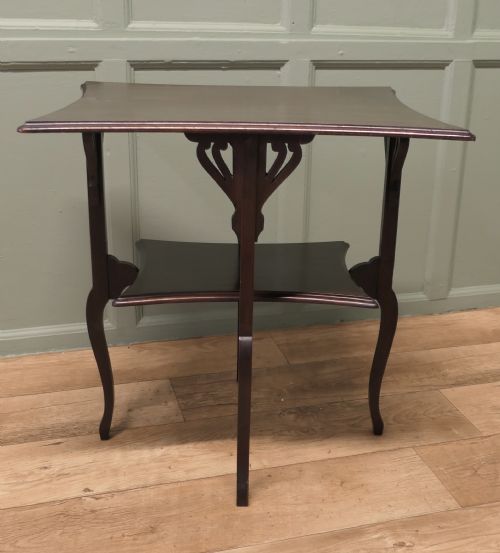
Buyers will encounter two-tier occasional tables and washstands alongside taller four-tier or five-tier open shelving units. These versatile pieces served diverse domestic functions, from holding books and music to displaying porcelain or serving afternoon tea.
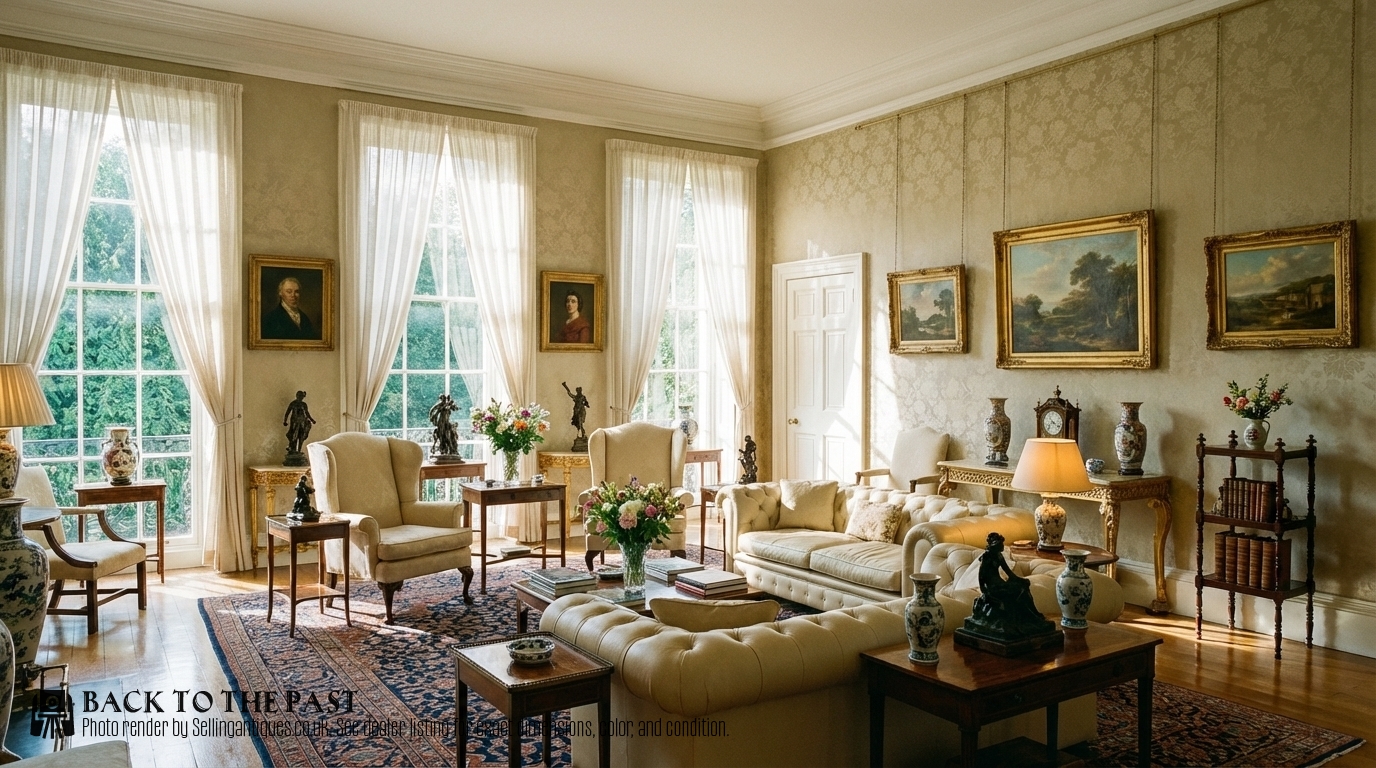
How they were made
The construction relies primarily on solid and veneered mahogany, often enriched with contrasting boxwood inlay or brass details such as casters and gallery rails. Joinery techniques connect turned or barley twist upright supports to stacked wooden platforms.
Makers utilised durable hardwoods paired with glass, cast iron, or brass fittings to achieve stability across multiple stacked tiers. Surface decoration ranges from plain polished timber to delicate stringing and inlaid motifs characteristic of the Sheraton Revival.
Mahogany Tier Stand Retail Price Guide 2026
Typical asking prices for mahogany tier stand among the pieces listed under this phrase on Sellingantiques today, from the lower quarter to the upper quarter. They describe what is for sale here now, not the wider market.
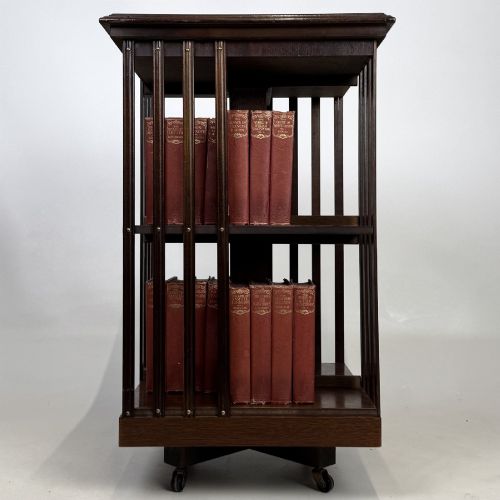
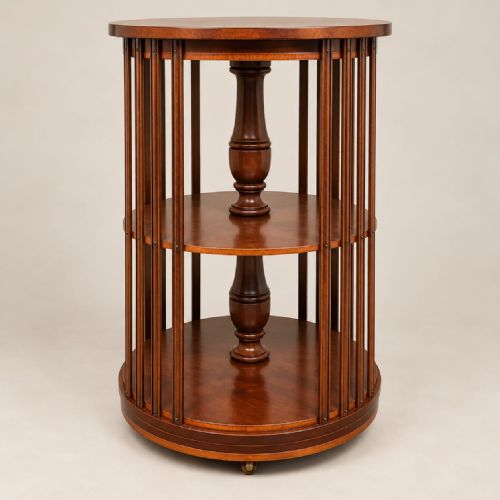
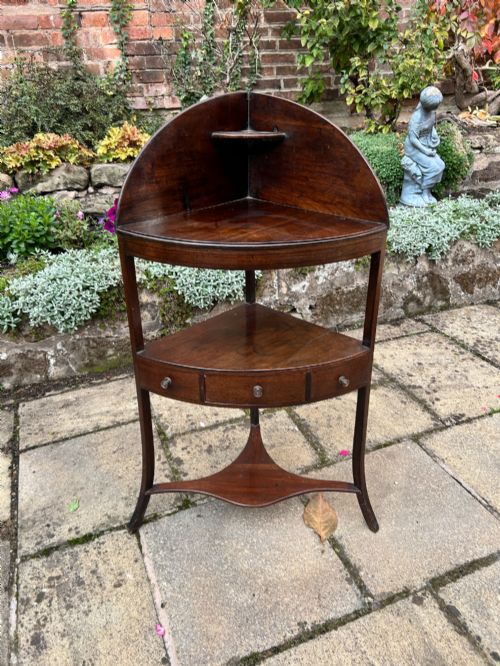
Form variations recorded here include open bookcases, revolving shelves, corner cabinets, dumb waiters, and folding cake stands.
What varies in quality
The distinction between standard examples and superior pieces rests upon the selection of timber grain, the crispness of the turning on the upright supports, and the restraint of the inlay. Earlier Georgian and Regency items often display finer proportions and more meticulous joinery than mass-produced later variants.
Attention to detail in secondary woods, the integration of brass hardware, and the structural integrity of the stacked tiers determine the overall standard. Pieces attributed to prominent workshops demonstrate superior balance and refined execution across every level.
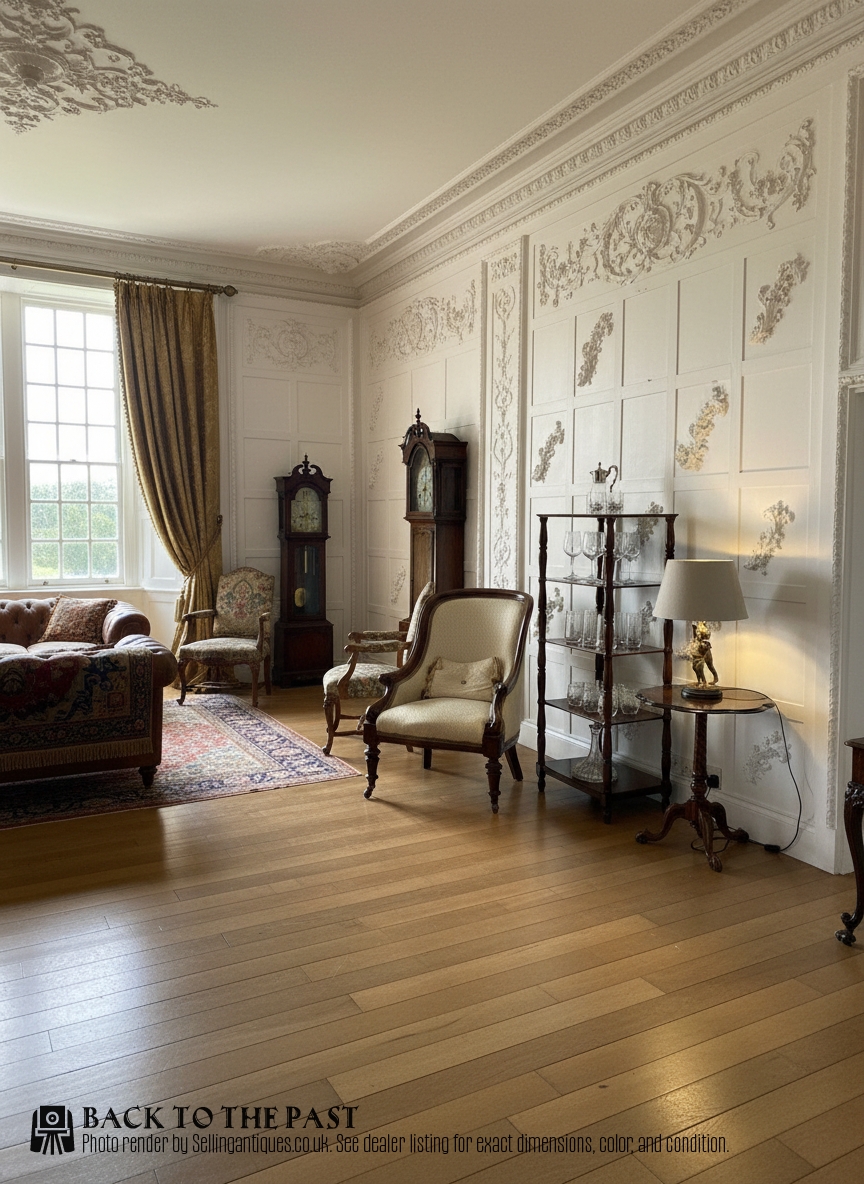
Gillows
The Mahogany Tier Stand Glossary
- Whatnot
- An open set of freestanding shelves used for displaying ornaments, books, or small possessions. These practical items typically feature three or four ascending tiers supported by slender columns.
- Etagere
- A piece of furniture consisting of a set of open shelves for displaying small objects or ornaments. French in origin, this decorative stand frequently incorporates delicate inlay and brass mounts.
- Dumb waiter
- A tiered serving table designed to hold food, plates, or wine without the need for attendants during meals. These practical pieces emerged during the Georgian period.
- Torchere
- A tall, slender stand designed to support a candelabrum, lamp, or decorative plant. These elevated pieces often feature circular tops supported by turned or fluted columns.
- Stringing
- A narrow line of contrasting inlay used to outline the edges of shelves and tabletops. Cabinet makers utilised boxwood against dark mahogany to create geometric borders.
Mahogany Tier Stand: Frequently Asked Questions
What is a mahogany tier stand used for?
These versatile tiered structures served multiple domestic purposes across different rooms. Historical uses ranged from displaying porcelain and holding books to serving afternoon tea or supporting washbasins.
Today, buyers utilise them to display collections, organise books in compact spaces, or act as prominent corner and bedside surfaces.
How do I date a tier stand?
Dating relies on observing structural characteristics, timber choice, and decorative styles. Georgian and Regency examples often feature heavier timber, simpler turned supports, and hand-cut joinery.
Later Victorian and Edwardian versions frequently incorporate machine-made components, lighter satinwood or boxwood stringing, and specific Revival motifs like barley twist columns.
Where should I place a tier stand at home?
Their vertical orientation makes these stands exceptionally well-suited for corners, narrow hallways, or beside seating areas where floor space is limited. Tall what-nots and etageres fit neatly against blank walls to draw the eye upward.
Shorter two-tier versions function effectively as bedside tables, lamp tables, or occasional surfaces next to armchairs.
Are these stands sturdy enough for daily use?
Most antique tier stands were built from durable hardwoods like mahogany to endure robust everyday domestic environments. The multiple shelves distribute weight evenly across the upright supports.
Care should be taken to place heavier items on the lowest shelf to maintain a low centre of gravity and ensure overall stability.