






Mahogany Corner Shelves
Mahogany corner shelves offer a practical way to utilise awkward wall space while bringing rich timber grain into a room.
Mahogany Corner Shelves
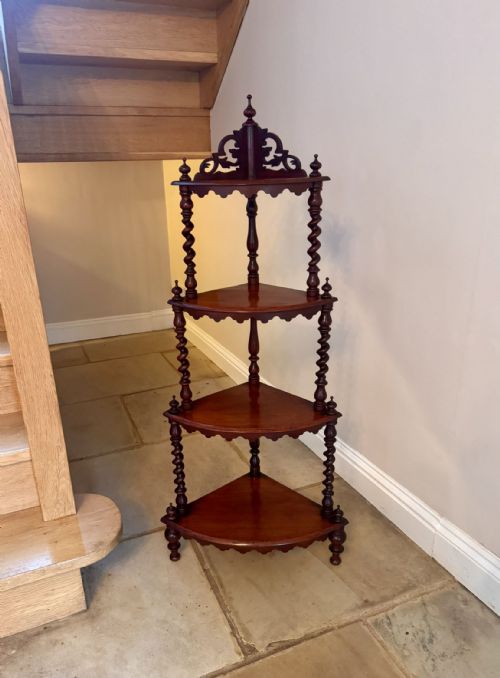
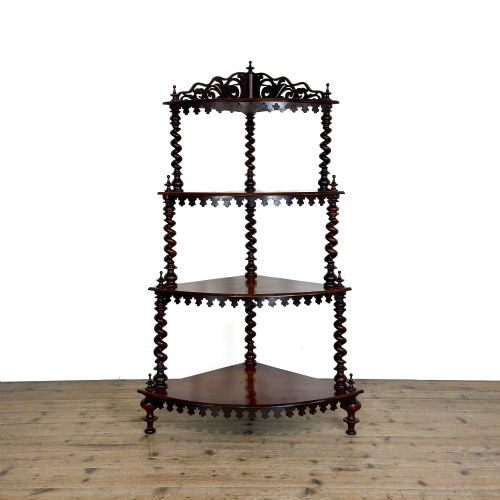
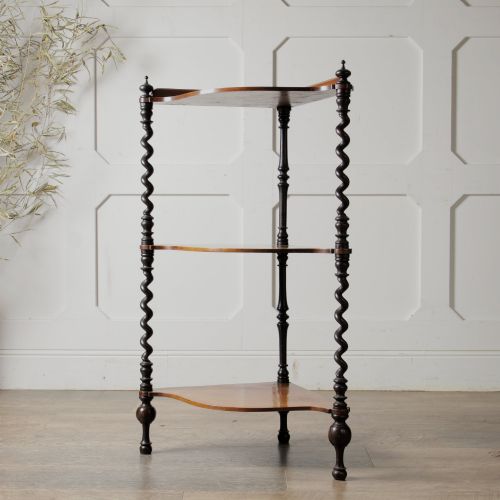
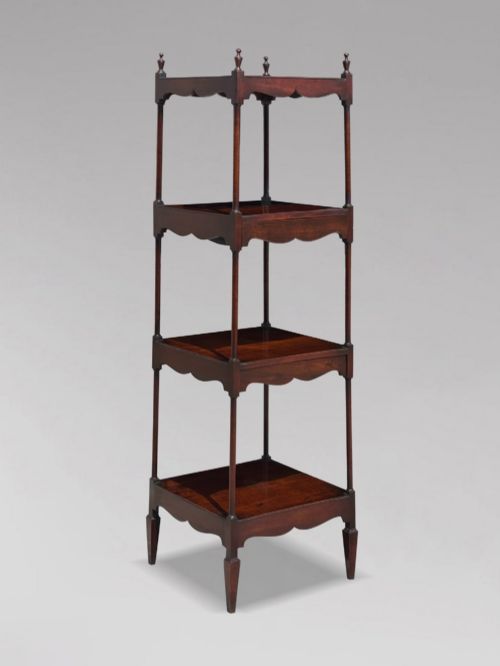
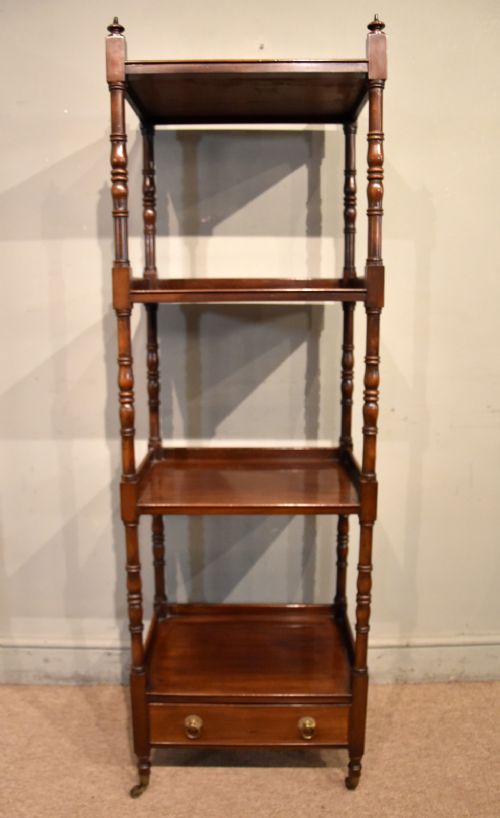
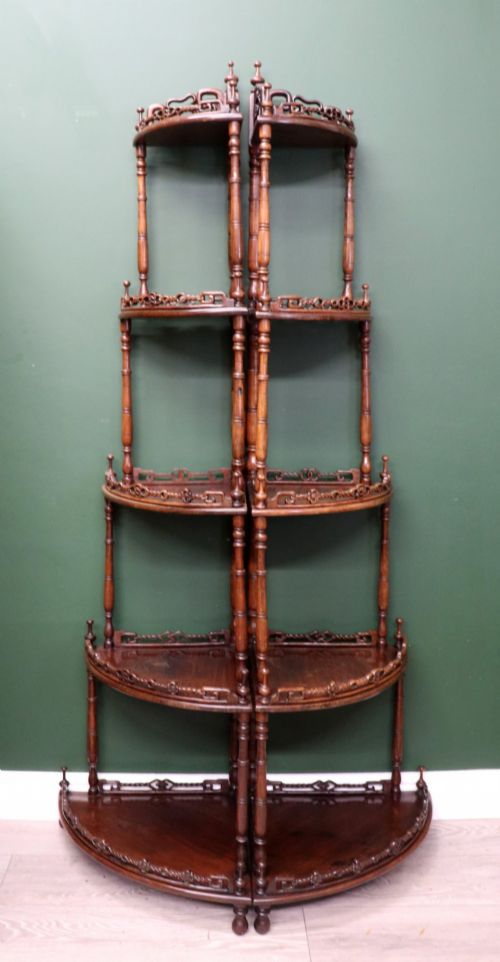
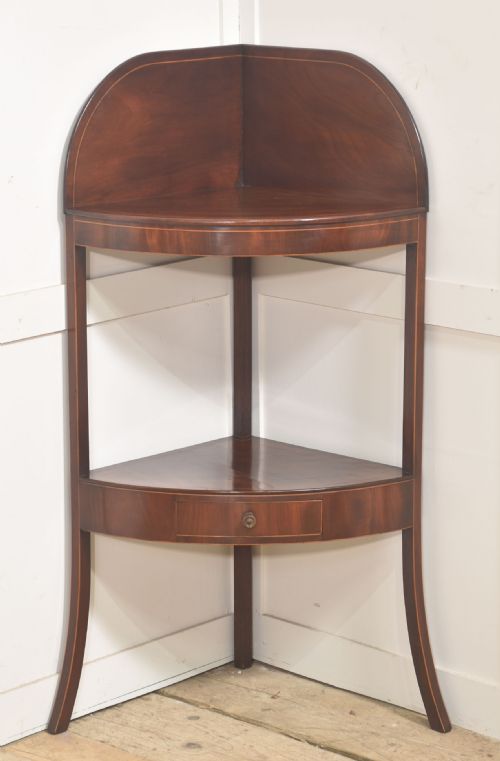
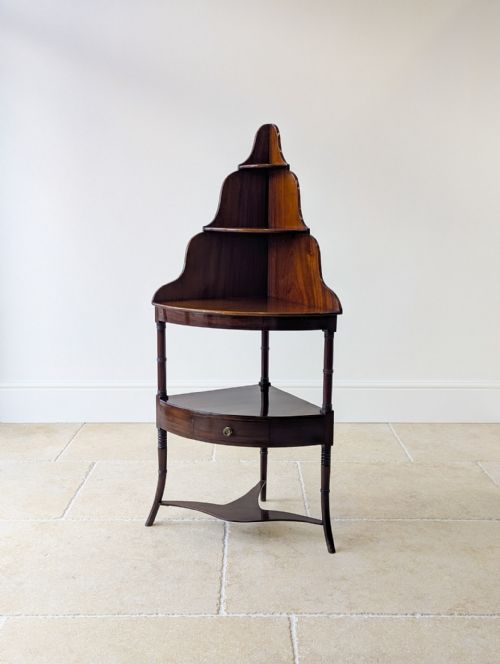
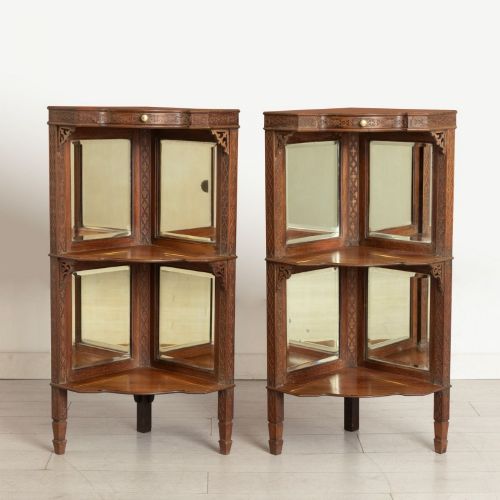
When you search for mahogany corner shelves, you find pieces designed to fit neatly into room junctions, taking the form of hanging brackets, multi-tiered whatnots and bow-fronted display units. The listings here span the Georgian, Regency, William IV and Victorian periods, alongside mid-nineteenth-century examples.
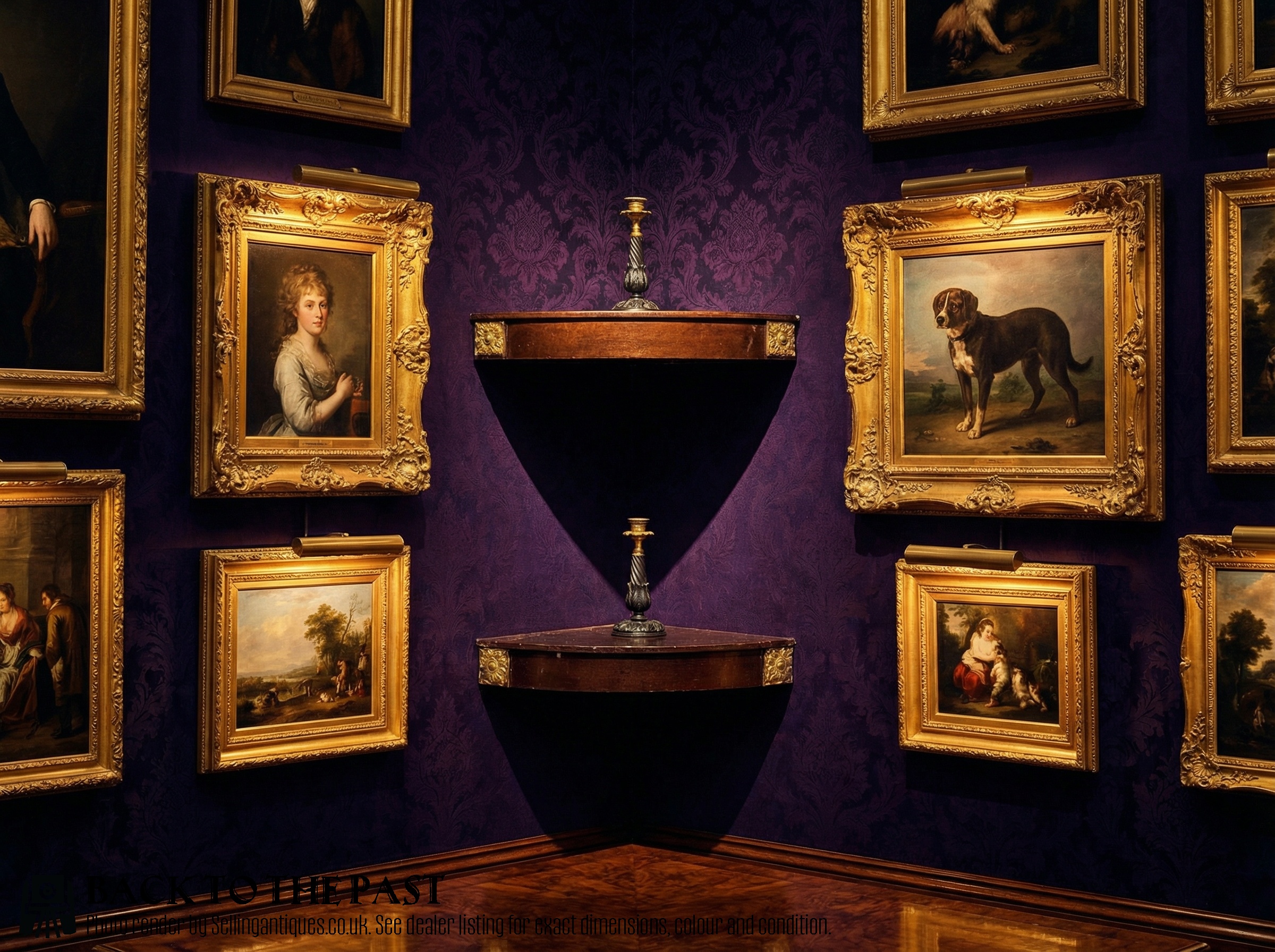
You are most likely to encounter wall-mounted brackets and multi-tiered whatnots in this selection. These pieces utilise figured timber and graduated tiers to display decorative objects or books without dominating the floor space.
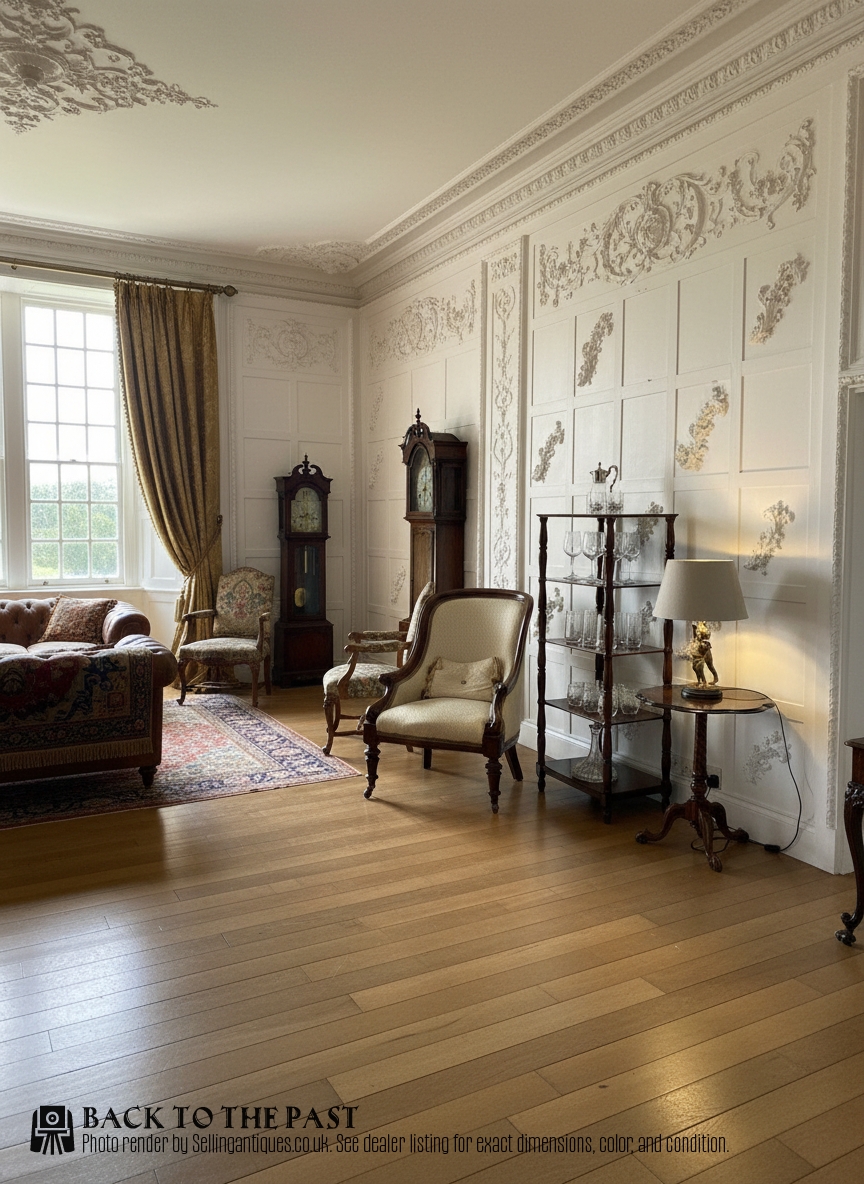
How they were made
Cabinet makers constructed these pieces primarily from solid mahogany and mahogany veneers, often selecting timber with rich grain patterns. Brass components occasionally appear as structural supports, hinges or decorative fixtures.
Joinery techniques such as dovetailed joints and turned supports ensured stability across multiple tiers. Workshops shaped the front edges into serpentine or bow-front profiles, requiring careful hand-planing and fitting.
Mahogany Corner Shelves Retail Price Guide 2026
Typical asking prices for mahogany corner shelves among the pieces listed under this phrase on Sellingantiques today, from the lower quarter to the upper quarter. They describe what is for sale here now, not the wider market.
Victorian cabinet makers occasionally referred to these multi-tiered display stands by the phonetic spelling wot-not.
What varies in quality
The distinction between standard pieces and the finest examples lies in the selection of the mahogany timber and the crispness of the turning on the upright supports. Superior pieces display deep, natural chatoyancy in the wood grain and finely proportioned mouldings.
Construction methods also dictate quality, with better examples showing seamless joints and carefully matched veneer panels on the shelves and backboards. Finer items integrate structural elements gracefully into the overall design rather than relying on heavy reinforcement.
The Mahogany Corner Shelves Glossary
- Whatnot
- A piece of furniture consisting of several open shelves for displaying small objects. These tiered stands date from the late eighteenth century onwards.
- Bow-fronted
- Having a convex, curved front edge that projects outward. This shape softens the angular geometry of a corner unit.
- Serpentine front
- A furniture front shaped with a double curve, concave in the centre and convex at the sides. This contour requires advanced woodworking skill.
- Wall brackets
- Small shelving units designed to be fixed directly to a wall. They lift storage off the floor to utilise vertical surfaces.
Mahogany Corner Shelves: Frequently Asked Questions
How were mahogany corner shelves used?
These shelves served primarily for the display of ornaments, china and small books in principal rooms. Their corner placement allowed households to maximise usable surface area without blocking walkways.
In larger houses, hanging brackets held decorative ceramics, whilst floor-standing whatnots kept reading materials close to seating areas.
How do I date a set of shelves?
Dating relies upon examining the timber selection, construction methods and stylistic details such as turning and edge profiles. Georgian and Regency pieces often feature simpler architectural lines and dense, heavy mahogany.
Victorian examples frequently introduce more elaborate serpentine fronts and turned uprights. Comparing the joinery to known period pieces confirms the manufacturing era.
Are these shelves sturdy enough for heavy books?
Most corner shelves and wall brackets were designed for lighter decorative objects rather than heavy libraries. Freestanding whatnots offer greater load-bearing capacity due to their floor supports.
Wall-mounted units depend entirely on the strength of the fixings and the integrity of the backboard joints. Owners should distribute weight evenly across the tiers.
How do I care for antique mahogany?
Mahogany requires stable room humidity and protection from direct sunlight to prevent the timber from fading or splitting. Regular dusting with a soft, dry cloth preserves the polished surface.
Occasional application of traditional wax feeds the wood and enhances the grain depth. Avoid modern silicone-based polishes that can damage the historic finish.