


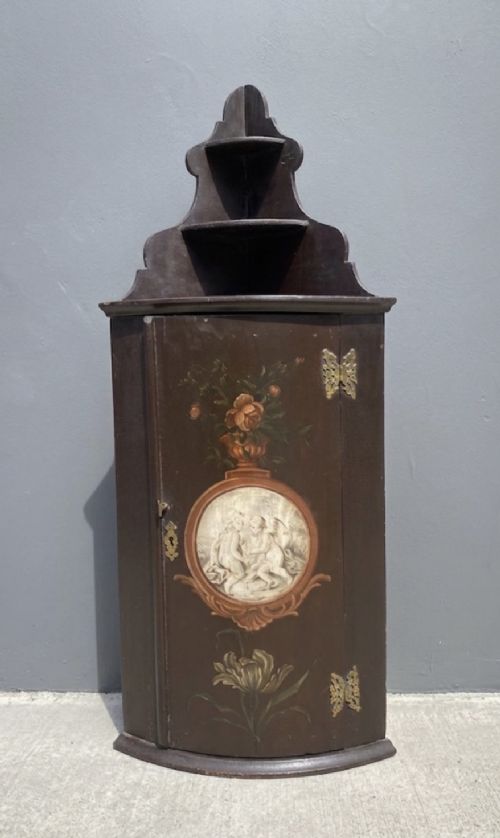


Dark Wood Wall Shelves
Dark wood wall shelves bring functional timber display to vertical surfaces, spanning Georgian craftsmanship through to Edwardian utility.
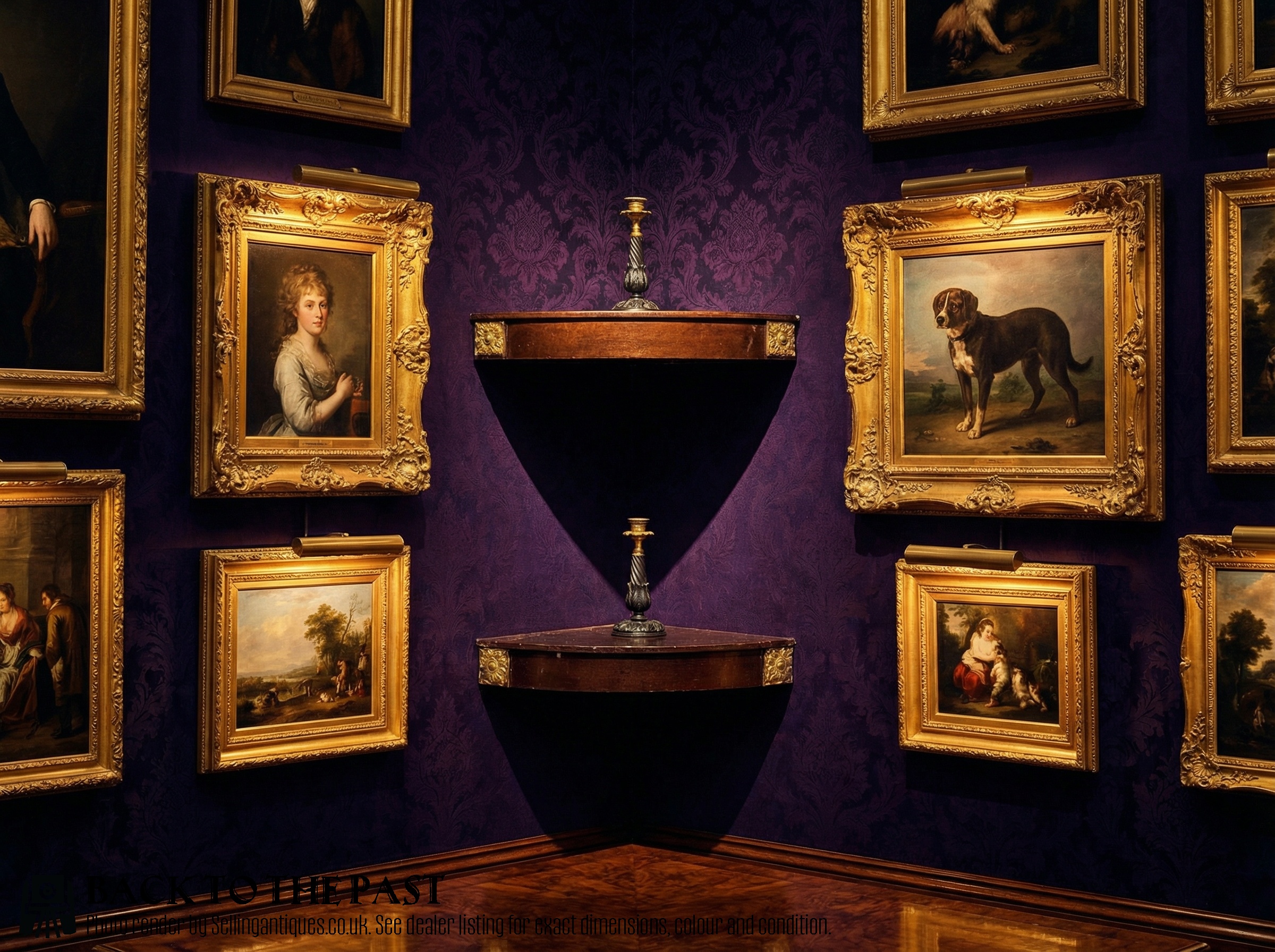
Dark Wood Wall Shelves
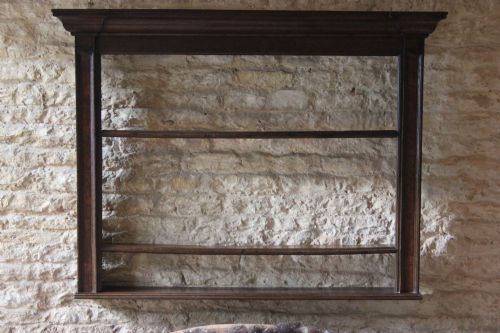
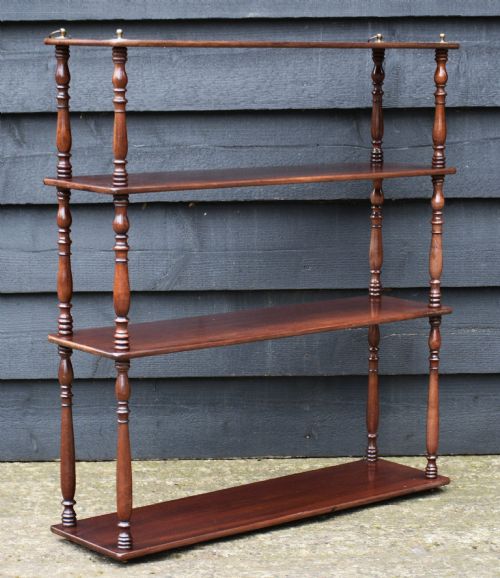
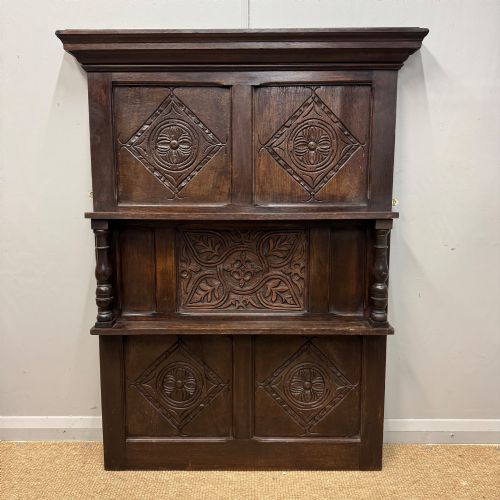
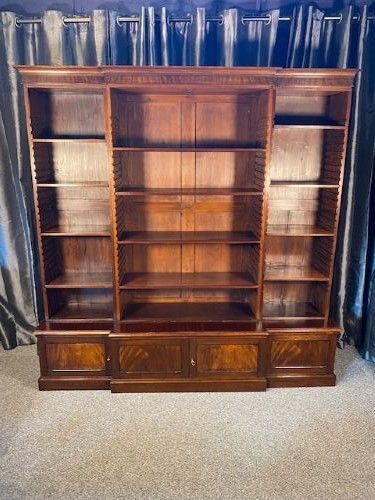
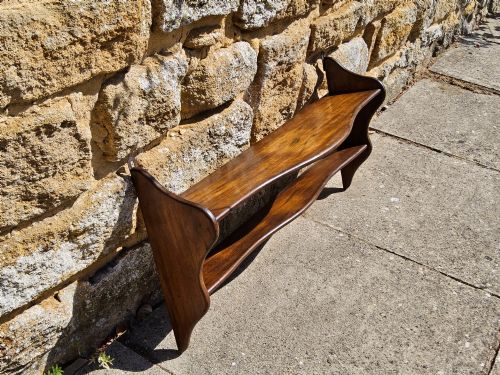
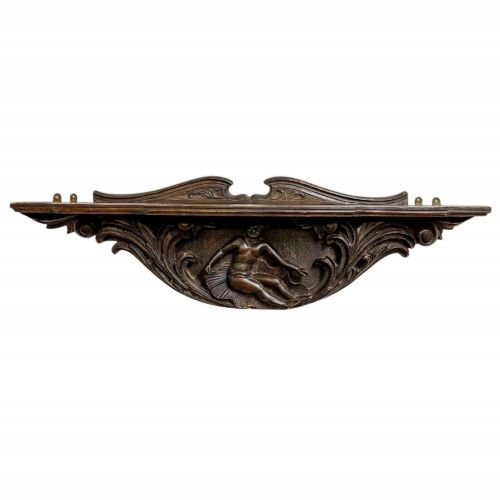
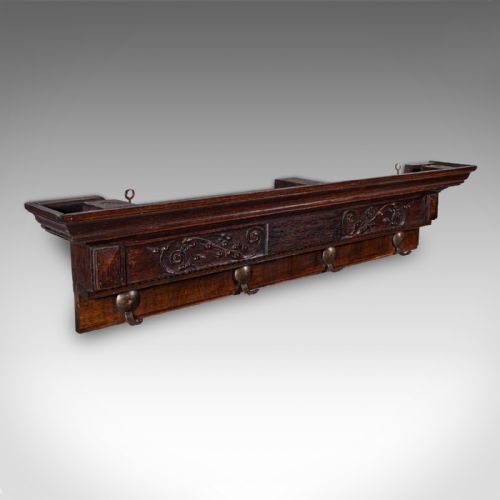
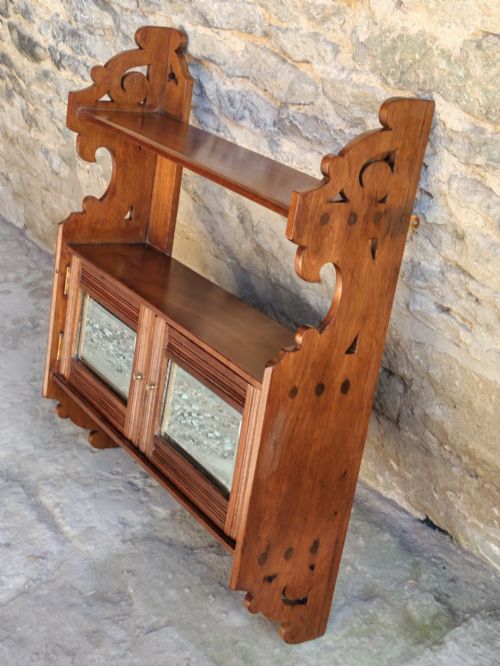
Dark wood wall shelves are practical timber fixtures designed to mount onto vertical surfaces for display and storage. When searching for dark wood wall shelves, buyers encounter hanging cabinets, waterfall tiers, and open bookshelves originating from periods such as the Georgian, Victorian, and Edwardian eras.
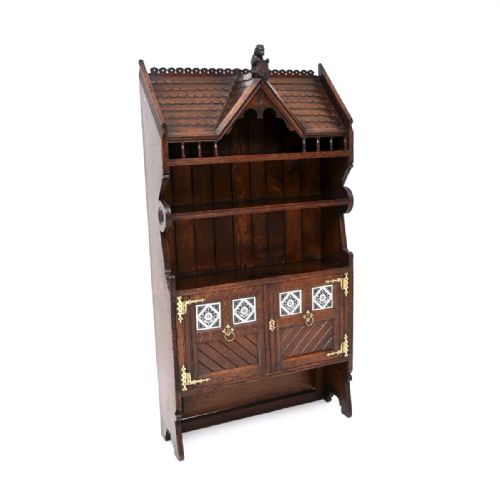
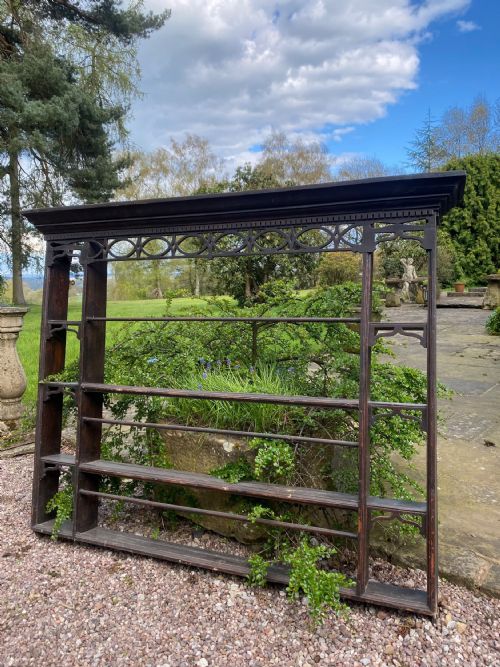
The selections on this page lean heavily toward mahogany, oak, and walnut configurations. Pieces range from simple plate racks and bobbin-turned ledges to elaborate Gothic Revival and French-influenced wall cabinets.
Buyers select these items to utilise vertical wall space in hallways, bedrooms, and reception rooms. They serve both utilitarian storage roles and decorative display functions depending on their original domestic purpose.

Materials and construction methods
Makers utilised dense timbers such as mahogany, oak, walnut, and rosewood for structural durability and rich natural tone. Joinery often involved pegged mortise and tenon joints in earlier oak pieces, transitioning to finer dovetailing in later mahogany and walnut furniture.
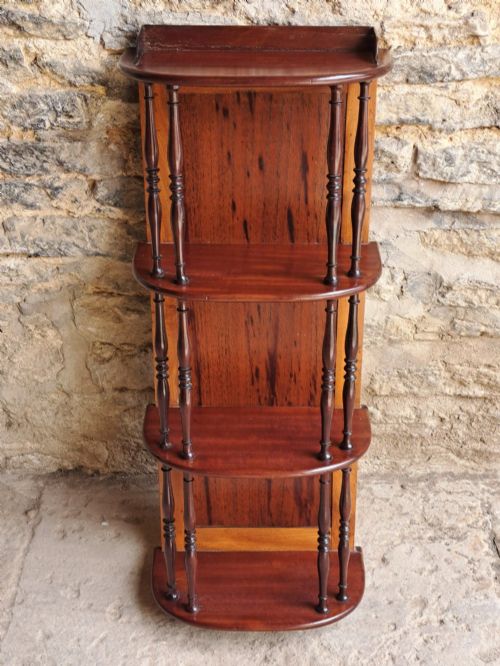
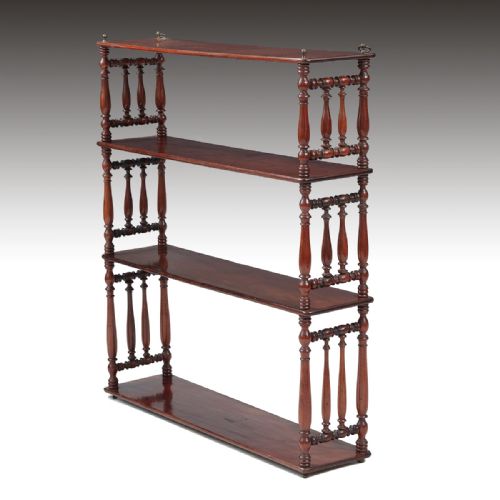
Surface finishing relied on hand-applied polishes, waxes, and paints to protect the timber grain. Additional detailing incorporates carved corbels, turned bobbin spindles, brass fittings, and inset mirrored glass.
Dark Wood Wall Shelves Retail Price Guide 2026
Typical asking prices for dark wood wall shelves among the pieces listed under this phrase on Sellingantiques today, from the lower quarter to the upper quarter. They describe what is for sale here now, not the wider market.
Assessing quality in construction and material
Quality rests in the selection of the timber and the precision of the joinery. Dense, well-figured walnut and closely grained mahogany indicate superior material choice compared to utilitarian secondary woods.
Hand-carved decorative elements and balanced proportions separate utilitarian workshop output from finer cabinetmaker pieces. The integrity of the hanging mechanisms and the stability of the shelves under load also reflect the original standard of production.
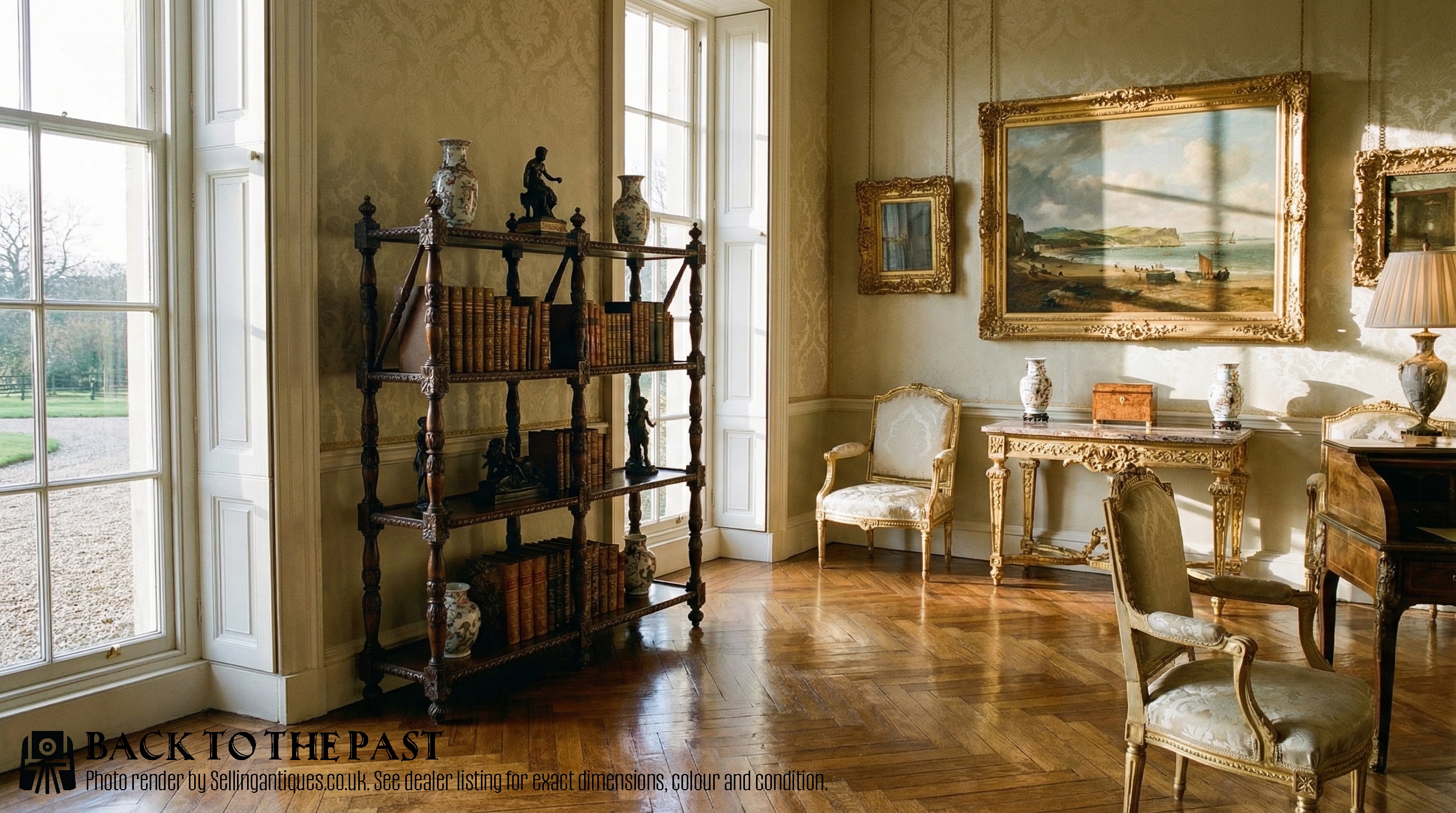
The Dark Wood Wall Shelves Glossary
- Hanging shelves
- Open wooden tiers designed to be suspended from a wall rather than resting on the floor. They provide accessible display space for books and ceramics.
- Bobbin shelves
- Wall shelving featuring turned wooden elements shaped like bobbins or spools. This style gained popularity during the late nineteenth century.
- Waterfall shelves
- Graduated shelving units where each lower tier projects further forward than the one above. The profile resembles cascading water.
- Overmantel
- A decorative structure positioned above a fireplace opening, frequently incorporating mirrors and display shelves. They anchor the chimney breast in period rooms.
- Plate rack
- A wall-mounted timber rack fitted with grooves or upright slats designed to display plates upright. They originate in country houses and cottage kitchens.
- Corbel
- A structural bracket projecting from a wall to support a weight above. In wall shelving, they provide both mechanical support and decorative carving.
Dark Wood Wall Shelves: Frequently Asked Questions
How do I hang antique wall shelves securely?
Check the original hanging points on the backframe to understand how the maker intended the piece to bear weight. Use appropriate wall fixings matched to the timber weight and your wall type.
Distribute heavier items on the lower tiers to maintain stability once mounted. Ensure the fixings anchor directly into wall studs or employ heavy-duty cavity anchors.
What is the difference between Georgian and Victorian shelves?
Georgian shelves display restrained classical proportions, often utilising solid mahogany with minimal carved ornamentation. The joinery is crisp and linear.
Victorian pieces frequently exhibit heavier Gothic Revival or Aesthetic Movement influences. They utilise darker walnut, elaborate turned spindles, and integrated mirror plates.
How should I clean dark wood finishes?
Dust the timber regularly with a soft, dry cloth to prevent particulate accumulation. Avoid silicone-based sprays that leave a synthetic film on antique polishes.
Apply a traditional beeswax polish occasionally to nourish the dry wood grain. Buff gently with a clean cloth to maintain a natural, subdued lustre.
Were these shelves made for specific rooms?
Many smaller units served as hallway mirrors with valet hooks for coats and hats. Others functioned as bedroom shelving or library book storage.
Kitchens and dining rooms utilised plate racks and enclosed hanging cupboards for ceramics. Their adaptable scale allows them to transition easily into modern domestic spaces.