



Four Tier Wall Shelf
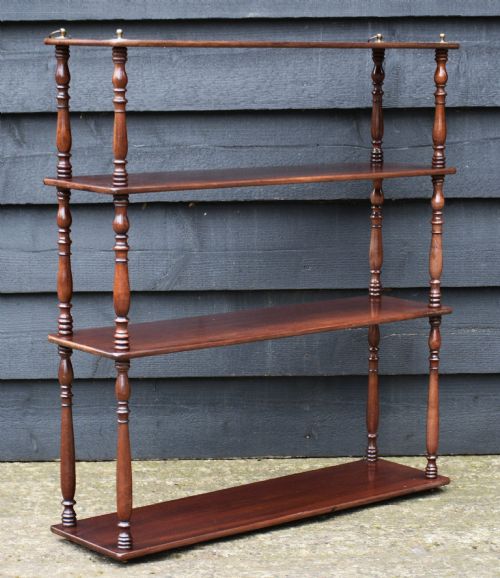
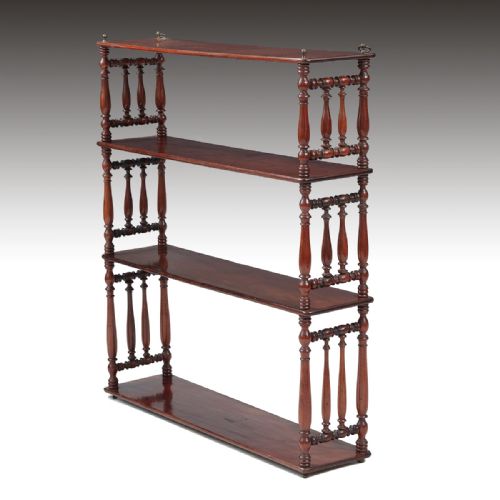
These four tier wall shelf examples are tiered wooden display units designed to mount directly onto vertical surfaces, bringing practical display space to compact rooms.
Four Tier Wall Shelf
A four tier wall shelf provides stepped levels of open display suspended against a wall, typically taking the form of hanging shelves or wall shelves. These items are designed to organise books, small ornaments or collections without occupying floor space.
The selections available here span the Regency era and the year 1890, capturing both classical British cabinet work and continental French Chateau tastes. Buyers encounter pieces from the nineteenth century alongside defined Regency iterations.
Formations range from strict architectural lines to ornate continental styling, reflecting the shifting interior demands of nineteenth-century households. Each four tier wall shelf utilises horizontal grading to create visual balance on any interior wall.
Construction and materials
Makers constructed each four tier wall shelf primarily from solid timbers, specifically utilising rich mahogany and figured walnut. These dense hardwoods provided the structural integrity needed to support multiple stacked tiers without sagging.
Metal components appear in the form of brass detailing, which often reinforces joints or serves as decorative hanging brackets and supports. Joinery relies on traditional cabinet-making methods suited to wall-mounted weight bearing.
Four Tier Wall Shelf Retail Price Guide 2026
Typical asking prices for four tier wall shelf among the pieces listed under this phrase on Sellingantiques today, from the lower quarter to the upper quarter. They describe what is for sale here now, not the wider market.
Recorded periods span from the Regency era through to the year 1890, encompassing French Chateau and Regency styles.
Assessing quality
Quality in a four tier wall shelf rests on the selection of timber grain and the crispness of the mouldings along each tier edge. Superior examples display carefully matched veneers or solid boards with deep, warm natural patination.
Construction refinement separates standard utility items from finer pieces, visible in the precision of the shelf supports and the integration of brass elements. The harmony of proportions across all four tiers dictates the aesthetic success of the design.
The Four Tier Wall Shelf Glossary
- Regency
- A style spanning the early nineteenth century characterised by classical restraint, inspired by ancient Greece and Rome. It frequently employs mahogany and restrained brass mounts.
- Hanging shelves
- Open shelving units fitted with brackets or rings specifically designed to be hung from wall fixings rather than resting on the floor.
- Walnut
- A durable timber prized for its rich dark colour and complex grain patterns, frequently utilised in nineteenth-century continental cabinet work.
- Mahogany
- A dense, reddish-brown tropical hardwood favoured by British cabinet makers for its stability and capacity for a high polish.
Four Tier Wall Shelf: Frequently Asked Questions
How do I hang a four tier wall shelf?
These units mount to walls using sturdy fixings attached to the rear structural uprights or hanging brackets. Professional installation into wall studs or solid masonry ensures the piece safely supports the weight of the shelves and displayed objects.
Position the shelf at an appropriate height to balance visual weight in the room while allowing comfortable access to each tier.
What rooms suit a four tier wall shelf?
Compact spaces benefit greatly from wall-mounted shelving because vertical surfaces take the place of floor-standing furniture. Studies, hallways and living rooms provide ideal settings for displaying small books and ceramics.
Kitchens and dining areas also utilise these tiers for organising tableware or decorative items without crowding the room.
How do I clean nineteenth-century timber shelves?
Dust the wood regularly with a soft, dry cloth to prevent particulate accumulation in the carved details and shelf joints. Avoid modern liquid polishes containing silicones, opting instead for traditional beeswax applied sparingly to nourish the grain.
Keep wooden shelving away from direct sunlight and heat sources to prevent the timber from drying out or splitting.
How do I identify Regency shelving?
Regency pieces often feature clean architectural lines, dark polished mahogany, and occasionally understated brass accents. The proportions remain balanced, reflecting the classical ideals of the early nineteenth century.
Compare the construction details and timber choice against documented examples from the same period to confirm authenticity.