






Mahogany Hanging Shelf
A mahogany hanging shelf organises wall space with timber tiers, offering compact storage that keeps surfaces clear.
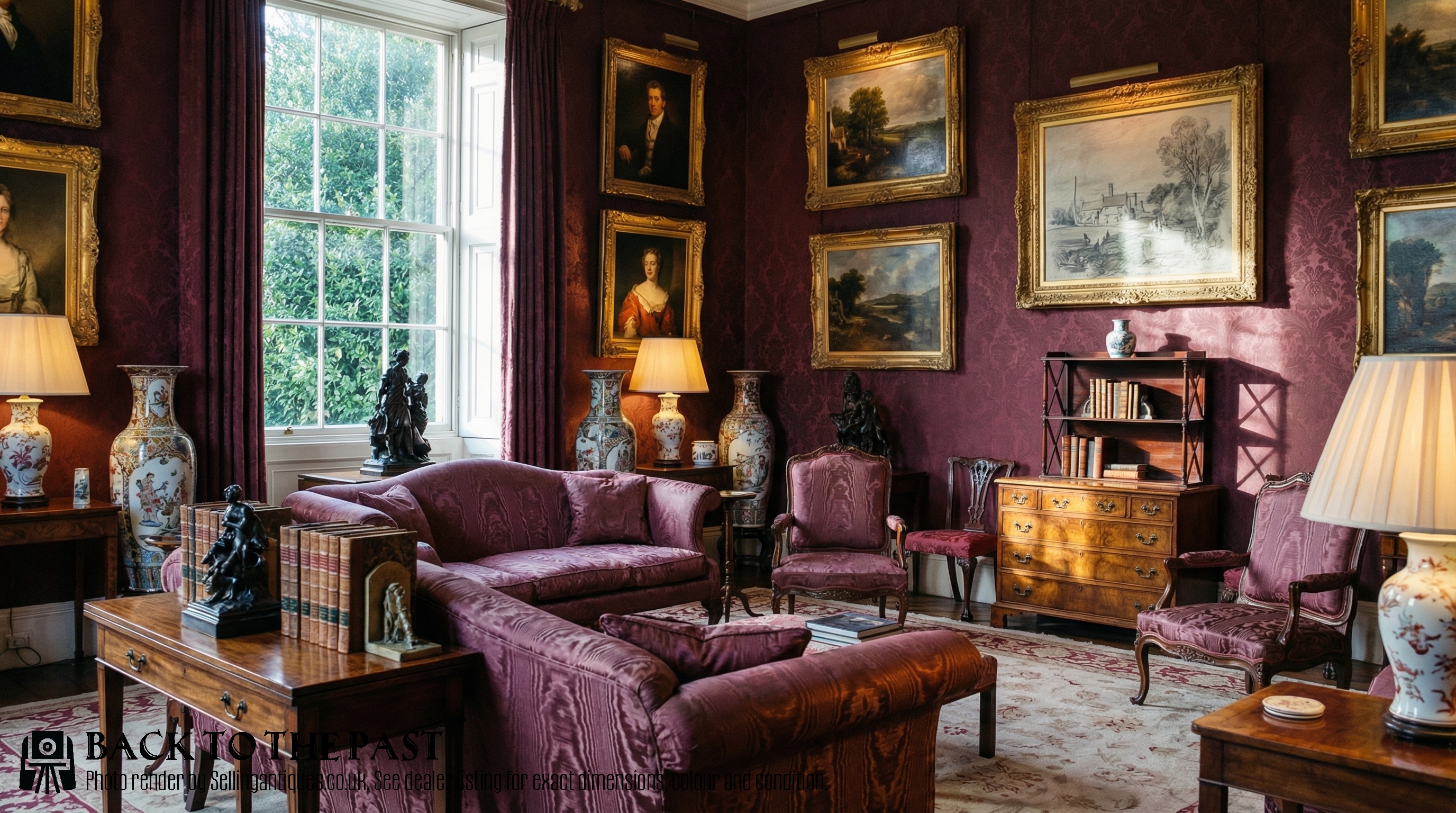
Mahogany Hanging Shelf
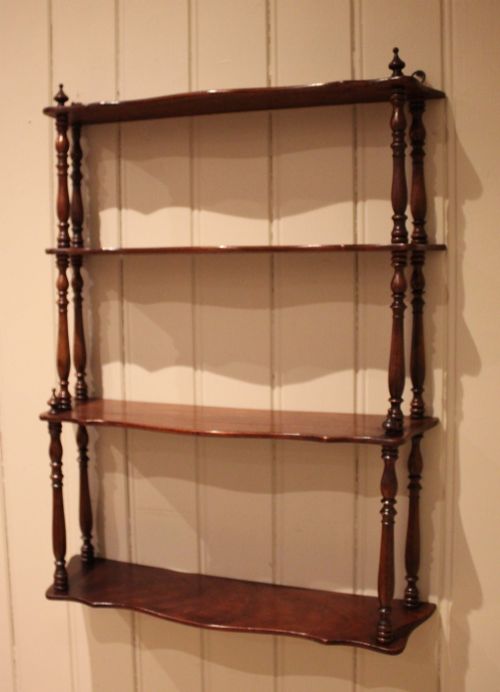
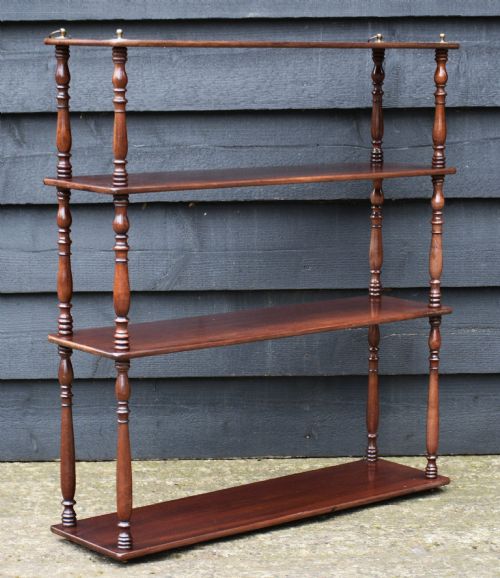
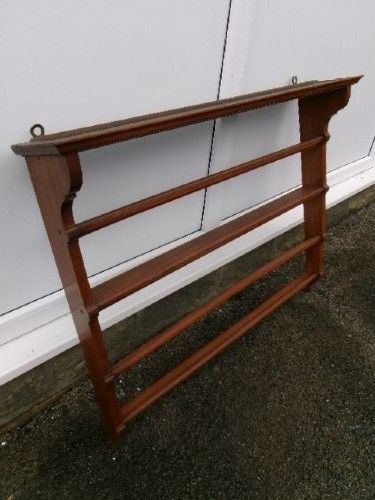
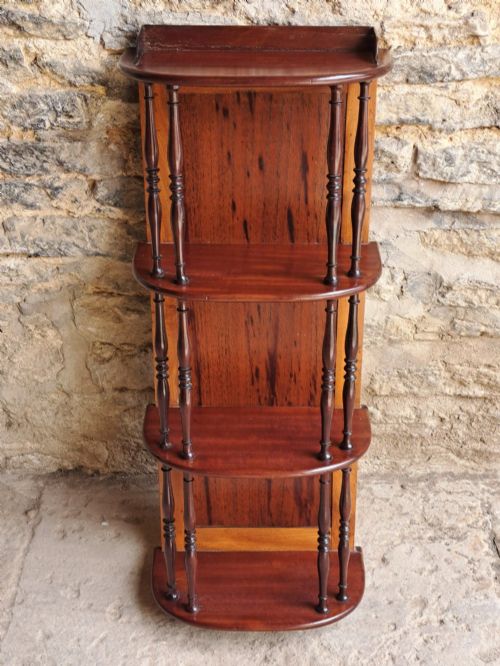
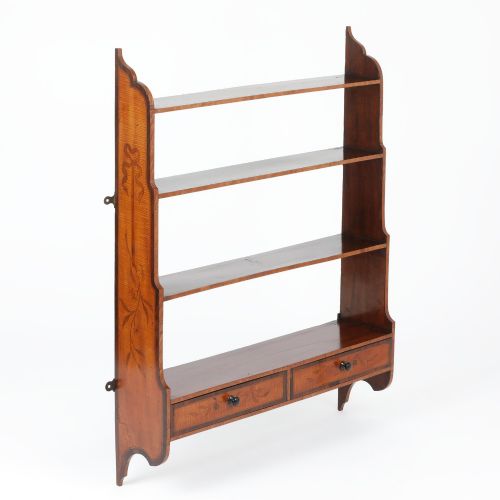
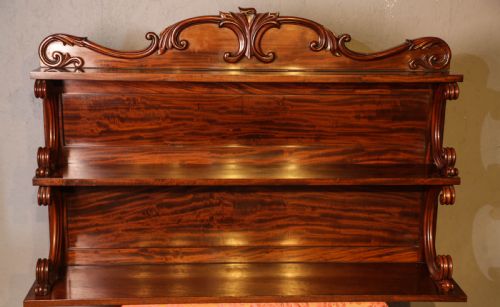
A mahogany hanging shelf takes many structural formats across domestic interiors, appearing primarily as open tiered wall shelves, enclosed wall cabinets, corner units, and bookcase combinations. When exploring this selection, buyers encounter everything from small two-tier pieces to multi-tier waterfall designs and wall-mounted plate racks.
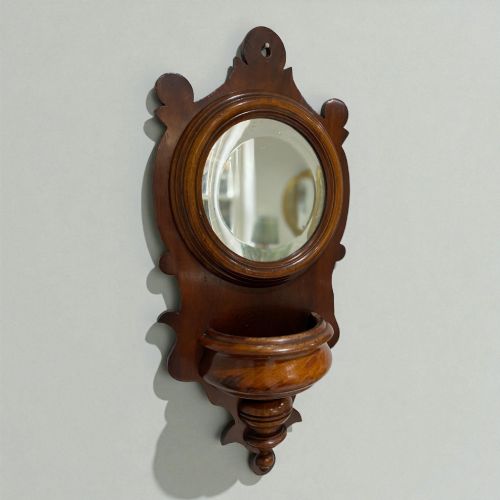
The objects span several centuries of production, originating in Georgian and Regency workshops through to Victorian, Edwardian, and early twentieth-century makers. Pieces frequently double as display cabinets, shaving mirrors with shelves, or desktop pigeon holes, reflecting the practical needs of past domestic spaces.

Materials and Technique
Makers constructed these pieces using solid mahogany alongside flame mahogany veneers, often incorporating contrasting timbers such as satinwood, boxwood inlay, and oak for decorative detail. Structural stability relied on traditional joinery methods suited to wall-mounted weight.
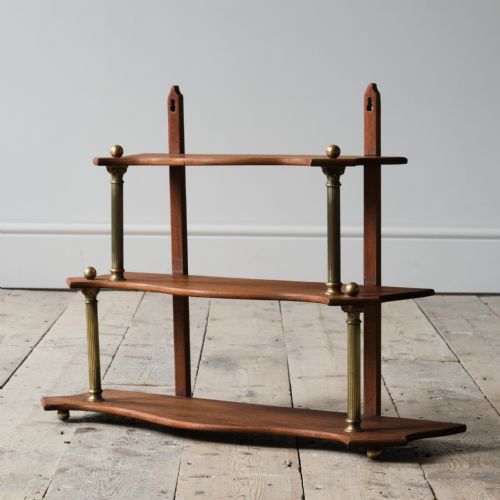
Metal components played a practical and decorative role, featuring brass galleries, brackets, and fixtures alongside iron hardware. Some examples incorporated painted surfaces or fretwork, while others utilised glazed doors for enclosed display.
Mahogany Hanging Shelf Retail Price Guide 2026
Typical asking prices for mahogany hanging shelf among the pieces listed under this phrase on Sellingantiques today, from the lower quarter to the upper quarter. They describe what is for sale here now, not the wider market.
Materials across the selection include solid mahogany, flame mahogany veneer, satinwood, brass, glass, iron, and boxwood inlay.
Craftsmanship and Proportion
Superior examples demonstrate careful timber selection, particularly in matched flame veneers and subtle stringing or boxwood inlay that enhances the grain without cluttering the surface. Joinery remains tight and clean, ensuring the tiers support weight reliably when mounted to a wall.
Proportion and detail separate standard utilitarian pieces from finer workshop productions. Elements like turned bobbin supports, well-cast brass galleries, and balanced fretwork elevate the visual weight of the furniture.
The Mahogany Hanging Shelf Glossary
- Brass gallery
- A low metal rail fitted to the edge of a shelf to secure objects from sliding off. These fixtures appear frequently on Regency and Victorian pieces.
- Waterfall shelves
- A tiered shelving unit where each successive tier steps back as the structure rises. This configuration suits corner placements and book storage.
- Fretwork
- Openwork ornamentation cut from thin wood panels using a fine saw. It characterises specific revival styles seen in eighteenth-century and nineteenth-century design.
Mahogany Hanging Shelf: Frequently Asked Questions
How do I hang a heavy mahogany shelf?
Wall-mounted furniture requires secure fixings anchored directly into wall studs or masonry rather than plaster alone. Check the weight distribution across the back plates before installation.
Ensure the mounting brackets match the age and load capacity of the specific tier system to prevent structural strain.
What rooms suit a hanging shelf best?
These compact pieces fit well in hallways, studies, and bedrooms where floor space remains limited. They provide display areas for books, ceramics, and small collections.
Enclosed cabinet versions also function effectively in bathrooms or kitchens for tidy storage.
How do I distinguish Regency from Victorian shelves?
Regency pieces often display restrained classical lines, brass inlay, and light brass galleries reflecting architectural influences. Victorian examples tend to feature heavier proportions, darker timber tones, and more elaborate carved or turned details.
Examining the secondary woods and construction methods helps confirm the manufacturing era.
Can these shelves support heavy books?
Open bookshelves and portable book carriers handle moderate volumes, but wall stability depends entirely on the mounting hardware. Shallower tiers suit lighter paperbacks and decorative ornaments.
Inspect the shelf joints where the horizontal boards meet the vertical uprights to verify load-bearing strength.