




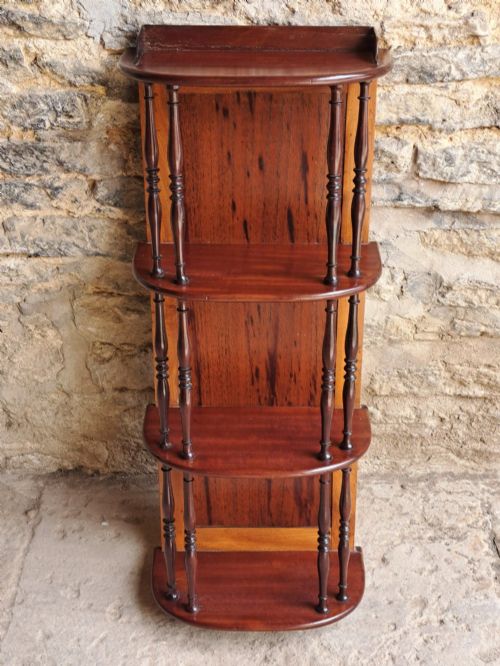
Victorian Hanging Shelves
Victorian hanging shelves bring vertical storage and display space to walls through mahogany, walnut, and oak tiers.
Victorian Hanging Shelves
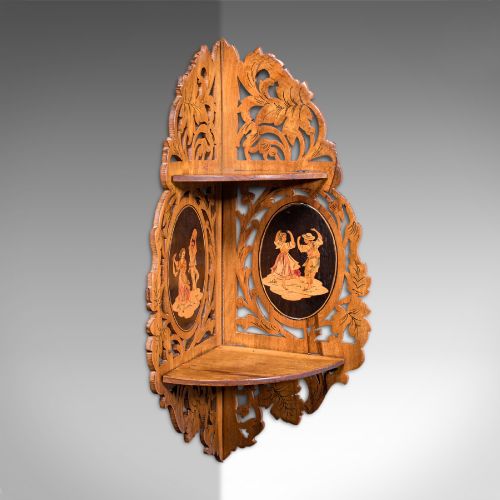
Victorian hanging shelves offer tiered wall storage for books, ceramics, and ornaments, lifting everyday objects off the floor and onto display surfaces. These pieces appear in numerous forms, including open bookcases, corner brackets, and multi-tiered waterfall designs.
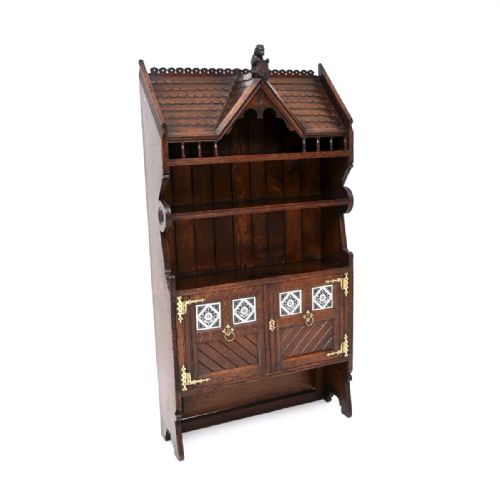
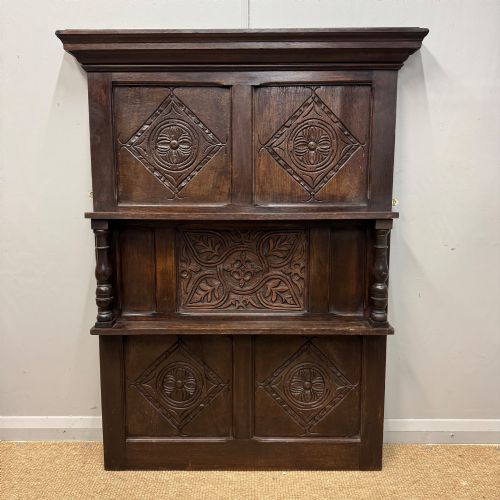
Mahogany and walnut predominate among the surviving examples, shaped into everything from simple three-tier boards to elaborate Gothic Revival cabinets with carved supports. The majority date from the nineteenth century, reflecting an era that prized functional wall furniture in domestic spaces.
Materials and construction
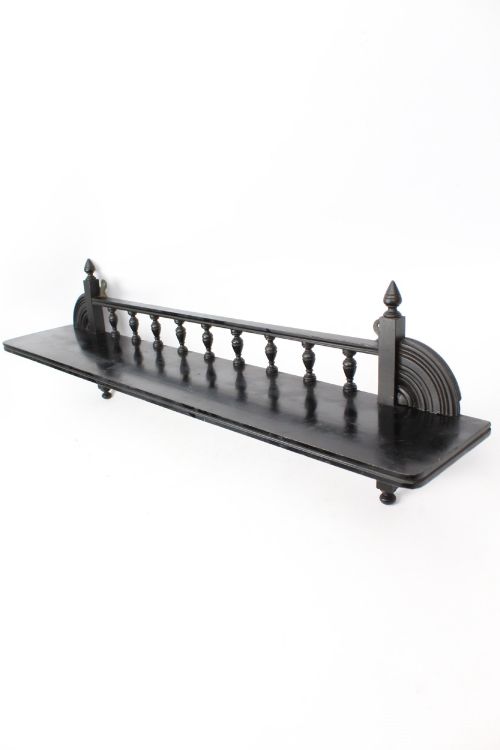
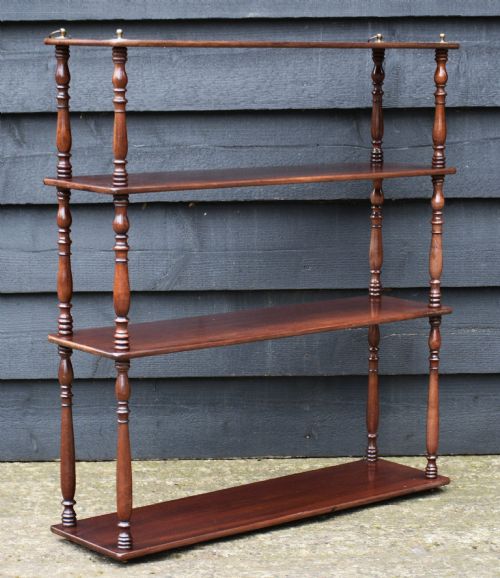
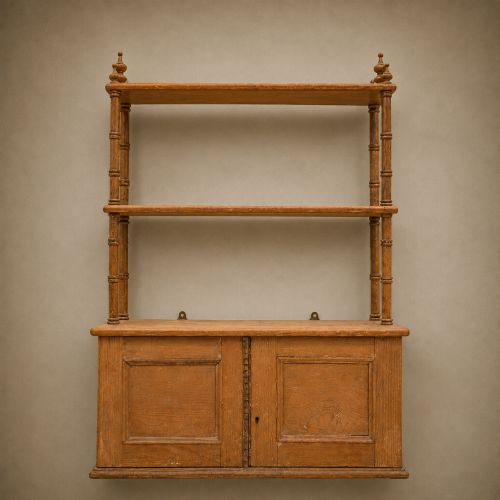
Cabinetmakers utilised dense timbers like mahogany, walnut, and oak to bear the weight of books and display items without sagging over time. Surfaces often feature turned columns, pierced fretwork sides, and applied mouldings that define the distinct styles of the period.
Brass fittings frequently secure the structural joints and suspension points, while ebonised wood and gilt highlights appear on pieces influenced by the Aesthetic Movement and Gothic Revival. Construction relies on pegged joints and screwed brackets designed to anchor securely into nineteenth-century walls.
Victorian Hanging Shelves Retail Price Guide 2026
Typical asking prices for victorian hanging shelves among the pieces listed under this phrase on Sellingantiques today, from the lower quarter to the upper quarter. They describe what is for sale here now, not the wider market.
Listings feature eighteenth-century pine and oak pieces alongside nineteenth-century mahogany, walnut, and satin birch wall units.
Assessing craftsmanship and execution
The distinction between standard utility shelving and finer specimens lies in the depth of timber selection and the crispness of carved details. Superior examples display figured veneers, carefully turned barley-twist supports, and balanced proportions that integrate the shelves visually with the wall.
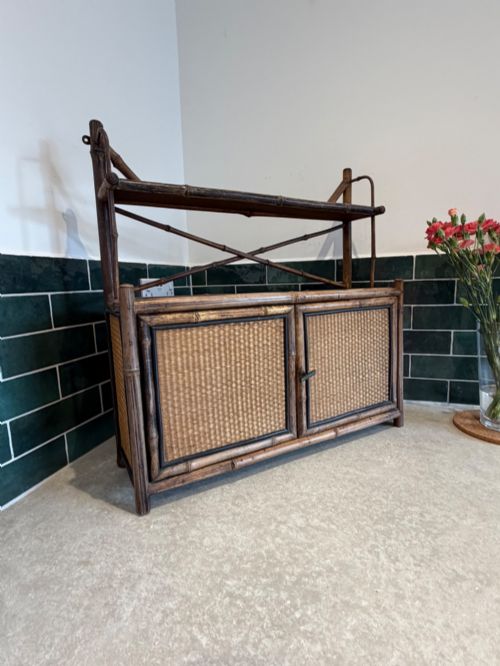
Secondary woods and simpler bracket construction indicate more utilitarian production intended for modest household service rather than formal reception rooms. The integration of glazed doors, integrated cupboards, or subtle inlay work elevates the ambition of the piece.
George Edmund Street·John Moyr Smith
The Victorian Hanging Shelves Glossary
- Waterfall shelves
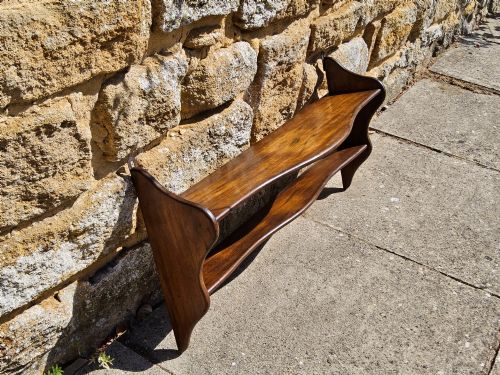
- Graduated tiers where each shelf steps back from the one below it, creating a cascading silhouette on the wall. This form gained popularity during the nineteenth century for displaying small ornaments.
- Gothic Revival
- A design style drawing inspiration from medieval architecture, characterised by pointed arches, heavy tracery, and dark oak timbers. Pieces in this idiom often incorporate carved religious or architectural motifs.
- Aesthetic Movement
- A late nineteenth-century style emphasising artistic expression, simplicity, and Japanese-inspired motifs. Items from this movement frequently utilise ebonised wood and contrasting gilt highlights.
- Barley-twist
- A decorative turning technique resembling a twisted rope, commonly used for the vertical supports and columns of wall shelves. It adds textural depth to the timber framework.
- WhatNot
- A multi-tiered open storage unit designed for displaying bric-a-brac, which could stand on the floor or hang upon a wall. These units feature graduated shelves supported by slender pillars.
Victorian Hanging Shelves: Frequently Asked Questions
How do I hang Victorian shelves safely?
These shelves require secure wall anchors suited to the weight of the dense timber and the objects placed upon them. Fixing directly into studs or using heavy-duty wall plugs ensures the hanging brackets support the load without pulling away from the plaster.
Distributing weight evenly across the tiers prevents undue strain on the historic joints and suspension fixtures. Lighter items belong on the upper ledges, while heavier books rest securely on the lowest board.
What rooms suit hanging shelves?
Bedrooms, halls, and sitting rooms accommodate these wall pieces effectively, providing accessible display surfaces without claiming floor space. Compact footprints make them practical additions beside fireplaces or above sideboards.
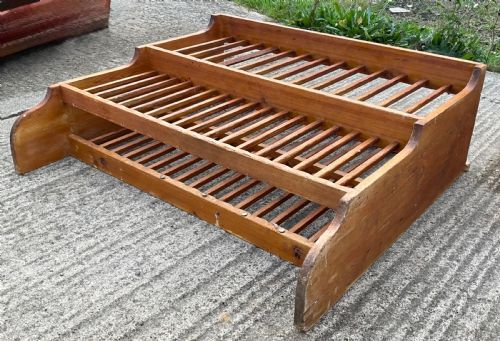
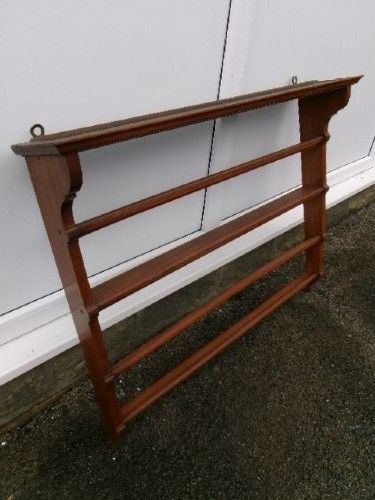
Kitchens and dining spaces also historically utilised open racks and small cabinets for plates and ceramics. Selecting the appropriate timber tone ensures the shelves complement existing room furnishings.
How do I identify Gothic Revival shelves?
Gothic Revival pieces display architectural elements such as pointed arches, quatrefoils, and heavy carved oak panels. Dark finishes and structural rigidity separate these robust items from lighter Victorian designs.
Makers working in this style often drew upon medieval church architecture for inspiration, translating stone motifs into domestic woodwork. The resulting shelves project a solemn, substantial presence on the wall.