







Antique Hanging Bookshelf
An antique hanging bookshelf brings timber and history to your wall, holding octavos securely without cluttering the floor.
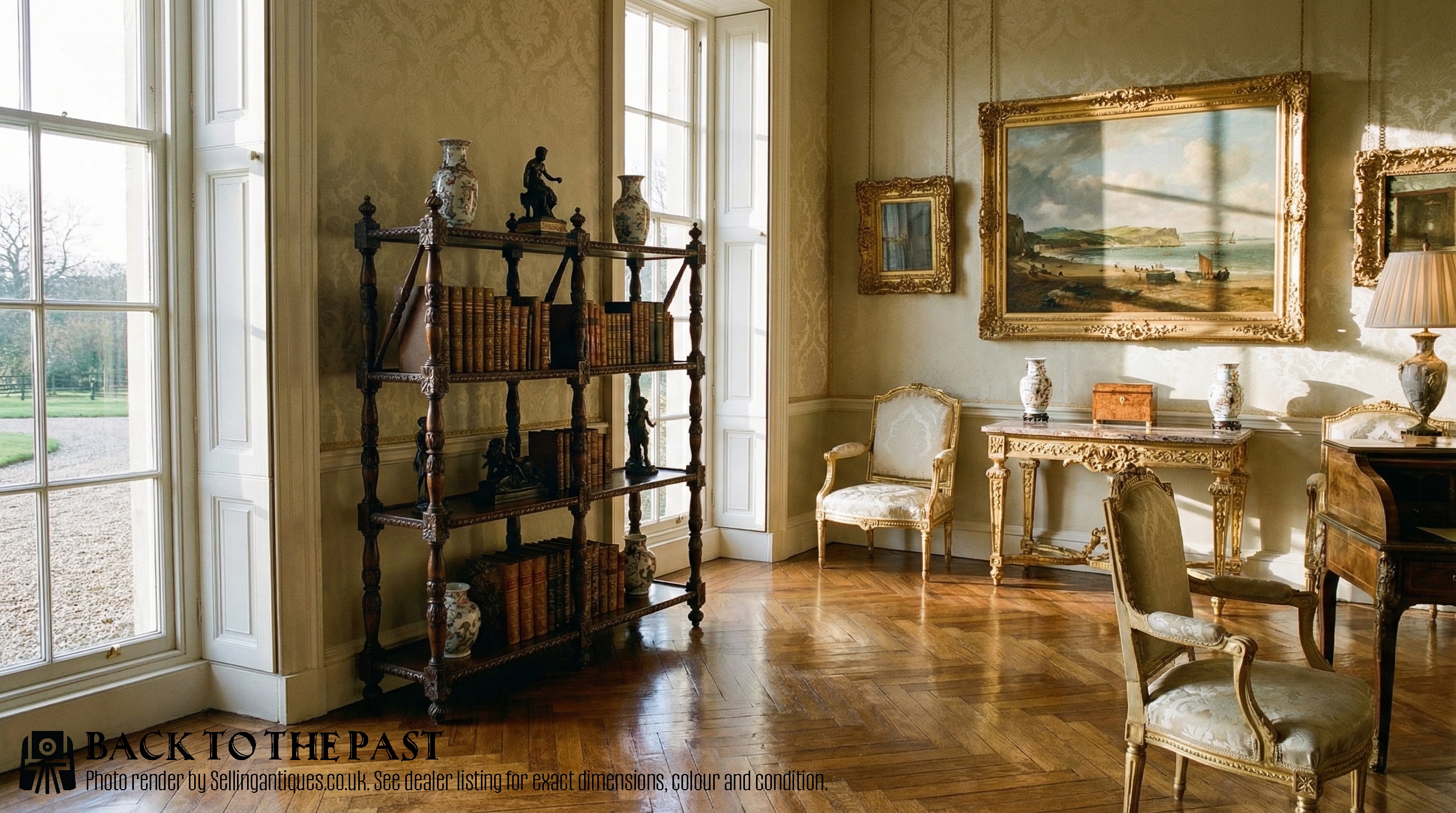
Antique Hanging Bookshelf
When you search for an antique hanging bookshelf, you encounter wall-mounted tiers and cabinets designed to keep volumes at hand. These pieces range from simple open shelving units to enclosed wall cabinets originating across the eighteenth, nineteenth, and early twentieth centuries.
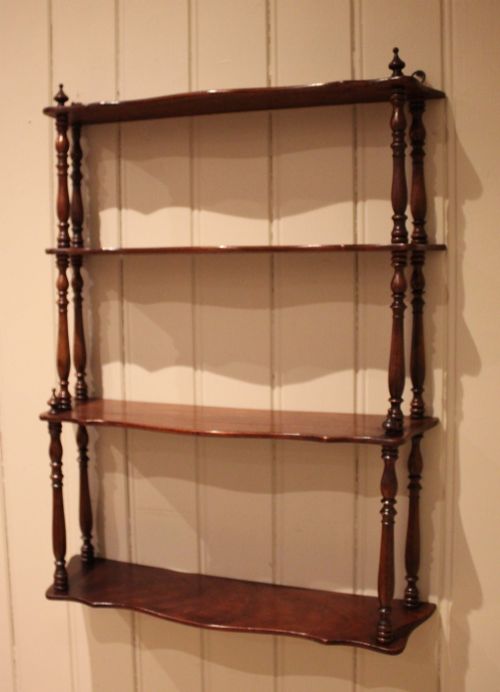
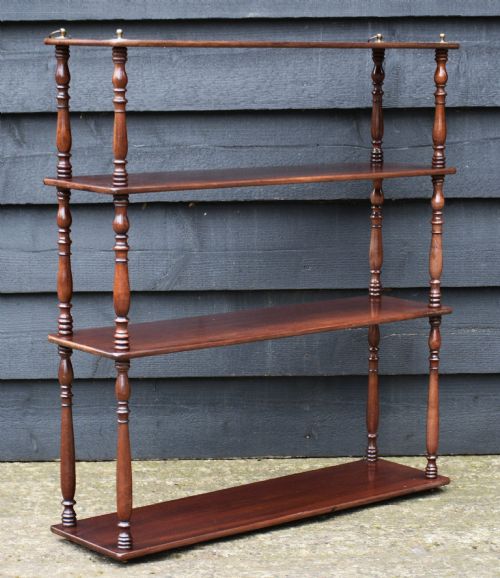
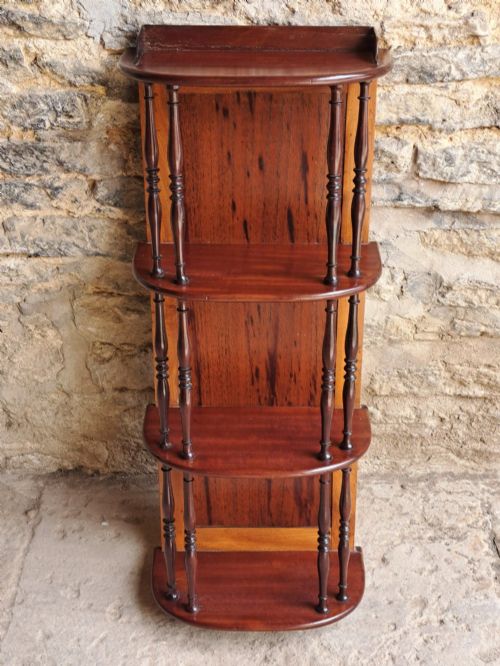
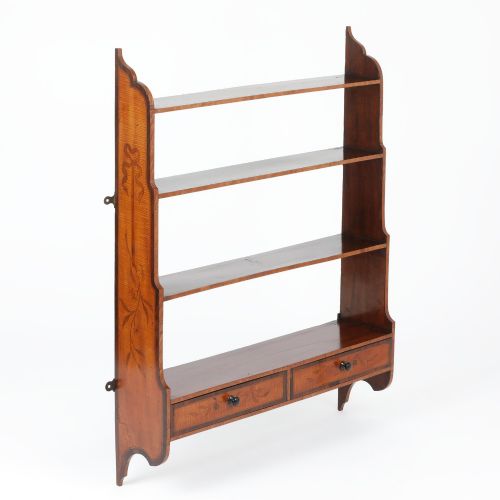
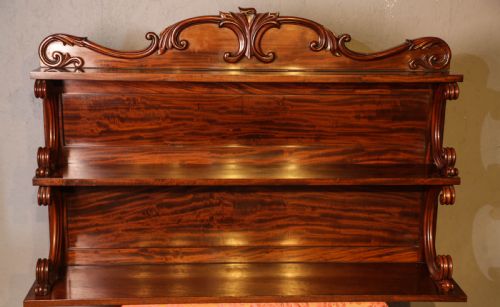
The version most commonly met on this page is the nineteenth-century mahogany hanging shelf, often built with two or three tiers for daily use. Georgian, Regency, and Victorian iterations appear frequently, constructed to hold books, plates, and small collectibles.
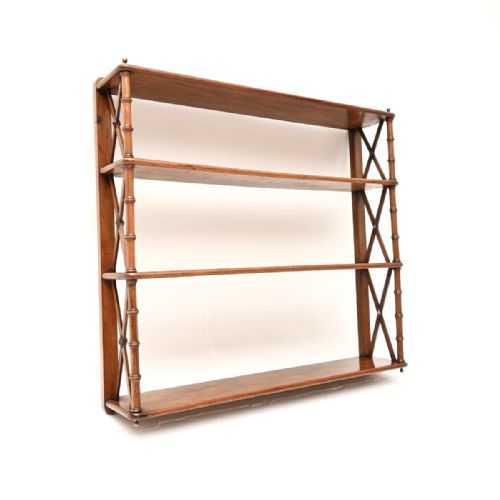
Makers and designers sometimes shaped these wall fixtures in specific idioms, including Gothic Revival, Sheraton, and Aesthetic Movement styles. They utilise solid timbers and sturdy brackets to bear the weight of heavy volumes safely above the floor.
Materials and construction
Cabinetmakers built these shelves using dense hardwoods such as mahogany, walnut, oak, and satinwood, frequently selecting figured grain for visible surfaces. Ebonised wood, beech, limewood, and cherry wood also provide the structure for particular regional and stylistic pieces.
Joinery involved secure housing joints and brass fixings to support the vertical load when mounted to a wall. Backboards and side panels were fitted to give rigidity to open shelves and enclosed display cabinets alike.
Antique Hanging Bookshelf Retail Price Guide 2026
Typical asking prices for hanging bookshelf among the pieces listed under this phrase on Sellingantiques today, from the lower quarter to the upper quarter. They describe what is for sale here now, not the wider market.
Some nineteenth-century readers needed portable mahogany bookshelves to take their favourite volumes from room to room without dropping a single page.
What separates the finest pieces
Quality rests upon the choice of timber and the restraint of the design, where figured mahogany or inlaid satinwood elevates a simple wall shelf into a refined piece of furniture. Superior examples display crisp moulding and balanced proportions rather than excessive ornamentation.
The integrity of the structural joints and the original mounting points dictate how well a shelf survives centuries of use. Finer pieces retain their original surface patination and brass fittings without modern alterations.
George Edmund Street·John Moyr Smith
The Antique Hanging Bookshelf Glossary
- Whatnot
- A multi-tiered piece of movable or wall-mounted furniture designed for displaying ornaments and books. It originated in the eighteenth century and remained popular through the Victorian era.
- Waterfall bookshelves
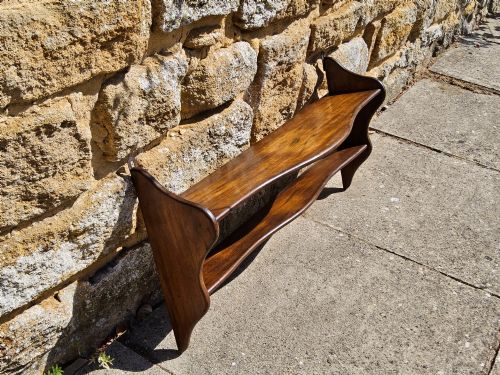
- Shelves constructed with stepped tiers that recede as they rise toward the wall. This design prevents books from tipping and creates a sloping profile.
- Gothic Revival
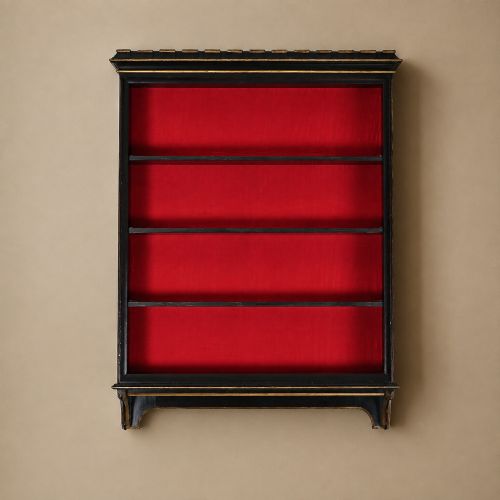
- An architectural and decorative style drawing on medieval forms. Pieces often feature pointed arches, tracery, and heavy oak or ebonised timber.
- Aesthetic Movement
- A late nineteenth-century design focus on beauty over utility, often incorporating ebonised wood and classical or Japanese motifs. John Moyr Smith worked within this sphere.
- Plate rack
- A wall-mounted rack featuring horizontal slats or grooves designed to hold plates upright. Many domestic hanging shelves served this dual purpose in Georgian and Victorian kitchens or dining rooms.
Antique Hanging Bookshelf: Frequently Asked Questions
How do I tell a Regency shelf from a Victorian one?
Regency hanging shelves tend to feature cleaner architectural lines, frequently utilising straight-grained mahogany with minimal, elegant turnings. They reflect the classical restraint of the early nineteenth century.
Victorian pieces often display heavier mouldings, darker ebonised finishes, or elaborate Gothic Revival and Aesthetic Movement details. Walnut and satin birch also become much more common as the nineteenth century progresses.
Were these shelves meant for books or display?
Many wall fixtures served a dual purpose for holding working libraries, loose periodicals, and decorative ceramics. Listings often describe items interchangeably as bookshelves, plate racks, or display cabinets.
Depth is the best indicator of primary use, as shallower ledges suit small volumes and plates, while deeper shelves accommodate larger octavos and small display objects.
How do I care for antique wood wall shelves?
Dust the timber regularly with a soft, dry cloth to prevent grit from settling into the grain and the old polish. Keep the shelves away from direct sources of heat and strong sunlight to prevent the mahogany or walnut from drying and cracking.
Apply a microcrystalline wax occasionally to nourish the surface if the finish appears dry. Avoid modern silicone sprays, which can permanently damage historic polish.