





19th Century Dumbwaiter
A 19th century dumbwaiter brings tier upon tier of practical timber engineering to the dining room, offering sturdy service and classic display.

19th Century Dumbwaiter
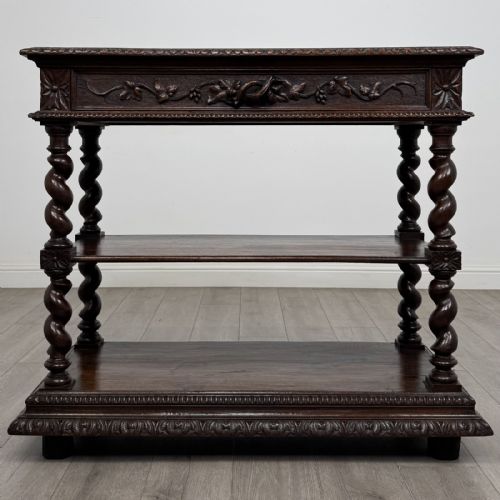
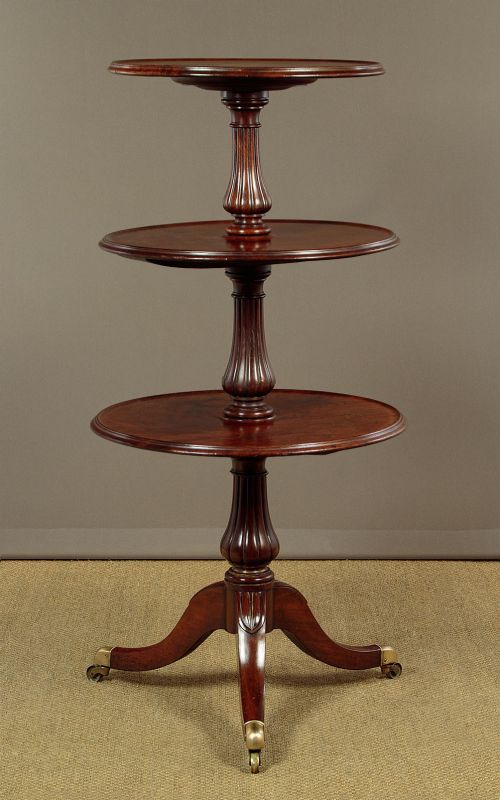
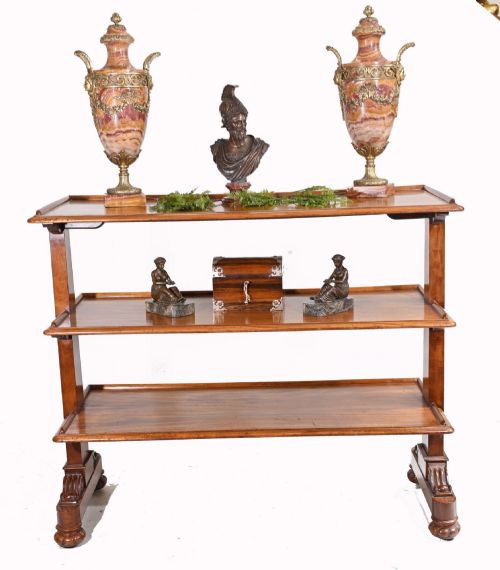
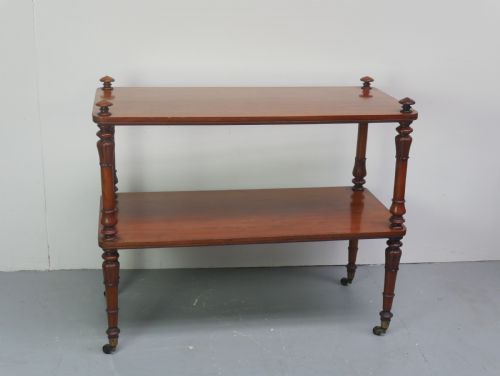
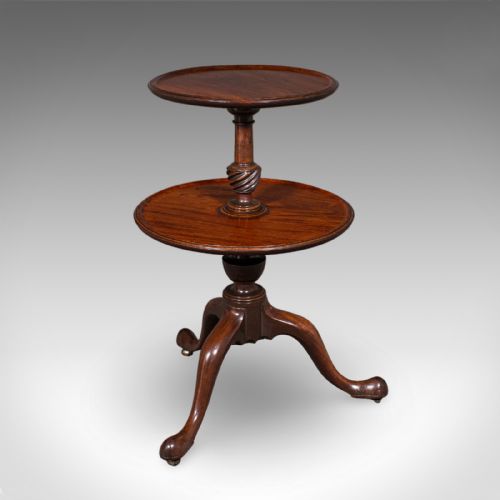
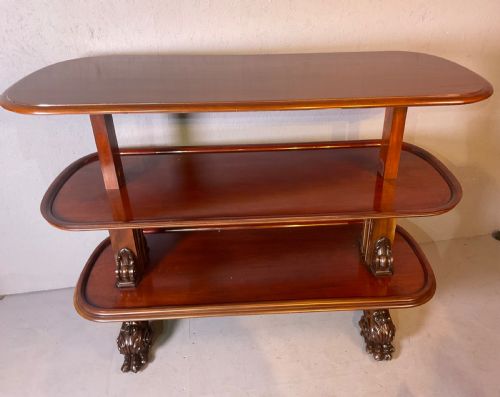
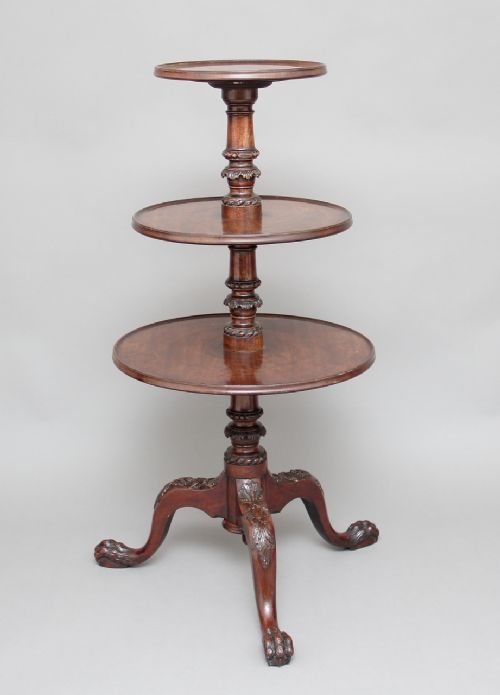
A 19th century dumbwaiter is a multi-tiered piece of dining furniture designed to hold dishes, serving ware, and food near the table. You will frequently find multi-tiered mahogany buffets, revolving stands, and serving tables spanning this period.
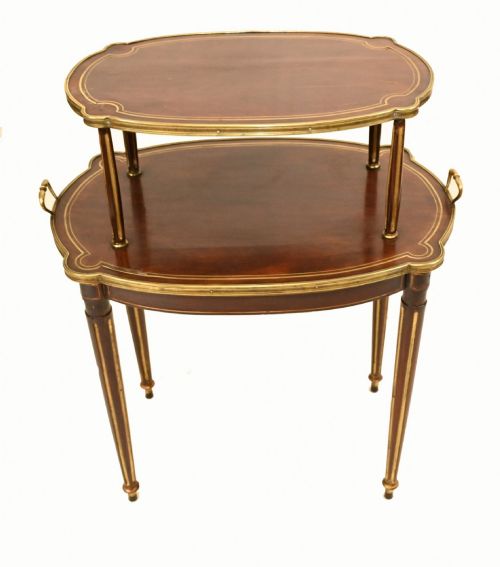
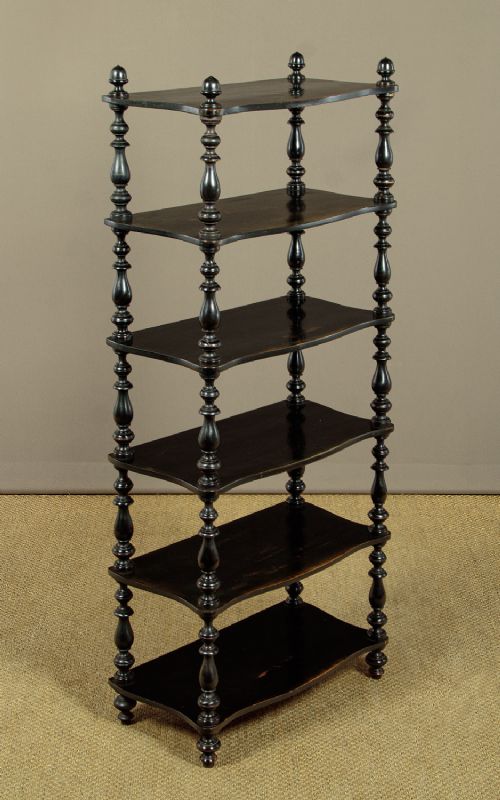
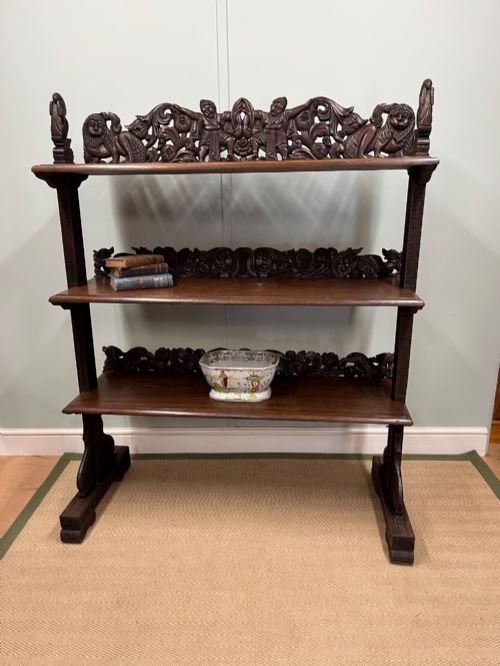
The pieces on this page range from compact two-tier afternoon tea stands to large metamorphic serving tables and towering six-tier ebonised items. Oak, walnut, teak, and hardwood also appear alongside the dominant mahogany constructions.
Makers and designers from the Regency, George IV, Victorian, and William IV eras shaped these forms, incorporating French Louis XV and XVI styles as well as Anglo-Indian influences.
How they were made
Cabinet makers constructed these dumbwaiters primarily in solid and veneered timbers such as mahogany, oak, and walnut, frequently utilising fiddleback grain or rich ebonised finishes. Brass castors, hinges, and revolving mechanisms provided the necessary mobility and movement for heavy tiered trays.
Marquetry inlay appeared on select French-influenced pieces, while turned columns and graduated circular tiers required precise carpentry to ensure the stands remained stable under weight.
19th Century Dumbwaiter Retail Price Guide 2026
Typical asking prices for 19th century dumbwaiter among the pieces listed under this phrase on Sellingantiques today, from the lower quarter to the upper quarter. They describe what is for sale here now, not the wider market.
Some towering six-tier Victorian stands suggest that nineteenth-century hosts took their afternoon tea logistics with extreme architectural seriousness.
What varies in quality
The distinction between standard examples and superior ones rests on the selection of timber figures, such as fiddleback mahogany, and the smoothness of the revolving or metamorphic actions. Solid joints, finely turned columns, and original brass fittings elevate a piece significantly above simpler utility items.
Heavier construction and complex multi-tiered configurations, such as six-tier stands or large metamorphic serving tables, demand greater joinery skill than standard two or three-tier tables.
The 19th Century Dumbwaiter Glossary
- Dumb waiter
- A tiered serving table or stand used to hold food and utensils without requiring an attendant. These pieces typically feature multiple circular or rectangular shelves.
- Buffet
- A sideboard or serving table designed for holding food and drink during meals. They often incorporate three tiers and substantial timber framing.
- Metamorphic
- Describing furniture designed to transform its shape or function, such as a piece shifting between a shelving unit and a serving trolley.
- Fiddleback mahogany
- Mahogany timber featuring a wavy, rippled grain pattern resembling the back of a violin. This decorative figure is highly prized in cabinet work.
- Ebonised
- Timber treated with a dark stain or finish to imitate ebony. This technique was popular for creating dramatic contrast in Victorian items.
- Etagere
- A piece of furniture consisting of a set of open shelves for displaying small objects. French examples often feature marquetry inlay.
19th Century Dumbwaiter: Frequently Asked Questions
How were dumbwaiters used?
These pieces served as auxiliary storage beside the dining table, holding dishes, bottles, and afternoon tea without servants present.
Dinners relied on tiered shelves and revolving trays to pass items easily between guests during long courses.
What is a metamorphic dumbwaiter?
A metamorphic piece includes mechanical elements that allow it to shift between different configurations or heights.
This clever design gave households multi-purpose furniture that could adapt from a standard serving table to a book shelf or food trolley.
How do I spot a Regency dumbwaiter?
Regency pieces often display clean classical lines, turned wooden columns, and revolving circular tiers supported on robust tripod or pedestal bases.
Richly figured mahogany and fiddleback veneers frequently characterise pieces from this earlier part of the nineteenth century.
Can I use a antique serving table today?
These sturdy timber stands work wonderfully as display surfaces, drinks stations, or side tables in modern dining rooms and hallways.
Their multiple tiers provide genuine vertical storage while adding historical character to an interior.