







Victorian Tier Stand
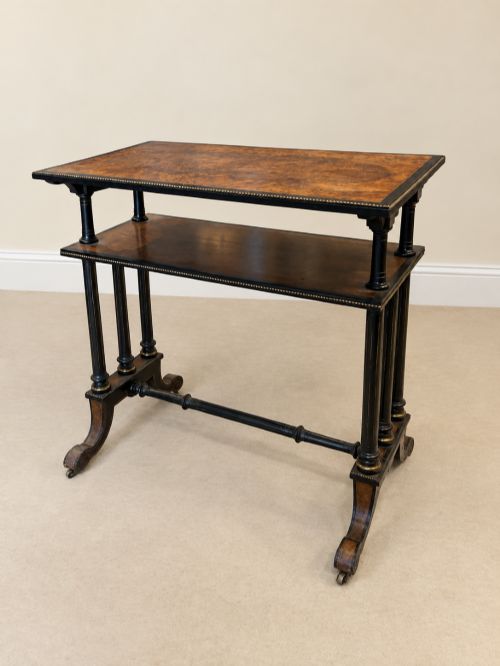
A victorian tier stand offers vertical display and storage across multiple levels, combining period craftsmanship with practical multi-tiered utility.
Victorian Tier Stand
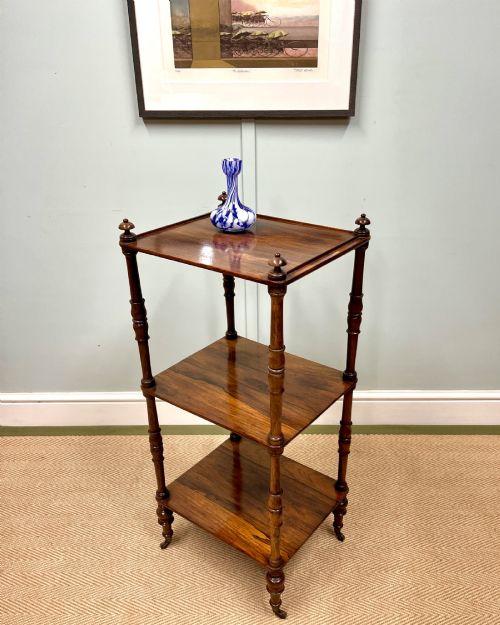
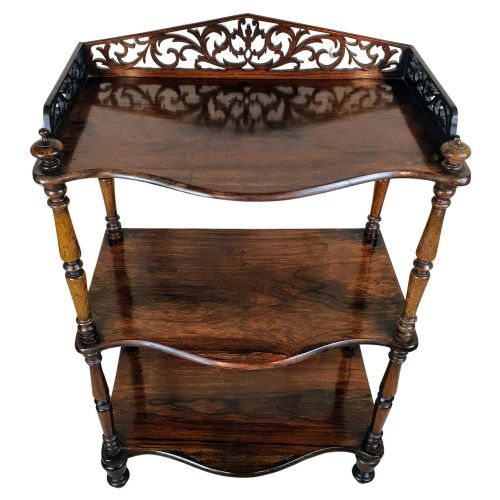
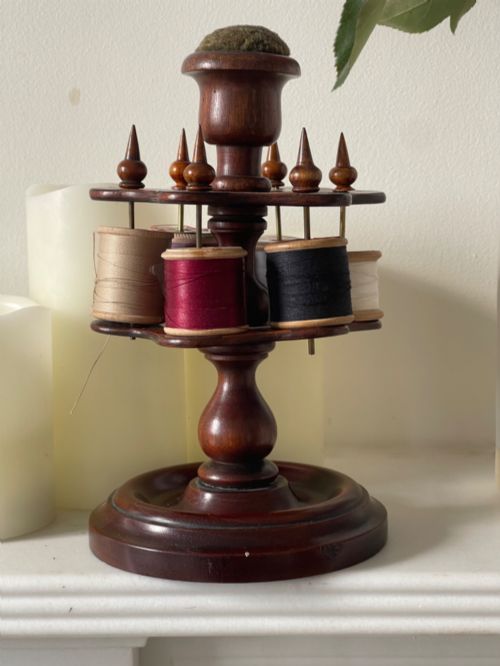
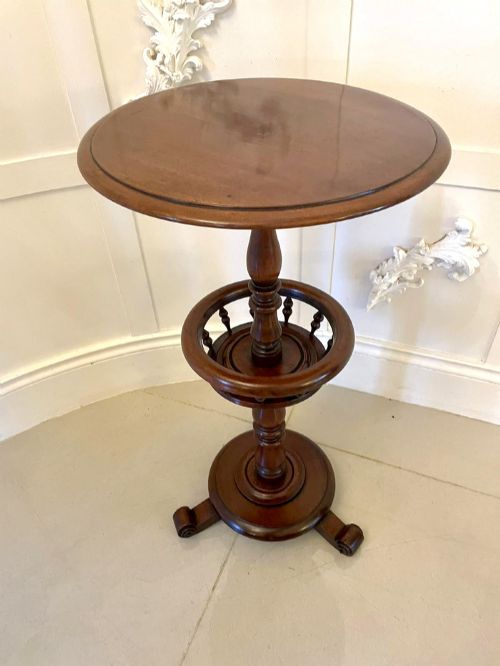
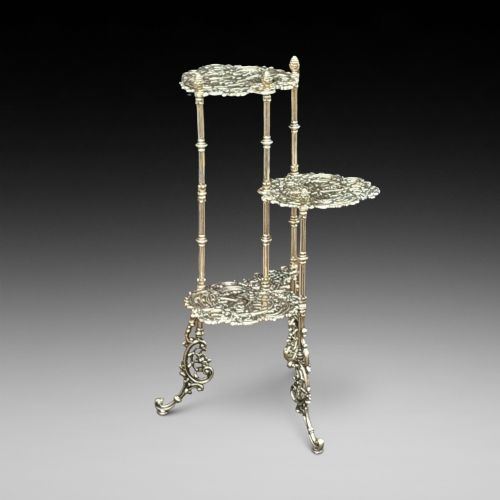
A victorian tier stand encompasses various multi-leveled furnishings including whatnots, étagères, corner shelves, and revolving bookcases designed for display or storage. Most examples originate from the nineteenth century, ranging from mid-Victorian burr walnut pieces to later ebonised or bamboo designs.
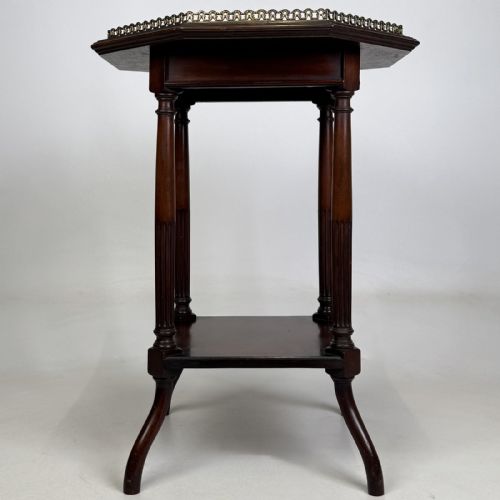
Makers utilised these tiered structures as versatile room furniture, placing them in corners, beside seating, or along walls to hold books, plants, and decorative objects. The selection includes everything from slim three-tier mahogany buffets to octagonal occasional side tables.
Materials and Construction
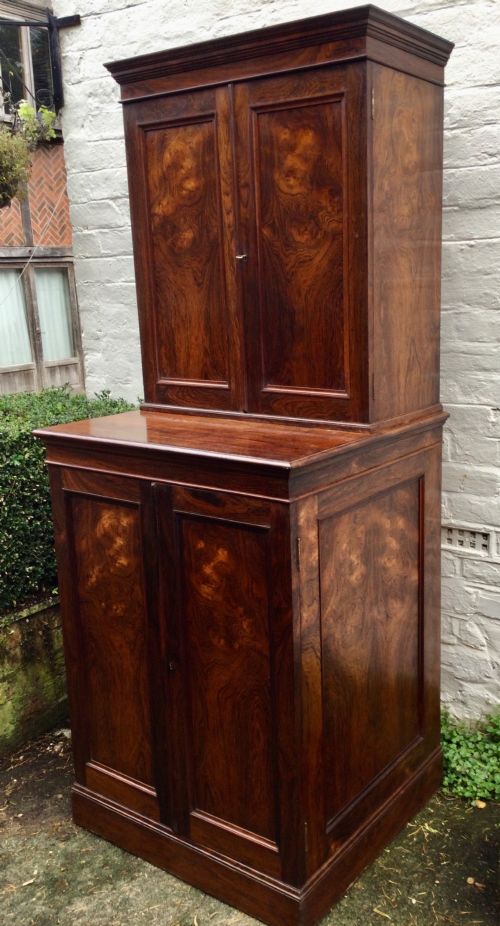
Timbers such as mahogany, walnut, burr walnut, rosewood, and oak form the primary structural framework of these pieces, frequently shaped with turned uprights or barley twist supports. Finer examples incorporate marquetry inlay, parcel gilding, or ebonised surfaces.
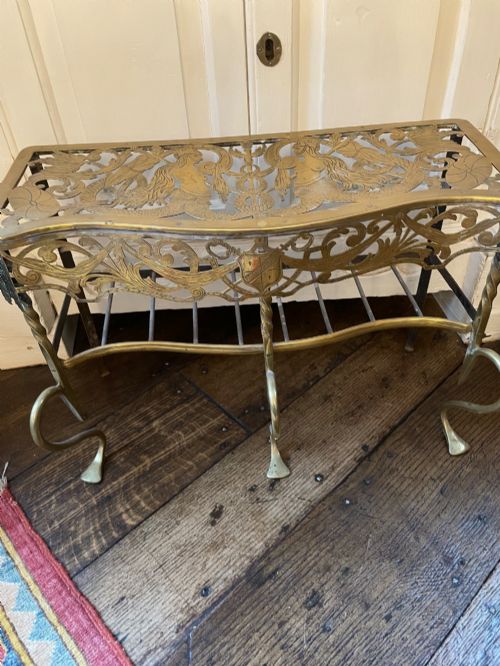
Alternative materials like bamboo, wrought iron, and wirework appear alongside traditional hardwoods, particularly in plant stands, garden furniture, and Aesthetic Movement designs.
Victorian Tier Stand Retail Price Guide 2026
Typical asking prices for victorian tier stand among the pieces listed under this phrase on Sellingantiques today, from the lower quarter to the upper quarter. They describe what is for sale here now, not the wider market.
Listings feature woods including mahogany, walnut, burr walnut, rosewood, oak, and bamboo across Victorian, Georgian, and Edwardian periods.
Assessing Quality
The choice of timber underpins the distinction between standard production and exceptional examples, particularly where figured burr walnut veneers or dense rosewood are selected. Grain matching across multiple tiers and the crispness of turned or carved details indicate superior workshop output.
Structural integrity relies on the rigidity of the upright supports and the secure joinery connecting each shelf, distinguishing sturdy functional furniture from purely decorative items.
LIBERTY of LONDON·WILLIAM BIRCH
The Victorian Tier Stand Glossary
- Whatnot
- A piece of furniture with multiple open shelves for displaying ornaments or books. Originating in the eighteenth century, it became a staple of nineteenth-century interiors.
- Étagère
- A piece of furniture consisting of a set of open shelves for small objects. These French-influenced pieces frequently feature delicate turned supports and mirror-backed panels.
- Barley twist
- A type of turned column resembling a twisted rope. This technique appeared widely on nineteenth-century table legs and upright supports.
- Canterbury
- A low, open-framed piece of furniture fitted with partitions for holding music sheets, newspapers, or magazines. Many Victorian iterations combine this function with tiered shelving.
- Serpentine
- A curved line of furniture moulding or shelving edges that bends outward at the centre and inward at the sides. This contour requires precise woodworking skill.
Victorian Tier Stand: Frequently Asked Questions
What is a victorian tier stand used for?
These pieces served multiple domestic purposes, acting as display surfaces for porcelain and ornaments, bedside tables, or storage for books and magazines. The tiered design maximised vertical floor space in smaller nineteenth-century rooms.
Today, they function effectively as lamp tables, plant stands, or occasional furniture in modern interiors while retaining their historic character.
How do I identify a Victorian piece?
Identification relies on examining the timber species, construction methods, and stylistic cues such as turned barley twist supports or aesthetic movement ebonising. Nineteenth-century cabinetmakers typically employed traditional joinery techniques without modern metal fasteners.
Comparing the specific shelf configuration and decorative details against documented period forms helps confirm the date of manufacture.
Are bamboo tier stands genuine period items?
Bamboo furniture gained immense popularity during the late nineteenth century, driven by trade and the Anglo-Japanese aesthetic taste. Makers constructed numerous occasional tables, shelving units, and plant stands using imported bamboo and lacquer panels.
These pieces belong to the late Victorian period and reflect the era's fascination with exotic materials and design.
What is the difference between a whatnot and an étagère?
While both terms describe multi-tiered shelving units, an étagère often implies a French-influenced display piece with lighter framing and decorative flourishes. A whatnot typically refers to the sturdier English equivalent used for general storage and display.
In practice, nineteenth-century makers and retailers used both terms interchangeably for similar multi-level furniture.