







Carved Walnut Etagere
A carved walnut etagere brings tiered display space to a room, offering open shelving for books and ornaments with the dark grain of Victorian and continental timber.
Carved Walnut Etagere
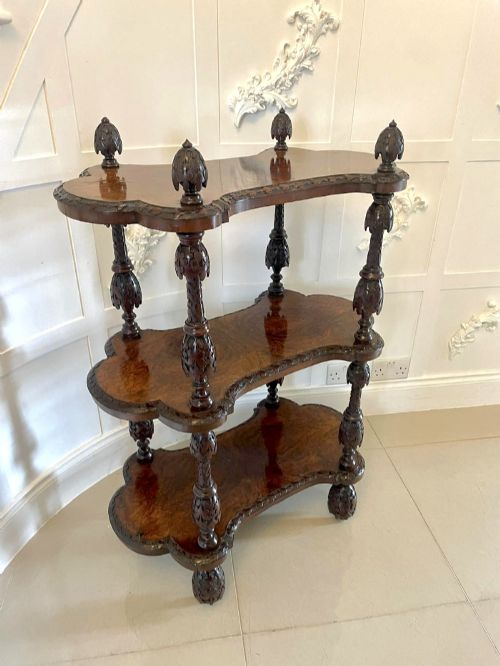
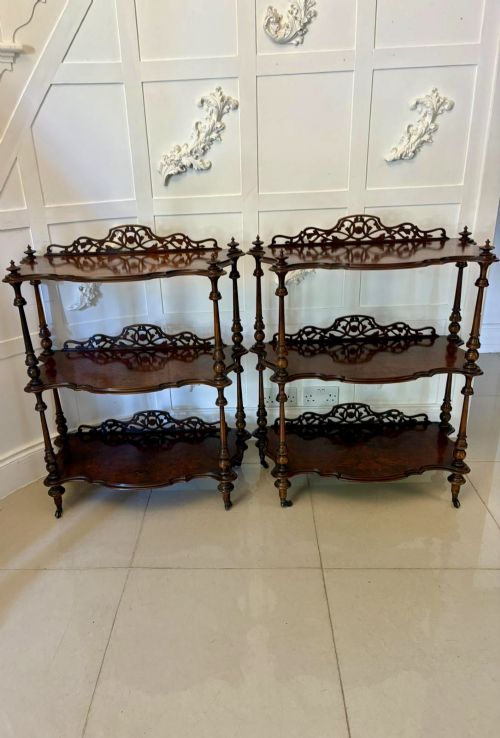
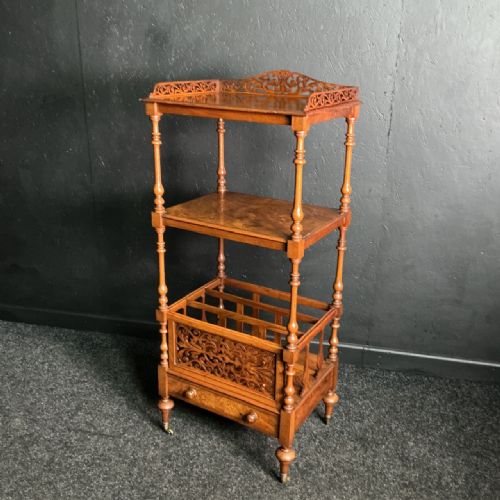
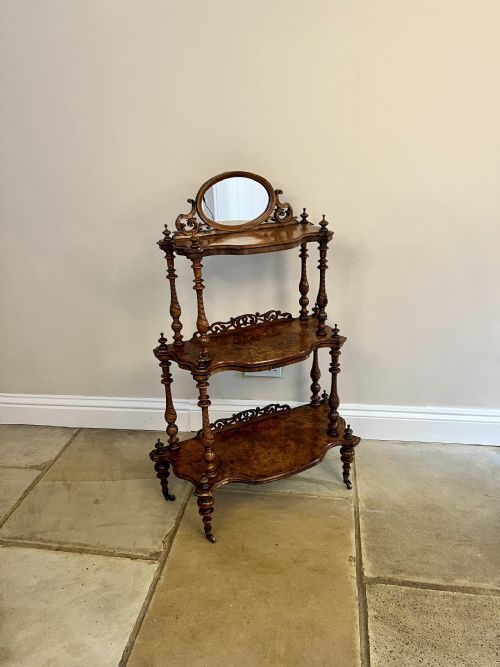
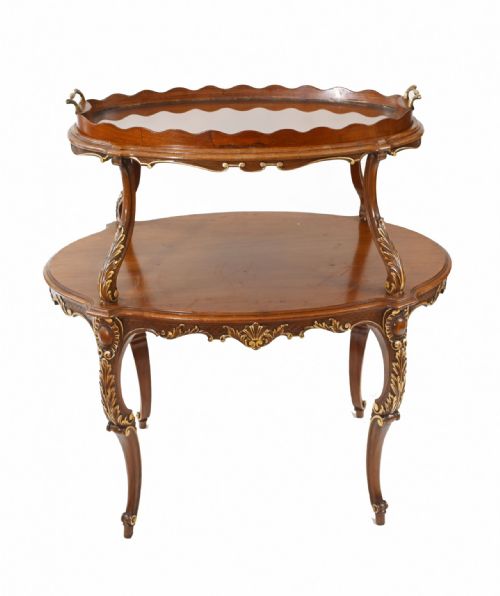
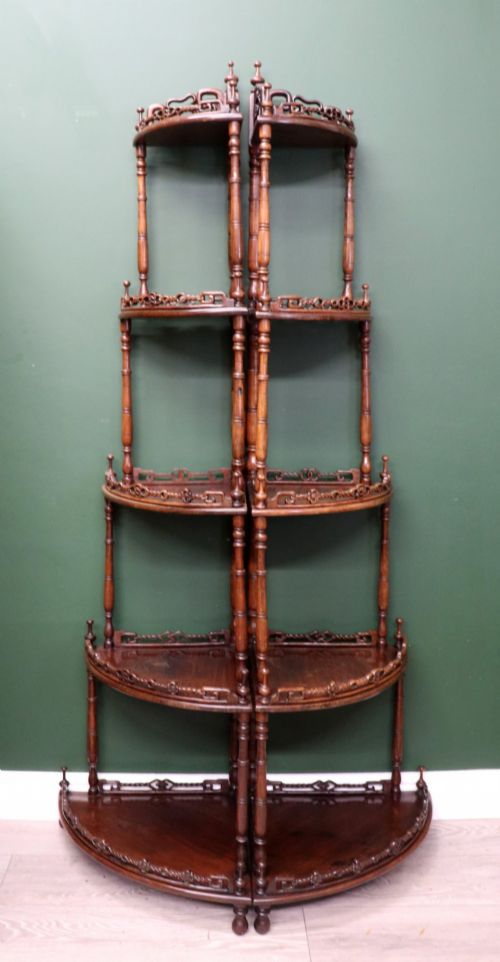
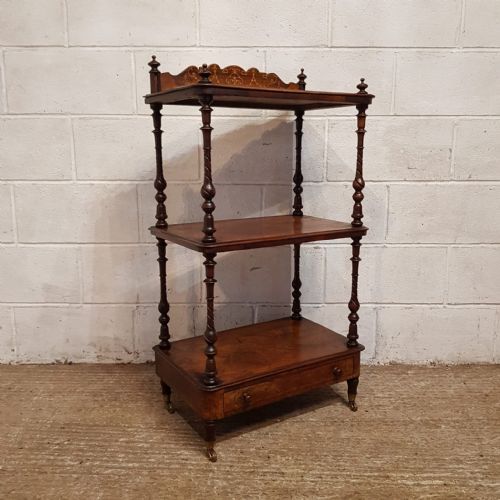
A carved walnut etagere is a multi-tiered piece of open shelving designed to display decorative items, books, and small collections in a reception room or drawing room. When searching for a carved walnut etagere, buyers encounter pieces primarily from the nineteenth century, including Victorian examples alongside French and Italian variations. These items range from freestanding three-tier and four-tier stands to corner units and music cabinets.
The form appears in various configurations, including freestanding whatnots, tiered tables, and wall-mounted shelves. Many examples incorporate turned supports, marquetry inlay, and glazed or mirrored sections alongside the open shelves. The majority of these pieces originate from the Victorian period, whilst continental versions show French provincial or chateau influences.
How they were made
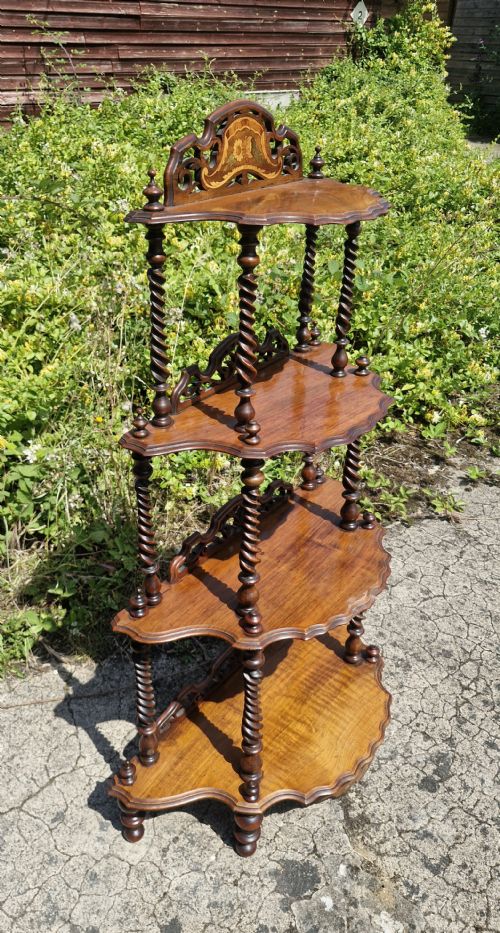
Cabinet makers utilised solid walnut and burr walnut veneer over secondary timbers such as mahogany to construct these multi-tiered units. Burr walnut provides a highly figured, swirling grain pattern on the shelves and top surfaces, contrasting with the straight grain of the upright supports. Turned wooden columns, brass fittings, and marquetry inlay provide structural detail and ornamentation across the tiers.
Carving appears on the crests, feet, and edge mouldings, executed by hand to give depth to the walnut framework. Glass panels and mirror glass are integrated into doors and back panels on specific variants, whilst gilt bronze mounts occasionally accent continental examples. Construction relies on traditional joinery to support the weight of multiple heavy timber shelves.
Carved Walnut Etagere Retail Price Guide 2026
Typical asking prices for carved walnut etagere among the pieces listed under this phrase on Sellingantiques today, from the lower quarter to the upper quarter. They describe what is for sale here now, not the wider market.
Some nineteenth-century makers doubled their display stands as music cabinets, proving Victorians loved sheet music as much as porcelain.
What varies in quality
Quality reveals itself in the selection of the timber and the depth of the figuring in the burr walnut veneer. Finer pieces display matched grain patterns across every tier, whilst simpler versions rely on plain walnut boards. The crispness of the hand carving on the mouldings and supports distinguishes standard production items from exhibition quality work.
The architectural presence of the piece depends on the rigidity of the uprights and the quality of the turning. Subtle details such as fine marquetry inlay work, well-cast brass elements, and intact mirrored backs elevate the status of a tier unit. The structural integrity of the joints between the shelves and uprights dictates how well the etagere has survived over the decades.
Gabriel Viardot·Gillows
The Carved Walnut Etagere Glossary
- Whatnot
- A nineteenth-century multi-shelved stand used for storing or displaying ornaments and books. It shares many characteristics with the etagere and the terms are frequently used interchangeably.
- Burr Walnut
- A specialised wood cut from a tree growth or burl, yielding complex and swirling grain patterns. It is highly prized for decorative veneer work on Victorian cabinet furniture.
- Marquetry Inlay
- Decorative patterns created by fitting thin pieces of wood veneer into a prepared surface. This technique adds floral or geometric motifs to the shelves and panels.
- Japonisme
- A late nineteenth-century style reflecting Japanese artistic influence on European decorative arts. Pieces from this movement incorporate asymmetrical arrangements and stylized carving.
Carved Walnut Etagere: Frequently Asked Questions
What is the difference between a whatnot and an etagere?
A whatnot and an etagere are essentially the same form, consisting of multiple open tiers for display. Regional naming conventions often dictate the label, with British makers preferring whatnot and continental makers using etagere.
Both pieces serve the same function of holding books, ceramics, and ornaments in nineteenth-century interiors. The construction methods and tiered layouts remain identical across both designations.
How do I place a corner etagere in a room?
A corner etagere fits directly into ninety-degree wall junctions, making efficient use of unutilised space in drawing rooms or parlours. These units bring height and display capability to corners that standard cabinets cannot reach.
Freestanding corner models rely on sturdy turned legs to support multiple triangular shelves. They provide a stable platform for display without protruding into the main walking areas of a room.
What items were traditionally displayed on these shelves?
Owners used these tiered stands to exhibit small ornamental objects, porcelain figures, and bound volumes. The open structure allowed guests to view collection items from multiple angles.
Heavier items sat on the sturdy lower platforms, whilst delicate glassware and miniatures occupied the upper tiers. This arrangement maintained the physical stability of the multi-level furniture.
How do I date a Victorian walnut etagere?
Dating relies on examining the turning style, timber selection, and assembly methods used in the frame. Pieces from the mid-nineteenth century often feature rich burr walnut veneers and elaborate pierced carving.
Later Victorian examples tend towards simpler turned supports or incorporate aesthetic movement and Japonisme details. Examining the secondary timbers and backboards helps confirm the manufacturing era.