






Walnut Display Stand
These walnut display stand pieces combine rich timber grains with tiered shelving to elevate objects of curiosity.
Walnut Display Stand
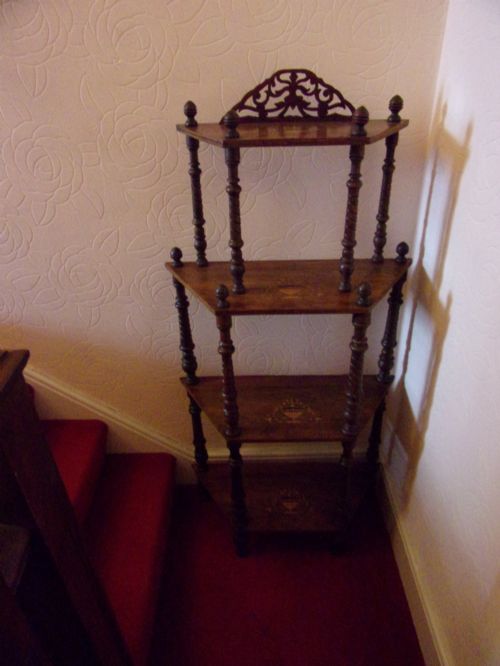
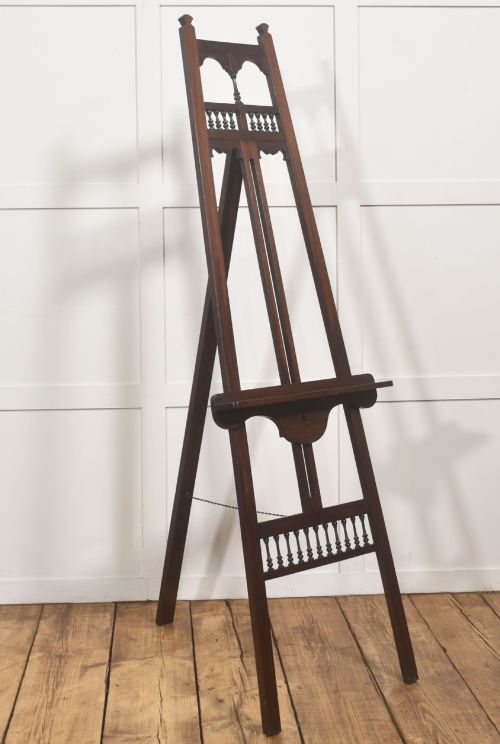
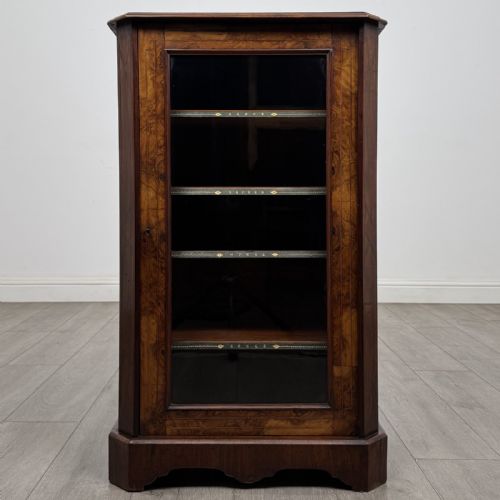
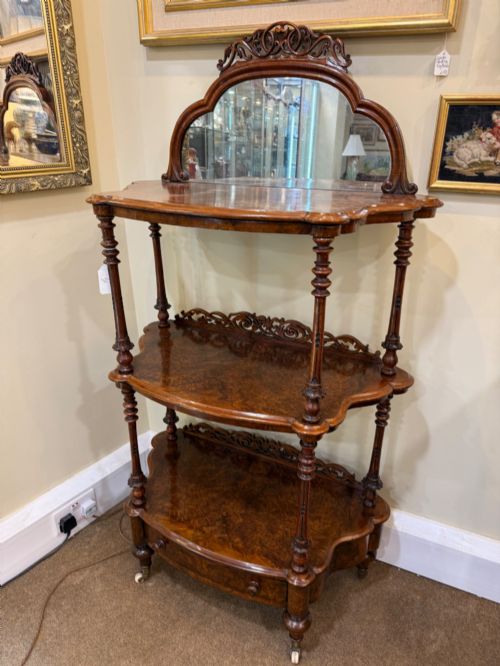
When searching for a walnut display stand, a buyer encounters a diverse group of tiered furniture designed to showcase ceramics, bronzes and treasured objects. The selection spans multi-tiered whatnots and etageres from the Victorian era alongside glazed cabinets on raised stands from the Edwardian period and the nineteen-thirties. These forms provide vertical presence and organised surfaces for interior display.
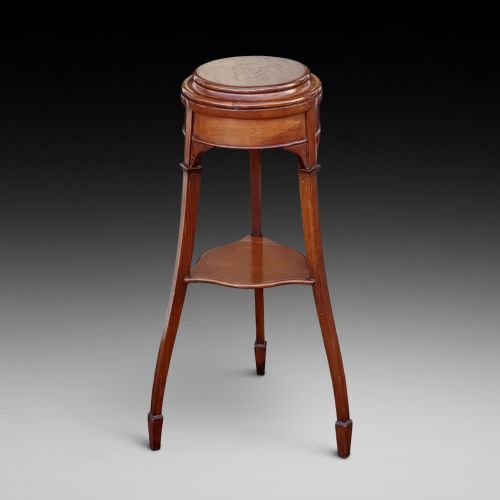
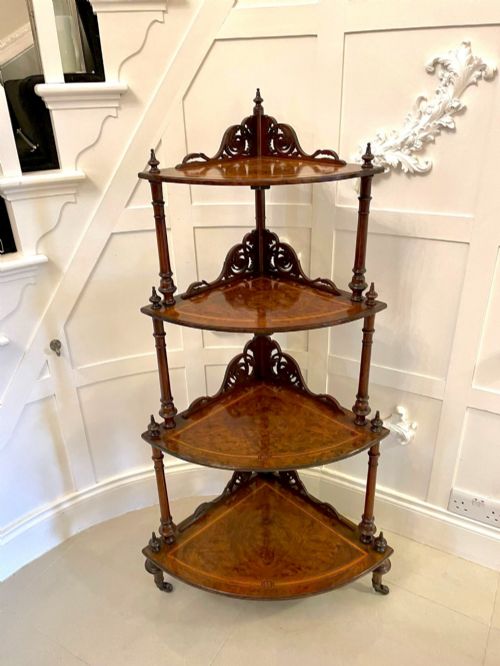
The Victorian period dominates the evidence, offering multiple variations including serpentine-shaped whatnots, corner stands and brass-mounted etageres. Pieces from the late nineteenth and early twentieth centuries introduce marquetry, ebonised wood and gilt bronze details to the standard walnut carcase. Buyers also find occasional tables, plant stands and specialised pedestals functioning as display surfaces.
How they were made
Cabinetmakers utilised solid walnut and highly figured burr walnut veneers to construct the main bodies of these stands, often selecting timber with rich grain patterns for primary viewing surfaces. Marquetry inlay, pewter inlay and carved figural elements appear across various pieces to ornament the timber structure. Brass mounts, ormolu, gilt bronze and glass panels frequently accompany the woodwork, particularly on French-influenced etageres and glazed cabinets.
Construction techniques range from multi-tier tiered shelving supported by turned or carved uprights to sophisticated glazed carcases elevated on tall bases or silver gilt stands. Ebonised wood and mahogany occasionally supplement walnut in framing details, while dovetail joinery secures drawers within multi-tier whatnot designs.
Walnut Display Stand Retail Price Guide 2026
Typical asking prices for walnut display stand among the pieces listed under this phrase on Sellingantiques today, from the lower quarter to the upper quarter. They describe what is for sale here now, not the wider market.
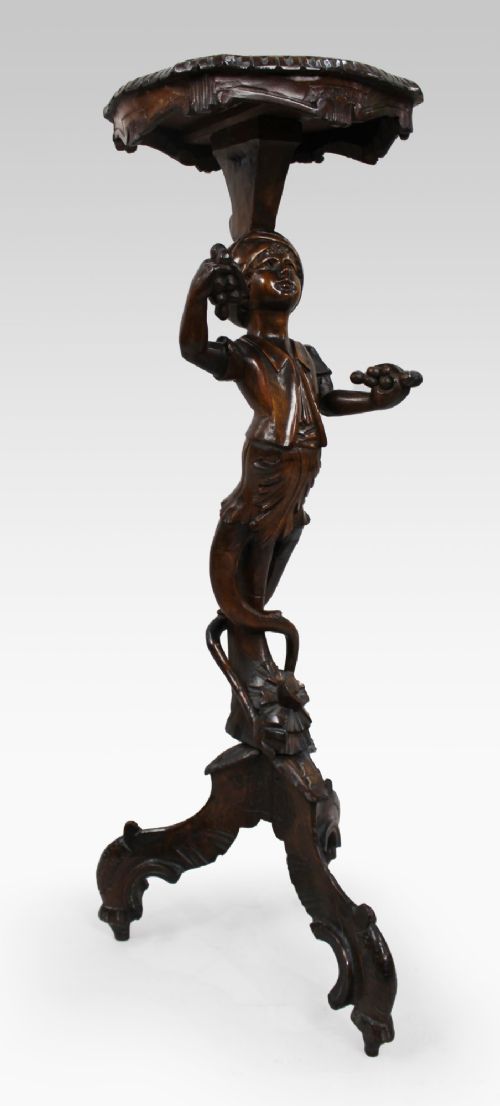
A nineteenth-century carved walnut Blackamoor stand waits among the tiers.
What varies in quality
The distinction between standard production and exceptional manufacture rests upon the choice of timber and the precision of decorative execution. Burr walnut veneers with intense, swirling figure command greater regard than plain walnut boards, particularly when matched symmetrically across serpentine or multi-tier surfaces. The inclusion of delicate marquetry, cast ormolu mounts and finely carved figural supports elevates a piece above simpler utility stands.
Structural refinement also defines the upper tier of quality, seen in the clean integration of glazed doors, the solidity of brass mounts, and the crispness of turned legs and gallery rails. Maker attribution, such as work originating from established firms, signals superior workshop practices in joinery and finish.
Gabriel Viardot·Maple & Co.·Shoolbred·Gillow & Co.
The Walnut Display Stand Glossary
- Whatnot
- A piece of furniture consisting of open shelves for displaying ornaments or books. This multi-tiered form became popular during the Victorian era for holding decorative objects in reception rooms.
- Etagere
- A set of open shelves for displaying small articles and ornaments. French examples often feature delicate turned legs and brass mounts.
- Burr walnut
- A veneer obtained from the wart-like growths on walnut trees, prized for its intricate, swirling grain patterns. Cabinetmakers applied this timber to the primary visual surfaces of cabinets and whatnots.
- Marquetry
- Decorative woodwork in which pieces of fine timber and other materials are inserted into a veneer to form geometric or pictorial designs. This technique frequently decorates Victorian display cabinets and stands.
- Torchere
- A tall stand designed to support a candelabrum or lamp. Earlier examples from the Georgian period provide elevated display platforms.
- Ormolu
- Gilded bronze used for decorative mounts and furniture ornamentation. This material adds metallic contrast to walnut surfaces on French and English pieces.
Walnut Display Stand: Frequently Asked Questions
What is a whatnot?
A whatnot is an open-shelved stand designed specifically for holding ornaments, ceramics and small decorative objects.
These pieces typically feature three or four tiers supported by slender columns, allowing items to be viewed from multiple angles.
How do you style a display stand?
Display stands suit corners, alcoves and hallway spaces where vertical furniture adds height without occupying a large footprint.
Grouping objects by material or scale helps maintain visual balance across the open shelves or within glazed cabinets.
What is burr walnut?
Burr walnut is a specialised wood veneer taken from the knotted growth of the walnut tree, creating a dense, swirling grain pattern.
Cabinetmakers utilised this figured timber on the most prominent surfaces of nineteenth-century display furniture to catch the light.
Are these stands sturdy enough for heavy items?
Most stands are engineered for lighter decorative objects, porcelain, small clocks and curated collections rather than heavy books.
Multi-tiered whatnots distribute weight across several shelves, though top-heavy items require careful placement on lower surfaces.