






Antique Walnut Whatnot
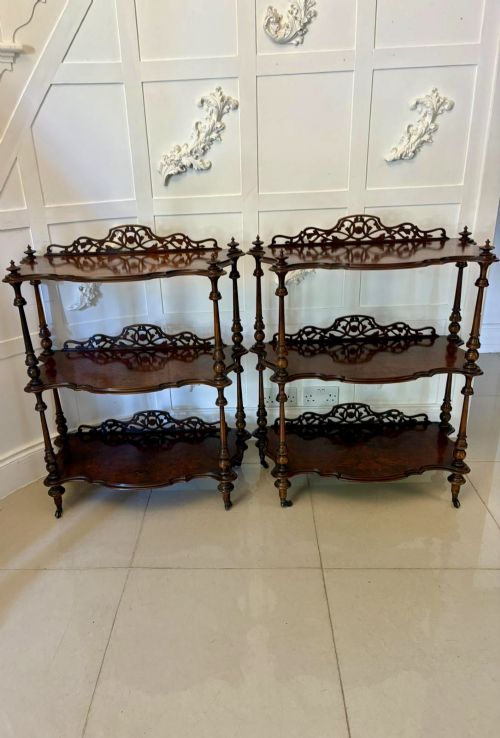
When you search for an antique walnut whatnot, you are looking at multi-tiered open shelving units designed for displaying ornaments, books, and collections.
Antique Walnut Whatnot
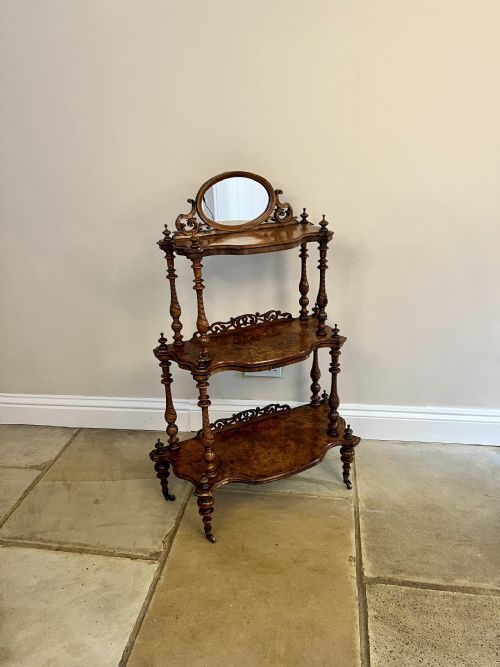
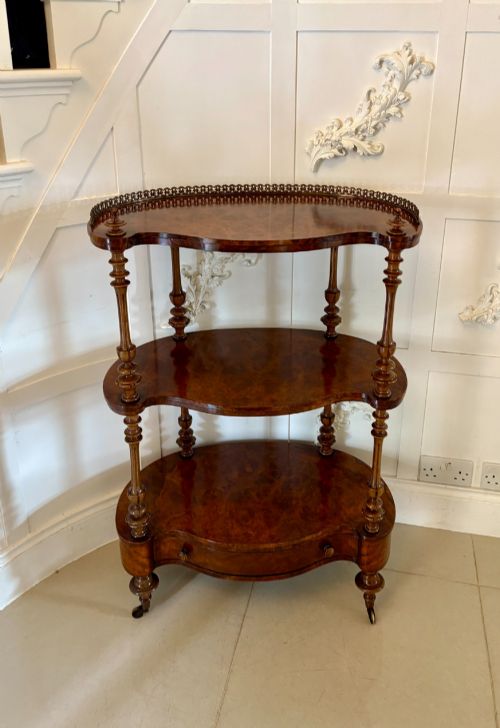
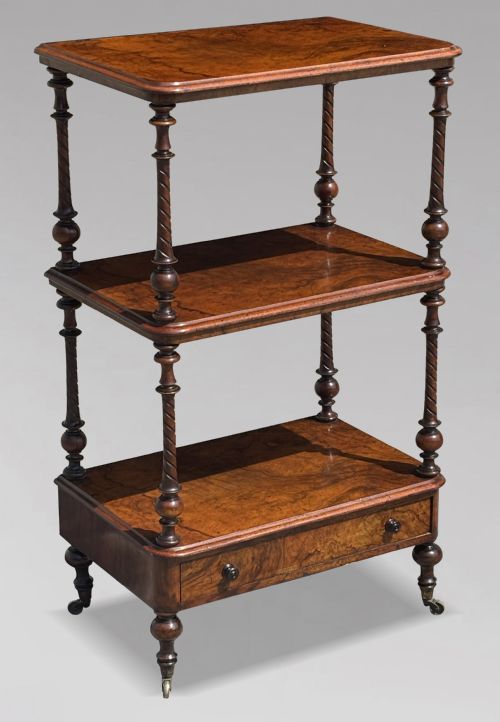
An antique walnut whatnot is a multi-tiered open display stand developed during the Victorian period for holding books, ornaments, and curiosities in the principal rooms of a home.
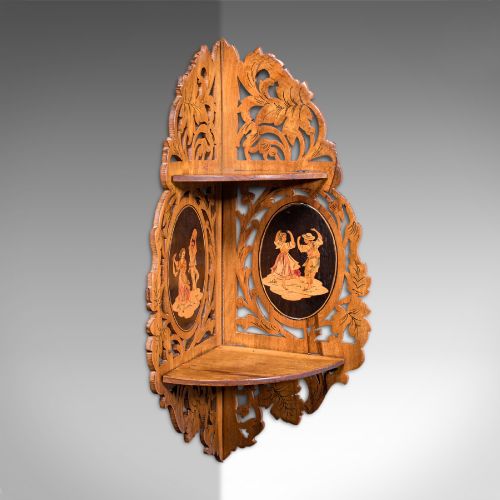
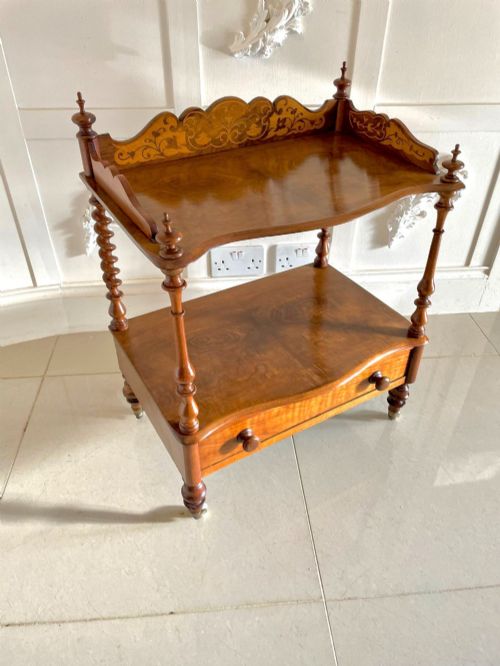
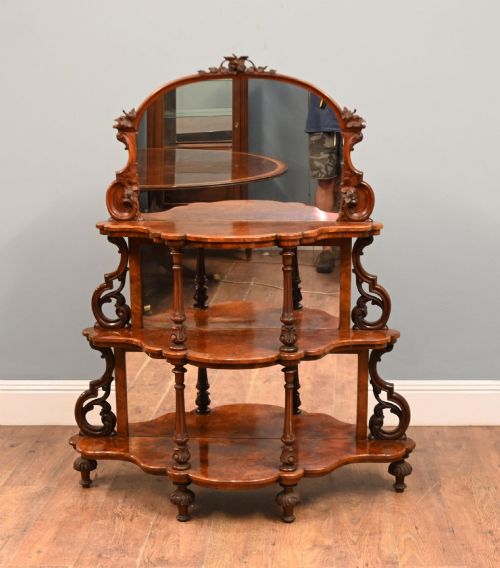
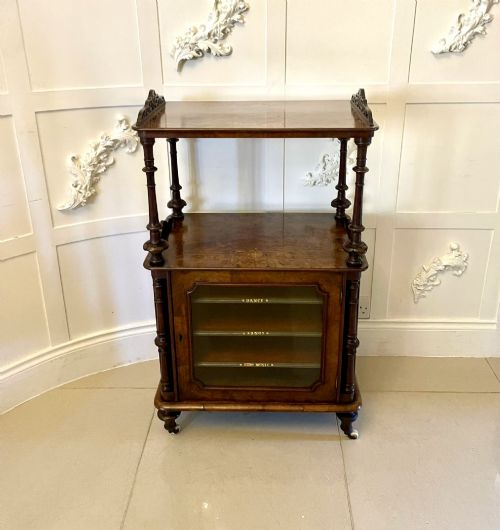
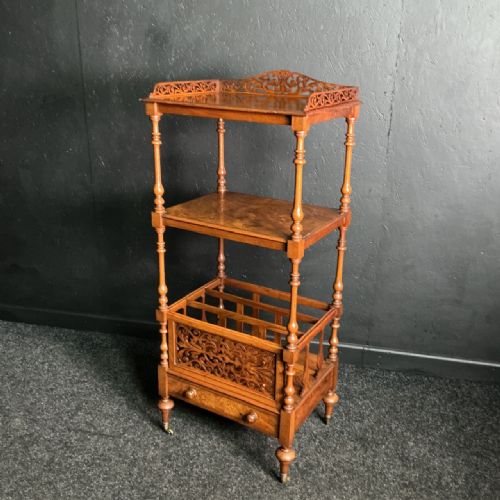
You will most frequently meet tiered freestanding models and corner designs on this page, often combining open display shelves with lower cupboards, drawers, or integrated Canterbury sections for sheet music and newspapers.
The form spans the mid to late nineteenth century, predominantly appearing in Victorian aesthetics through to Edwardian interpretations with French or domestic influences.
Materials and construction
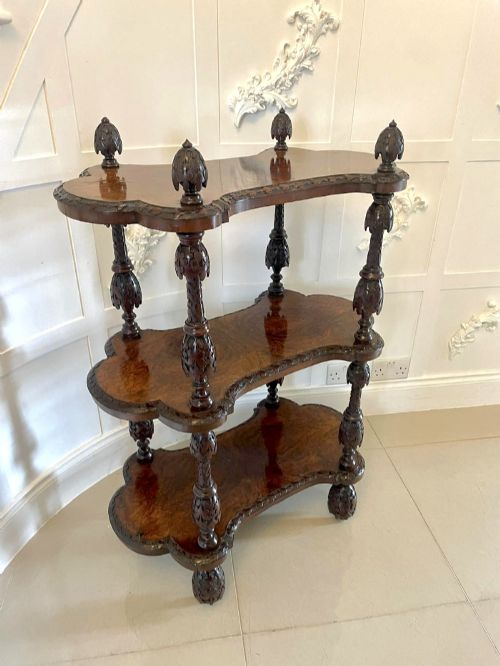
Cabinetmakers utilised solid walnut and decorative burr walnut veneers, selecting timber figured with rich grain patterns to cover the tiered platforms and upright supports.
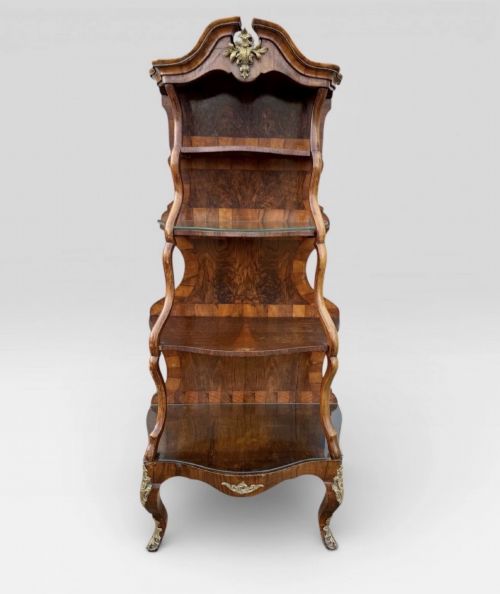
Construction frequently incorporated contrasting details such as boxwood inlay, ebonised wood, and gilt metal mounts, alongside turned columns and brass fittings to structure the multi-level stands.
Antique Walnut Whatnot Retail Price Guide 2026
Typical asking prices for walnut whatnot among the pieces listed under this phrase on Sellingantiques today, from the lower quarter to the upper quarter. They describe what is for sale here now, not the wider market.
Victorian households utilised these multi-tiered marvels to display everything from delicate porcelain tea sets to taxidermy hummingbirds without losing their footing.
Markers of quality
Quality rests in the selection of the burr walnut veneer, where tightly figured, symmetrical grain across the tiers elevates a piece well above plain timber versions.
The crispness of turned columns, the precision of boxwood marquetry inlay, and the integration of secondary functions like drawers or built-in Canterburys distinguish higher workshop output.
Gillows
The Antique Walnut Whatnot Glossary
- Whatnot
- A multi-tiered piece of furniture designed for the display of ornaments or books. It gained widespread popularity in the Victorian interior as open shelving became fashionable.
- Burr Walnut
- A specialised timber cut from the abnormal growth or burl of a walnut tree, yielding highly decorative swirling grain patterns. Cabinetmakers prized this veneer for principal display surfaces.
- Canterbury
- A low stand featuring partitions, originally designed to hold sheet music, folios, or newspapers. When combined with a whatnot, it forms a dual-purpose piece with shelving above.
- Etagere
- A French term for a set of tiered open shelves used for displaying decorative objects. It is frequently synonymous with the English whatnot.
- Marquetry
- Decorative patterns formed by the insertion of contrasting pieces of wood veneer into a background. Boxwood inlay is often utilised for floral or geometric motifs on these surfaces.
Antique Walnut Whatnot: Frequently Asked Questions
What is an antique walnut whatnot used for?
These tiered stands served primarily as display furniture in nineteenth-century drawing rooms and parlours, holding decorative ceramics, silver, and treasured ornaments.
They also functioned as practical storage for books, writing materials, and sheet music when combined with lower cupboards or Canterbury sections.
How do I tell a corner whatnot from a standard one?
Corner whatnots are constructed with right-angled shelves designed specifically to fit snugly into room corners, maximising space in smaller Victorian interiors.
Freestanding standard models feature four finished sides or curved serpentine fronts, allowing placement anywhere in the middle of a room or against a flat wall.
What is a Canterbury whatnot?
A Canterbury whatnot combines open display shelves on the upper tiers with a partitioned rack at the base intended for holding newspapers, magazines, or music folios.
This hybrid form provides both surface display space and tidy compartmentalised storage for household papers.
How do I date an antique walnut whatnot?
Dating relies on observing structural characteristics, timber choices like burr walnut veneer, and stylistic markers such as Rococo Revival curves or Edwardian marquetry.
Most examples date from the Victorian era between eighteen-fifty and eighteen-ninety, when tiered display furniture reached the height of its domestic popularity.