





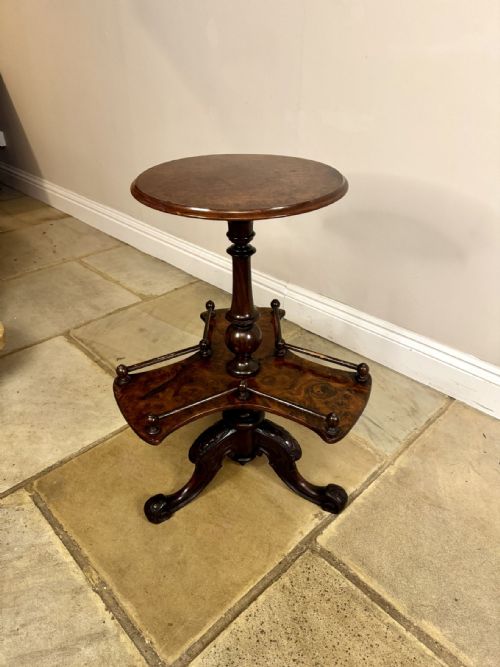

Carved Walnut Whatnot
A carved walnut whatnot brings multi-tiered Victorian display and storage to a room with rich timber grain and intricate carved detail.
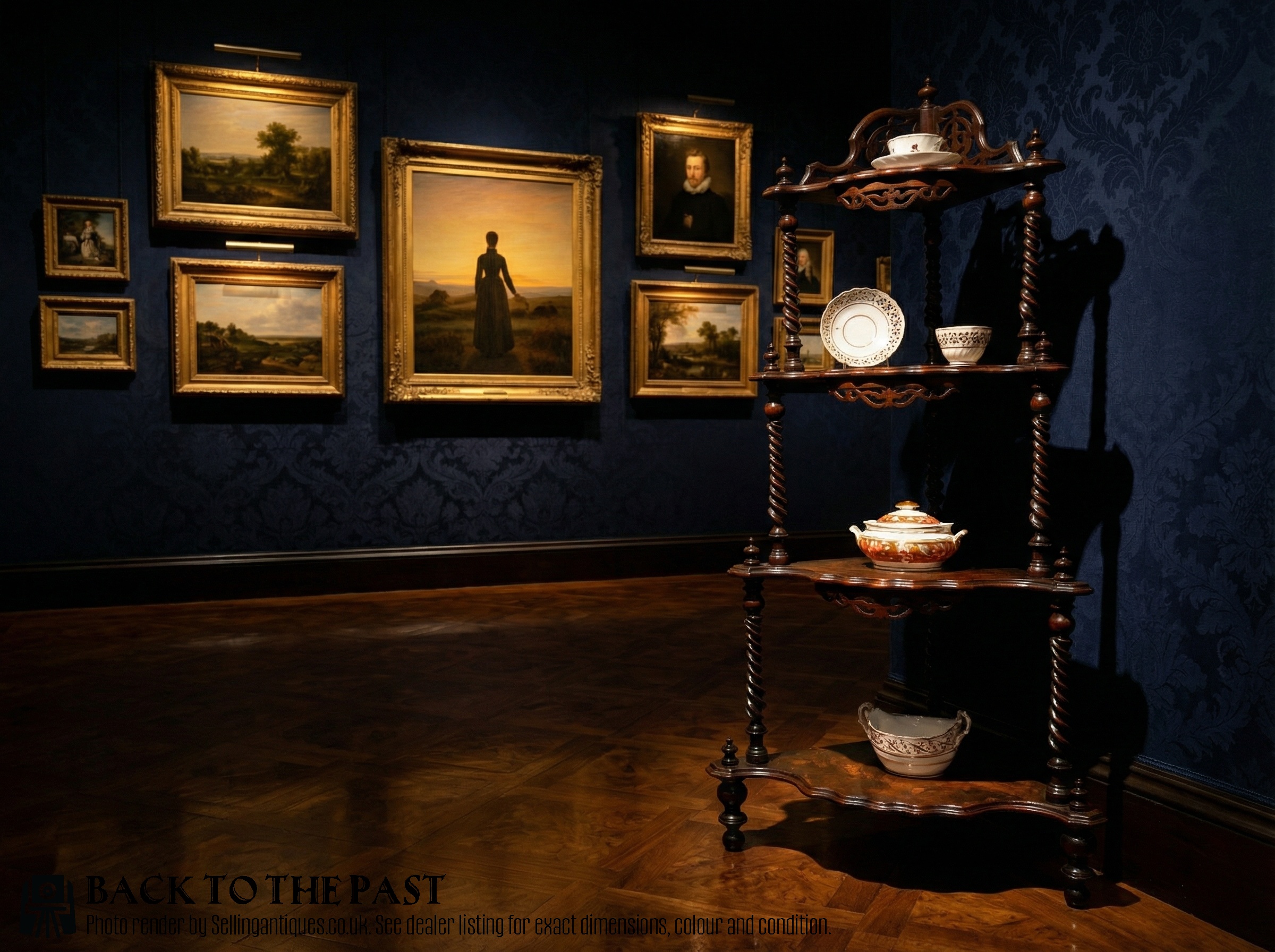
Carved Walnut Whatnot
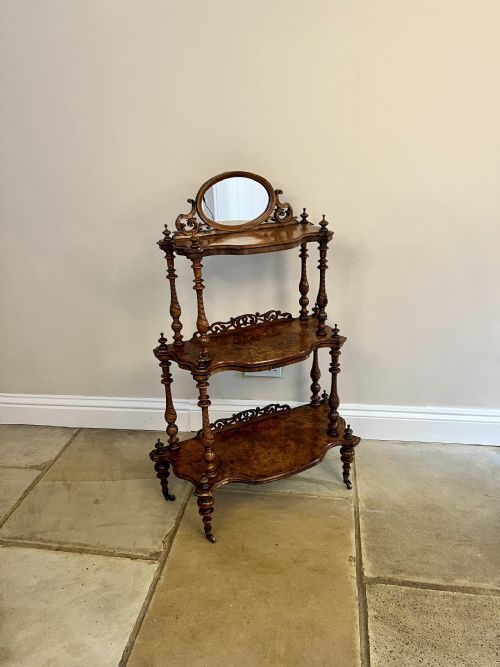
When you search for a carved walnut whatnot, you are looking at nineteenth-century tiered shelving units designed to display ornaments, books, and small household items. These pieces emerge predominantly from the Victorian era, spanning dates from the 1850s through to the 1880s.
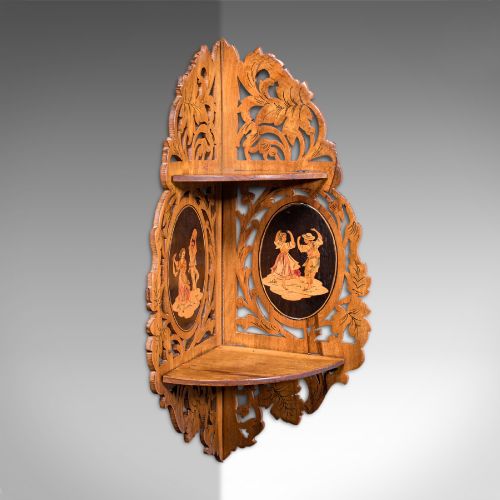
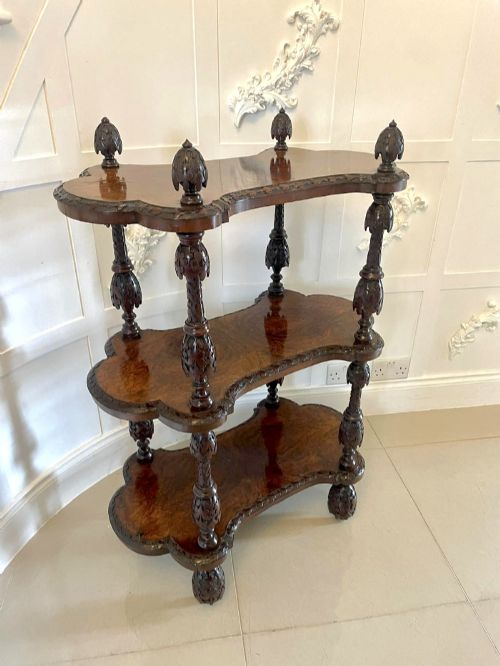
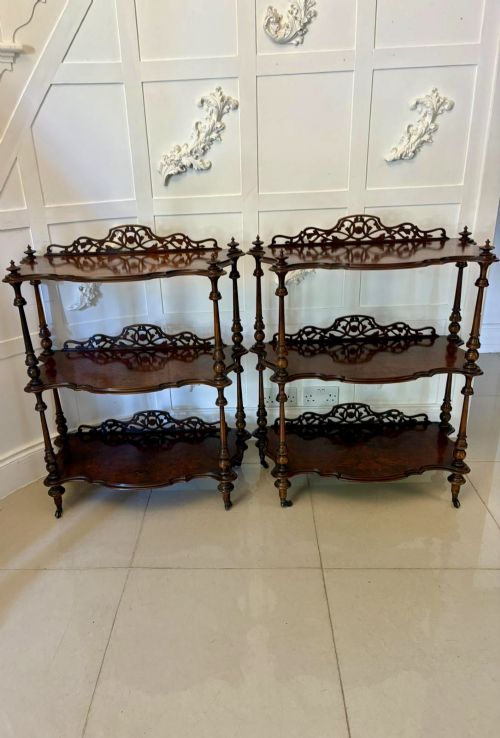
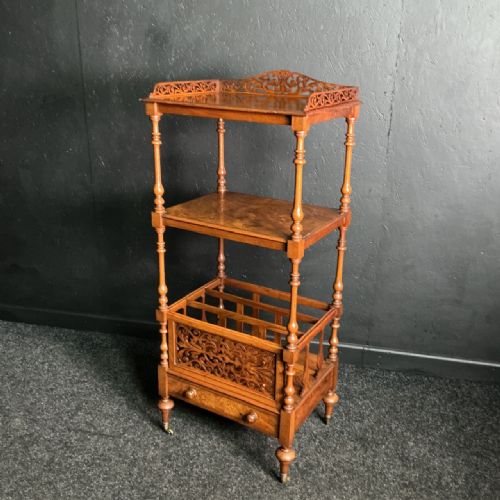
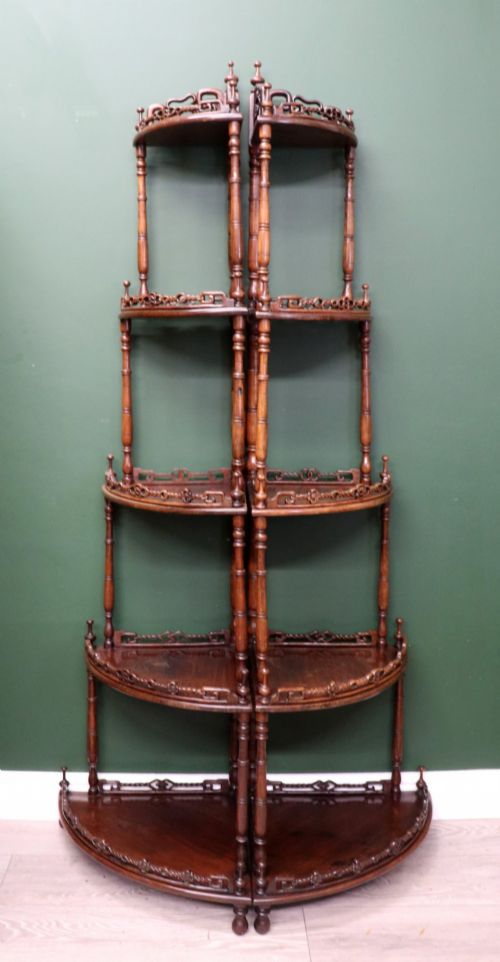
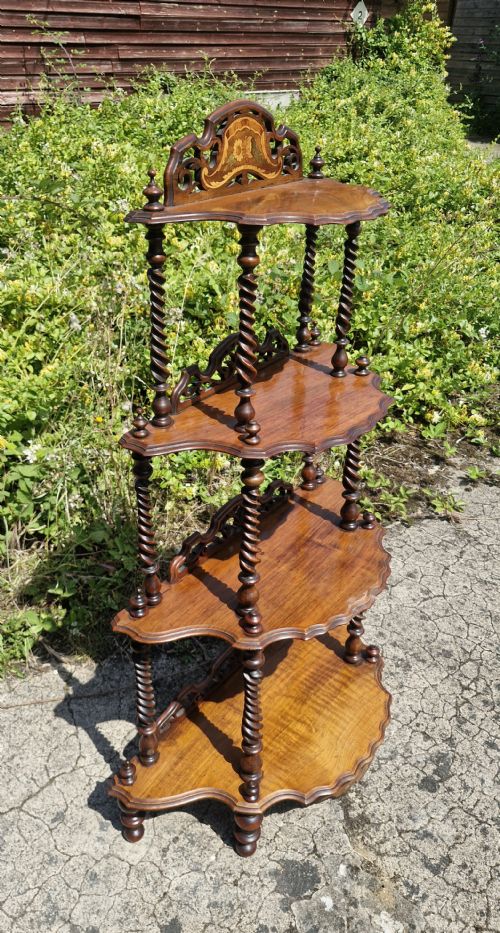
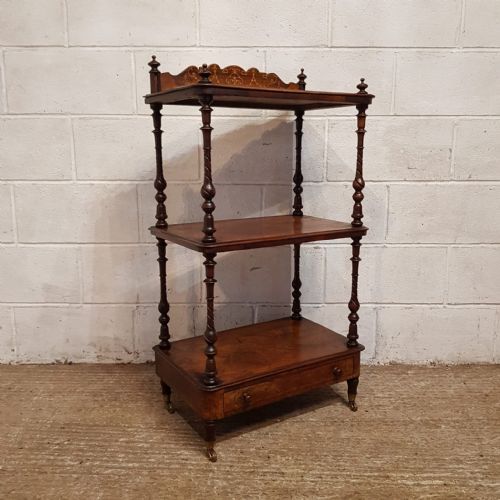
The versions you are most likely to meet on this page include freestanding three-tier etageres, corner shelves, and combinations incorporating canterburys or lower cabinets. Walnut and burr walnut dominate the selection, frequently enhanced by marquetry inlay, brass accents, and carved decorative motifs.
Makers and workshops of the period produced both standard freestanding units and specialised corner whatnot formats to suit various room layouts. Irish examples featuring shamrock carvings also appear within the broader record, demonstrating regional variations in Victorian cabinet making.
How they were made
Cabinet makers utilised solid walnut and figured burr walnut veneers applied to carcases, building tiered structures supported by turned columns or carved uprights. Marquetry inlay added contrasting woods to the surfaces, whilst brass fittings and castors completed mobile or modular elements.
Carving was executed by hand to create decorative crests, pierced galleries, and foliate details on the upright supports and backboards. Secondary timbers such as mahogany occasionally appear alongside the primary walnut structure in composite pieces.
Carved Walnut Whatnot Retail Price Guide 2026
Typical asking prices for carved walnut whatnot among the pieces listed under this phrase on Sellingantiques today, from the lower quarter to the upper quarter. They describe what is for sale here now, not the wider market.
Listings span the Victorian era from 1850 to 1880, utilising walnut, burr walnut, mahogany, brass, ceramic, glass, and marquetry inlay.
What varies in quality
The distinction between standard items and exhibition quality pieces lies in the choice of timber and the ambition of the carving. Highly figured burr walnut and elaborate marquetry inlay separate superior examples from plainer nineteenth-century walnut furniture.
Depth and crispness in hand-carved elements, such as shamrock motifs or pierced galleries, indicate skilled craftsmanship. The integration of functional sections like canterburys or lower cabinets also influences the complexity and status of the piece.
The Carved Walnut Whatnot Glossary
- Burr walnut
- A highly prized timber veneer showing swirling, knotty grain patterns formed from the growths of walnut trees. It was frequently utilised on the primary display surfaces of high-status nineteenth-century furniture.
- Canterbury
- A low stand featuring partitions for holding sheet music or books, often combined beneath the lower tier of a whatnot. This dual-purpose form provides both storage and display capabilities.
- Marquetry
- A decorative technique applying fitted pieces of wood veneer to a structure to form pictorial or geometric patterns. Inlaid examples often combine contrasting timbers across the shelves and backboards.
Carved Walnut Whatnot: Frequently Asked Questions
What is a carved walnut whatnot used for?
These tiered units served primarily to display decorative ornaments, porcelain, and books in Victorian drawing rooms and parlours. Versions combined with canterburys also provided dedicated storage for sheet music beneath the display shelves.
Today, they function effectively in modern interiors as display furniture for collections, plants, or books, fitting easily into corners or against living room walls.
Are all these pieces freestanding?
The selection includes both freestanding multi-tiered etageres and specialised corner units designed to fit snugly against room junctions. Freestanding examples offer access from multiple angles and often incorporate lower cabinets or canterburys.
Corner shelves make efficient use of unutilised room space while maintaining the characteristic tiered display structure of the period.
What materials are used besides walnut?
Whilst walnut and figured burr walnut form the primary surfaces, makers incorporated supplementary materials to enhance function and decoration. Brass fittings, castors, ceramic elements, and glass components appear alongside secondary timbers like mahogany.
Marquetry inlay introduces various contrasting woods to create geometric or floral patterns across the tiers and backboards.