


Victorian Walnut Shelves
Victorian walnut shelves bring warmth and architectural refinement to a room, offering practical display space through tiered open architecture and rich timber grains.
Victorian Walnut Shelves
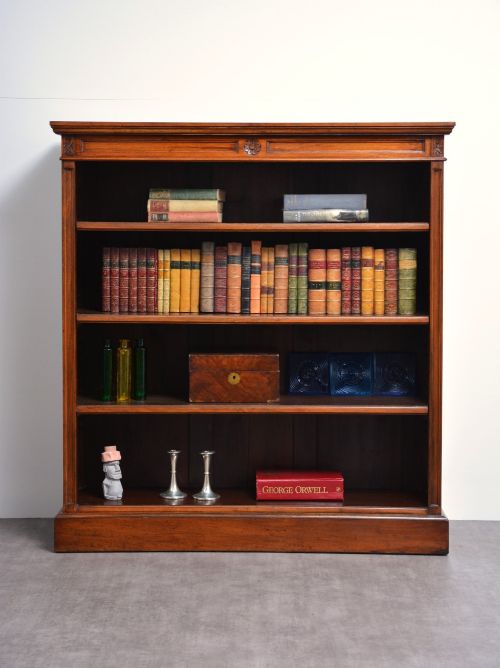
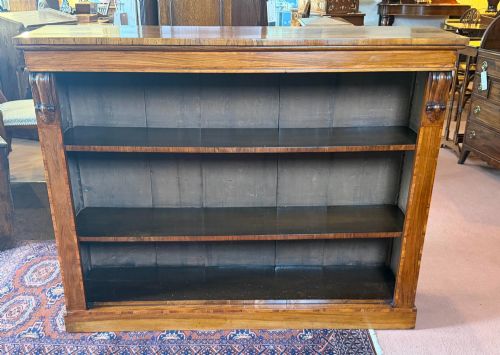
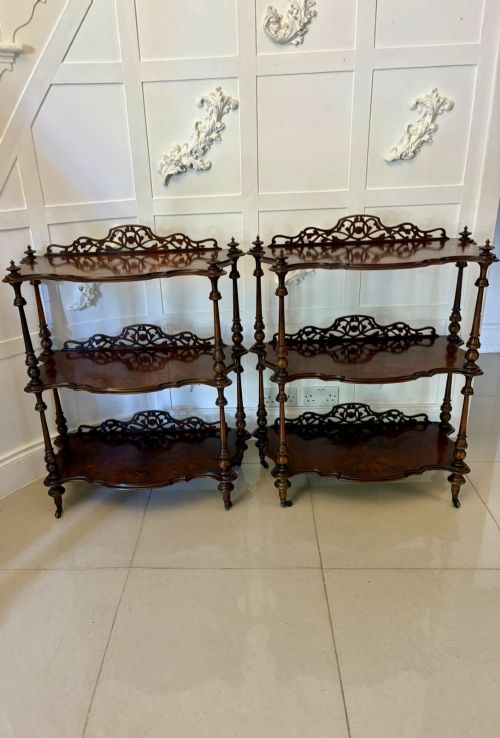
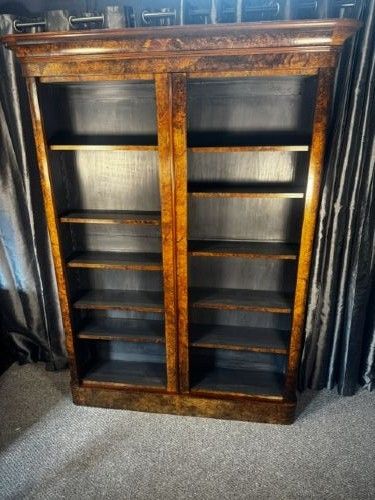
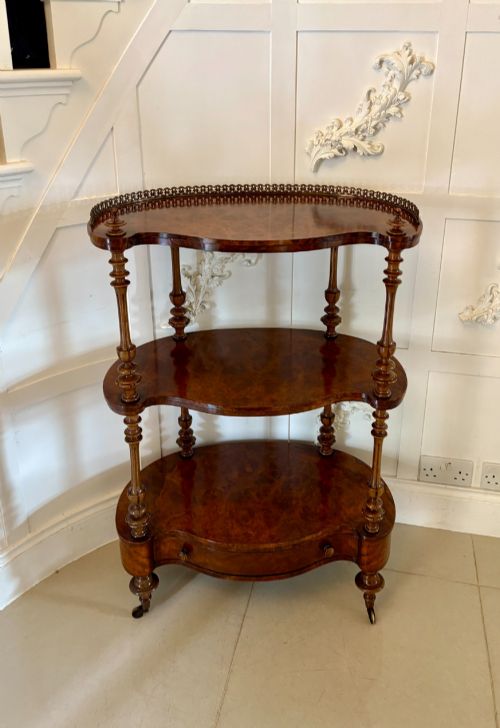
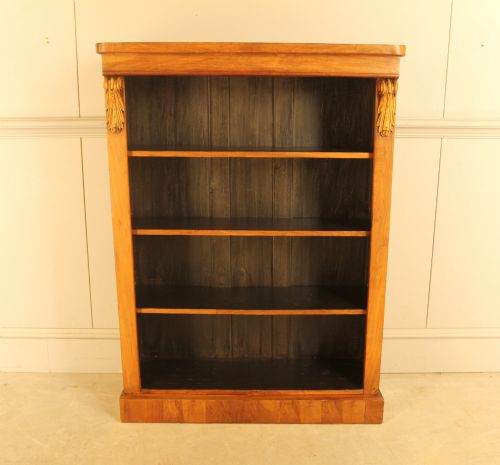
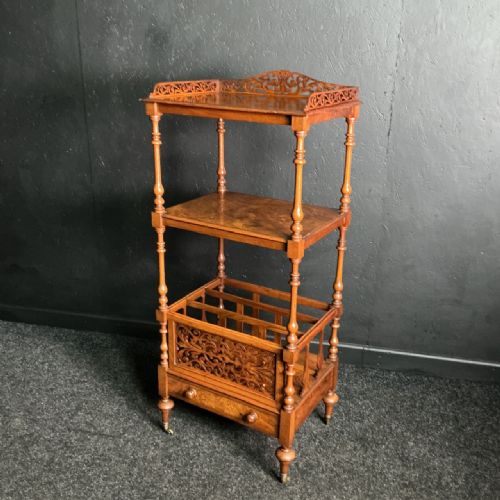
Victorian walnut shelves encompass open bookcases, multi-tiered wall units, and freestanding whatnots designed for domestic display and library storage. The pieces you encounter most frequently on this page date from the mid to late nineteenth century, reflecting the period's preference for organised utility.
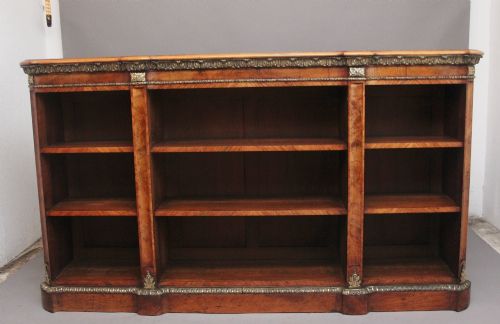
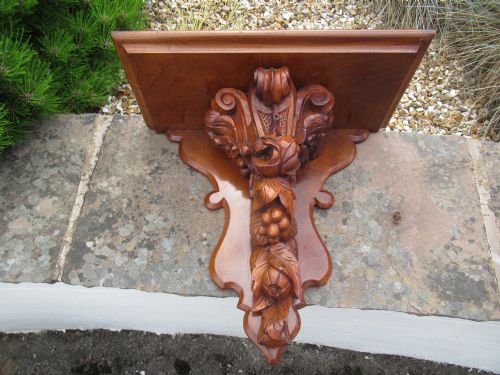
Makers of this era constructed these units in various configurations, ranging from simple hanging wall brackets and three-tier corner pieces to large breakfront library bookcases. Walnut and burr walnut serve as the primary foundations, often accompanied by secondary timbers such as pine.
Stylistic influences span standard Victorian design to Aesthetic Movement and occasional Continental interpretations. Buyers searching for these items seek functional display furniture that carries the distinctive figured grain and dark warmth of nineteenth-century cabinet work.
Gradations in Quality
Quality rests upon the selection of the timber veneer, the crispness of any applied ormolu mounts, and the integrity of the structural joinery. Finer examples display symmetrical burr walnut figuring across wide expanses and retain original adjustable shelf mechanisms.
Lesser pieces exhibit simpler plain walnut boards, replacement hardware, or heavy surface restoration that obscures the natural grain. The distinction between standard domestic output and exceptional workshop production lies in the depth of the timber selection and the precision of the cabinet work.
Materials recorded across the inventory include solid walnut, burr walnut veneer, brass, ormolu, and glass.
Johnstone and Jeanes·Gillows·Gabriel Viardot·H.A.C.
The Victorian Walnut Shelves Glossary
- Burr walnut
- A specialised timber cut from the warted growths of walnut trees, yielding intricate swirling patterns highly prized for Victorian decorative panels.
- Whatnot
- A multi-tiered freestanding open shelf unit designed for displaying ornaments, books, and curiosities within the drawing room.
- Credenza
- A low cabinet piece, frequently incorporating mirrored doors and ormolu mounts alongside central shelving compartments.
- Ormolu
- Gilt bronze mounts applied to furniture edges and panels to provide decorative contrast against dark walnut timber.
- Marquetry
- The art of applying decorative pieces of veneer to a structure to form intricate geometric or floral designs.
Victorian Walnut Shelves: Frequently Asked Questions
How do I install wall hanging shelves?
Wall-mounted versions require secure fixing into solid masonry or direct attachment to internal wall studs using appropriate brackets.
Because nineteenth-century timber carries significant weight, check the load-bearing capacity of the mounting points before placing heavy volumes upon the boards.
Are the shelves adjustable?
Many open bookcases and cabinet interiors feature movable shelves resting on traditional wooden rack strips or metal pin supports.
This adaptability allows the storage of varied book heights and display objects within a single unit.
How do I care for walnut veneer?
Maintain the timber surfaces by dusting with a soft cloth and avoiding placement near direct heat sources or strong sunlight.
Periodic application of appropriate wax polish preserves the moisture and depth of the nineteenth-century walnut grain.
What is a whatnot used for?
These tiered open structures served as versatile display stands for porcelain, decorative objects, and reading material in Victorian drawing rooms.
Their open architecture allows light to pass through while keeping frequently accessed items close to hand.