


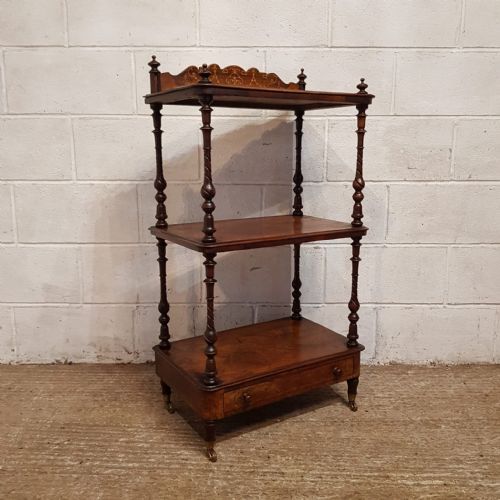


Burr Walnut Etagere
A burr walnut etagere brings figured timber and tiered display into a room, offering both surface space and decorative presence.
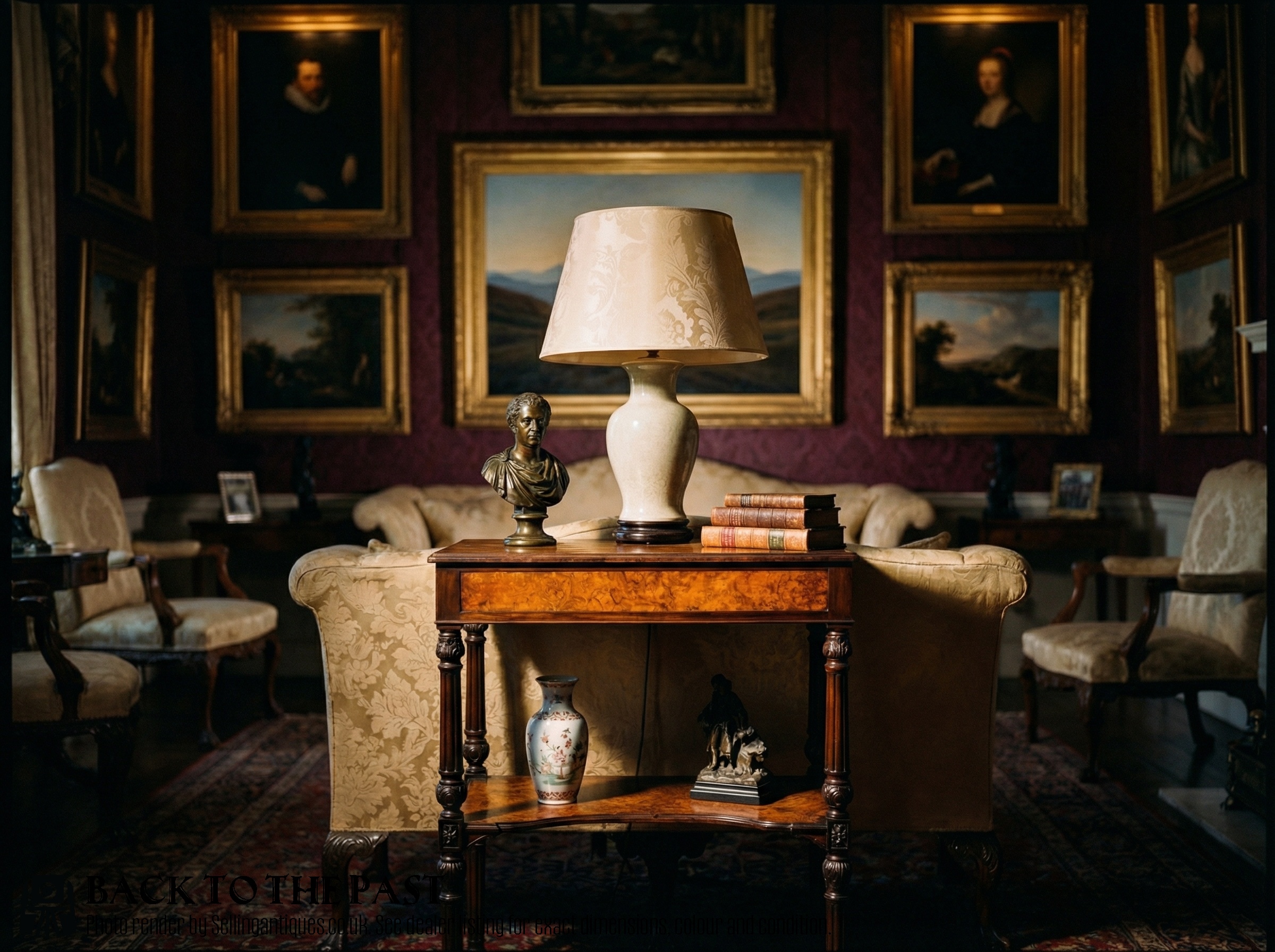
Burr Walnut Etagere
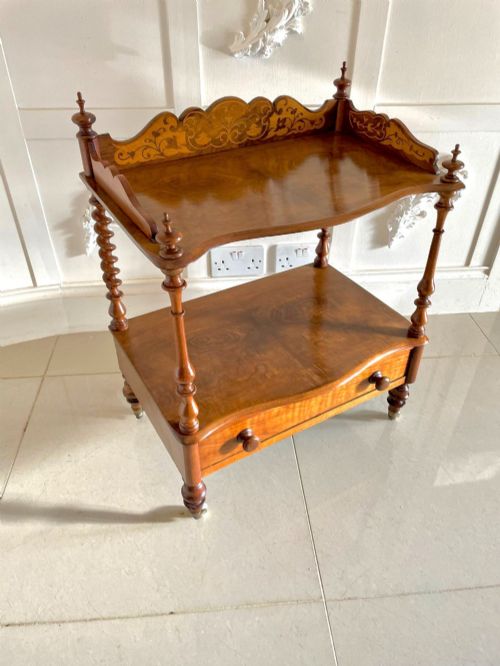
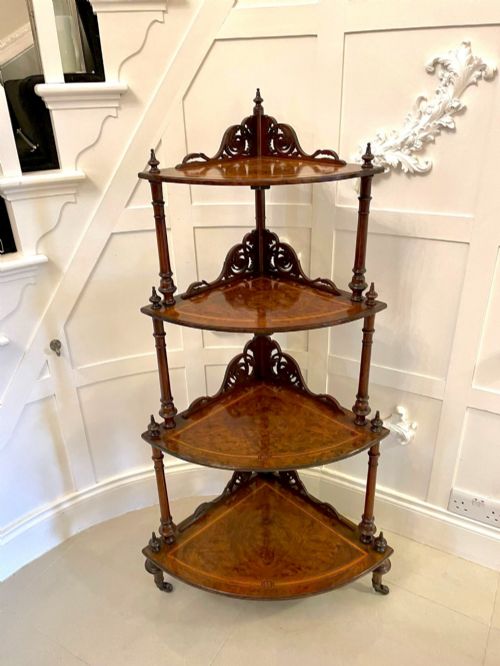
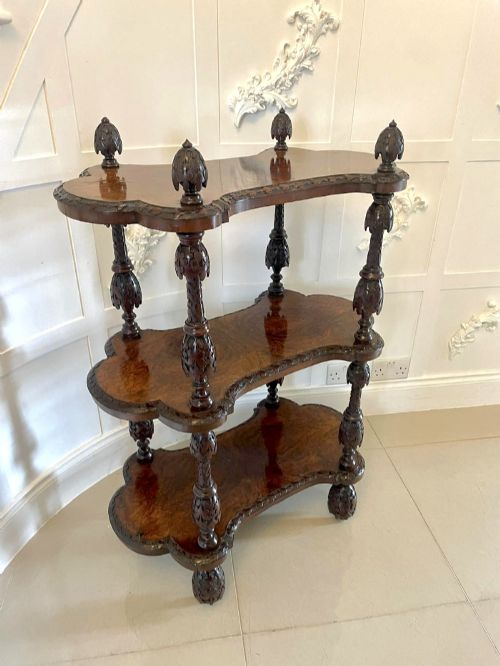
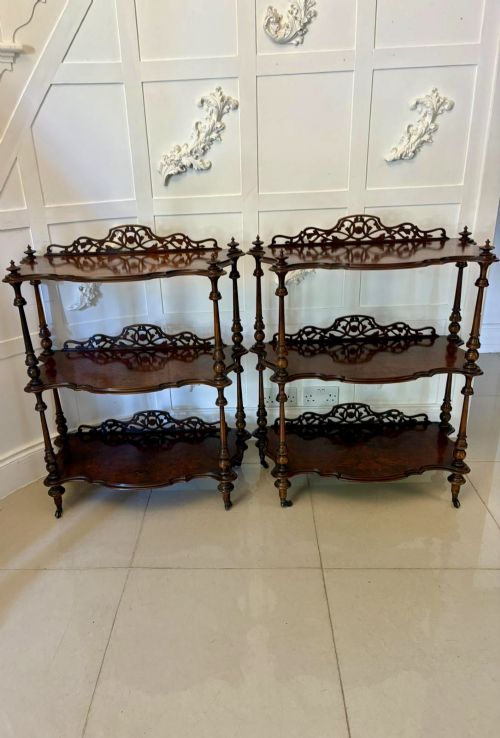
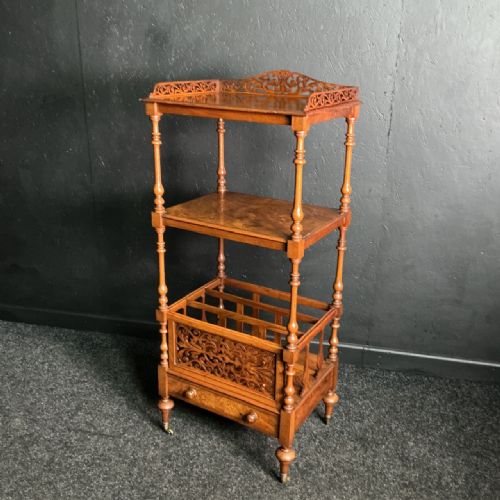
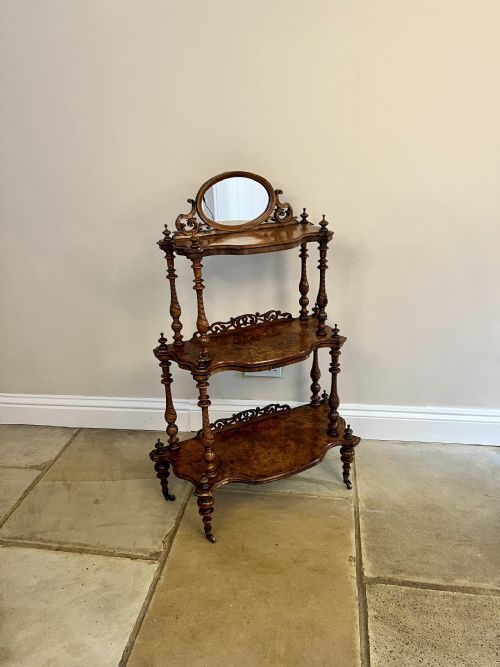
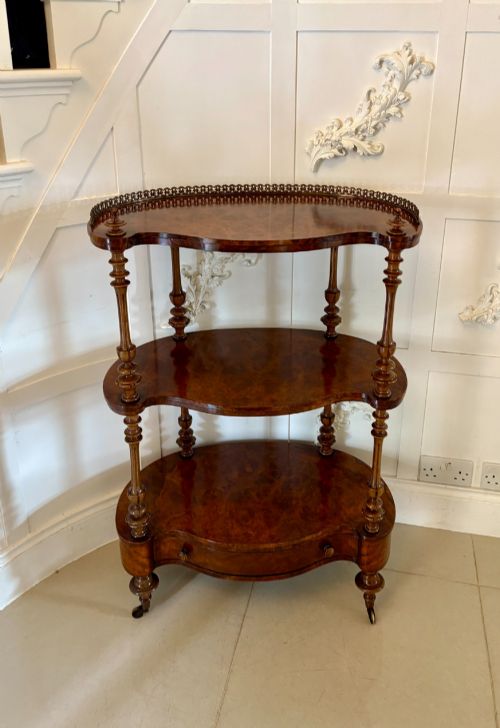
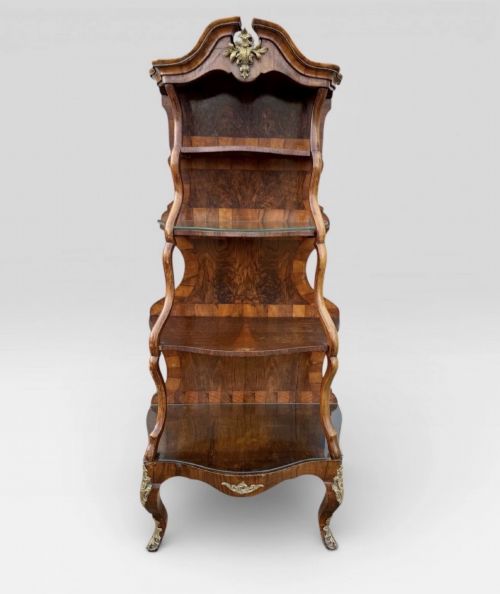
A burr walnut etagere is a multi-tiered display stand or whatnot designed to hold ornaments, books, and small objects in nineteenth-century interiors. These pieces appear most frequently in Victorian forms, spanning corner whatnots, side cabinets, demi-lune display consoles, and three- or four-tier shelving units.
The materials recorded in these listings centre on burr walnut, walnut, and ebonised wood, often complemented by brass, glass, mirror glass, and intricate inlay. Makers utilised these rich veneers to create decorative freestanding and corner furniture suited to principal reception rooms.
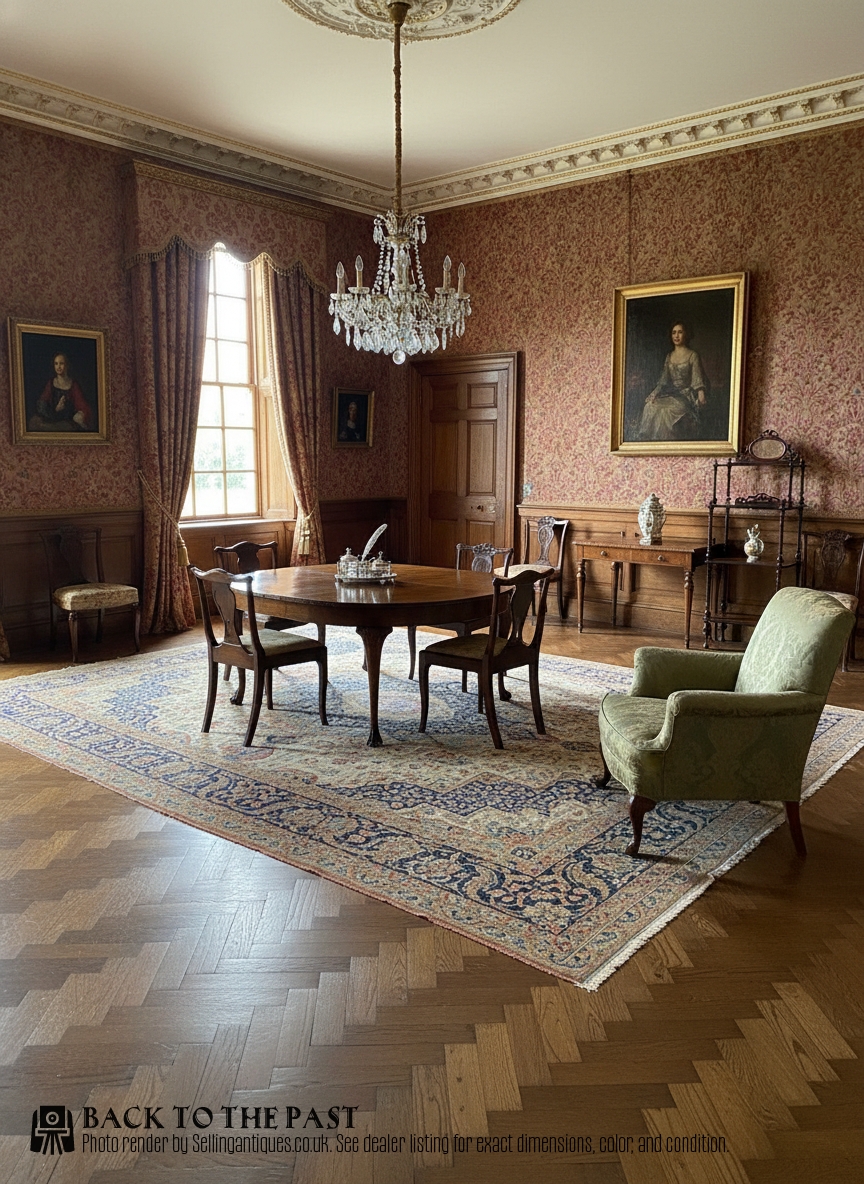
How they were made
Craftsmen selected highly figured burr walnut veneer for its distinctive swirling grain patterns, applying it to foundational timbers alongside ebonised wood details. Marquetry inlay and gilt metal mounts frequently embellished the surfaces.
Multi-tiered structures utilised turned supports, upright columns, or corner framing to sustain several shelves, sometimes incorporating mirrored backs, glass panels, or lower cabinets with doors.
Burr Walnut Etagere Retail Price Guide 2026
Typical asking prices for burr walnut etagere among the pieces listed under this phrase on Sellingantiques today, from the lower quarter to the upper quarter. They describe what is for sale here now, not the wider market.
Listings span the nineteenth century, featuring Victorian, Regency, and Louis XV style pieces built from burr walnut, walnut, and ebonised wood.
What varies in quality
Quality rests upon the selection and matching of the burr walnut veneer across the visible tiers, panels, and serpentine shelves. Higher grades show harmonious grain patterns and crisp execution in marquetry inlay and carved elements.
The structural ambition of the piece also defines the standard, distinguishing simpler corner units and lamp tables from grander multi-tier display stands, freestanding étagères, and cabinets with exhibition-level detailing.
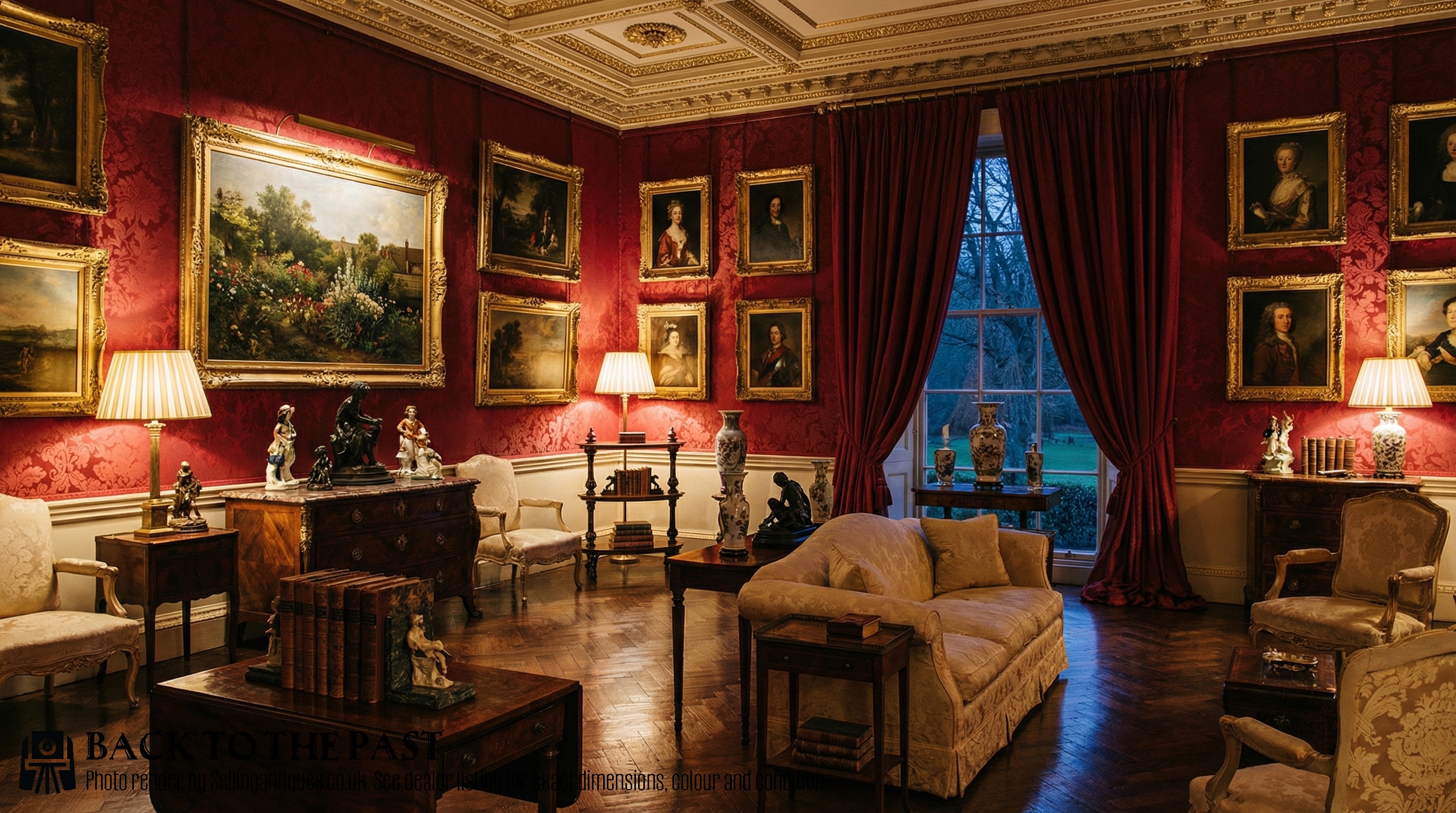
Holland & Sons
The Burr Walnut Etagere Glossary
- Burr walnut
- A highly figured timber harvested from walnut tree growths, prized for its swirling, knotty grain patterns used in fine cabinet making.
- Étagère
- A French term for a piece of furniture consisting of a set of open shelves for displaying small objects, widely adopted in nineteenth-century Britain.
- Whatnot
- A multi-tiered shelving unit used for displaying ornaments and bric-a-brac, emerging prominently during the Victorian period.
- Marquetry
- Decorative woodwork in which thin slices of various coloured woods and other materials are fitted together to form pictorial or geometric patterns on a surface.
- Serpentine
- A curved line or shape featuring a convex centre flanked by concave curves, frequently seen on the fronts of higher-grade tables and étagères.
Burr Walnut Etagere: Frequently Asked Questions
What is a burr walnut etagere used for?
These tiered pieces were designed to hold decorative objects, porcelain, and books in Victorian drawing rooms and parlours. They provided open display surfaces while adding warmth through figured timber.
Today, they serve a similar function in contemporary homes, functioning as corner stands, display consoles, or lamp tables that showcase collections without dominating floor space.
How do I tell a corner whatnot apart?
Corner whatnots feature angled shelves specifically constructed to fit snugly into the corner of a room. They maximise vertical space in smaller areas while retaining the characteristic multi-tiered display format.
Freestanding etageres and serpentine tables, by contrast, sit away from walls and offer all-round visibility, often incorporating enclosed cabinets or mirrors.
What periods do these pieces date from?
The pieces recorded here belong primarily to the nineteenth century, with a strong concentration of Victorian items dating from the 1850s, 1860s, 1880s, and 1890s. Earlier Regency examples and Louis XV style revivals also appear among the selections.
These dates reflect the peak eras of tiered display furniture production in Britain and Europe, using traditional joinery and veneer techniques.
How do I care for burr walnut furniture?
Burr walnut veneer benefits from placement away from direct sunlight and extreme temperature fluctuations, which can cause the timber to dry or fade. Regular dusting with a soft cloth maintains the polished finish.
Applying a suitable wax polish occasionally helps preserve the moisture and depth of the figured grain without building up heavy residues.