



Three Tier Etagere
These pieces for a three tier etagere bring tiered display surfaces and open shelving to a room, offering practical storage with decorative presence.
Three Tier Etagere
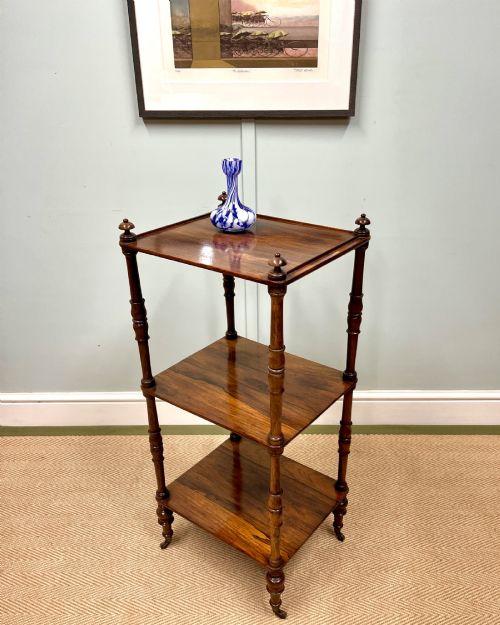
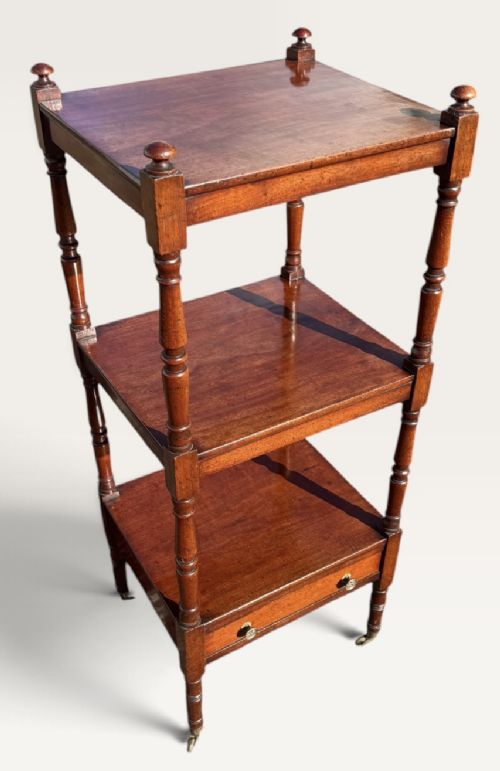
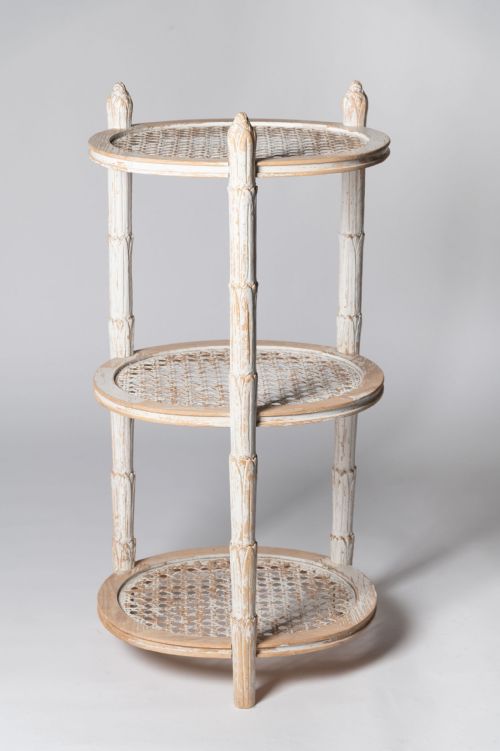
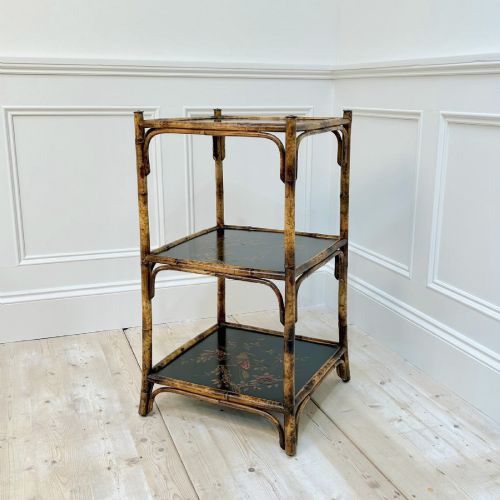
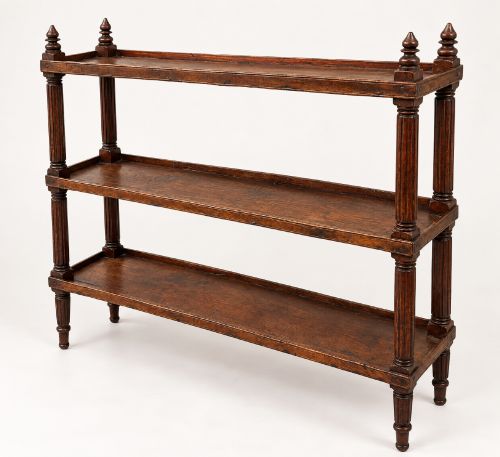
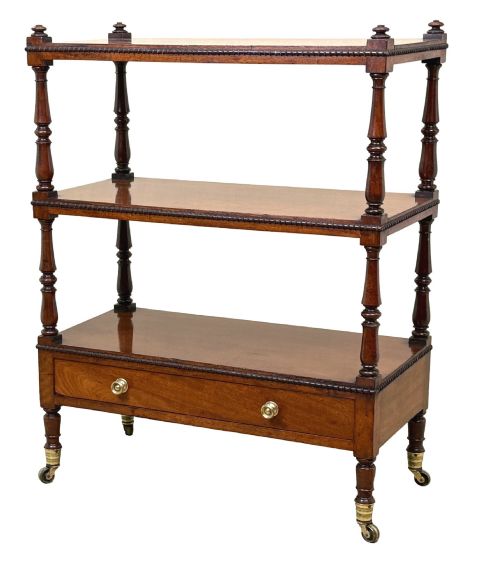
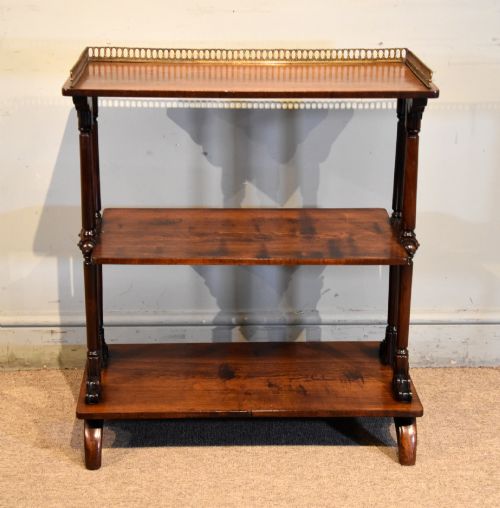
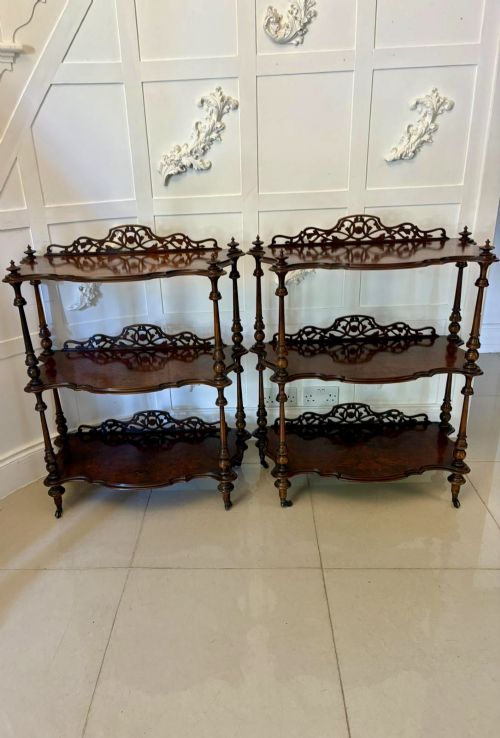
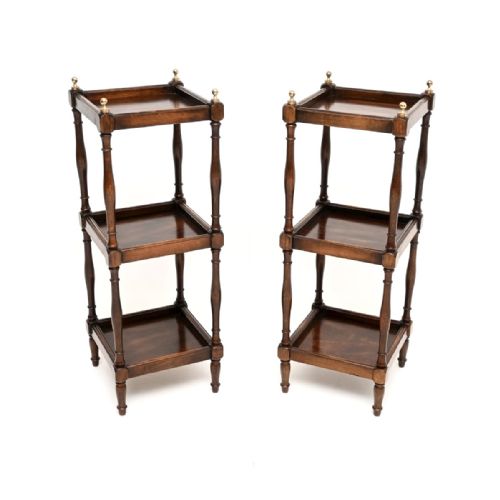
A three tier etagere provides multiple open open shelves arranged vertically for display and storage, appearing in forms such as side tables, wall shelves, and floor-standing whatnots. The pieces found here date predominantly from the nineteenth century, taking in the Victorian, Regency, and William IV periods.
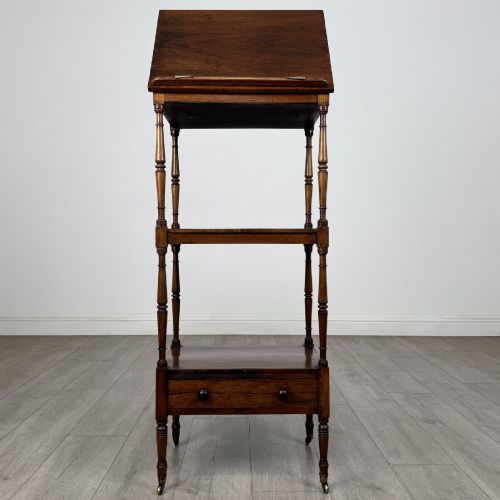
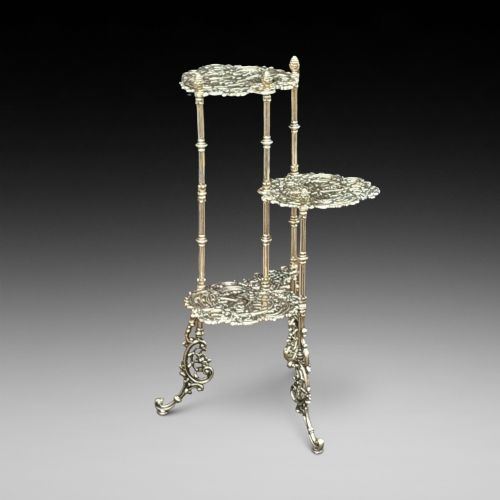
Makers and cabinetmakers built these tiered units in timber frameworks, incorporating turned legs, barley twist supports, and brass mounts. The designs range from compact corner units and wall-hanging shelves to large central buffets and trolley formats.
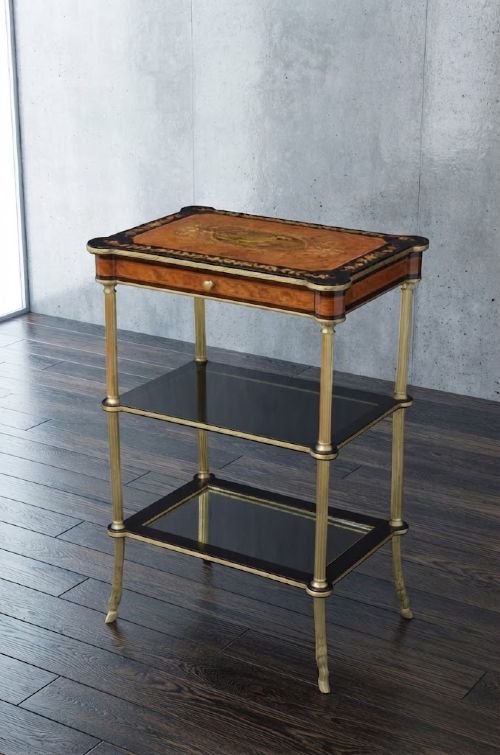
English and French workshops produced the majority of these items, using native hardwoods alongside continental veneers and marquetry inlay. The three tier etagere serves as a versatile item of furniture suited to displaying ceramics, books, and decorative objects.
How they were made
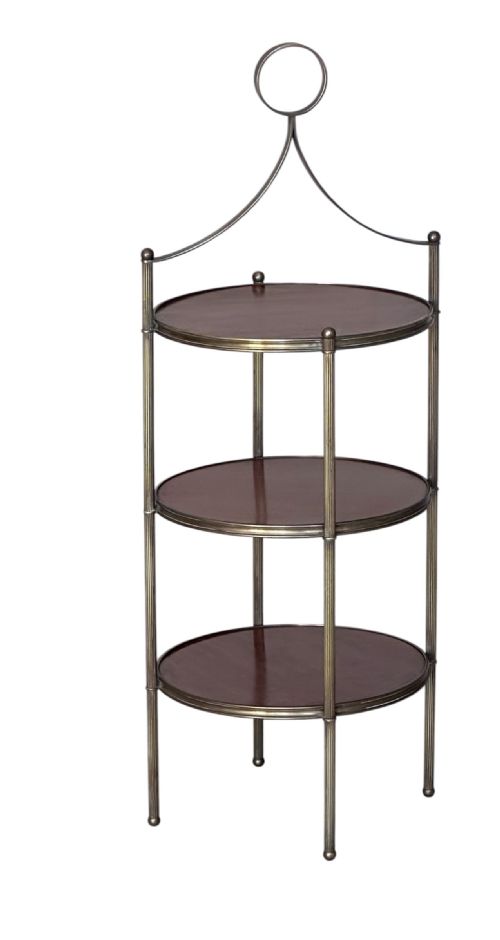
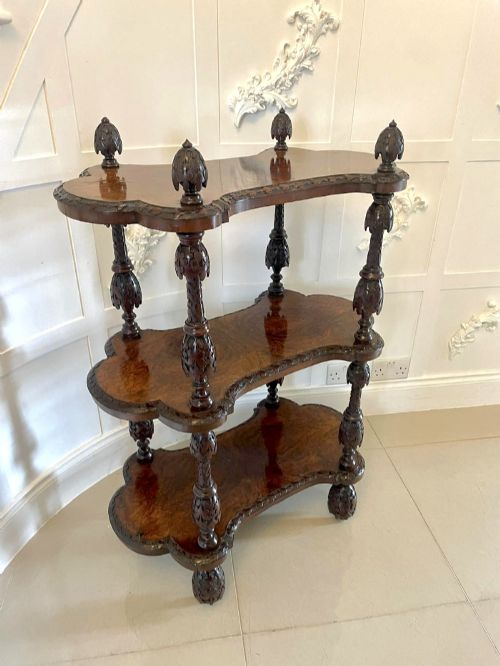
Cabinetmakers constructed the main frameworks using timbers such as mahogany, walnut, rosewood, and ebonised wood, frequently selecting burr walnut veneers for figured grain patterns. Supports often take the form of turned wooden columns, barley twist pillars, or brass columns.
Surface decoration involved marquetry inlay, parquetry, ormolu mounts, and painted finishes on woods like satin birch and fruitwood. Tiered platforms were connected securely to upright supports, sometimes incorporating small drawers or mirrored panels within the assembly.
Three Tier Etagere Retail Price Guide 2026
Typical asking prices for three tier etagere among the pieces listed under this phrase on Sellingantiques today, from the lower quarter to the upper quarter. They describe what is for sale here now, not the wider market.
Victorian households relied on these tiers to keep stray bric-a-brac safely off the parlour floor.
What varies in quality
The refinement of the timber selection and veneer matching defines the upper tier of these pieces, particularly where highly figured burr walnut or exotic rosewood is utilised. Superior examples display crisp turning on upright supports and precise joinery in the assembly of each tier.
Decorative additions such as brass mounts, ormolu enrichments, and detailed marquetry inlay distinguish finer workshop output from simpler utilitarian shelving. The overall proportions and balance of the tiers dictate the visual harmony of the finished etagere.
Samson & Son London
The Three Tier Etagere Glossary
- Etagere
- A piece of furniture consisting of a set of open shelves for displaying small objects. These tiered units often function as side tables or display stands.
- Whatnot
- A nineteenth century multi-shelved open cabinet designed for the storage and display of ornaments. They appear in corner configurations as well as freestanding rectangular formats.
- Burr walnut
- A veneer taken from the knotted growth of a walnut tree, prized for its swirling grain patterns. Cabinetmakers used this material on high quality Victorian pieces.
- Marquetry
- Decorative woodwork in which pieces of fine wood are applied to a structure to form designs. This technique appears frequently on French and English tables from the nineteenth century.
- Ormolu
- Gilt bronze mounts applied to furniture for decorative effect. These metallic accents are characteristic of French influenced designs from the period.
Three Tier Etagere: Frequently Asked Questions
What is a three tier etagere used for?
These tiered units served historically for the display of ornaments, porcelain, and small decorative objects in entertaining rooms. Today they provide open vertical storage for books and collections while occupying minimal floor space.
The graduated shelving allows smaller items to sit on upper tiers while larger pieces rest on the base surface, making them adaptable for daily living spaces.
How do I date a three tier etagere?
Dating relies on identifying the prevailing timber choices and decorative styles of the nineteenth century, such as Regency rosewood or Victorian burr walnut. Construction methods, including the type of fixings and timber preparation, also point to specific decades.
Comparison with documented examples from periods like William IV helps narrow the timeframe of manufacture.
Where should I place an etagere in a room?
Freestanding models suit corners or flat wall spaces where their multi-level shelving can be viewed from multiple angles. Wall-hanging variants mount securely at eye level to utilise vertical wall space above other furniture.
Care should be taken to keep wooden tiers away from direct heat sources and strong sunlight to protect polished finishes and veneers.
What is the difference between a whatnot and an etagere?
While both terms describe multi-shelved open furniture, whatnot traditionally refers to nineteenth century English tiered stands with turned uprights. Etagere is a broader term that encompasses French-influenced tables and display units with similar tiered formats.
Both forms share the primary function of open display, though etageres frequently incorporate mirror glass or metal mounts.