




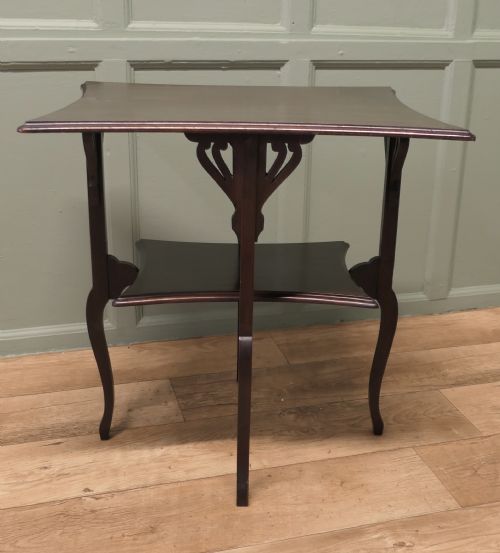
Antique Tiered Shelf
An antique tiered shelf is a stacked display stand for books, food or ornaments, built to organise space with elegance.
Antique Tiered Shelf
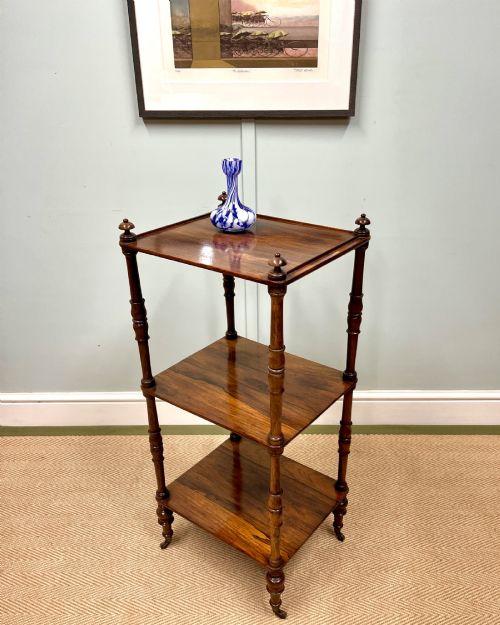
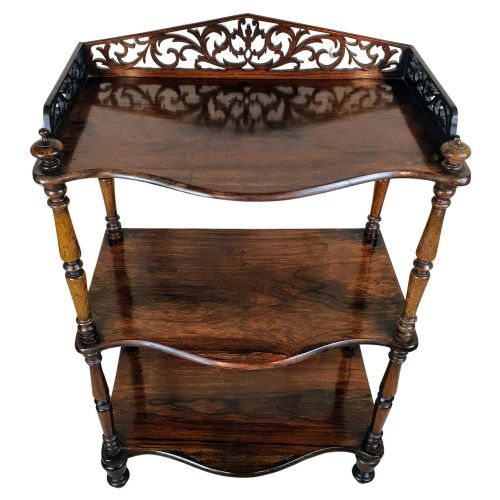
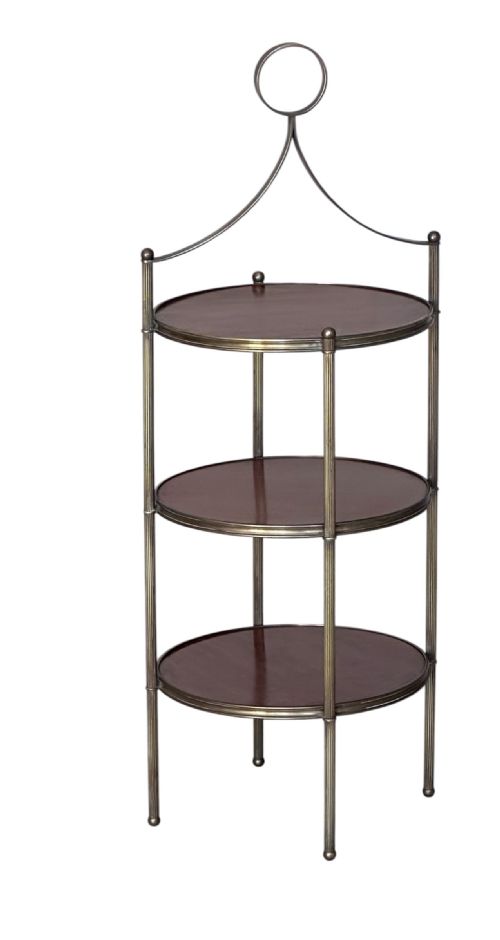
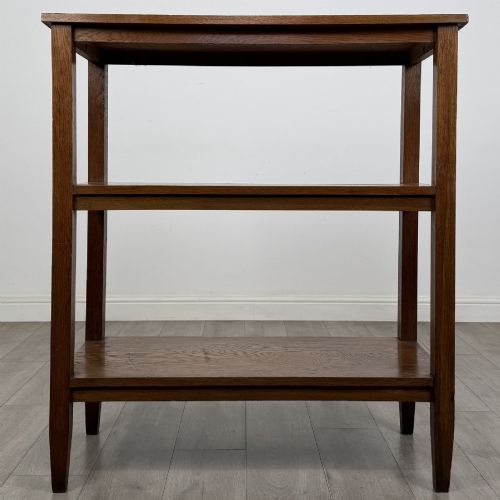
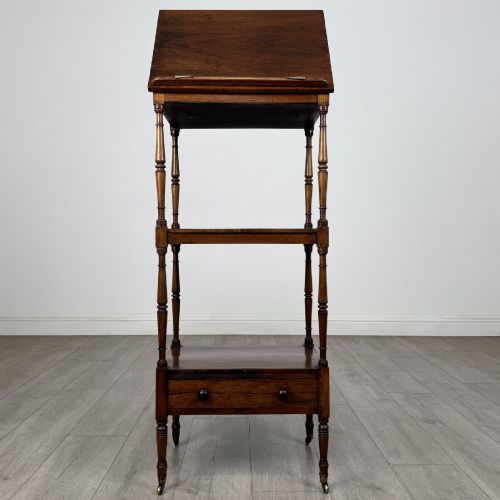
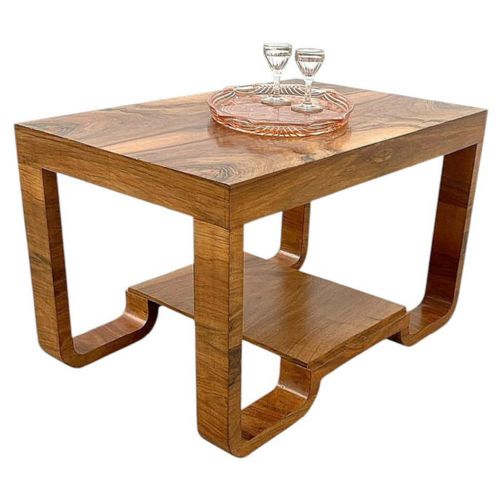
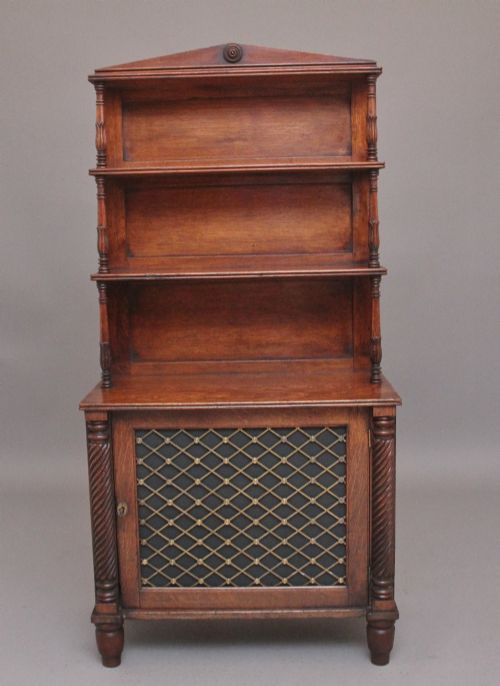
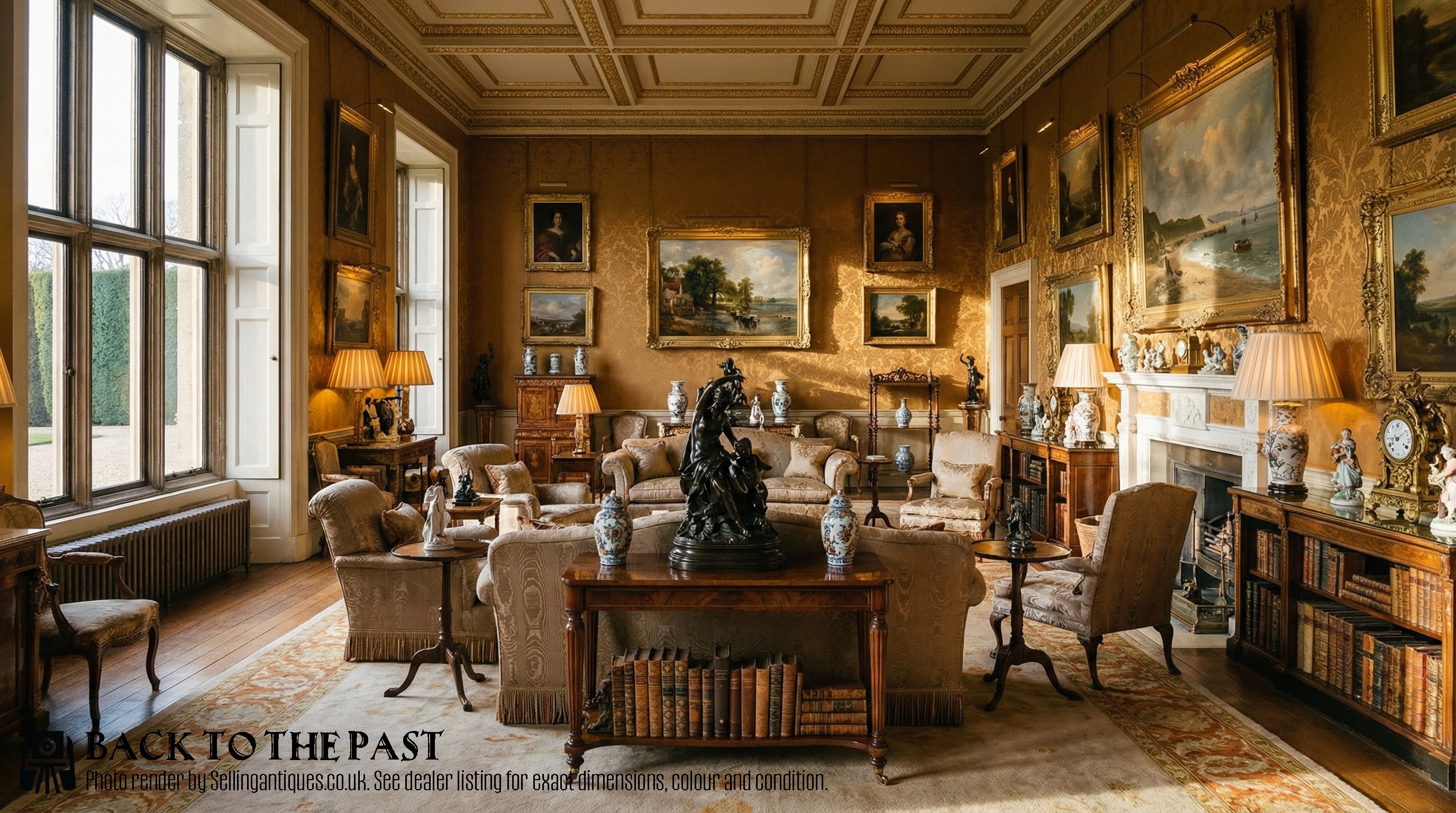
An antique tiered shelf takes the form of a whatnot, a dumb waiter, an etagere or a shelving unit. These pieces provide multiple levels for display or utility across Victorian sitting rooms and dining spaces.
The versions most likely to be met on this page span the nineteenth century, including pieces dated to eighteen eighty, eighteen sixty and eighteen fifty. Makers of the period constructed them as freestanding furniture items designed to hold books, food or decorative objects.
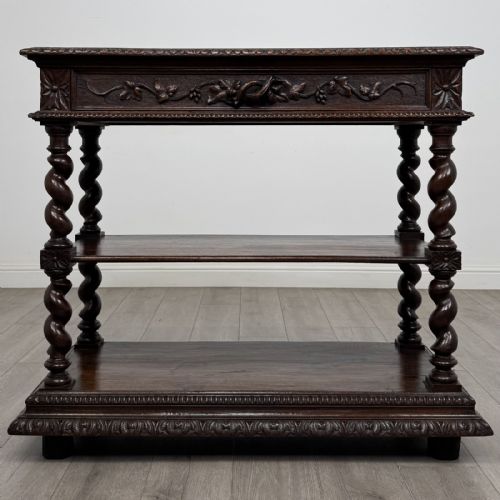
Examples in the current selection display distinct regional and stylistic origins, such as an Irish exhibition quality burr walnut whatnot alongside standard rosewood and mahogany forms. Each configuration offers multiple stages of shelves supported by turned columns or uprights.
How they were made
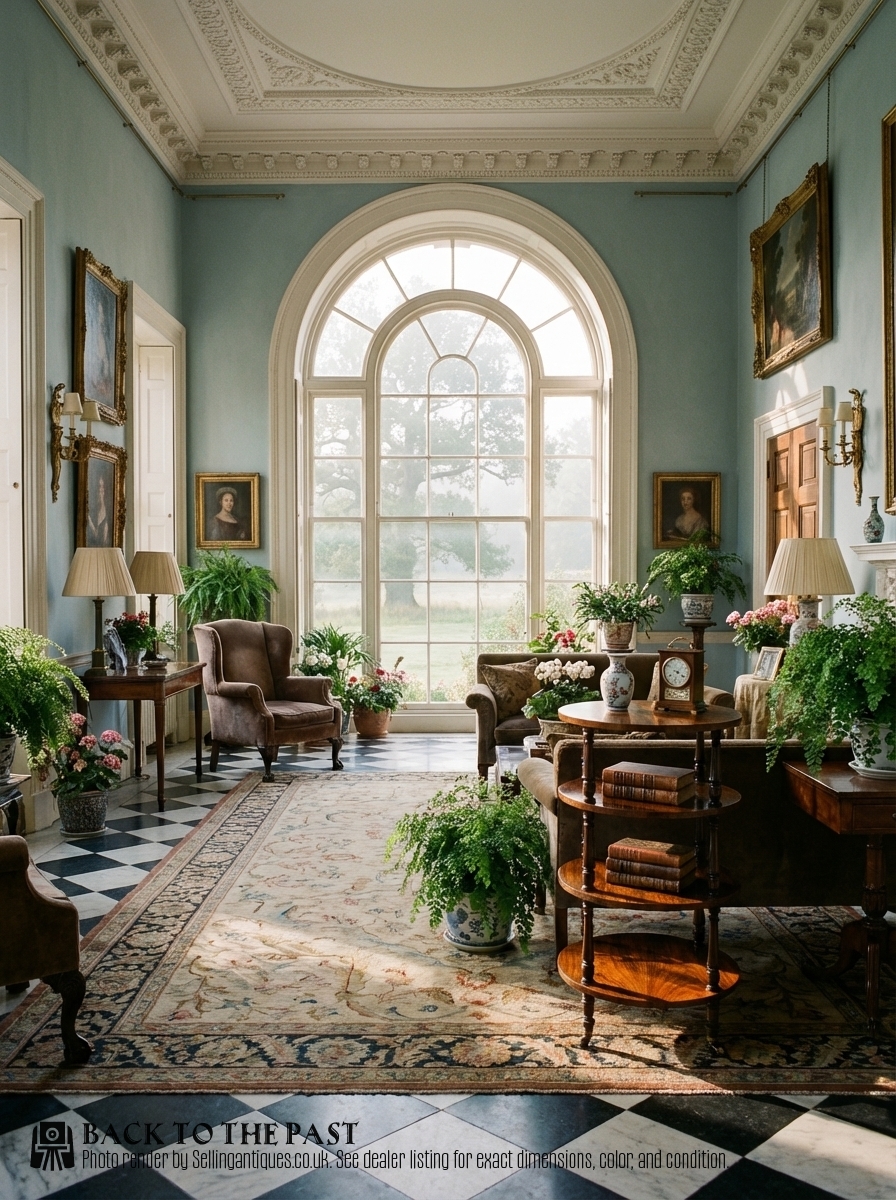
Craftsmen built these tiered shelves using dense cabinet timbers including walnut, burr walnut, rosewood and mahogany. Selected surfaces often display decorative marquetry inlay alongside turned brass components.
Structural assembly relied on traditional joinery to support multiple levels of shelving while maintaining stability. Makers applied polished finishes to highlight the natural grain patterns of the walnut and rosewood.
Antique Tiered Shelf Retail Price Guide 2026
Typical asking prices for tiered shelf among the pieces listed under this phrase on Sellingantiques today, from the lower quarter to the upper quarter. They describe what is for sale here now, not the wider market.
Listings on this page exclusively feature Victorian pieces dated between eighteen fifty and eighteen eighty-five.
What varies in quality
Quality separates standard production items from exhibition pieces through the selection of timber and decorative detail. Finer examples utilise highly figured burr walnut and incorporate intricate marquetry inlay across the tiers.
The sophistication of the turning on the upright supports and the integration of brass elements distinguish superior pieces. Execution of the joinery and overall structural refinement define the upper tier of the range.
The Antique Tiered Shelf Glossary
- Whatnot
- A piece of furniture with shelves for displaying small objects, books or ornaments. These pieces typically feature three or more tiers supported by vertical columns.
- Etagere
- A set of open shelves for displaying ornaments or china. This French term often applies interchangeably with the English whatnot.
- Dumb waiter
- A tiered stand traditionally used for serving food or holding books in a dining room. The form includes circular or rectangular shelves arranged vertically.
- Marquetry inlay
- Decorative patterns formed by fitting contrasting pieces of wood veneer into a prepared surface. This technique embellishes the top surfaces or friezes of finer furniture.
- Burr walnut
- A specialised wood veneer taken from the growth growths of a walnut tree. It produces highly figured, swirling grain patterns prized in Victorian cabinet making.
Antique Tiered Shelf: Frequently Asked Questions
What is an antique tiered shelf used for?
These pieces served multiple domestic purposes including displaying ornaments, holding books and serving food in nineteenth-century interiors. Their stacked platform design maximised vertical space in parlours and dining rooms.
Today they function similarly as display furniture for collections or books while adding period character to a room. Each tier offers a distinct surface for arrangement.
How do I identify a Victorian whatnot?
Victorian whatnots feature three or more stacked shelves supported by turned wooden columns or pillars. They are freestanding units typically constructed from rosewood, walnut or mahogany.
Evidence from this period shows variations including inlaid wood, carved details and brass fittings. The presence of multiple open tiers defines the form.
What is the difference between a whatnot and an etagere?
Both terms describe multi-tiered shelving units designed for display, though etagere often reflects a lighter, more decorative French influence. Whatnot is the traditional English term for the same form.
In practice, makers used both designations for freestanding tiered furniture during the nineteenth century. The construction methods and tiered layouts remain largely comparable.
Are antique tiered shelves sturdy enough for heavy books?
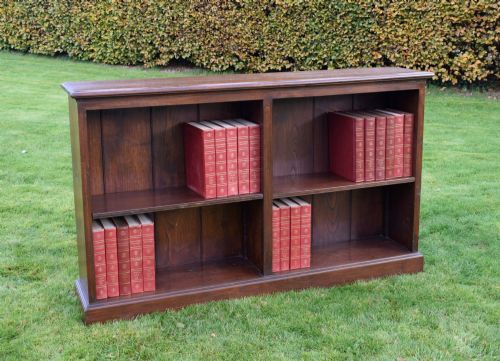
These pieces were built from solid hardwoods like mahogany and walnut to support books, ceramics and food items safely. The upright columns and shelf joints provide structural stability for everyday use.
However, the weight capacity depends on the specific design and condition of the individual piece. Standard usage for display and moderate book storage aligns with their original purpose.