





Victorian Rosewood Whatnot
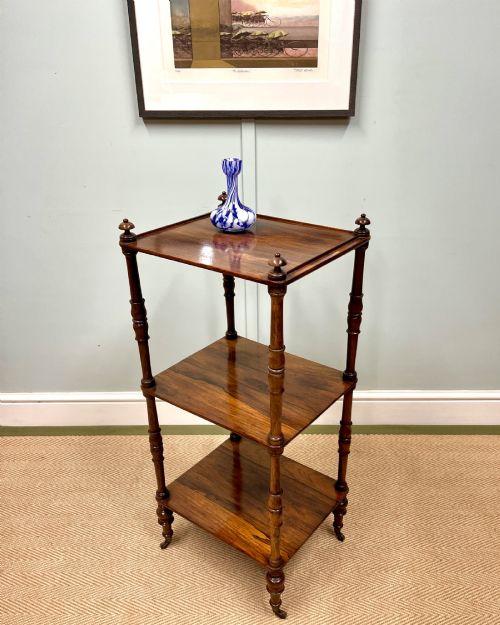
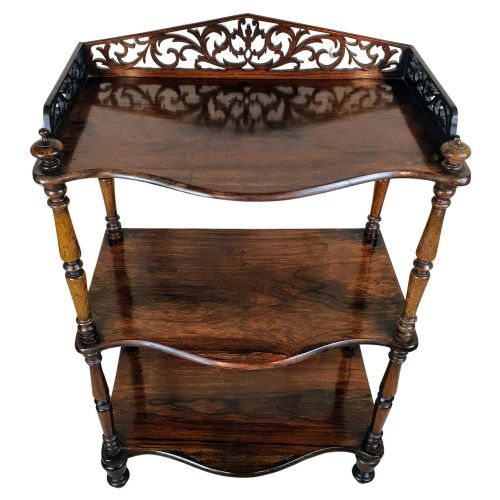
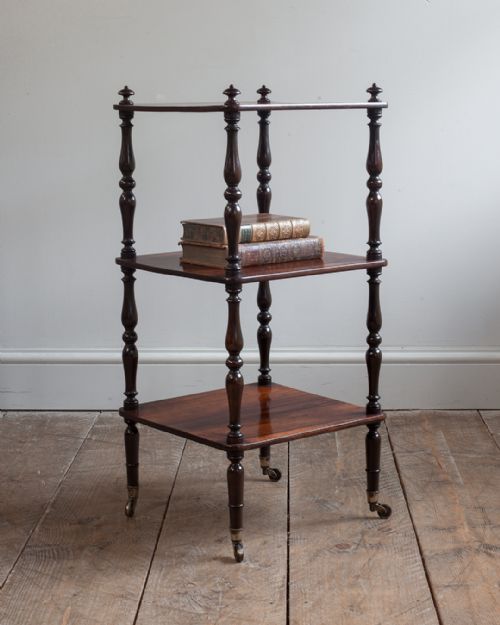
A victorian rosewood whatnot brings multi-tiered display space into a room, offering open shelving crafted for books, ornaments and music.

Victorian Rosewood Whatnot
When you search for a victorian rosewood whatnot, you encounter open multi-tiered pieces designed for display and storage in nineteenth-century interiors. These items appear as freestanding tiered shelves, corner units, and combinations incorporating lower cabinets, writing surfaces, or canterbury partitions.
The pieces on this page span the Victorian, William IV, and Regency periods, dating from the nineteenth century down to eighteen seventy. The majority take the form of three or four-tier freestanding and corner structures intended to hold books, magazines, and ornaments.
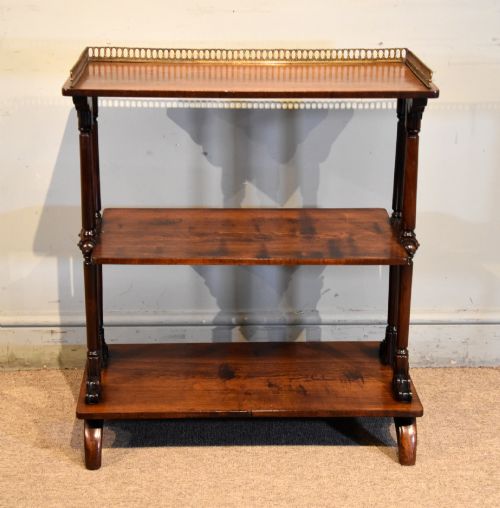
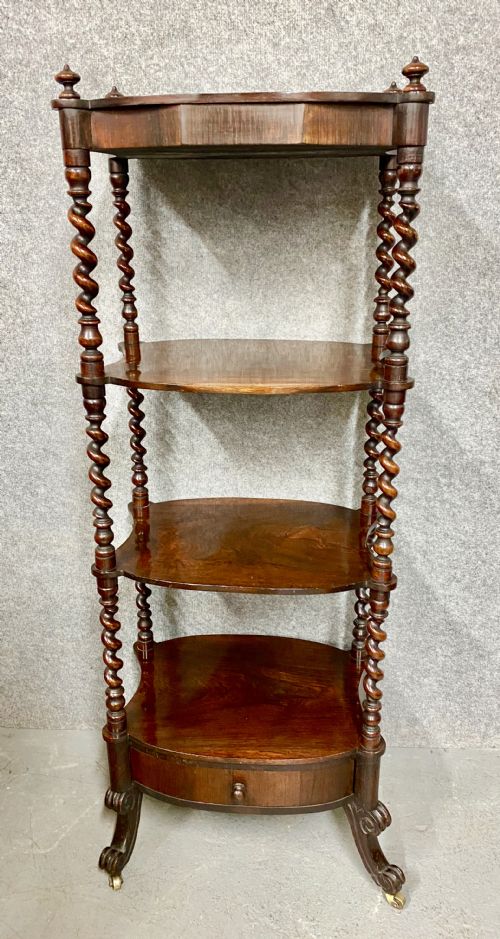
Makers utilised rosewood extensively, sometimes combining it with mahogany, brass mounts, glass, mirrors, and castors to create practical furniture for the parlour and drawing room. Certain examples integrate specialised functions such as reading stands, jardiniere plant tables, and dumb waiters.
What separates the grades
Quality rests upon the selection of timber, the crispness of turned supports, and the structural integrity of the stacked tiers. Pieces showing finer grain matching in the rosewood and sturdier joinery across multiple shelves occupy the upper end of the range.
The presence of secondary functions, such as integrated canterbury bases, brass binding, or fitted drawers, distinguishes more ambitious workshop production from simpler domestic shelving units.
Victorian Rosewood Whatnot Retail Price Guide 2026
Typical asking prices for victorian rosewood whatnot among the pieces listed under this phrase on Sellingantiques today, from the lower quarter to the upper quarter. They describe what is for sale here now, not the wider market.
Listings feature rosewood and mahogany pieces incorporating three to six tiers, corner designs, and integrated brass castors.
Samson and Son London·Gillows
The Victorian Rosewood Whatnot Glossary
- Whatnot
- An open multi-tiered piece of furniture designed for displaying ornaments, books, and objects. These items became popular during the nineteenth century for drawing room use.
- Étagère
- A set of open shelves for displaying small objects and ornaments. The term is frequently used interchangeably with whatnot in nineteenth-century cabinet work.
- Canterbury
- A low stand featuring partitioned sections for holding sheet music, books, or newspapers. Many nineteenth-century examples combine this function with upper whatnot shelves.
- Barley twist
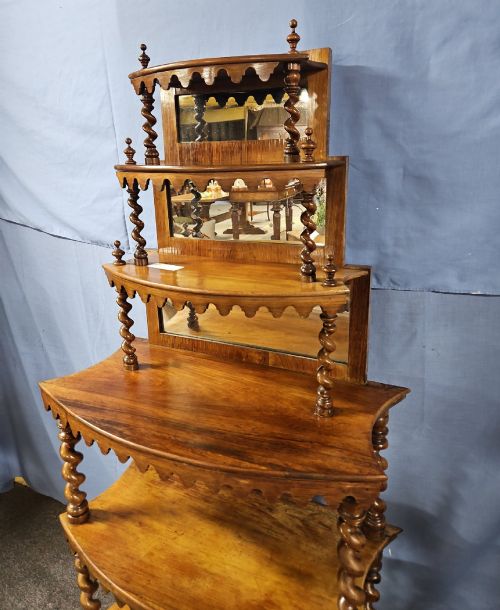
- A carved spiral column or leg resembling the shape of twisted barley. This decorative turning appears frequently on nineteenth-century supports and uprights.
- Castor
- A small wheel attached to the base of furniture legs to ease movement. Brass castors are commonly found on nineteenth-century freestanding examples.
Victorian Rosewood Whatnot: Frequently Asked Questions
What is a whatnot used for?
These tiered pieces served nineteenth-century households as open storage for books, ceramic ornaments, and decorative items. They occupied corners and walls in drawing rooms where floor space remained at a premium.
Certain variations incorporated specialised lower compartments, functioning as music stands, newspaper racks, or serving surfaces. Today, they continue to provide practical open display shelving for domestic interiors.
How do I tell a corner whatnot apart?
Corner units feature triangular shelves designed to fit directly into ninety-degree room angles. They save floor space while utilising vertical areas that standard rectangular furniture leaves empty.
Freestanding rectangular and circular versions possess four finished sides and stand away from walls. They require central placement or open floor areas to display their turned columns and uprights from all angles.
What is a canterbury whatnot?
A canterbury whatnot combines open display shelves on top with slotted partitions beneath. The lower section provided storage for sheet music, newspapers, and periodicals.
Cabinet makers integrated these functions during the mid-nineteenth century to serve musical households. The resulting dual-purpose furniture kept reading materials tidy while supporting decorative ornaments above.
How do I date a rosewood whatnot?
Dating relies on stylistic shifts across the nineteenth century, moving from heavy Regency and William IV forms to lighter Victorian designs. Elements such as barley twist columns, brass castors, and inlaid decoration offer clues to the decade of manufacture.
Earlier pieces from the early nineteenth century often display simpler structural lines before ornate carved tiers and mirrored backs gained popularity in the eighteen-fifties and sixties.