

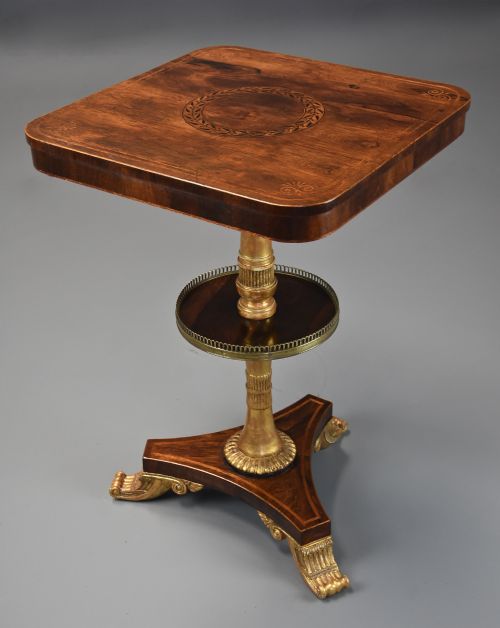


Rosewood Tiered Stand
A rosewood tiered stand brings layered display space to a room, using rich timbers and multiple levels for books, plants, and ornaments.
Rosewood Tiered Stand
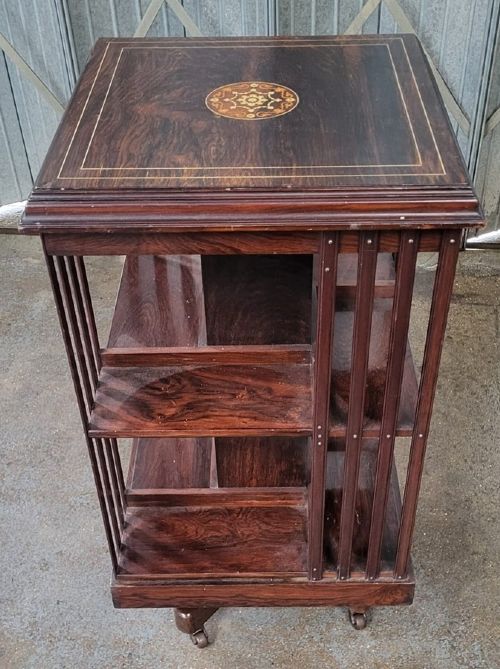
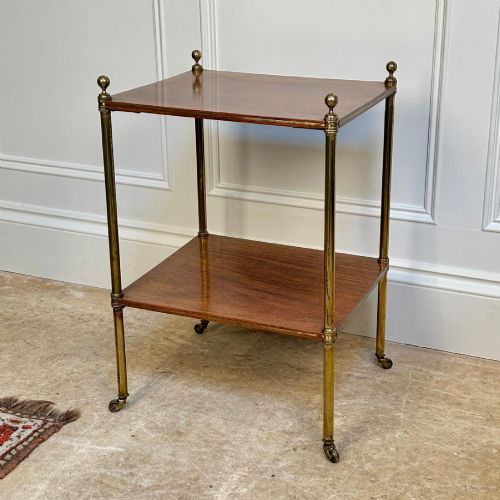
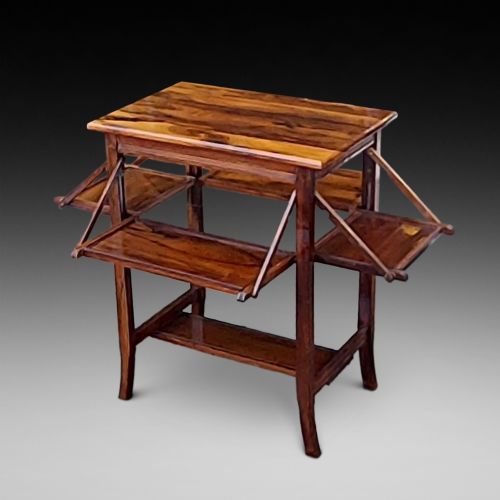
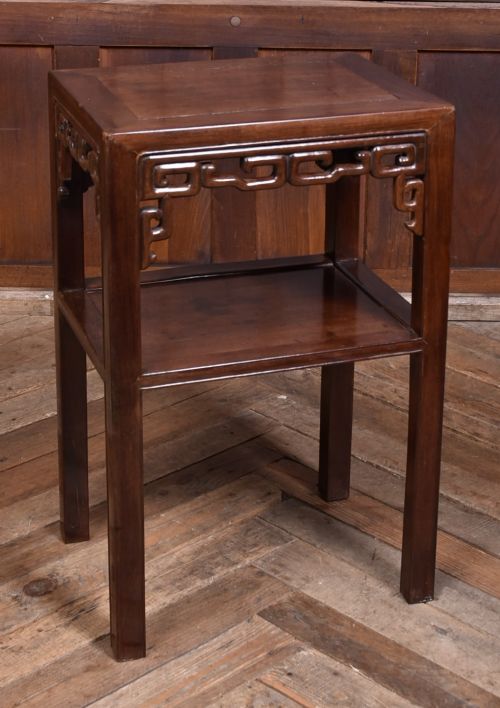
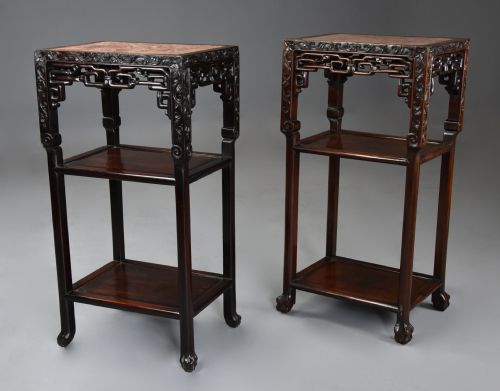
When you search for a rosewood tiered stand, you encounter pieces primarily from the Regency, Victorian, and Edwardian periods, alongside Chinese hardwood examples. These multileveled forms include whatnots, etageres, and waterfall bookcases designed to hold books, plants, and decorative objects.
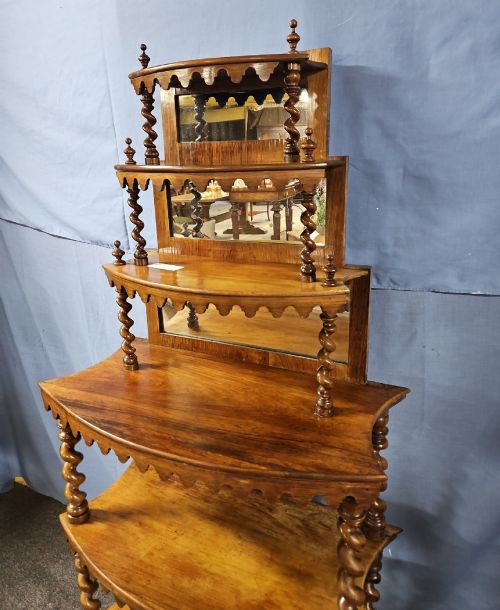
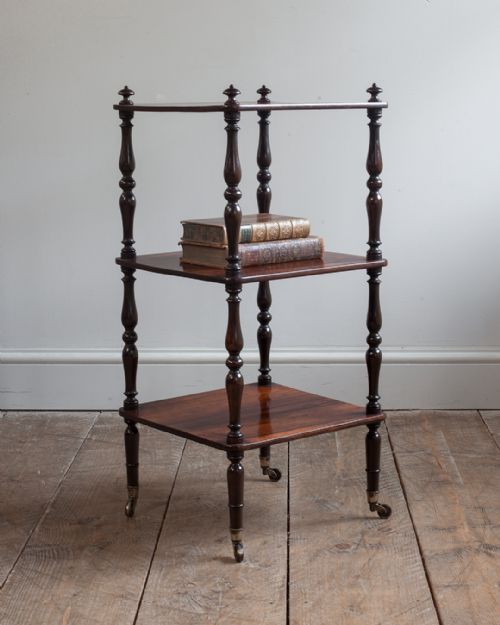
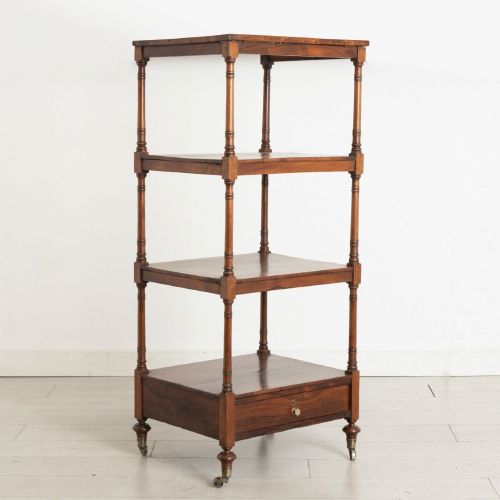
The most frequent form on this page is the whatnot, spanning small three-tier designs up to substantial six-tier shelving units. These stands serve as functional display furniture intended to utilise vertical space efficiently in domestic rooms.
How they were made
Cabinet makers utilised dense rosewood and exotic hardwoods, often selecting timber with rich grain patterns for visible surfaces. Construction frequently incorporated turned supports, delicate brackets, and tiered platforms to distribute weight across multiple levels.
Many pieces feature decorative additions such as brass mounts, ormolu details, marble inserts, and intricate marquetry inlay. French style and Chinese Qing style examples demonstrate varied joining techniques, from traditional pegged frames to fine cabinetry joints.
Object forms include side tables, whatnots, bookcases, etageres, plant stands, and shelving units.
What varies in quality
The standard of timber selection sets apart finer examples, with superior pieces displaying rich, well-matched grain across every tier. Cabinetmaking distinction shows in the crispness of turned supports, the precision of marquetry inlay, and the integration of quality brass or ormolu mounts.
Structural integrity dictates value at the upper end of the range, where tiers remain completely level and firm despite supporting heavy books or marble tops. Maker attribution and documented provenance further elevate certain pieces above standard commercial production.
Edwards & Roberts·Samson & Son London·Gillows·George Bullock
The Rosewood Tiered Stand Glossary
- Whatnot
- A piece of furniture with multiple open shelves or tiers for displaying ornaments or books. Originating in the late eighteenth century, it became a staple of Victorian interiors.
- Etagere
- A piece of furniture consisting of a number of open shelves for displaying small objects. This French form often incorporates delicate inlay and mirrored backs.
- Marquetry
- Decorative woodwork in which pieces of finely tinted wood and other materials are fitted into a veneer to form designs. This technique decorates the surfaces of many nineteenth-century tables.
- Ormolu
- Gilded bronze used for decorative mounts on furniture. It provides bright metallic contrast against dark rosewood and hardwood surfaces.
Rosewood Tiered Stand: Frequently Asked Questions
What is a rosewood tiered stand used for?
These pieces provide multiple open levels to display books, ceramics, and plants within a living space.
Historically, they functioned as versatile storage furniture in drawing rooms and parlours where floor space was at a premium.
How do I identify a Regency period stand?
Regency stands often feature classical proportions, rosewood timbers with dark grain, and restrained brass detailing.
They frequently date from the early nineteenth century and rely on architectural turned columns rather than heavy carving.
Are Chinese hardwood stands different from Victorian ones?
Chinese hardwood stands typically utilise dense native timbers like zitan or huanghuali with distinct joinery and carved details.
Victorian pieces lean towards European Revival styles, incorporating marquetry inlay, ormolu mounts, and tiered pine or hardwood carcases veneered in rosewood.
How do I care for antique rosewood furniture?
Keep these stands away from direct sunlight and strong heat sources to prevent the rosewood veneer from drying and cracking.
Dust regularly with a dry cloth and apply a microcrystalline wax sparingly when the timber appears dry.