
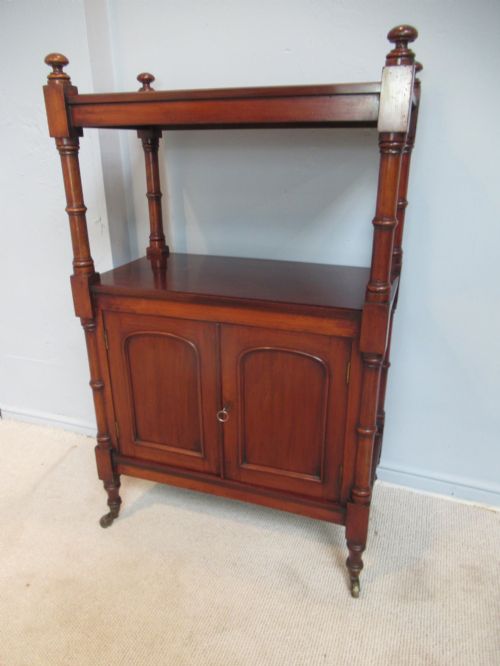


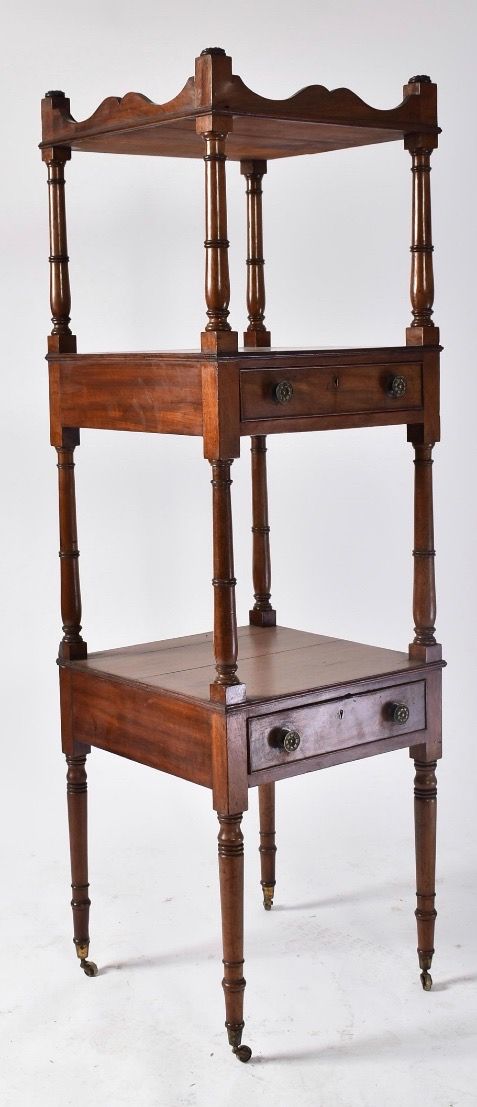
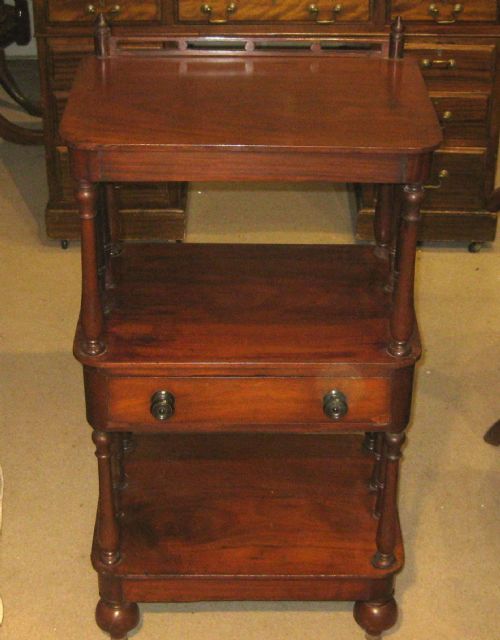

Mahogany Tiered What Not
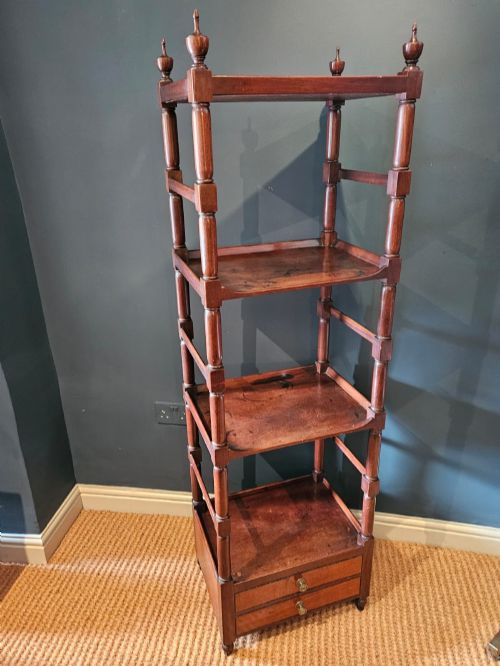
A mahogany tiered what not provides open display and storage across stacked shelves, making it a practical choice for organising books and ornaments.
Mahogany Tiered What Not
When searching for a mahogany tiered what not, you encounter multi-tiered shelving units designed for domestic display and utility. These pieces originate from periods spanning the Georgian, Regency, William IV, and Victorian eras.
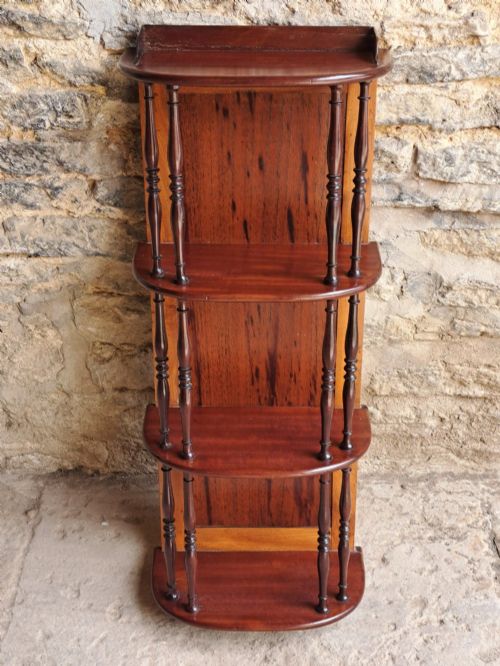
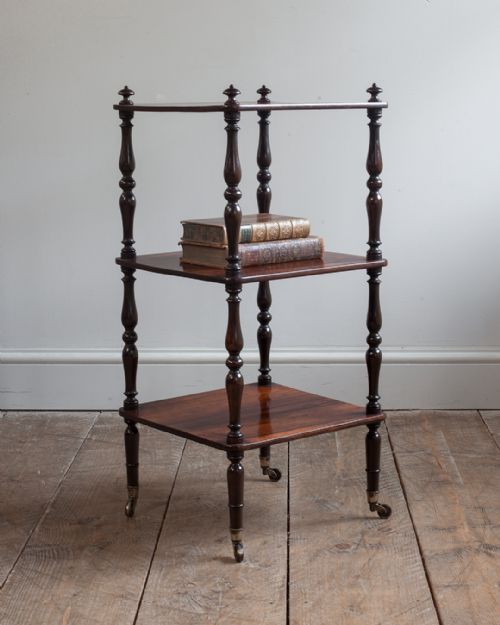
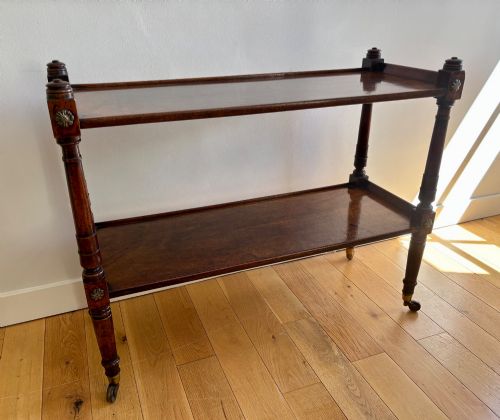
The form typically manifests as freestanding structures with three or four ascending shelves, occasionally incorporating single drawers or folding mechanisms. You also find related forms such as etageres, dumb waiters, and wall-mounted shelving units within the selection.
Most examples rely primarily on mahogany timber, sometimes enriched with rosewood, walnut, cane, or marquetry veneers. Their proportions range from compact bedside units to taller four-tier bookcases suitable for living spaces.
How they were made
Cabinet makers constructed these units using solid mahogany and supportive brass fittings, applying veneers of rosewood or walnut where decorative surfaces were required. Timber selection focused on grain figure and structural stability to support multiple stacked platforms.
Joinery techniques involved precise turning for upright supports and secure joints for tier assembly, occasionally integrating folding mechanisms or drawer boxes. Surface finishing relied on traditional polishing methods that highlighted the natural depth and reddish-brown tone of the mahogany.
Some Victorian examples include folding tiers designed to collapse flat, proving that clever space-saving furniture existed long before modern flats.
What varies in quality
Quality in a mahogany tiered what not rests on the crispness of the turning on the upright columns and the neatness of the joinery connecting each tier. Finer pieces demonstrate careful timber selection, where the mahogany grain matches harmoniously across the visible shelves and supports.
The presence of secondary materials such as brass castors, subtle inlay, or marquetry veneers distinguishes superior examples from plain utility pieces. Proportion and scale also dictate worth, with compact formats or unusual configurations commanding greater interest from collectors.
The Mahogany Tiered What Not Glossary
- Whatnot
- A piece of furniture consisting of a set of open shelves for displaying small objects or books. It developed in the late 18th century and remained popular through the Victorian period.
- Etagere
- A French term for a piece of furniture with a series of open shelves for displaying ornaments. These often mirror the multi-tiered construction found in English whatnots.
- Dumb waiter
- A tiered piece of furniture traditionally used for holding food or tableware without the need for servants. Folding variants allowed for convenient storage when not in use.
- Marquetry
- The art and craft of applying pieces of veneer to a structure to form decorative patterns. Artisans utilised contrasting woods to create intricate surface designs.
- Regency
- An architectural and decorative style spanning the early 19th century in Britain. Pieces from this era often feature classical restraint combined with elegant proportions.
Mahogany Tiered What Not: Frequently Asked Questions
What is a mahogany tiered what not?
A mahogany tiered what not is a multi-shelved shelving unit designed for displaying books, ceramics, and ornaments in domestic interiors.
Originating in the Georgian and Regency periods, these pieces evolved through the Victorian era to serve both decorative and practical storage functions.
How were whatnots used originally?
Originally placed in drawing rooms or parlours, these units held decorative items, writing materials, and current reading matter.
Their open construction allowed owners to showcase prized possessions within easy reach of seating areas.
How do I date a mahogany what not?
Dating relies on examining the turning style of the upright supports, the cabinet construction methods, and the primary timber characteristics.
Georgian and Regency examples typically display finer proportions and restrained classical details, whereas Victorian versions often feature heavier timber scantries.
Where should I place a what not at home?
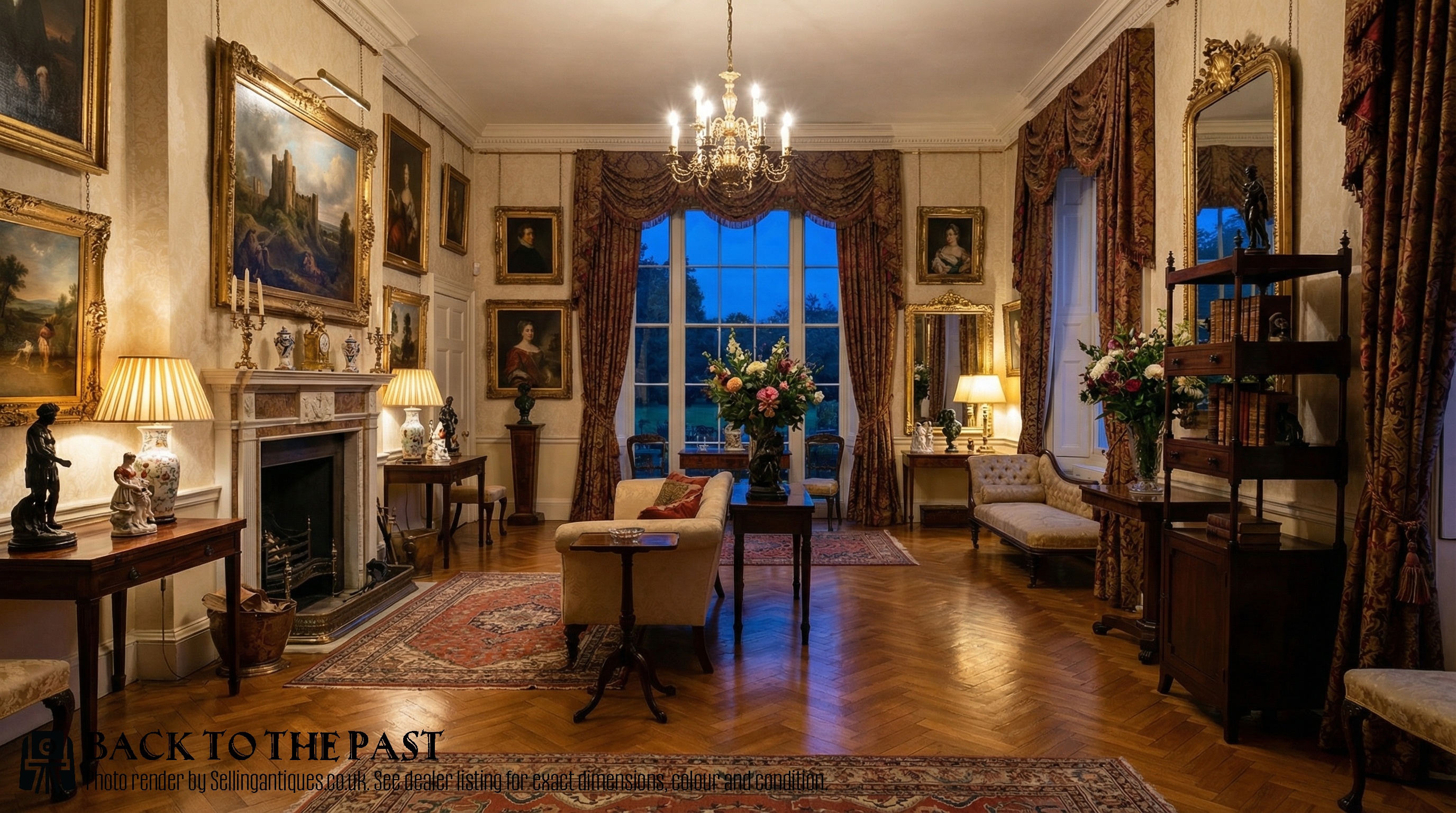
These units suit corners or flat walls in living rooms, studies, or hallways where vertical display space is needed without blocking light.
Their slender profiles make them effective for organising books or collections in compact rooms.