
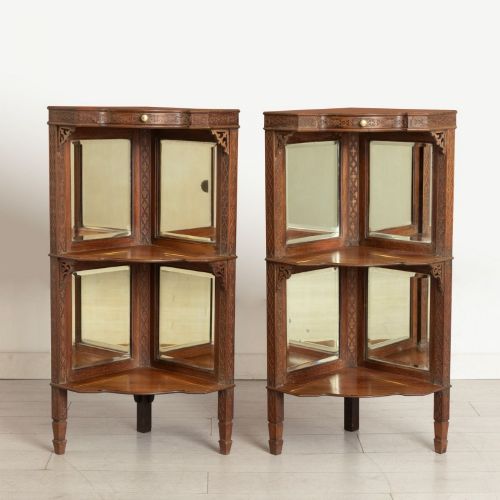
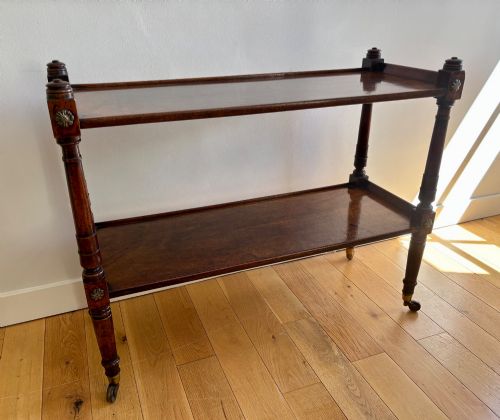


Mahogany Open Etagere
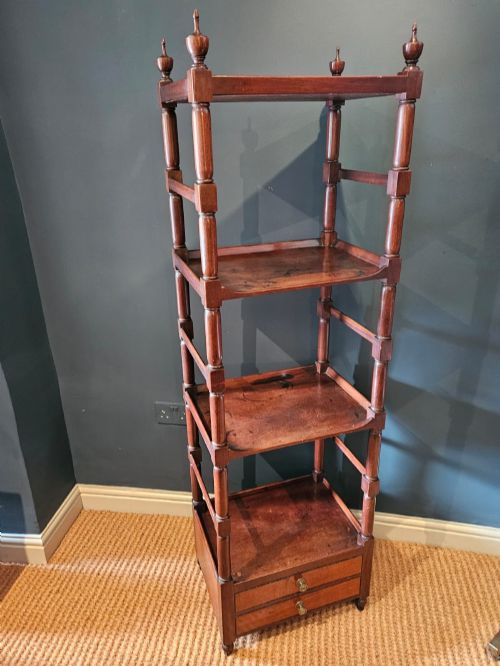
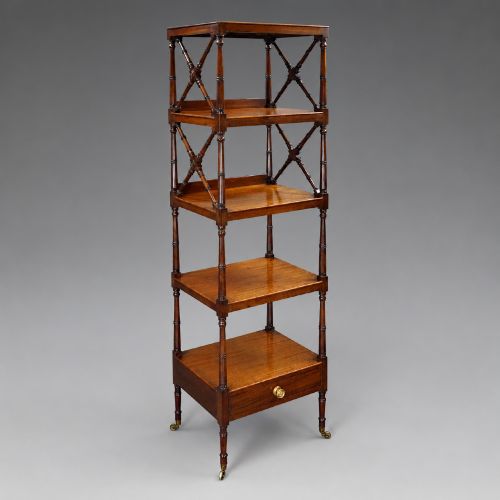
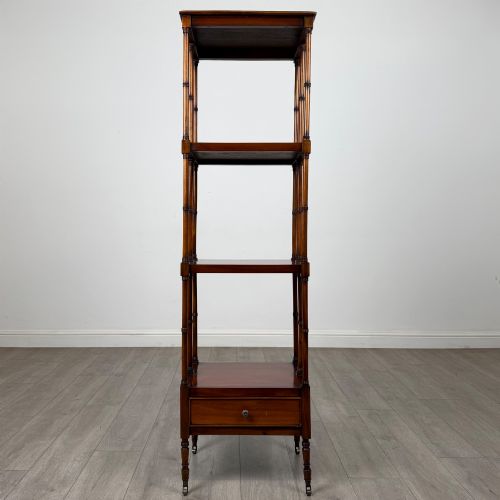
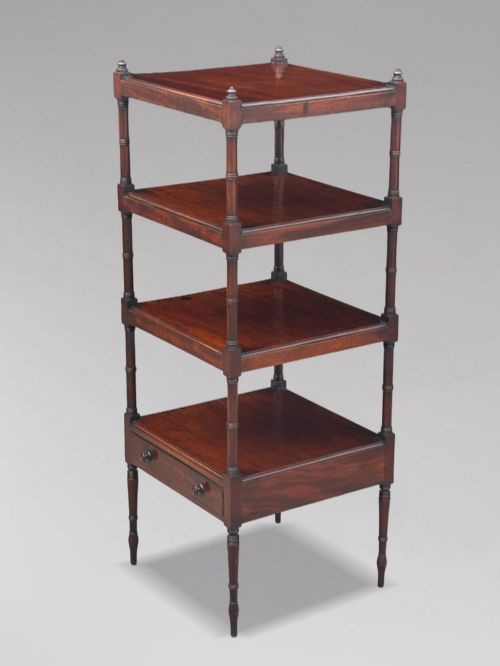
Mahogany open etagere pieces are tiered display shelves providing open storage, sought after for displaying books and collections in period interiors.
Mahogany Open Etagere
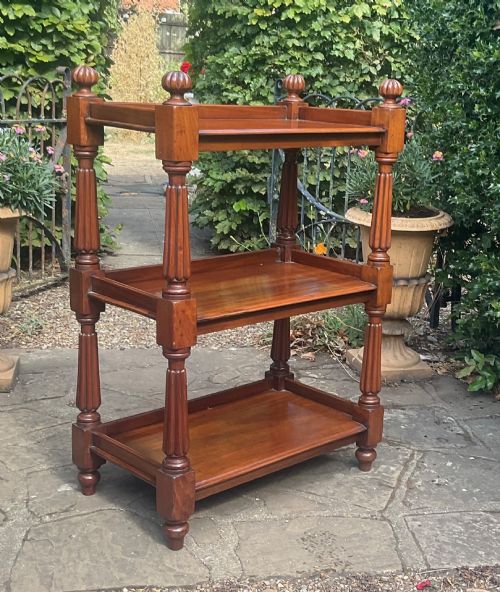
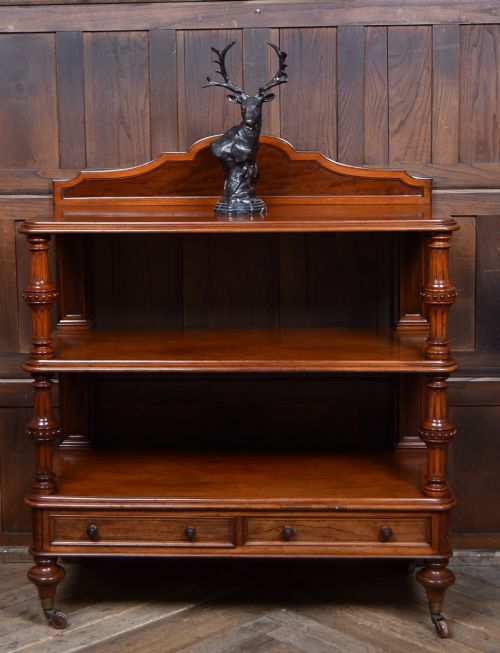
A mahogany open etagere is a multi-tiered freestanding shelving unit designed for displaying decorative objects, books and collections. Buyers searching for a mahogany open etagere will encounter items categorized as what-nots, bookcases, shelving units and music stands from the Georgian, Regency, Victorian and Edwardian eras.
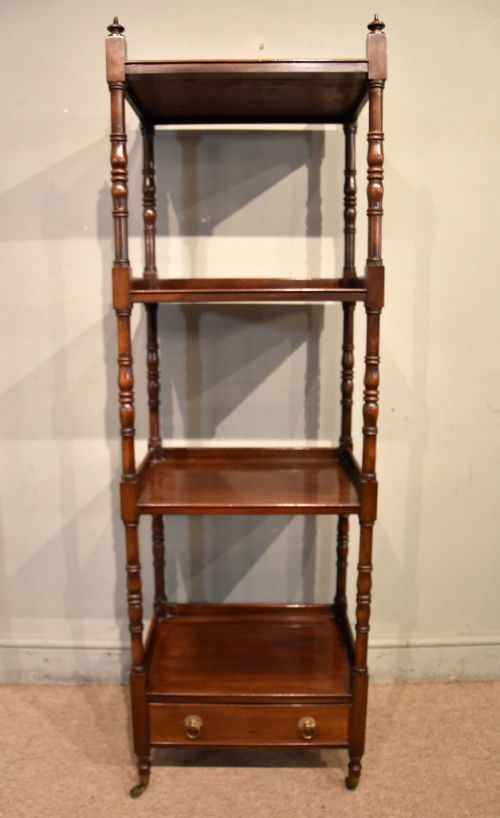
The most common formats found on this page are three-tier and four-tier upright shelving stands, alongside corner versions and pieces fitted with lower drawers. These items originate from the late eighteenth century through to the early twentieth century, reflecting shifting domestic tastes for open display furniture.
Makers and designers produced these open stands in varying heights and footprints, ranging from slender slimline buffets to tall freestanding display towers. The integration of open shelves defines the group, offering immediate visual access to the objects placed upon them.
Quality variations across periods
Quality in these tiered shelves rests upon the selection of timber grain, the crispness of turned supports and the overall architectural proportion of the tiers. Examples from the George III and Regency periods often demonstrate finer joinery and more balanced graduation between shelf levels than later mass-produced Victorian equivalents.
The inclusion of functional drawers, integrated mirror glass backs or unusual formats such as A-frame designs elevates the character of a piece. Finer examples balance structural stability with delicate vertical supports, whereas utilitarian items prioritize robust daily storage over decorative refinement.
Several Victorian examples roll easily across the carpet on tiny original brass castors.
Edwards & Roberts
The Mahogany Open Etagere Glossary
- Etagere
- A piece of furniture consisting of a set of open shelves for displaying small objects or ornaments. These tiers allow items to be viewed from multiple angles.
- Veneer
- A thin layer of finer wood applied to a base timber surface to provide decorative grain patterns. Cabinet makers utilised mahogany veneers to achieve rich surface figures on larger panels.
- Castor
- A small wheel mounted on a swivel attached to the base of furniture feet. Original brass castors assist the movement of heavy tiered display stands.
- Tier
- A single level in a stacked structure of shelves. Graduated tiers decrease in depth from bottom to top.
Mahogany Open Etagere: Frequently Asked Questions
What is a mahogany open etagere used for?
These tiered stands served historically for displaying porcelain, silver and books within sitting rooms and drawing rooms. Today they function similarly in modern interiors to hold decorative objects and collected volumes.
The open design allows light to pass through the shelves, making them suitable for placement against walls or as freestanding room dividers.
How do I tell a Georgian etagere from a Victorian one?
Georgian and Regency versions typically exhibit lighter proportions, restrained classical turning on the support columns, and finer timber selection. They often date from around 1800 to 1820.
Victorian pieces tend to be heavier in construction, occasionally incorporating mirrors, lower drawers or more elaborate decorative mouldings reflecting later nineteenth-century manufacturing trends.
Are these pieces stable enough for heavy books?
Most tier units were built to support decorative ceramics and lighter volumes rather than heavy reference libraries. The top shelves are narrower and carry less weight than the broader lower tiers.
Placing heavier books on the bottom shelf maintains the centre of gravity and ensures the freestanding structure remains secure on its feet.
What does a corner whatnot look like?
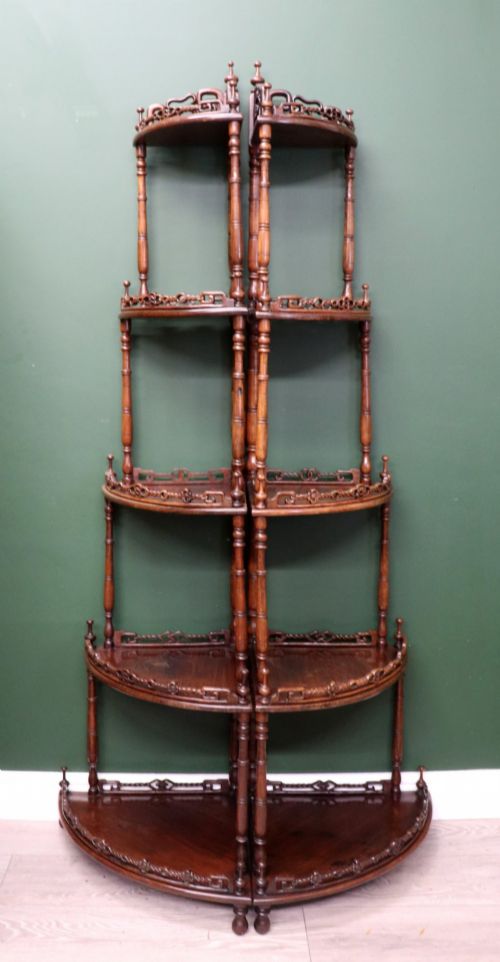
A corner whatnot is specifically shaped with a triangular footprint designed to fit snugly into the intersection of two walls. This configuration maximises unused room space while offering multiple open display shelves.
Surviving examples often appear as matched pairs, particularly within nineteenth-century interior arrangements.