


Pair of Etageres
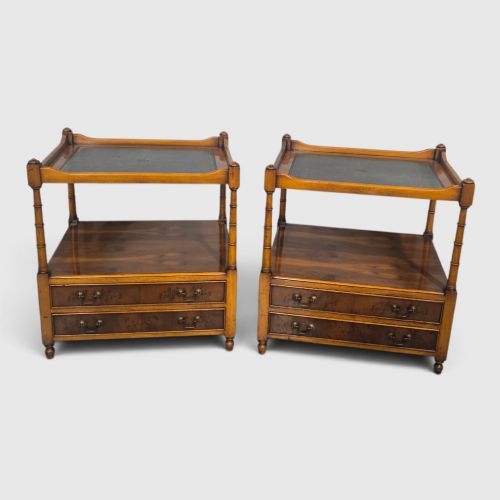
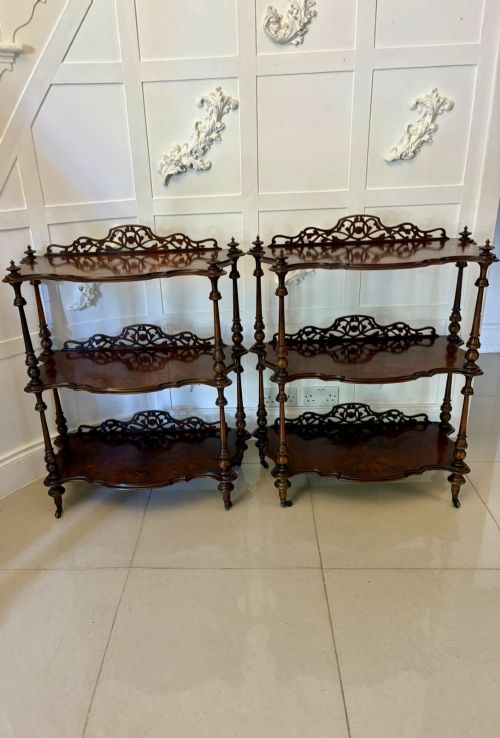
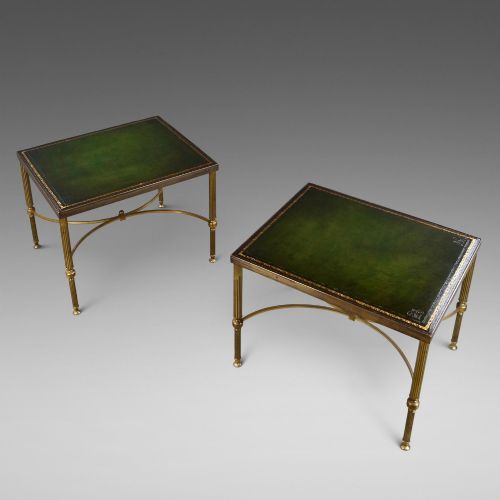
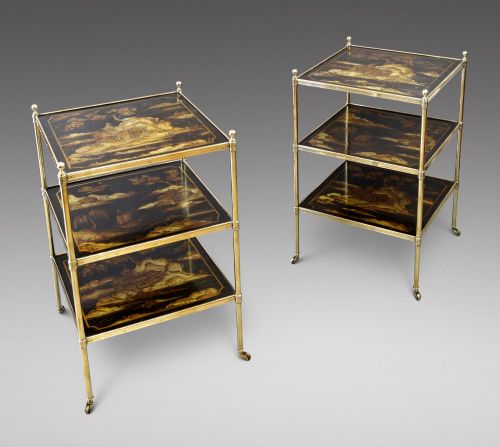
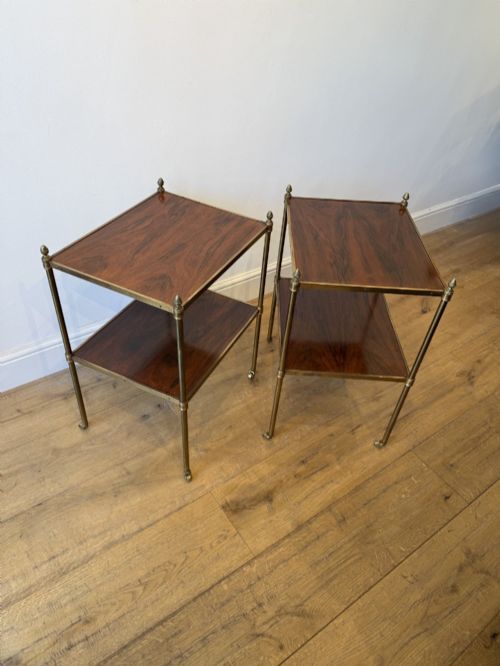
A pair of etageres brings tiered display space to a room, offering matching open shelving for objects in brass, mahogany, and walnut.
Pair of Etageres
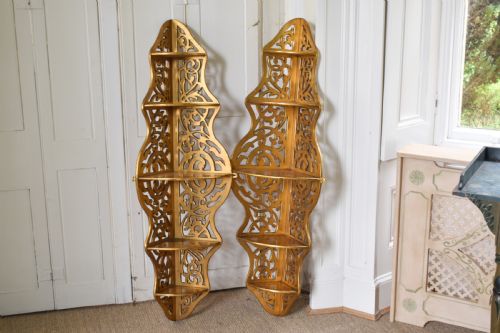
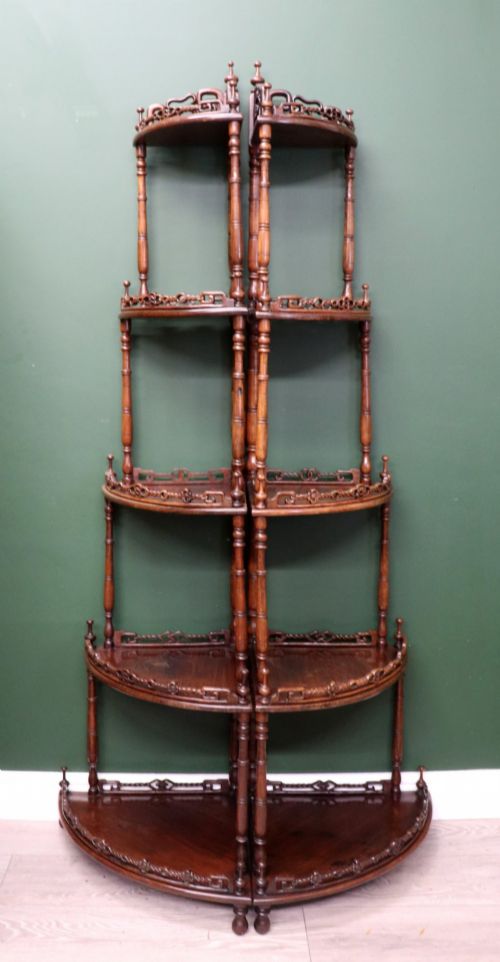
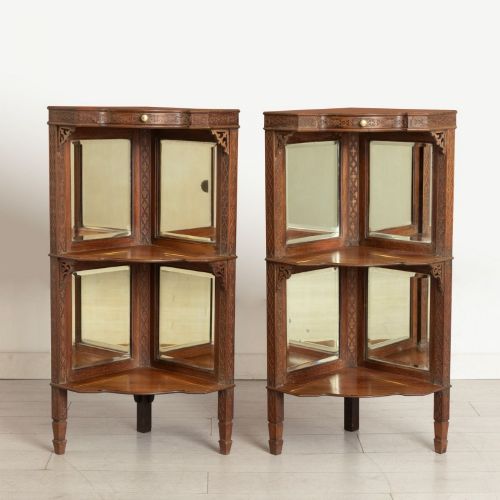
A pair of etageres comprises multi-tiered open shelving units designed for displaying small objects, books, and decorative items. These pieces appear in forms ranging from freestanding multi-tiered stands to corner units and side tables across the selection.
The pieces on this page span the 19th century, Victorian, Regency, and Edwardian periods, alongside later 20th-century examples. Mahogany, walnut, and brass frame constructions dominate the listings alongside specialised variants like corner shelves and wall-mounted units.
Materials and construction
Cabinet makers utilised dense hardwoods such as mahogany, walnut, rosewood, and yew, often embellished with marquetry inlay, giltwood, or burr veneers. These timber frames provide the structural support necessary for multi-tiered open shelving.
Metal components play a structural and decorative role, featuring cast brass frames, lacquered tubular brass, and gilt metal details. Some tiers incorporate inset tooled panel leather or marble tops to create durable surfaces for display.
Several listings provide just enough shelf space to display a delicate collection of porcelain figures or a single very important candlestick.
Distinctions in craftsmanship
Superior examples demonstrate meticulous timber selection, visible in the grain matching of burr walnut, mahogany, or satinwood panels. Finer pieces also display crisp marquetry work and robust brass framing rather than simpler turned wood structures.
The integration of secondary materials such as inset leather panels, bevelled glass, and finely cast brass mounts separates standard production items from workshop pieces bearing attribution to notable makers.
Mallett·Edwards & Roberts·Strahan of Dublin·Donald Ross·Maison Bagues·Whytock & Reid
The Pair of Etageres Glossary
- Etagere
- A piece of furniture consisting of a set of open shelves for displaying small ornaments. The form gained popularity in the 19th century as a decorative and practical multi-tiered stand.
- Whatnot
- A traditional British term for an open multi-shelf storage unit designed to hold books or ornaments. These pieces frequently appear in corner or freestanding formats.
- Marquetry
- Decorative woodwork where pieces of veneer are fitted into a design on a structural panel. Makers used contrasting timbers like satinwood and walnut to create geometric or floral patterns.
- Regency Style
- A design aesthetic reflecting the neoclassical tastes of early 19th-century Britain. Pieces in this style often incorporate classical motifs, rosewood, or brass inlay.
Pair of Etageres: Frequently Asked Questions
How were etageres originally used?
These tiered stands served as display furniture in drawing rooms and parlours for porcelain, silver, and decorative ornaments. Their open shelves kept favoured household objects visible and accessible.
Over time, owners adapted them to function as lamp tables, bedside stands, or bookcase alternatives depending on the room layout.
What is the difference between an etagere and a whatnot?
While both terms describe multi-tiered open shelving units, etagere often implies a lighter, French-influenced framework incorporating brass or marquetry. Whatnot is a traditional British designation frequently applied to corner or freestanding timber shelves.
In practice, makers and dealers have used both terms interchangeably across different periods to describe tiered display furniture.
How do I place a pair in a modern room?
A matching pair works well flanking a fireplace, framing a doorway, or placed symmetrically against a primary wall. Their open framework prevents them from visually crowding a space while providing balanced display surfaces.
Shorter versions function effectively as bedside tables or lamp stands, while taller multi-tiered pieces suit corners and empty wall expanses.
How can I tell a Victorian piece from a Regency one?
Regency pieces tend to feature cleaner neoclassical lines, darker rosewood or mahogany timbers, and restrained brass mounts. Victorian examples often showcase heavier proportions, burr walnut veneers, and more elaborate marquetry or turned supports.
Examining the construction methods, secondary timbers, and hardware fastenings helps clarify the period of manufacture.