




Nineteenth Century Whatnot
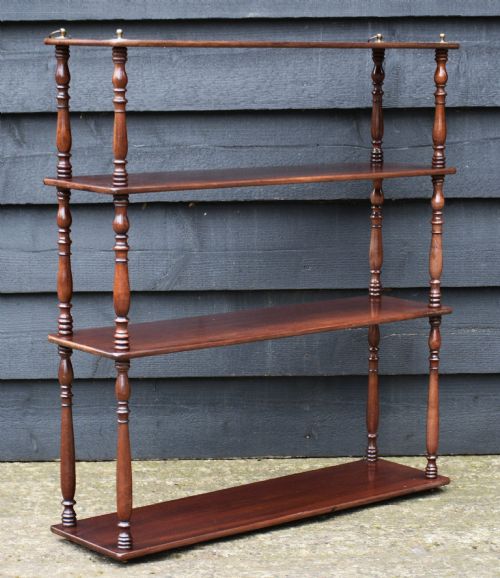
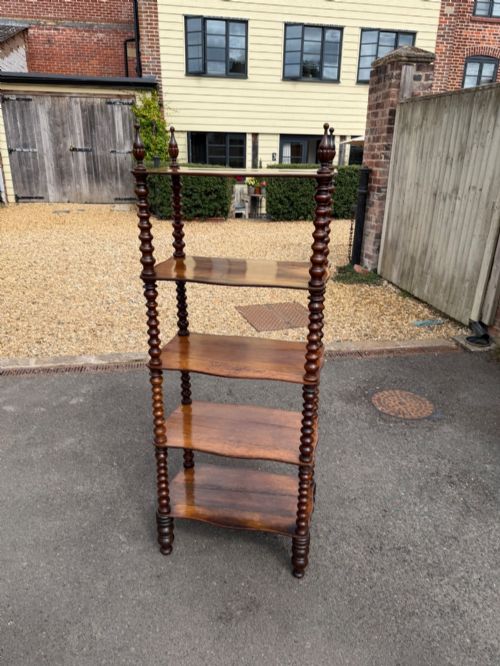
A nineteenth century whatnot is an open tiered display piece designed for holding books, ornaments and ceramics, bringing vertical elegance to a room.

Nineteenth Century Whatnot
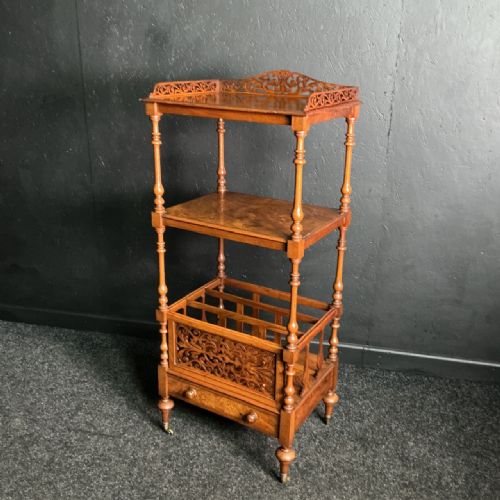
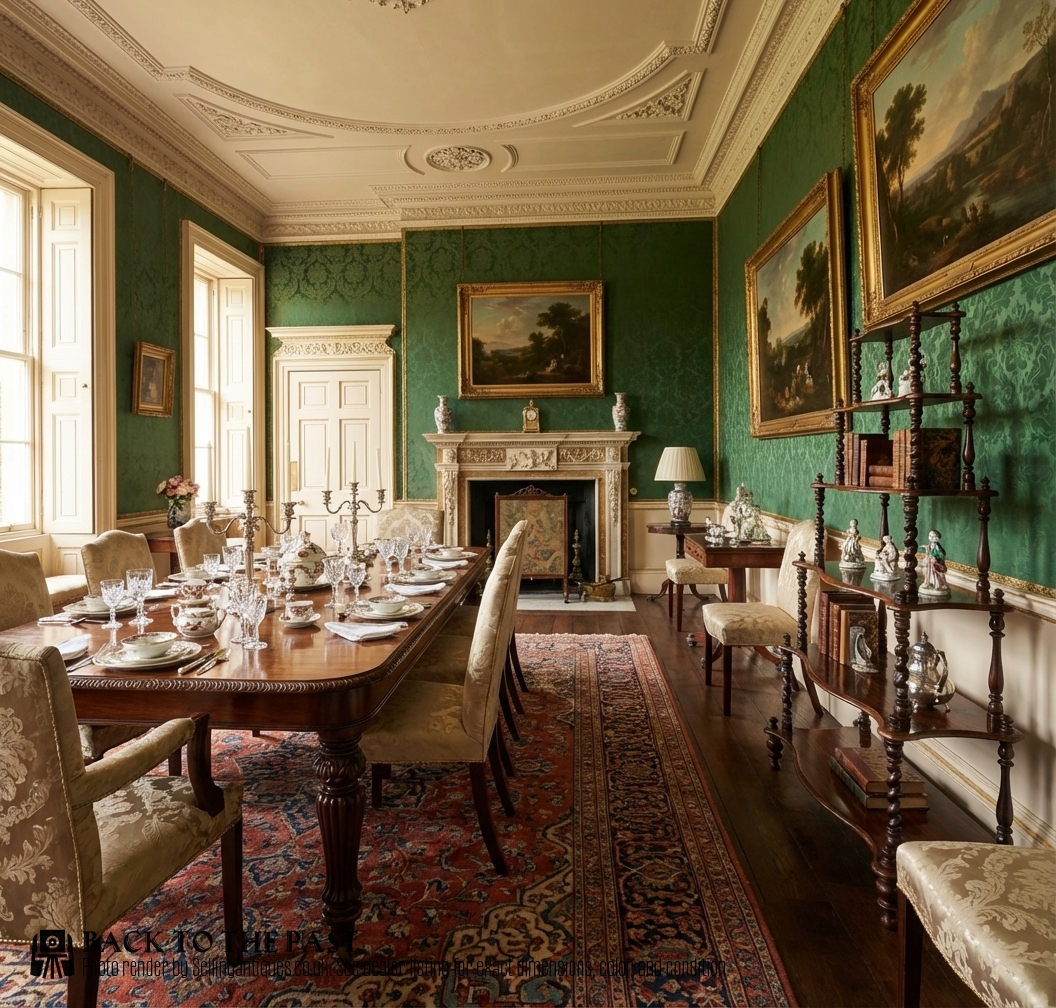
A nineteenth century whatnot is a multistoried shelving unit created to display decorative objects and organise smaller household items within domestic interiors. These pieces appear in various forms, including freestanding models, corner units, and designs incorporating lower cupboards or jewellery cabinets.
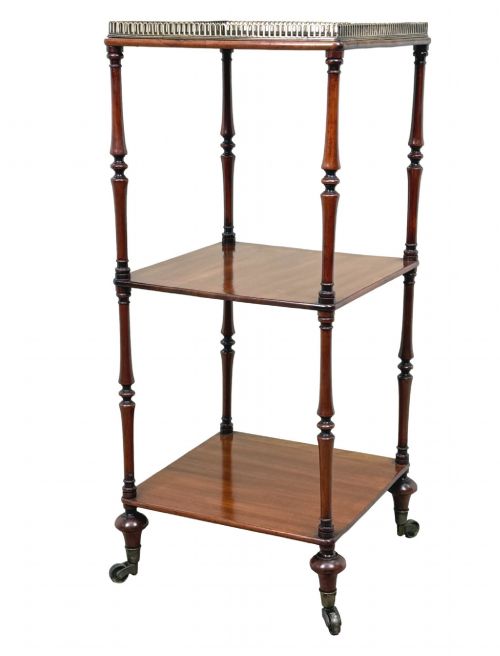
Most examples encountered here date from the Victorian and Regency periods, spanning multiple tiers supported by slender uprights. The form evolved to suit changing interior tastes, resulting in configurations ranging from three simple shelves to towering six tier stands and waterfall fronts.
Markers of Distinction
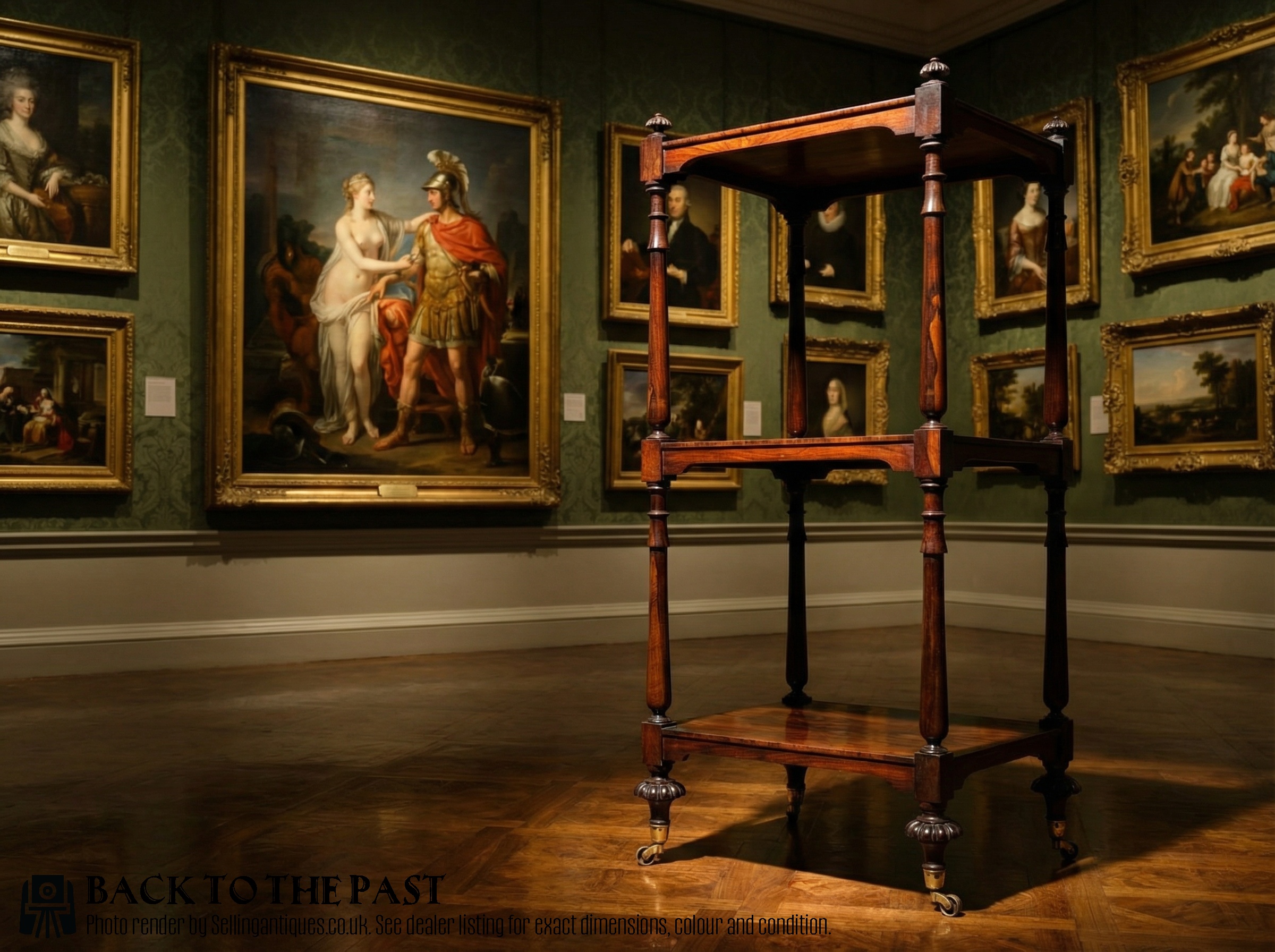
Quality in a nineteenth century whatnot rests on the selection of timber and the precision of the joinery connecting the tiers and supports. Finer examples display carefully matched veneers, delicate marquetry, and substantial secondary woods that ensure stability across multiple levels.
Proportion and scale dictate the visual success of the piece, with superior items balancing height against the delicate turnings of the upright posts. The inclusion of integrated drawers, cupboards, or high grade brass casters signals a more ambitious commission.
Nineteenth Century Whatnot Retail Price Guide 2026
Typical asking prices for nineteenth century whatnot among the pieces listed under this phrase on Sellingantiques today, from the lower quarter to the upper quarter. They describe what is for sale here now, not the wider market.
Listings feature woods such as mahogany, rosewood, walnut, and burr walnut, spanning the Georgian, Regency, and Victorian periods.
The Nineteenth Century Whatnot Glossary
- Whatnot
- A set of open shelves used for displaying ornaments, books, or china. The name arose simply because the shelves held 'what not'.
- Étagère
- A piece of furniture consisting of a set of open shelves for displaying small objects. This French term is frequently used interchangeably with whatnot.
- Marquetry
- Decorative veneer work formed by fitted pieces of various woods or other materials. It creates pictorial or geometric patterns on the surface.
- Ormolu
- Gilded bronze used for decorative mounts and furniture embellishments. The technique involves applying a mercury and gold amalgam to bronze.
- Waterfall front
- A tiered shelving arrangement where each successive shelf steps forward or curves downward. This design creates a cascading visual effect.
Nineteenth Century Whatnot: Frequently Asked Questions
What is a nineteenth century whatnot used for?
These pieces served primarily to display decorative ceramics, silver, and books in drawing rooms and parlours. They provided vertical storage without dominating the floor space.
Today, they continue to function well for displaying collections, plants, or photographs in contemporary homes.
How do I tell a Regency whatnot from a Victorian one?
Regency models often display cleaner classical lines, simpler柱 supports, and darker timbers like rosewood or early mahogany. They date from the early decades of the century.
Victorian versions frequently incorporate heavier carving, marquetry inlay, or revival influences such as Louis XV style curves and burr walnut veneers.
Are corner whatnots common?
Corner whatnots appear regularly, designed specifically to utilise unused room angles efficiently. They share the same tiered shelving construction as freestanding models.
These pieces fit neatly into smaller spaces while retaining the display capacity of larger rectangular units.
What timbers were used for these pieces?
Makers favoured dense hardwoods including mahogany, walnut, and rosewood for their strength and rich grain patterns. Burr walnut and satinwood provided striking decorative surfaces for finer commissions.
Secondary woods supported the internal structure, while brass and ormolu supplied metallic accents.