

Victorian Tiered Stand
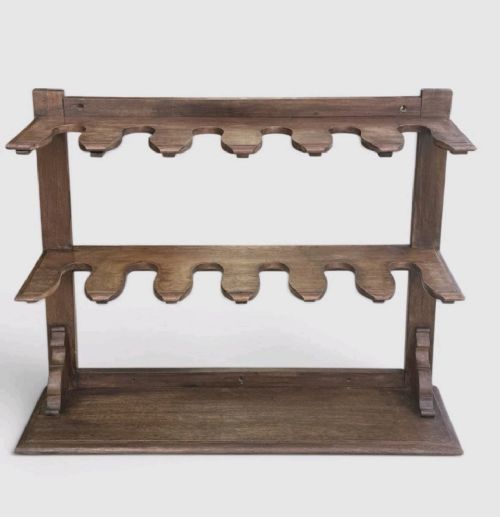
These Victorian tiered stand pieces bring practical display space to a room, offering multiple levels of timber and brass support for ornaments and books.
What a Victorian Tiered Stand Is
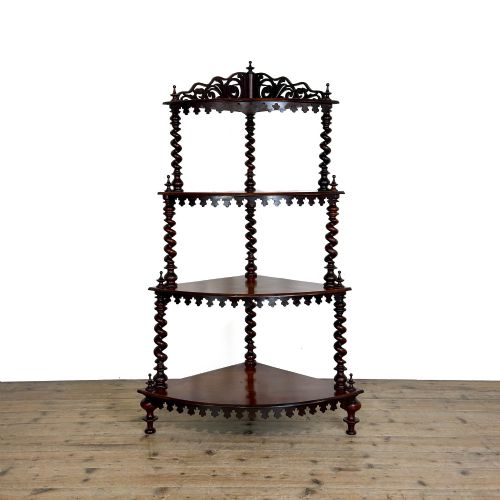
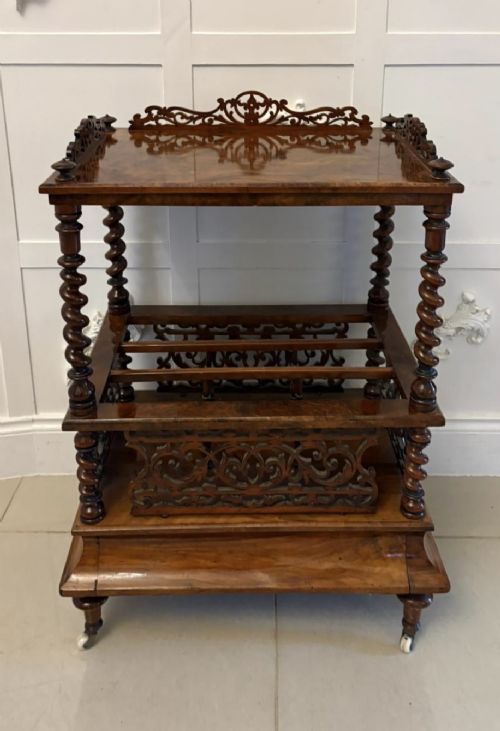
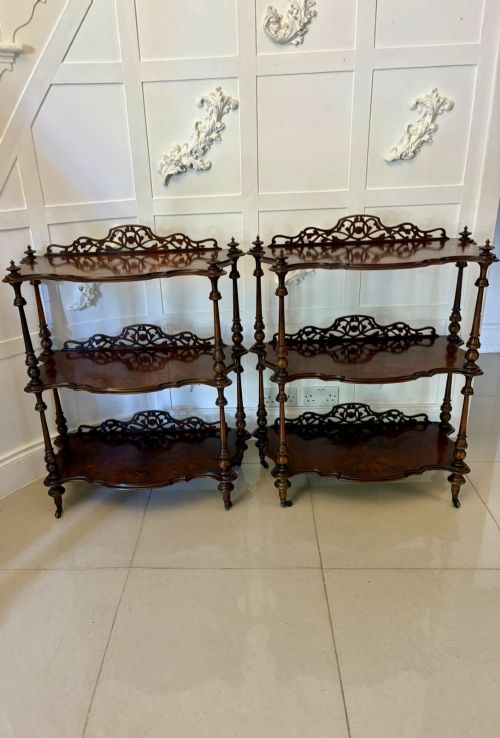
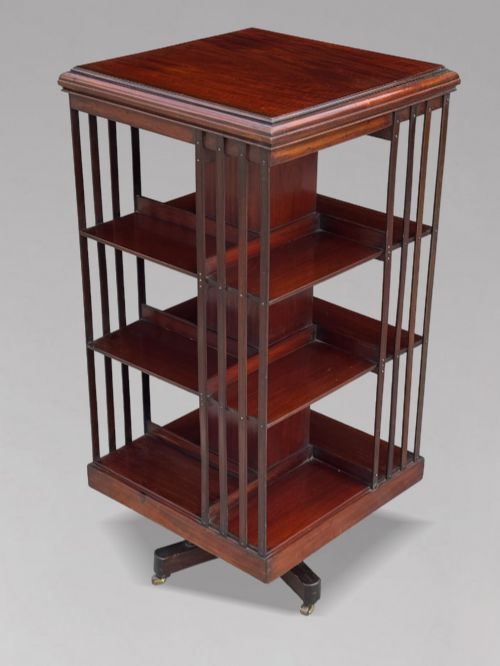
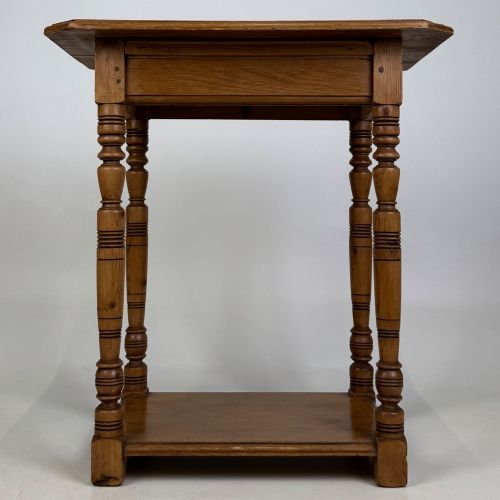
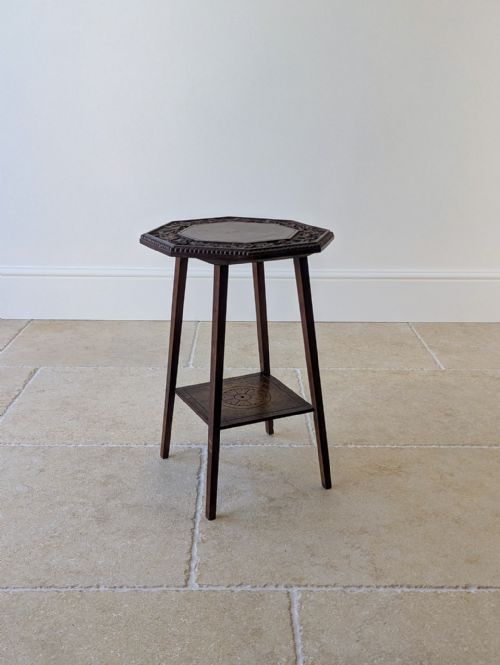
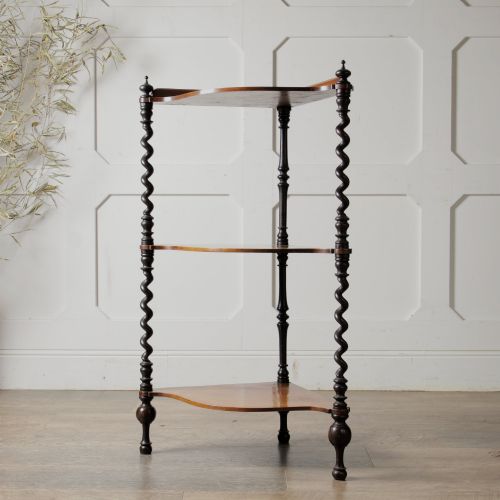
A Victorian tiered stand, often called a whatnot or étagère, serves as a multi-level display piece for the home. The selection spans pieces from the nineteenth century, including specific years like 1850 and 1890.
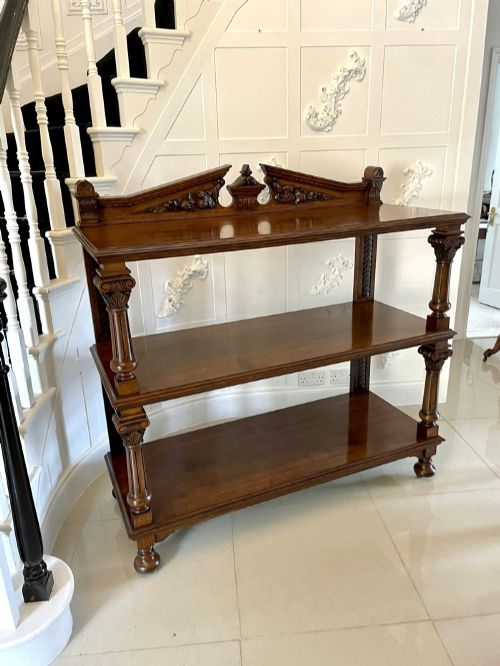
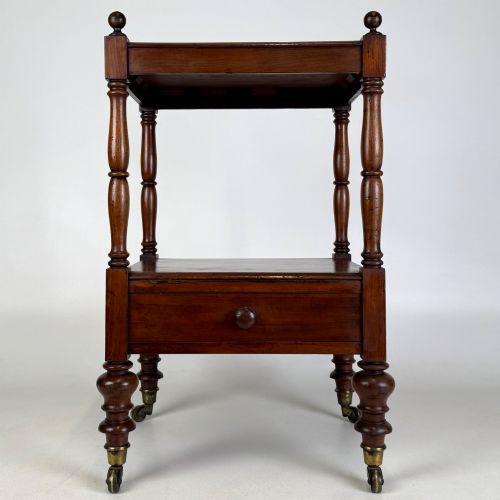
The primary forms include standard whatnots, display shelves, and specialised trolley designs with a cellarette. These items utilise multiple tiers supported by uprights, designed to hold books and decorative objects in a drawing room or study.
Materials and Construction
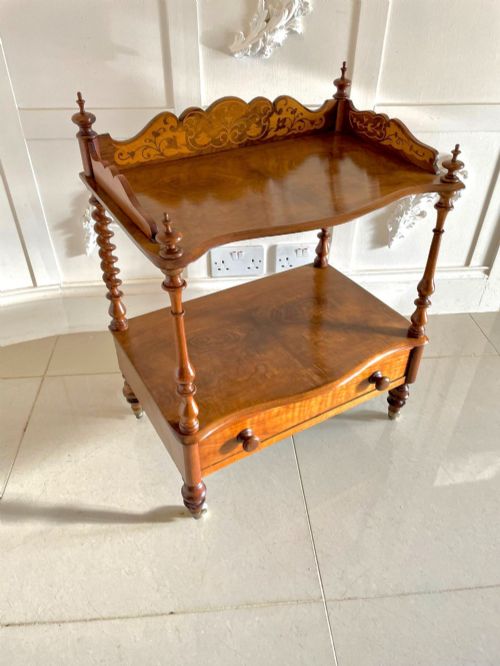
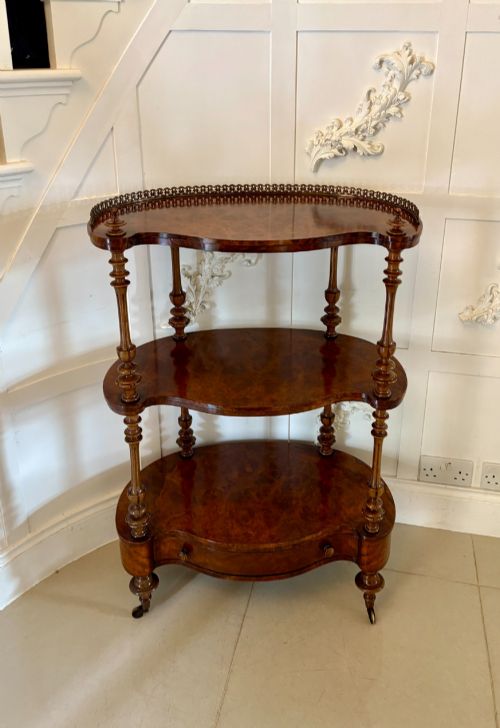
Cabinet makers constructed these stands using timber species such as burr walnut, standard walnut, mahogany, and rosewood. Some examples incorporate burr walnut veneer to create decorative figured surfaces on the shelves.
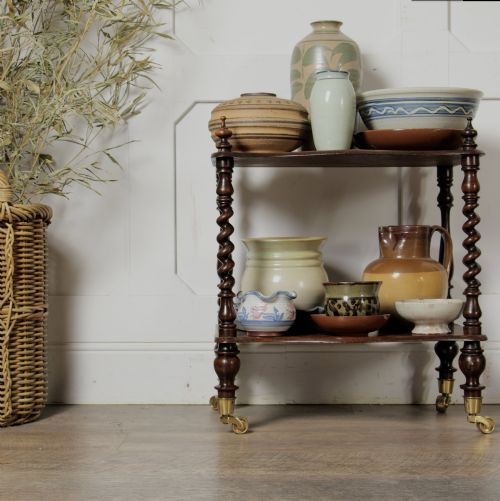
Metal elements in brass appear alongside the wooden structures, particularly in fittings and trolley configurations. Joinery and turning techniques define the upright supports that divide each tier.
Retail Price Guide 2026
Typical UK retail prices for victorian tiered stand, calculated from the Sellingantiques database of over a million retail prices indexed since 2003. This retail price guide relies exclusively on Sellingantiques data; no external sources or auction records are used, so the figures do not describe the wider market.
Some stands came equipped with a cellarette, ensuring the books stayed within arm's reach of the port.
Judging Quality and Distinction
Quality separates standard production from exceptional pieces through the selection of timber veneers, such as richly figured burr walnut. Finer items display serpentine shaping and superior turning on the upright supports.
The integration of functional additions like cellarettes or butler trolley wheels elevates the utility and design complexity of a stand. Refined edge moulding and balanced proportions between the tiers indicate superior cabinet work.
The Victorian Tiered Stand Glossary
- Whatnot
- A piece of furniture with shelves for small objects, books, or ornaments. This form became popular during the nineteenth century.
- Étagère
- A piece of furniture consisting of a set of open shelves for displaying small articles. These items often feature decorative woodwork.
- Cellarette
- A cabinet or compartment used for holding bottles of wine or spirits. Some multi-tier pieces incorporate this feature into their base.
- Burr walnut
- A wood obtained from the burl of a walnut tree, highly prized for its swirling grain patterns. Cabinet makers utilised this material for decorative veneer panels.
- Serpentine
- A curved line of furniture shaping that undulates inward and outward. This profile appears on superior nineteenth-century shelves.
Frequently Asked Questions
What is a Victorian tiered stand?
A Victorian tiered stand is an open-shelved piece of furniture designed for displaying ornaments, books, and small household items across multiple levels.
These pieces date from the nineteenth century and appear in forms such as whatnots, etageres, and butlers trolleys.
What woods were used for these stands?
Cabinet makers utilised a range of timbers including mahogany, walnut, burr walnut, and rosewood. Burr walnut veneer was often applied to create decorative figured surfaces.
Brass components also feature in the construction of certain trolley and stand designs.
How do I use a whatnot in a room?
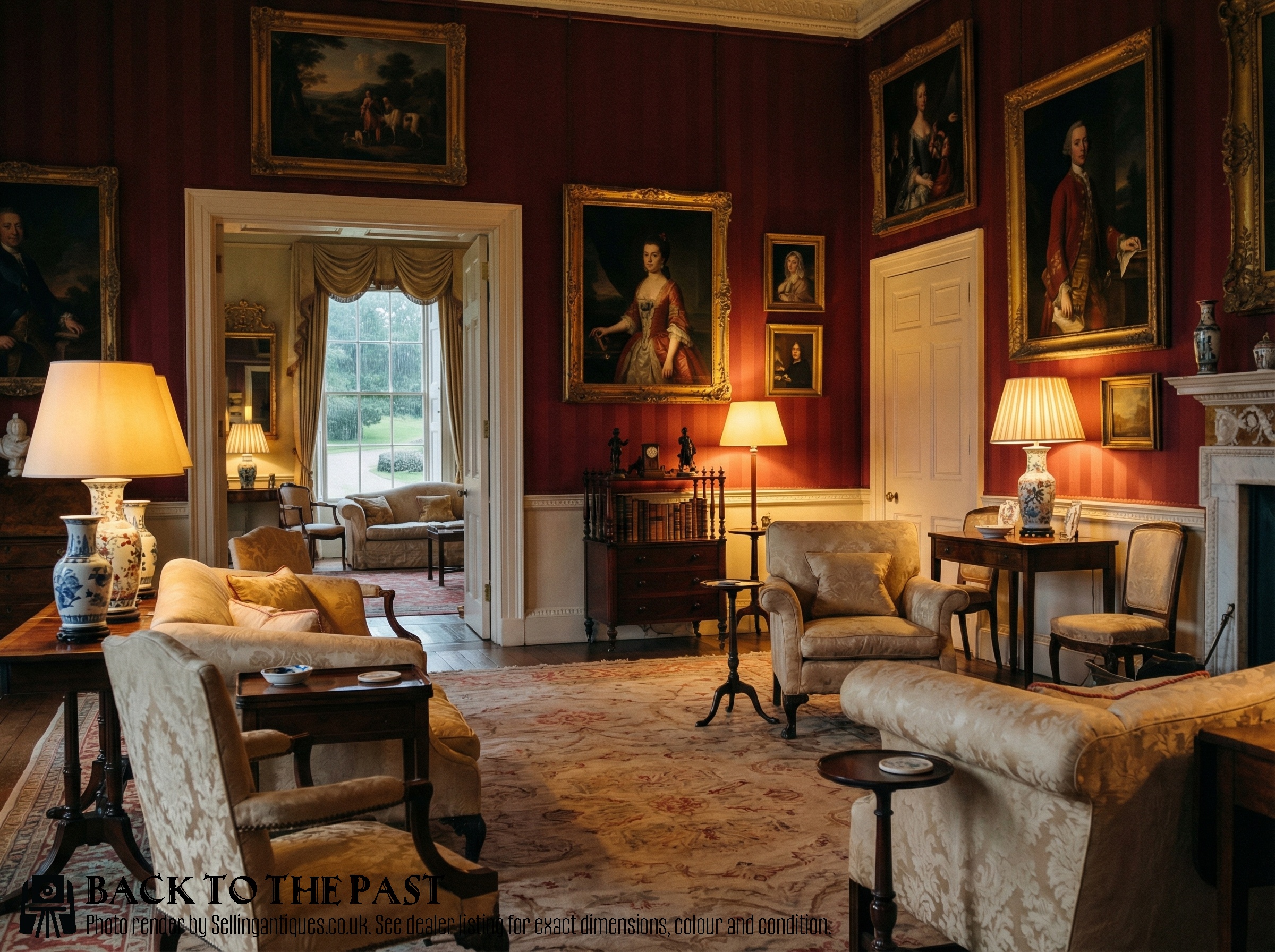
These pieces provide vertical display space without taking up a large floor footprint. You can place them in sitting rooms or studies to hold books and decorative objects.
Specialised variants even include cellarettes or wheels for serving purposes.
How do I tell different periods apart?
Dating relies on timber choice, construction techniques, and stylistic markers recorded across the nineteenth century. Pieces from around 1850 often feature rich burr walnut and serpentine shapes.
Later items from 1890 introduce functional trolley configurations.